
Honeywell CW45-5CB-UVN-0 vs Unitech HT730-LJ6142BG: Specification Comparison
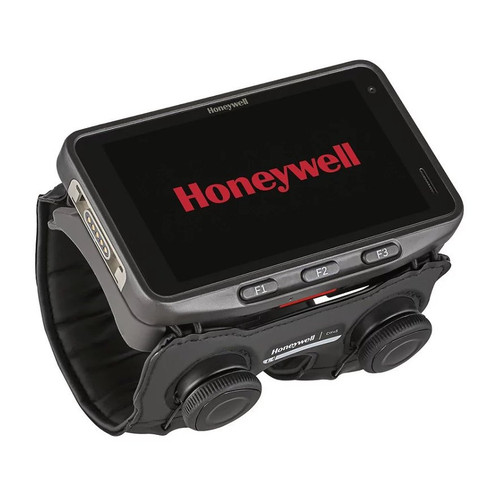
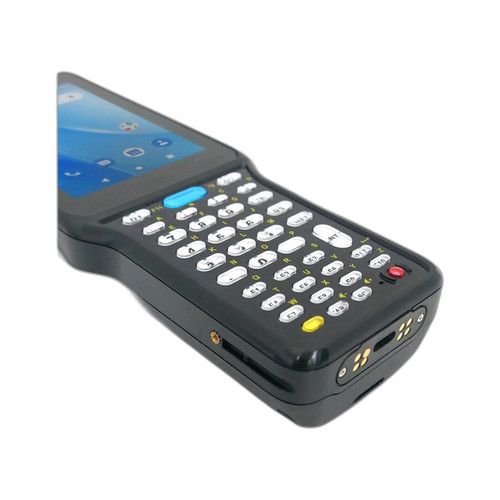
Both the Honeywell CW45-5CB-UVN-0 and the Unitech HT730-LJ6142BG are Android-based wearable mobile devices targeting hands-free warehouse and field operations. The Honeywell is positioned as a full wearable mobile computer with a 4.7-inch HD display, night-vision capability, and WiFi 6; the Unitech is a wearable 2D scanner with a 4-inch screen, 4G dual-SIM, 60 fps scan engine, and a 47-key keypad. A buyer choosing between them is trading general-purpose compute capability against scan-centric specialization.
In This Guide
Which device delivers stronger scanning performance and compute power?
The Unitech HT730-LJ6142BG is purpose-built around its 2D imaging engine, capturing QR Code, Data Matrix, PDF417, Dot Code, Code 128, Code 39, UPC, EAN, and linear 1D barcodes at a specified 60 fps scan rate with a 30-degree tilt-down scan pattern. These scan-centric specs are absent from the Honeywell CW45-5CB-UVN-0's provided specification set — no scan engine, fps rate, or supported symbologies are listed for the CW45.
On compute, the Honeywell CW45-5CB-UVN-0 specifies a Qualcomm QCS4290 Octa-Core 2.0 GHz processor. No processor specification is provided for the Unitech HT730-LJ6142BG. The CW45 also lists a 13MP camera is not specified; the HT730 does list a 13MP camera. Buyers prioritizing barcode scanning breadth and throughput have concrete numbers only from the Unitech; buyers needing verified processing headroom have concrete numbers only from the Honeywell.
How do the two devices compare on wireless connectivity and network flexibility?
The Honeywell CW45-5CB-UVN-0 supports WiFi 6 (802.11 a/b/g/n/ac/ax) and Bluetooth 5.2, plus USB. WiFi 6 brings MU-MIMO, OFDMA, and higher theoretical throughput compared to earlier 802.11 generations — useful in dense RF environments such as large distribution centers with many concurrent devices.
The Unitech HT730-LJ6142BG specifies WiFi 2×2 MU-MIMO but does not identify the 802.11 generation (no ax/WiFi 6 claim in provided specs). Critically, the HT730 adds 4G dual-SIM connectivity and Bluetooth (standard, version not specified), giving it wide-area cellular fallback that the CW45's provided specs do not mention. For deployments requiring coverage beyond a warehouse WiFi footprint — yard management, delivery, or multi-site field work — the HT730's 4G dual-SIM is a material differentiator. The CW45's WiFi 6 generation advantage applies specifically inside well-covered WiFi infrastructure.
Which unit is tougher and lasts longer on a shift?
The Honeywell CW45-5CB-UVN-0 carries IP65/IP67 ingress protection ratings, confirming dust-tight and water-immersion resistance. Its drop rating is not specified in the provided data. Battery options are 3,400 mAh or 6,800 mAh Li-Ion (swappable), with no stated runtime hours. Weight is 263 g (9.3 oz / 0.58 lb). It also specifies day/night and outdoor-ready attributes, with night vision noted as a special feature.
The Unitech HT730-LJ6142BG specifies a 1.8 m (6 ft) drop rating to concrete, extendable to 2.4 m with a bumper — a concrete ruggedness number the Honeywell's specs do not provide. Its 6,700 mAh removable battery is rated for 20–26 hours of continuous operation, a specific runtime claim absent from the CW45 data. IP rating for the HT730 is not provided in the supplied specs. The HT730's 47-key physical keypad supports direct data entry without relying solely on a touchscreen. The CW45's weight is stated; the HT730's weight is not provided.
Which should you choose: the CW45-5CB-UVN-0 or the HT730-LJ6142BG?
Our take: The CW45-5CB-UVN-0 is the stronger choice when the deployment is WiFi-6-infrastructure-heavy and requires a full mobile computer with verified IP65/IP67 sealing, a larger 4.7-inch HD display, night-vision capability, and a Qualcomm QCS4290 octa-core processor — with the flexibility of a 3,400 or 6,800 mAh swappable battery. The HT730-LJ6142BG holds the advantage in three spec-verified areas: its 2D scan engine is fully characterized (60 fps, 30-degree pattern, eight symbology families) while the CW45 lists no scan specs; its 6,700 mAh battery carries a stated 20–26 hour runtime versus no stated runtime for the CW45; and its 1.8 m drop rating to concrete is explicit where the CW45 provides none. The HT730 also adds 4G dual-SIM for out-of-WiFi coverage. Choose the CW45 for compute-forward wearable computing on WiFi 6 infrastructure; choose the HT730 for scan-intensive, all-shift, multi-network field or warehouse operations.
Side-by-Side Comparison
Spec-for-spec, from manufacturer data.
| Specification | Honeywell CW45-5CB-UVN-0 | Unitech HT730-LJ6142BG |
|---|---|---|
| Device Category | Wearable Mobile Computer | Wearable 2D Scanner |
| Operating System | Android | Android 10 |
| Processor | Qualcomm QCS4290 Octa-Core 2.0 GHz | — |
| Display Size | 4.7 in HD (1280 × 720) | 4 in |
| Scan Engine | — | 2D Imager, 60 fps |
| Scan Symbologies | — | QR, Data Matrix, PDF417, Code 128, Code 39, UPC, EAN, Dot Code |
| Wi-Fi | WiFi 6 (802.11 a/b/g/n/ac/ax) | WiFi 2×2 MU-MIMO (generation not specified) |
| Cellular | — | 4G dual-SIM |
| Bluetooth | 5.2 | Supported (version not specified) |
| Battery Capacity | 3,400 mAh or 6,800 mAh (swappable) | 6,700 mAh (removable) |
| Battery Runtime | — | 20–26 hours continuous |
| IP Rating | IP65/IP67 | — |
| Drop Rating | — | 1.8 m to concrete (2.4 m with bumper) |
| Keypad | CW45-KPD | 47-key |
| Camera | — | 13MP |
| Weight | 263 g (9.3 oz) | — |
| Night Vision / Day-Night | Yes | — |
| Warranty | 1-year | Manufacturer Warranty (duration not specified) |
Frequently Asked Questions
Which should you choose: the CW45-5CB-UVN-0 or the HT730-LJ6142BG?
The CW45-5CB-UVN-0 is the stronger choice when the deployment is WiFi-6-infrastructure-heavy and requires a full mobile computer with verified IP65/IP67 sealing, a larger 4.7-inch HD display, night-vision capability, and a Qualcomm QCS4290 octa-core processor — with the flexibility of a 3,400 or 6,800 mAh swappable battery. The HT730-LJ6142BG holds the advantage in three spec-verified areas: its 2D scan engine is fully characterized (60 fps, 30-degree pattern, eight symbology families) while the CW45 lists no scan specs; its 6,700 mAh battery carries a stated 20–26 hour runtime versus no stated runtime for the CW45; and its 1.8 m drop rating to concrete is explicit where the CW45 provides none. The HT730 also adds 4G dual-SIM for out-of-WiFi coverage. Choose the CW45 for compute-forward wearable computing on WiFi 6 infrastructure; choose the HT730 for scan-intensive, all-shift, multi-network field or warehouse operations.
Does either device support cellular connectivity for use outside a warehouse WiFi zone?
Yes — the Unitech HT730-LJ6142BG specifies 4G dual-SIM connectivity in addition to WiFi, making it suitable for yard management, field delivery, or multi-site use where WiFi coverage is unavailable. The Honeywell CW45-5CB-UVN-0's provided specifications list only WiFi 6 and Bluetooth 5.2; no cellular capability is documented for it.
Which device is better suited for reading barcodes at high speed across many symbology types?
The Unitech HT730-LJ6142BG is the spec-supported choice for scan-intensive tasks: it lists a 2D imaging engine at 60 fps, a 30-degree tilt-down scan pattern, and eight named symbology families including QR Code, Data Matrix, PDF417, Code 128, Code 39, UPC, EAN, and Dot Code. The Honeywell CW45-5CB-UVN-0's provided specifications include no scan engine, fps rate, or symbology list.
How do the battery options and shift coverage compare between the two models?
The Honeywell CW45-5CB-UVN-0 offers a choice of 3,400 mAh or 6,800 mAh swappable Li-Ion batteries, but no shift runtime in hours is stated in the provided specs. The Unitech HT730-LJ6142BG provides a single 6,700 mAh removable battery with a stated runtime of 20–26 hours of continuous operation — the only model with a documented shift-coverage figure. If confirmed runtime is a purchasing criterion, the HT730 is the only one of the two with that data on record.
More Mobile Computer Comparisons
- Honeywell CW45-X0N-AND10XG vs Unitech HT730-LJ6122BG
- Honeywell CW45-X0N-AND10XG vs Unitech HT730-LJ6142BG
- Honeywell CW45-X0N-AND10XG vs Unitech HT330-QA62TM3G-Z3
- Honeywell CW45-X0N-AND10XG vs Zebra TC2205-0G1250SS-US
- Honeywell CW45-X0N-AND10XG vs Honeywell CW45-X0N-AND10SG
- Honeywell CW45-X0N-AND10XG vs Honeywell CW45-X0N-BND10XG
Mobile Computer Buying Guides
Get a Second Opinion on Your Camera Choice
Share your site layout, coverage goals, and budget. Our team will validate the camera selection, flag anything we would change, and recommend products that match the use case.