
Honeywell 520-36/48-H3 vs Honeywell 1962H-WC-CUP: Specification Comparison
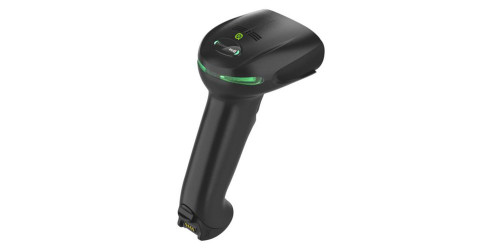
Both products are Honeywell Xenon XP 1952g-series wireless area imagers — cordless 2D barcode scanners designed for general-purpose scanning in warehouse, retail, and light industrial environments. The 520-36/48-H3 and 1962H-WC-CUP share the same platform series, scan technology, and durability ratings, making them directly cross-shoppable. The key differentiators lie in symbology breadth, bundled accessories, and specific configuration contents rather than core performance specifications, which are identical across both units.

In This Guide
Which scanner decodes a broader range of barcode symbologies out of the box?
The 1962H-WC-CUP specification lists seven symbologies: UPC, Code 128, Code 39, QR Code, Data Matrix, PDF417, and Aztec. Notably, it explicitly includes PDF417 (a stacked linear barcode used heavily in driver's licenses, shipping labels, and boarding passes) and Aztec (used in transit ticketing), as well as Code 39, which is common in industrial and government applications.
The 520-36/48-H3 specification lists five symbologies: EAN, UPC, Code 128, QR Code, and Data Matrix. It adds EAN (essential for retail point-of-sale applications) but does not list Code 39, PDF417, or Aztec in the provided spec data. Buyers whose workflow requires stacked 2D barcodes such as PDF417 should note this gap in the 520-36/48-H3 spec sheet, though the absence of a listed symbology does not definitively confirm the hardware cannot decode it — only that it is not specified.
Are both scanners equally rated for ruggedized field and warehouse use?
Both scanners carry identical durability ratings across every listed metric. Each holds an IP65 rating, confirming protection against total dust ingress and water spray from any direction — suitable for dock environments, dusty warehouses, and light outdoor use. Both are rated for a 2.0 m (6.5 ft) drop tolerance, meeting the demands of hand-held scanning on warehouse floors or loading docks.
Working range is identical at 2.5 to 50.8 cm (1 to 20 inches) on both units, and both operate over Bluetooth 4.2 with USB fallback connectivity. Neither unit lists an operating temperature range, battery capacity, or specific charge cycle specification in the provided specs, so buyers with extreme-temperature or extended-shift requirements should consult the respective datasheets directly.
What accessories and configuration components does each SKU include?
The 520-36/48-H3 specification explicitly lists compatible accessories including a Guide, a Bluetooth Access Point, a Smart Battery Pack, and power supply options for both NA and EU plugs. The part number format '520-36/48-H3' suggests a bundle or kit configuration that may include charging or communication hardware, though the spec does not enumerate every included item definitively.
The 1962H-WC-CUP carries a part number suffix 'WC-CUP' which typically denotes a specific cradle or charge/communication bundle configuration in Honeywell's nomenclature, but the provided spec data does not enumerate included accessories beyond the scanner itself. Buyers should verify bundle contents — cradle type, cable, and power supply — directly against each SKU's box contents list before ordering, as the included accessories directly affect total deployment cost.
Which should you choose: the 520-36/48-H3 or the 1962H-WC-CUP?
Our take: The 1962H-WC-CUP is the stronger choice when the deployment requires decoding a broader symbology set, specifically PDF417 and Aztec barcodes used in logistics documents, transit passes, and government ID scanning, in addition to the standard retail and industrial codes. The spec sheet lists seven symbologies versus five for the 520-36/48-H3, adding PDF417 and Aztec explicitly. On every other measurable dimension — IP65 dust and water resistance, 2.0 m drop tolerance, Bluetooth 4.2 plus USB connectivity, and the 2.5–50.8 cm working range — both scanners are specification-identical. The 520-36/48-H3 lists EAN explicitly, which may matter for European retail POS deployments. Both carry a 3-year warranty. Choose the 520-36/48-H3 for EAN-centric retail environments with confirmed accessory bundle needs; choose the 1962H-WC-CUP for mixed-symbology logistics or government workflows where PDF417 and Aztec decode are required.
Side-by-Side Comparison
Spec-for-spec, from manufacturer data.
| Specification | Honeywell 520-36/48-H3 | Honeywell 1962H-WC-CUP |
|---|---|---|
| Series / Family | Xenon XP 1952g | Xenon XP 1952g |
| Part Number | 520-36/48-H3 | 1962H-WC-CUP |
| Scan Type | Area Imager (1D/2D) | Area Imager (1D/2D) |
| Wireless Connectivity | Bluetooth 4.2 + USB | Bluetooth 4.2 + USB |
| IP Rating | IP65 | IP65 |
| Drop Rating | 2.0 m (6.5 ft) | 2.0 m (6.5 ft) |
| Working Range | 2.5–50.8 cm (1–20 in) | 2.5–50.8 cm (1–20 in) |
| EAN Support | Yes (listed) | Not listed in spec |
| UPC Support | Yes | Yes |
| Code 128 Support | Yes | Yes |
| Code 39 Support | Not listed in spec | Yes (listed) |
| QR Code Support | Yes | Yes |
| Data Matrix Support | Yes | Yes |
| PDF417 Support | Not listed in spec | Yes (listed) |
| Aztec Support | Not listed in spec | Yes (listed) |
| Warranty | 3-year | 3-year |
Frequently Asked Questions
Which should you choose: the 520-36/48-H3 or the 1962H-WC-CUP?
The 1962H-WC-CUP is the stronger choice when the deployment requires decoding a broader symbology set, specifically PDF417 and Aztec barcodes used in logistics documents, transit passes, and government ID scanning, in addition to the standard retail and industrial codes. The spec sheet lists seven symbologies versus five for the 520-36/48-H3, adding PDF417 and Aztec explicitly. On every other measurable dimension — IP65 dust and water resistance, 2.0 m drop tolerance, Bluetooth 4.2 plus USB connectivity, and the 2.5–50.8 cm working range — both scanners are specification-identical. The 520-36/48-H3 lists EAN explicitly, which may matter for European retail POS deployments. Both carry a 3-year warranty. Choose the 520-36/48-H3 for EAN-centric retail environments with confirmed accessory bundle needs; choose the 1962H-WC-CUP for mixed-symbology logistics or government workflows where PDF417 and Aztec decode are required.
Can either scanner read PDF417 barcodes on shipping labels and driver's licenses?
Based on the provided specifications, PDF417 is listed as a supported symbology only for the 1962H-WC-CUP. The 520-36/48-H3 spec sheet does not list PDF417. Buyers who need to scan shipping labels, driver's licenses, or boarding passes that use PDF417 should select the 1962H-WC-CUP or verify PDF417 support directly with Honeywell before purchasing the 520-36/48-H3.
Are both scanners equally durable for warehouse and dock environments?
Yes, based on the provided specifications both scanners are rated identically for ruggedized use: IP65 (full dust protection and water spray resistance) and a 2.0 m (6.5 ft) drop tolerance. Neither unit has an advantage over the other in the durability metrics listed in the supplied specs.
Do both scanners work wirelessly, and what is the connection type?
Both scanners use Bluetooth 4.2 for wireless operation and include USB as a fallback or tethered connection option. The working range for both is specified at 2.5 to 50.8 cm (1 to 20 inches) for the scan window itself. Bluetooth radio range to the host or access point is not specified in either product's provided spec data and should be confirmed via their respective datasheets.
More Barcode Scanner Comparisons
- Zebra DS3678 vs Honeywell 520-36/48-H3
- Zebra DS3678 vs CipherLab A2564S2BS0001
- Zebra DS3678 vs Honeywell 1962H-WC-CUP
- Zebra DS3678 vs Socket Mobile CX4238-3326
- Zebra DS3678 vs Zebra DS3678
- Zebra DS3678 vs Zebra DS8178-SRSF007ZZWW
Barcode Scanner Buying Guides
Get a Second Opinion on Your Camera Choice
Share your site layout, coverage goals, and budget. Our team will validate the camera selection, flag anything we would change, and recommend products that match the use case.