
HID 40NKS-00-000000 vs Speco Technologies AP500HA: Specification Comparison
Both the HID 40NKS-00-000000 (SIGNO 40 Pigtail) and the Speco Technologies AP500HA are 125kHz proximity card readers that output Wiegand data for integration with third-party access control panels. Each is a standalone read-only credential device — not a controller, not an integrated lock — making them direct cross-shop candidates for installers selecting a proximity reader for a new or retrofit access control deployment.
In This Guide
- Which reader supports broader credential compatibility and output protocol flexibility?
- Which reader is better suited for harsh or outdoor environments, and how do their power requirements compare?
- How do the readers differ in installer feedback mechanisms, mounting, and panel integration?
- Which should you choose: the 40NKS-00-000000 or the AP500HA?
- Side-by-Side Specs
- FAQ
Which reader supports broader credential compatibility and output protocol flexibility?
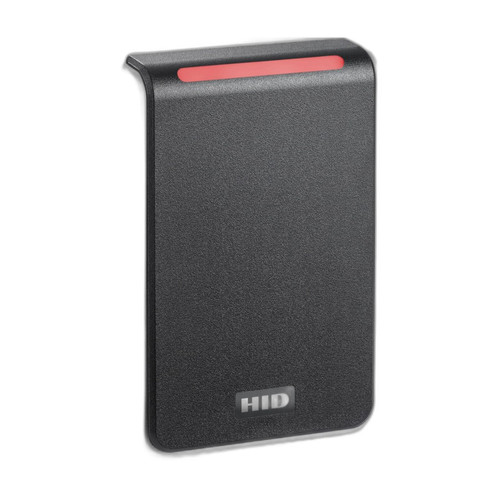
The HID 40NKS-00-000000 is specified for EM 32-bit proximity credentials (ISO/IEC 11784/11785) and outputs a 32-bit Wiegand MSB signal. The spec sheet also references NFC/BLE, SEOS profile, Smart profile, and Standard profiles, suggesting the SIGNO platform may accommodate multi-technology credentials depending on model configuration, though the provided specs anchor this SKU to EM 32-bit only. The Wiegand output is Data0/Data1/Common.
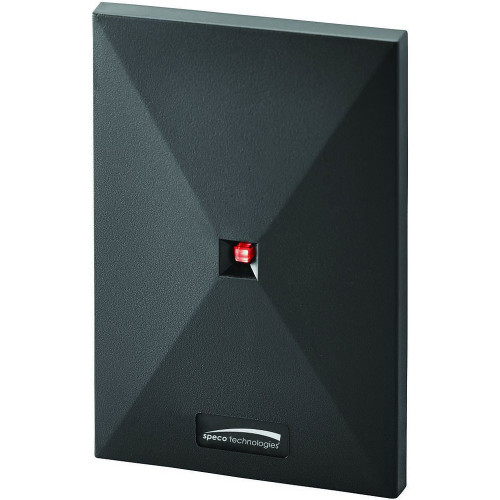
The AP500HA reads 125kHz proximity credentials from both HID and AWID card families, and outputs Wiegand ABA Track II. This dual-brand card compatibility (HID and AWID) gives installers flexibility when existing card stock is unknown or mixed. No multi-technology or mobile credential support is listed in the provided specs for the AP500HA.
Which reader is better suited for harsh or outdoor environments, and how do their power requirements compare?
The AP500HA carries an IP67 ingress protection rating, meaning it is rated for complete dust exclusion and temporary immersion in water up to 1 meter. Its operating temperature range is -40°F to 149°F (-40°C to 65°C), and it is explicitly listed as an outdoor-rated device. Power draw is 30mA at 12VDC, with a wide input range of 5–16 VDC. Weight is 4 oz. ETL listing and NDAA Section 889 Part B compliance are specified.
The HID 40NKS-00-000000 is listed for both indoor and outdoor environments, but no IP ingress protection rating is present in the provided specifications. Power is listed as PoE or 12VDC; no current draw figure is provided. Dimensions are stated as 80" x 121.5" x 19.5", which appear to be typographical errors in the source data (likely millimeters: 80mm x 121.5mm x 19.5mm) and should be verified against the manufacturer datasheet before installation planning. No certifications are listed in the provided specs.
How do the readers differ in installer feedback mechanisms, mounting, and panel integration?
The HID 40NKS-00-000000 provides a green LED plus buzzer on valid read and a red LED for status — covering both visual and audible confirmation. It supports surface-mount/wall installation with both flush-mount terminal block and pigtail wiring options, which aids retrofit scenarios where conduit or junction box dimensions vary.
The AP500HA includes an audio beeper and LED indicators per the package contents and spec. Read range is explicitly stated at 8 inches. Mounting type is listed as 'Rack' in one spec field, which appears to be a data-entry error for a wall-mount proximity reader; the physical product description (wall proximity reader with snap-on cover) should be treated as authoritative. No read range figure is provided for the HID unit in the supplied specifications.
Both readers output Wiegand and integrate with standard access control panels. The AP500HA specifies ONVIF compliance, which is atypical for a standalone card reader and may reflect a data classification artifact; buyers should verify applicability. The HID unit's pigtail wiring suits panels with screw-terminal Wiegand inputs directly.
Which should you choose: the 40NKS-00-000000 or the AP500HA?
Our take: The AP500HA is the stronger choice when the installation site is outdoors or in a harsh environment and NDAA Section 889 Part B compliance is required. Its IP67 rating, -40°F to 149°F operating range, and ETL listing provide verified weatherproofing and regulatory standing that the HID 40NKS-00-000000 cannot be confirmed to match from the provided specs — no IP rating or certifications are listed for the HID unit. The AP500HA also names an explicit 8-inch read range and a precise 30mA @ 12VDC power draw, both useful for panel load calculations, while the HID spec omits both figures. Conversely, the HID 40NKS-00-000000 is the stronger choice for deployments using EM 32-bit card stock with PoE-powered panels, or where the SIGNO platform's potential multi-technology upgrade path (SEOS, NFC/BLE per the spec references) is a future consideration. Platform lock-in is a qualifier: HID SIGNO readers are optimized for HID panel ecosystems, while the AP500HA's HID- and AWID-card compatibility suits mixed or legacy card environments.
Side-by-Side Comparison
Spec-for-spec, from manufacturer data.
| Specification | HID 40NKS-00-000000 | Speco Technologies AP500HA |
|---|---|---|
| Product Type | Proximity Card Reader | Proximity Card Reader |
| Frequency / Technology | EM 32-bit (ISO/IEC 11784/11785) | 125kHz (HID & AWID) |
| Output Protocol | 32-bit Wiegand MSB | Wiegand ABA Track II |
| Read Range | — | 8 inches |
| Power Input | PoE or 12VDC | 5–16 VDC |
| Current Draw | — | 30mA @ 12VDC |
| IP Rating | — | IP67 |
| Operating Temperature | — | -40°F to 149°F |
| Environment Rating | Indoor / Outdoor | Outdoor |
| Feedback | Green LED + Buzzer (valid); Red LED (status) | LED indicators + audio beeper |
| Mount Style | Surface-mount, Wall; pigtail or terminal block | Wall (snap-on cover) |
| Certifications | — | ETL, NDAA Section 889 Part B |
| NDAA Compliant | — | Yes (Section 889 Part B) |
| Warranty | 2-year | 2-year |
| Weight | — | 4 oz |
| Connectivity | Wired Wiegand (Data0, Data1, Common) | Wired Wiegand |
Frequently Asked Questions
Which should you choose: the 40NKS-00-000000 or the AP500HA?
The AP500HA is the stronger choice when the installation site is outdoors or in a harsh environment and NDAA Section 889 Part B compliance is required. Its IP67 rating, -40°F to 149°F operating range, and ETL listing provide verified weatherproofing and regulatory standing that the HID 40NKS-00-000000 cannot be confirmed to match from the provided specs — no IP rating or certifications are listed for the HID unit. The AP500HA also names an explicit 8-inch read range and a precise 30mA @ 12VDC power draw, both useful for panel load calculations, while the HID spec omits both figures. Conversely, the HID 40NKS-00-000000 is the stronger choice for deployments using EM 32-bit card stock with PoE-powered panels, or where the SIGNO platform's potential multi-technology upgrade path (SEOS, NFC/BLE per the spec references) is a future consideration. Platform lock-in is a qualifier: HID SIGNO readers are optimized for HID panel ecosystems, while the AP500HA's HID- and AWID-card compatibility suits mixed or legacy card environments.
Is the HID 40NKS-00-000000 or the AP500HA better for an outdoor parking garage installation?
Based on the provided specs, the AP500HA is the more clearly qualified choice for outdoor use. It carries an IP67 ingress protection rating and a specified operating range of -40°F to 149°F. The HID 40NKS-00-000000 is listed as Indoor/Outdoor but no IP rating is present in its provided specifications, so its weatherproofing level cannot be confirmed from the available data.
Will either reader work with our existing HID prox cards?
The AP500HA explicitly lists compatibility with HID 125kHz proximity cards as well as AWID cards. The HID 40NKS-00-000000 is specified for EM 32-bit proximity credentials (ISO/IEC 11784/11785); standard HID 125kHz prox cards (HID Prox / HID iCLASS legacy) are a different format. Verify your card format against each reader's supported credential list before purchasing.
Does either reader meet NDAA Section 889 compliance requirements for government or federal projects?
Only the AP500HA has NDAA Section 889 Part B compliance listed in its provided specifications. No certifications of any kind are listed in the provided specs for the HID 40NKS-00-000000; buyers with federal or NDAA-gated project requirements should consult the HID datasheet directly to confirm compliance status before specifying that unit.
More Access Control Reader Comparisons
- HID 5365EGP00 vs Comelit 909020116
- HID 5365EGP00 vs Speco Technologies AP500HA
- HID 5365EGP00 vs Comelit 909020113
- HID 5365EGP00 vs HID 20NKS-00-000000
- HID 5365EGP00 vs HID 40NKS-00-000000
- Comelit 909020116 vs Speco Technologies AP500HA
Access Control Reader Buying Guides
Get a Second Opinion on Your Camera Choice
Share your site layout, coverage goals, and budget. Our team will validate the camera selection, flag anything we would change, and recommend products that match the use case.