
HID 40NKS-00-000000 vs Comelit 909020116: Specification Comparison
The HID 40NKS-00-000000 and Comelit 909020116 are both wired proximity readers intended for physical access control at doors and entry points. Both accept proximity credentials and deliver LED plus audible feedback on read events. A buyer evaluating either unit is choosing between a traditional Wiegand-output pigtail reader and an Ethernet-connected PoE+ reader, making them cross-shoppable alternatives at the credential-reading layer of an access control deployment, though their downstream panel integration architectures differ significantly.
In This Guide
- What credential technology and output protocol does each reader use, and how does that affect panel compatibility?
- How does each reader handle power delivery and environmental exposure?
- How do the physical form factors and credential-feedback mechanisms compare for deployment in real access points?
- Which should you choose: the 40NKS-00-000000 or the 909020116?
- Side-by-Side Specs
- FAQ
What credential technology and output protocol does each reader use, and how does that affect panel compatibility?
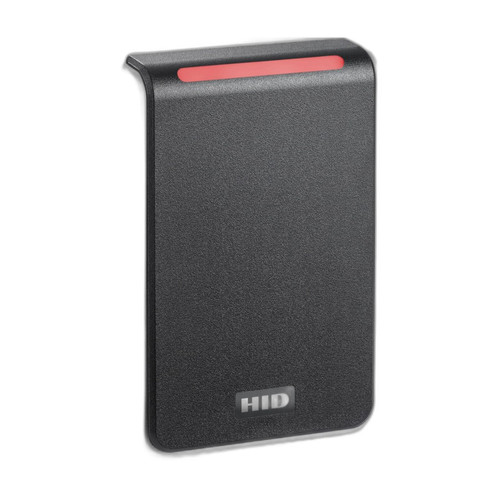
The HID 40NKS-00-000000 outputs 32-bit Wiegand MSB (Data0/Data1/Common pigtail wiring) and reads EM Proximity cards conforming to ISO/IEC 11784/11785. This is the dominant legacy wiring standard; virtually every access control panel manufactured in the last 30 years accepts Wiegand input, making the HID unit a drop-in retrofit for existing infrastructure. The spec sheet also references NFC/BLE, SEOS, Smart, and Standard profiles, though the primary documented output remains 32-bit Wiegand MSB.
The Comelit 909020116 connects via Ethernet and is powered over PoE+ (802.3at). Its output protocol and credential format are not specified in the provided data beyond a general 'proximity reader' designation and Ethernet connectivity. Buyers integrating with a specific panel or controller must verify Comelit's protocol compatibility independently, as no Wiegand, OSDP, or proprietary SDK detail is listed in the available specs.
How does each reader handle power delivery and environmental exposure?
The HID 40NKS-00-000000 accepts either PoE or 12VDC, giving installers two power paths. Its environmental rating is listed as Indoor/Outdoor, but no IP ingress protection rating is specified in the provided data. Mounting is surface-mount wall via flush-mount terminal block or pigtail wiring.
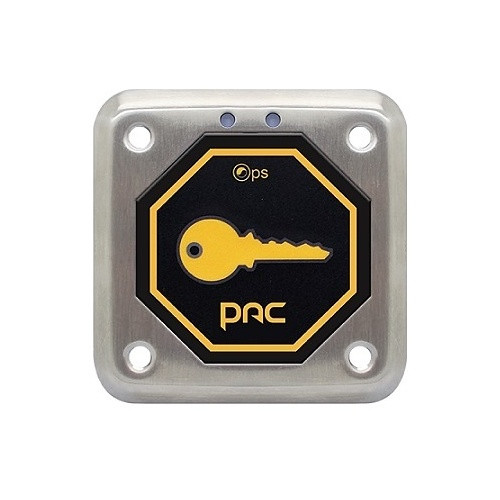
The Comelit 909020116 is powered exclusively via PoE+ (802.3at) at 15.4W over Ethernet; a separate 4W figure also appears in the specs but is not reconciled in the provided data. Critically, the Comelit carries a documented IP67 rating and is constructed from Grade 304 stainless steel, giving it a verified weatherproof and vandal-resistant enclosure. This makes its environmental suitability for harsh outdoor installations directly verifiable from spec, whereas the HID unit's outdoor capability lacks a matching IP rating in the provided documentation.
How do the physical form factors and credential-feedback mechanisms compare for deployment in real access points?
The HID 40NKS-00-000000 measures 80 mm × 121.5 mm × 19.5 mm (note: the spec lists these with inch symbols but the values are consistent with millimeter dimensions for a compact wall reader). It provides a green LED plus buzzer on valid read and a red LED for status, which covers both visual and audible acknowledgment at the reader head.
The Comelit 909020116 measures 100 mm × 100 mm × 16 mm, a square, low-profile form factor. It also provides red/green LED indicators and an audible sounder. At 0.442 kg with a stainless steel Grade 304 body, it is a heavier, more ruggedized unit. The HID unit's weight is not specified in the provided data. Both readers offer equivalent feedback modalities—LED plus sounder—but the Comelit's square footprint suits standard electrical-box gang plate installations, while the HID's taller rectangular form suits narrow door-frame or mullion mounting.
Which should you choose: the 40NKS-00-000000 or the 909020116?
Our take: The 40NKS-00-000000 is the stronger choice when integrating with an existing Wiegand-based access control panel infrastructure, particularly in retrofit or mixed-technology deployments. Its documented 32-bit Wiegand MSB output directly addresses the dominant panel input standard, while the Comelit 909020116 lists only Ethernet connectivity with no stated output protocol, leaving panel compatibility unverified from available specs. Conversely, the 909020116 is the stronger choice for new outdoor or high-abuse installations: it carries a verified IP67 environmental rating and Grade 304 stainless steel vandal-resistant housing, neither of which the HID unit documents in the provided specs. Power flexibility favors the HID unit (PoE or 12VDC versus PoE+ only for Comelit). Both carry a 2-year warranty. Specify the HID 40NKS-00-000000 for Wiegand panel retrofit; specify the Comelit 909020116 where IP67 outdoor weatherproofing and vandal resistance are contractually required.
Side-by-Side Comparison
Spec-for-spec, from manufacturer data.
| Specification | HID 40NKS-00-000000 | Comelit 909020116 |
|---|---|---|
| Product Type | Proximity Card Reader | Proximity Reader |
| SKU / MPN | 40NKS-00-000000 | 909020116 |
| Output Protocol | 32-bit Wiegand MSB | Not specified in provided specs |
| Connectivity | Wired Wiegand (Data0, Data1, Common) | Ethernet |
| Power Input | PoE or 12VDC | PoE+ (802.3at) only |
| Power Consumption | Not specified | 15.4W |
| Credential Standard | EM Proximity ISO/IEC 11784/11785 | Not specified in provided specs |
| IP Rating | Not specified | IP67 |
| Housing Material | Not specified | Grade 304 stainless steel |
| Vandal Resistance | Not specified | Yes (rated) |
| Environment | Indoor / Outdoor | Indoor / Outdoor (IP67 verified) |
| Dimensions | 80 x 121.5 x 19.5 mm | 100 x 100 x 16 mm |
| Weight | Not specified | 0.442 kg / 0.974 lb |
| Visual Feedback | Green LED (valid read); Red LED (status) | Red / Green LEDs |
| Audible Feedback | Buzzer | Audible sounder |
| Warranty | 2-year | 2-year |
Frequently Asked Questions
Which should you choose: the 40NKS-00-000000 or the 909020116?
The 40NKS-00-000000 is the stronger choice when integrating with an existing Wiegand-based access control panel infrastructure, particularly in retrofit or mixed-technology deployments. Its documented 32-bit Wiegand MSB output directly addresses the dominant panel input standard, while the Comelit 909020116 lists only Ethernet connectivity with no stated output protocol, leaving panel compatibility unverified from available specs. Conversely, the 909020116 is the stronger choice for new outdoor or high-abuse installations: it carries a verified IP67 environmental rating and Grade 304 stainless steel vandal-resistant housing, neither of which the HID unit documents in the provided specs. Power flexibility favors the HID unit (PoE or 12VDC versus PoE+ only for Comelit). Both carry a 2-year warranty. Specify the HID 40NKS-00-000000 for Wiegand panel retrofit; specify the Comelit 909020116 where IP67 outdoor weatherproofing and vandal resistance are contractually required.
Is the 40NKS-00-000000 or 909020116 easier to wire into an existing access control panel?
The HID 40NKS-00-000000 is easier to wire into most existing panels because it outputs standard 32-bit Wiegand MSB over a Data0/Data1/Common pigtail—the interface virtually all legacy and modern access panels accept natively. The Comelit 909020116 connects via Ethernet, and its panel-side protocol is not specified in the available data, so compatibility with a given panel must be confirmed with Comelit before specifying.
Which reader is better suited for an exposed outdoor entrance prone to weather and vandalism?
The Comelit 909020116 is the documented choice for harsh outdoor use: it carries a verified IP67 weatherproof rating and is constructed from Grade 304 stainless steel with a vandal-resistant enclosure. The HID 40NKS-00-000000 is rated Indoor/Outdoor but no IP ingress protection rating is provided in the available specifications, so its suitability for wet or high-abuse environments cannot be confirmed from spec alone.
Can either reader run on a single network cable without a separate power supply?
Yes, both can. The HID 40NKS-00-000000 supports PoE (standard 802.3af, though the exact class is not stated) alongside 12VDC as an alternative. The Comelit 909020116 requires PoE+ (802.3at) at 15.4W and connects over Ethernet, meaning a single Cat6 cable carries both data and power with no separate power run needed—provided the switch or injector is 802.3at-capable.
More Access Control Reader Comparisons
- HID 5365EGP00 vs Comelit 909020116
- HID 5365EGP00 vs Speco Technologies AP500HA
- HID 5365EGP00 vs Comelit 909020113
- HID 5365EGP00 vs HID 20NKS-00-000000
- HID 5365EGP00 vs HID 40NKS-00-000000
- Comelit 909020116 vs Speco Technologies AP500HA
Access Control Reader Buying Guides
Get a Second Opinion on Your Camera Choice
Share your site layout, coverage goals, and budget. Our team will validate the camera selection, flag anything we would change, and recommend products that match the use case.