
HID 20NKS-00-000000 vs HID 40NKS-00-000000: Specification Comparison
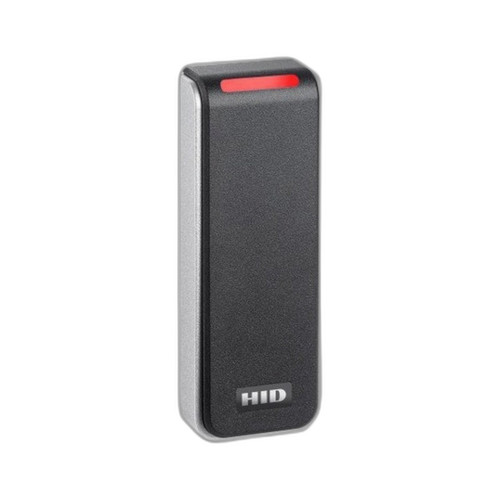
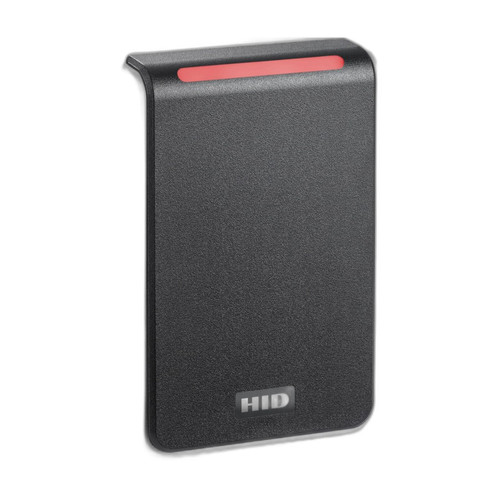
The HID 20NKS-00-000000 Signo 20 and HID 40NKS-00-000000 Signo 40 are both wired, wall-mount proximity card readers using 32-bit Wiegand MSB output and EM 32-bit credential formats. Both target physical access control installations where legacy or standards-based Wiegand panels are already in place. This comparison evaluates form factor and physical dimensions, credential and protocol compatibility, and power and feedback capabilities to help installers and IT buyers select the right reader for their specific door hardware and infrastructure constraints.
In This Guide
- How do the physical dimensions and mounting options differ between the two readers?
- Are there differences in credential format support and communication protocol between the two readers?
- Do the two readers differ in power options and user feedback mechanisms?
- Which should you choose: the 20NKS-00-000000 or the 40NKS-00-000000?
- Side-by-Side Specs
- FAQ
How do the physical dimensions and mounting options differ between the two readers?
The 20NKS-00-000000 Signo 20 measures 45" x 121.5" x 19.5", making it the more compact of the two units. The 40NKS-00-000000 Signo 40 is physically larger at 80" x 121.5" x 19.5", sharing the same depth and height but presenting a notably wider footprint. Both units specify wall-mount, surface-mount installation. Both also list flush mount terminal block and pigtail wiring options per their shared mounting field. The Signo 40 is specifically identified in its model name and specs as a 'Pigtail' reader, while the Signo 20 specs note 'surface mount' under installation. Neither model specifies a conduit entry type beyond these wiring options. Buyers working with tight mullion or door-frame real estate should note the width difference between the two models.
Are there differences in credential format support and communication protocol between the two readers?
Both readers output 32-bit Wiegand MSB and are designed for EM 32-bit proximity credentials. The 20NKS-00-000000 explicitly cites ASP10022 and EM 32-bit standard card formats, and references ISO/IEC alignment via its ASP10022 designation. The 40NKS-00-000000 specifies EM Proximity per ISO/IEC 11784/11785, providing a direct international standard citation absent from the Signo 20 spec set. Both units reference a shared NFC/BLE, SEOS profile, Smart profile, and Standard field, though these appear as partial or placeholder data in the provided specs for both models and cannot be confirmed as distinct differentiators. Neither unit lists multi-technology credential support beyond EM 32-bit in their confirmed spec fields. Integrators running mixed-credential environments should verify additional format support directly against HID datasheets before specifying either reader.
Do the two readers differ in power options and user feedback mechanisms?
The 40NKS-00-000000 Signo 40 explicitly lists PoE or 12VDC as power input options, giving installers flexibility to leverage existing Power over Ethernet infrastructure without a separate power supply run. The 20NKS-00-000000 Signo 20 does not specify power input in its provided specs, leaving power requirements unconfirmed from the data at hand. On feedback, both readers provide a dual-LED (red/green) indicator plus an audible buzzer. The Signo 20 spec details red LED for standby and a green flash on successful read. The Signo 40 similarly notes green LED plus buzzer for valid read and red LED for status. The feedback behavior described is functionally equivalent across both models based on available spec data.
Which should you choose: the 20NKS-00-000000 or the 40NKS-00-000000?
Our take: The 40NKS-00-000000 Signo 40 is the stronger choice when power-source flexibility and ISO/IEC credential standard documentation matter to the installation. The Signo 40 explicitly supports both PoE and 12VDC power inputs—a spec absent from the Signo 20's provided data—which simplifies cabling in retrofits or new builds where PoE switches are already deployed. The Signo 40 also cites ISO/IEC 11784/11785 for its EM Proximity credential format, providing a clear international standards reference the Signo 20 spec does not include. Conversely, the Signo 20 carries a smaller footprint (45" wide vs. 80" wide), making it the better fit for constrained mounting surfaces such as narrow mullions or shallow door frames. Both readers share identical Wiegand 32-bit MSB output, 2-year warranty, dual-LED and buzzer feedback, and wall-mount surface installation. Where physical space is the binding constraint, specify the Signo 20; where PoE infrastructure or IEC standard traceability drives the decision, specify the Signo 40.
Side-by-Side Comparison
Spec-for-spec, from manufacturer data.
| Specification | HID 20NKS-00-000000 | HID 40NKS-00-000000 |
|---|---|---|
| SKU | 20NKS-00-000000 | 40NKS-00-000000 |
| Model | Signo 20 | Signo 40 |
| Product Type | Proximity Reader | Card Reader |
| Width | 45" | 80" |
| Height | 121.5" | 121.5" |
| Depth | 19.5" | 19.5" |
| Communication Protocol | Wiegand 32-bit MSB | Wiegand 32-bit MSB |
| Credential Format | EM 32-bit / ASP10022 | EM Proximity (ISO/IEC 11784/11785) |
| Power Input | — | PoE or 12VDC |
| Connectivity | Wired | Wired (Data0, Data1, Common) |
| Feedback | Red LED (standby), green flash (read), buzzer | Green LED + buzzer (valid read), red LED (status) |
| Mount Style | Surface mount, wall | Surface mount, wall |
| Wiring Options | Terminal block and pigtail | Terminal block and pigtail |
| Environment | Indoor / Outdoor | Indoor / Outdoor |
| Warranty | 2-year | 2-year |
| Datasheet | /content/product-datasheets/20NKS-00-000000.pdf | /content/product-datasheets/40NKS-00-000000.pdf |
Frequently Asked Questions
Which should you choose: the 20NKS-00-000000 or the 40NKS-00-000000?
The 40NKS-00-000000 Signo 40 is the stronger choice when power-source flexibility and ISO/IEC credential standard documentation matter to the installation. The Signo 40 explicitly supports both PoE and 12VDC power inputs—a spec absent from the Signo 20's provided data—which simplifies cabling in retrofits or new builds where PoE switches are already deployed. The Signo 40 also cites ISO/IEC 11784/11785 for its EM Proximity credential format, providing a clear international standards reference the Signo 20 spec does not include. Conversely, the Signo 20 carries a smaller footprint (45" wide vs. 80" wide), making it the better fit for constrained mounting surfaces such as narrow mullions or shallow door frames. Both readers share identical Wiegand 32-bit MSB output, 2-year warranty, dual-LED and buzzer feedback, and wall-mount surface installation. Where physical space is the binding constraint, specify the Signo 20; where PoE infrastructure or IEC standard traceability drives the decision, specify the Signo 40.
Is the 20NKS-00-000000 or 40NKS-00-000000 better for retrofits with existing PoE switch infrastructure?
Based on the provided specs, the 40NKS-00-000000 Signo 40 is the documented choice—it explicitly lists PoE or 12VDC as power options. The 20NKS-00-000000 Signo 20 does not specify power input in its available spec data, so PoE compatibility cannot be confirmed for that model without consulting the HID datasheet directly.
Will either reader work with my existing Wiegand access control panel?
Yes, both the 20NKS-00-000000 and 40NKS-00-000000 output 32-bit Wiegand MSB (Data0/Data1/Common), which is the standard interface on the vast majority of legacy and current access control panels. No protocol converters are required for either reader on a standard Wiegand panel.
Which reader is physically smaller for a tight door-frame or mullion installation?
The 20NKS-00-000000 Signo 20 is the narrower unit at 45" wide versus the 40NKS-00-000000 Signo 40 at 80" wide. Both share the same 121.5" height and 19.5" depth per the provided specifications, so the width difference is the sole dimensional differentiator between the two models.
More Access Control Reader Comparisons
- HID 5365EGP00 vs Comelit 909020116
- HID 5365EGP00 vs Speco Technologies AP500HA
- HID 5365EGP00 vs Comelit 909020113
- HID 5365EGP00 vs HID 20NKS-00-000000
- HID 5365EGP00 vs HID 40NKS-00-000000
- Comelit 909020116 vs Speco Technologies AP500HA
Access Control Reader Buying Guides
Get a Second Opinion on Your Camera Choice
Share your site layout, coverage goals, and budget. Our team will validate the camera selection, flag anything we would change, and recommend products that match the use case.