
Hanwha XRN-6420RB2 vs Hanwha XRN-6420DB4: Specification Comparison
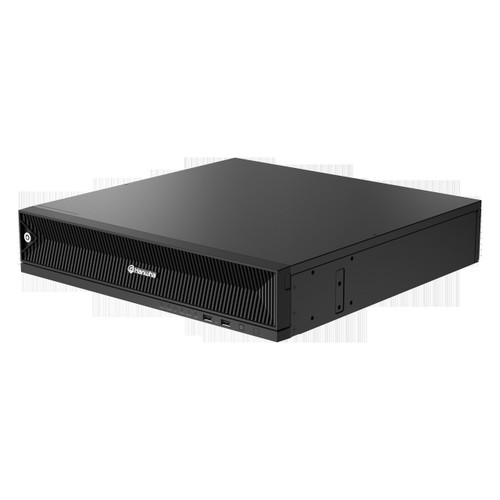
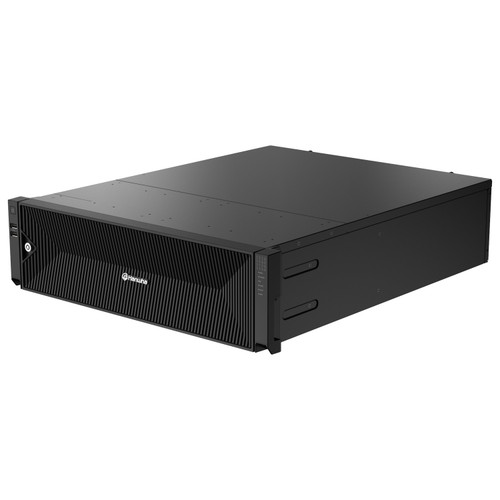
Both the Hanwha XRN-6420RB2 and XRN-6420DB4 are 64-channel embedded-Linux NVRs from Hanwha's Wisenet line, sharing the same 520 Mbps recording bandwidth ceiling and 32MP maximum resolution support. The comparison is relevant because a buyer specifying a high-channel-count enterprise recorder will encounter both models and must weigh storage architecture, RAID configuration, physical footprint, power design, and pre-configured versus bare-bay deployment against their project requirements.
In This Guide
- How do the two NVRs differ in raw storage capacity, drive bay count, and RAID architecture?
- What are the differences in power supply design, physical dimensions, weight, and operating environment?
- How do the two NVRs compare on protocol support, remote access, analytics, and VMS compatibility?
- Which should you choose: the XRN-6420RB2 or the XRN-6420DB4?
- Side-by-Side Specs
- FAQ
How do the two NVRs differ in raw storage capacity, drive bay count, and RAID architecture?
The XRN-6420RB2 ships with 8 SATA HDD bays pre-configured at 48TB and expands to a maximum of 80TB. It supports RAID 5 and RAID 6 with N+1 automatic failover. The pre-configured 48TB SKU (XRN-6420RB2-48TB) means storage is ready at first power-on.
The XRN-6420DB4 provides 16 SATA HDD bays with a stated maximum of 160TB in non-RAID mode. RAID 5/6 is supported in an 8-HDD-per-array, dual-array configuration (8 HDDs × 2 arrays). Per-drive capacity is listed at up to 10TB per slot. Hot-swap is explicitly called out. The XRN-6420DB4 also adds iSCSI external storage expansion, which is not listed for the XRN-6420RB2. The DB4 ships without pre-installed drives; total storage depends on buyer-supplied HDDs.
Summary: the DB4 doubles the bay count (16 vs. 8) and more than doubles the maximum raw capacity (160TB vs. 80TB). The RB2 trades raw ceiling for a ready-to-record, pre-configured bundle. iSCSI expansion is a DB4-only feature per the provided specs.
What are the differences in power supply design, physical dimensions, weight, and operating environment?
The XRN-6420RB2 specs do not list input voltage, maximum wattage, or BTU dissipation. Weight without HDDs is 8.8 kg (19.4 lb). Physical dimensions are not provided in the supplied spec data.
The XRN-6420DB4 specifies a dual SMPS (redundant power supply) rated 100–240 VAC ±10% at 50/60 Hz, 2.7 A, with a maximum draw of 265 W (904.2 BTU with 16 HDDs installed). Weight without HDDs is approximately 15.1 kg (33.3 lb). Dimensions are 440.0 mm × 132.0 mm × 571.1 mm. Operating humidity is explicitly listed at 20%–85% RH.
Both units share an operating temperature range of 0°C to +40°C. The DB4's dual SMPS is a meaningful redundancy advantage for mission-critical deployments; the RB2's power supply configuration is not specified. The DB4 is substantially heavier, consistent with its larger chassis and 16-bay enclosure.
How do the two NVRs compare on protocol support, remote access, analytics, and VMS compatibility?
Both NVRs support SUNAPI and ONVIF, H.265/H.264/MJPEG compression, two-way audio (G.711, G.726, AAC at 16/48 kHz), dual HDMI output, and Embedded Linux. Both support N+1 failover and offer analytics including defocus, audio, dynamic event, and user event.
The XRN-6420DB4 provides additional documented detail: maximum 4 concurrent users (1 local, 3 remote), simultaneous playback up to 112 channels (64 local, 16 per remote user), playback bandwidth up to 200 Mbps, fisheye dewarping (1 channel local plus CMS), 300 PTZ presets, a 100,000-entry log (system and event logs each), ARB (Automatic Recovery Backup) support, and explicit browser compatibility (Chrome, Edge, Safari on Windows 10+ and macOS 13.5.2+). Mobile support is listed as iOS and Android.
The XRN-6420RB2 adds TPM 2.0 and signed firmware (cybersecurity specs absent from the DB4's provided data), and lists Wisenet Viewer and Wisenet mobile under VMS compatibility. The RB2 also notes its processor as Intel 12th generation, which is not specified for the DB4. Compatibility with Hanwha AI cameras is explicitly called out for the DB4.
Which should you choose: the XRN-6420RB2 or the XRN-6420DB4?
Our take: The XRN-6420DB4 is the stronger choice when maximum raw storage capacity, drive-bay scalability, and power-supply redundancy are the primary requirements. Its 16 SATA bays support up to 160TB versus the RB2's 8-bay, 80TB ceiling — double the capacity — and its dual SMPS with a documented 265 W draw provides a redundancy tier the RB2 spec sheet does not address. iSCSI expansion is a DB4-only documented feature. Conversely, the XRN-6420RB2 is the stronger choice when a pre-configured, deployment-ready system is required: its 48TB bundle ships ready to record, and its documented TPM 2.0 plus signed firmware address cybersecurity mandates (NDAA compliance noted) not confirmed in the DB4 spec data. Both units share 64 channels, 520 Mbps recording bandwidth, RAID 5/6, and N+1 failover. Buyers prioritizing storage scale and power redundancy should specify the DB4; those prioritizing rapid deployment and documented cybersecurity posture should specify the RB2.
Side-by-Side Comparison
Spec-for-spec, from manufacturer data.
| Specification | Hanwha XRN-6420RB2 | Hanwha XRN-6420DB4 |
|---|---|---|
| Product Type | NVR | NVR |
| Max Channels | 64 | 64 |
| Max Resolution | 32MP (15fps, H.265 only) | 32MP (15fps, H.265 only) |
| Recording Bandwidth | 520 Mbps | 520 Mbps |
| HDD Bays | 8 SATA | 16 SATA (hot-swap) |
| Max Storage (Raw) | 80TB | 160TB (non-RAID mode) |
| Pre-configured Storage | 48TB (this SKU) | — |
| RAID Support | RAID 5/6 | RAID 5/6 (8 HDDs × 2 arrays) |
| iSCSI Expansion | — | Supported |
| N+1 Failover | Yes | Yes |
| Power Supply | Not specified | Dual SMPS, 100–240 VAC, 265 W max |
| Operating Temp | 0°C to +40°C | 0°C to +40°C |
| Weight (excl. HDD) | 8.8 kg (19.4 lb) | 15.1 kg (33.3 lb) |
| Cybersecurity | TPM 2.0, signed firmware, NDAA-compliant | — |
| Processor | Intel 12th Gen | — |
| Max Concurrent Users | — | 4 (1 local, 3 remote) |
Frequently Asked Questions
Which should you choose: the XRN-6420RB2 or the XRN-6420DB4?
The XRN-6420DB4 is the stronger choice when maximum raw storage capacity, drive-bay scalability, and power-supply redundancy are the primary requirements. Its 16 SATA bays support up to 160TB versus the RB2's 8-bay, 80TB ceiling — double the capacity — and its dual SMPS with a documented 265 W draw provides a redundancy tier the RB2 spec sheet does not address. iSCSI expansion is a DB4-only documented feature. Conversely, the XRN-6420RB2 is the stronger choice when a pre-configured, deployment-ready system is required: its 48TB bundle ships ready to record, and its documented TPM 2.0 plus signed firmware address cybersecurity mandates (NDAA compliance noted) not confirmed in the DB4 spec data. Both units share 64 channels, 520 Mbps recording bandwidth, RAID 5/6, and N+1 failover. Buyers prioritizing storage scale and power redundancy should specify the DB4; those prioritizing rapid deployment and documented cybersecurity posture should specify the RB2.
Is the XRN-6420RB2 or XRN-6420DB4 better for larger deployments requiring more storage?
The XRN-6420DB4 supports up to 16 SATA bays and a maximum of 160TB (non-RAID mode), compared to the XRN-6420RB2's 8 bays and 80TB maximum. The DB4 also adds iSCSI external storage expansion per its spec sheet. For deployments requiring maximum on-box or expandable storage, the DB4 has the higher ceiling based on the provided specifications.
Does either NVR include a redundant power supply?
The XRN-6420DB4 specifies a dual SMPS (redundant power supply) rated 100–240 VAC with a maximum draw of 265 W. The XRN-6420RB2's spec sheet does not list power supply type, input voltage, or wattage, so a direct comparison on this point cannot be made from the provided data.
Which NVR has better documented cybersecurity features?
The XRN-6420RB2 explicitly lists TPM 2.0, signed firmware, and NDAA compliance in its provided specifications. The XRN-6420DB4's provided spec data does not include equivalent cybersecurity entries. Buyers with NDAA or zero-trust firmware requirements should verify DB4 compliance with Hanwha directly, as this information is absent from the supplied spec set.
Get a Second Opinion on Your Camera Choice
Share your site layout, coverage goals, and budget. Our team will validate the camera selection, flag anything we would change, and recommend products that match the use case.