
Hanwha PRN-6400DB4 vs Speco Technologies N64NR: Specification Comparison
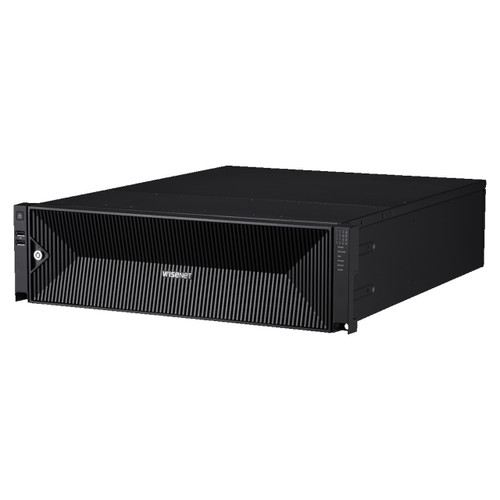
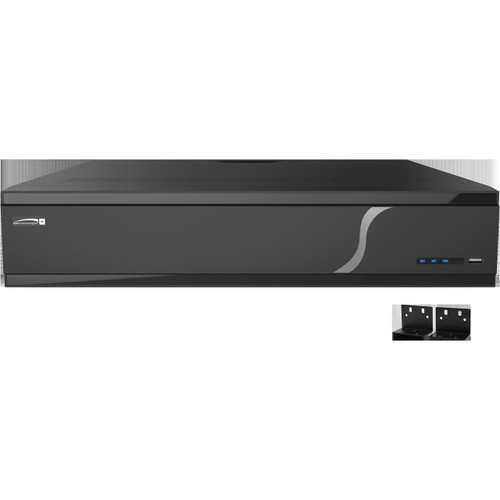
Both the Hanwha PRN-6400DB4 and the Speco Technologies N64NR are rack-mount, 64-channel network video recorders designed for large-scale IP camera deployments. This comparison evaluates them across three decision-critical dimensions for enterprise NVR buyers: recording capacity and throughput, storage architecture and redundancy, and analytics plus integration capabilities. Neither unit is an accessory or a mismatched device class — both are standalone 64-channel NVR appliances intended for physical-security installers sourcing head-end hardware for mid-to-large surveillance systems.
In This Guide
- Which NVR delivers higher channel resolution and recording bandwidth?
- How do these NVRs compare on raw storage capacity, drive architecture, and fault tolerance?
- What analytics, protocol support, and ecosystem integration does each NVR offer?
- Which should you choose: the PRN-6400DB4 or the N64NR?
- Side-by-Side Specs
- FAQ
Which NVR delivers higher channel resolution and recording bandwidth?
The PRN-6400DB4 supports a maximum input resolution of 32MP across all 64 channels with a recording bandwidth of up to 400 Mbps. The N64NR tops out at 16MP (3840×2160 / 4K UHD) and no aggregate bandwidth figure is specified in the provided data. At the decoding layer, the Hanwha unit drives dual HDMI outputs — 4K@30Hz plus 1080p@60Hz — and supports up to 64-division multi-screen display locally, with 36 or 16 divisions over HDMI. For the N64NR, maximum decode resolution, output port count, and multi-screen division count are not specified in the available specs.
Simultaneous playback is documented only for the PRN-6400DB4: up to 112 channels (64 local, 16 per remote user across up to 3 remote users). The N64NR lists a 30 fps frame rate at full 16MP resolution across all 64 channels, but simultaneous playback channel counts are absent from the provided specification set. The H.265 frame-rate ceiling for the Hanwha at 32MP is 15 fps per stream; at 1080p it reaches 480 fps aggregate — figures not matched in the Speco data.
How do these NVRs compare on raw storage capacity, drive architecture, and fault tolerance?
The PRN-6400DB4 ships with 16 hot-swappable SATA HDD bays supporting drives up to 10TB each, yielding a maximum raw capacity of 160TB. It adds native RAID 5 and RAID 6 (configured as two 8-HDD arrays) plus iSCSI external storage expansion, N+1 failover, and Automatic Recovery Backup (ARB). The N64NR provides 8 SATA HDD bays; maximum per-drive capacity, total usable capacity, RAID support level, hot-swap capability, and external storage expansion options are not specified in the provided data.
From a resiliency standpoint, the PRN-6400DB4's documented RAID 5/6 with N+1 failover and ARB addresses enterprise continuity requirements. Because the N64NR's storage architecture beyond bay count is not specified, no equivalent redundancy comparison can be drawn for that unit. Installers requiring documented fault tolerance should note that only the Hanwha unit carries confirmed RAID and failover specs here.
What analytics, protocol support, and ecosystem integration does each NVR offer?
The PRN-6400DB4 supports AI-based object detection — person, face, vehicle, and license plate — tied to Wisenet AI and P/X series cameras. It implements ONVIF Profile-S, SUNAPI (both server and client), IPv4/IPv6, SNMP, 802.1x, and a signed-firmware security chain with Hanwha Techwin Root CA device certificates. PTZ control extends to 300 presets via GUI, web viewer, or SPC-2000 controller. Mobile access (iOS/Android) supports 16-channel live and 4-channel playback. Web viewer is confirmed on Windows 10 and macOS 10.13 under Chrome, Edge, and Safari.
The N64NR lists line crossing, people counting, license plate recognition, and vehicle detection as built-in recorder-side analytics — no camera-brand dependency is specified. It also carries ONVIF compliance, two-way audio, and PoE (802.3af, under 13W) support. Protocol details beyond ONVIF, remote user limits, PTZ preset counts, web viewer OS/browser support, and mobile app specifics are absent from the provided specification set for the N64NR. Its 2-year warranty is the only warranty term documented across either product.
Which should you choose: the PRN-6400DB4 or the N64NR?
Our take: The PRN-6400DB4 is the stronger choice when maximum resolution, high-throughput bandwidth, and enterprise-grade storage redundancy are required. Concretely: it records at 32MP versus the N64NR's 16MP ceiling; its aggregate recording bandwidth of 400 Mbps is documented while no equivalent figure exists for the N64NR; and its 16-bay, 160TB RAID 5/6 architecture with N+1 failover and ARB dwarfs the N64NR's 8-bay configuration with no confirmed RAID. The N64NR's documented 30 fps at full 16MP across all 64 channels and its recorder-native analytics (no camera-brand dependency) are meaningful differentiators for camera-agnostic deployments. Buyers already committed to the Wisenet/Hanwha camera ecosystem will extract the most from the PRN-6400DB4's AI search and SUNAPI integration; installers working mixed-brand environments requiring confirmed 30 fps 4K and a 2-year warranty may find the N64NR relevant, though many specs remain undocumented.
Side-by-Side Comparison
Spec-for-spec, from manufacturer data.
| Specification | Hanwha PRN-6400DB4 | Speco Technologies N64NR |
|---|---|---|
| Max Input Channels | 64 | 64 |
| Max Camera Resolution | 32MP | 16MP (3840x2160) |
| Recording Bandwidth | 400 Mbps | Not specified |
| Video Compression | H.265, H.264, MJPEG, WiseStream | H.265, H.264 |
| Max Frame Rate (1080p) | 480 fps aggregate | 30 fps (all channels at 16MP) |
| HDD Bays | 16 (hot-swap) | 8 |
| Max Onboard Storage | 160TB | Not specified |
| RAID Support | RAID 5/6 (2×8 HDD arrays) | Not specified |
| External Storage | iSCSI | Not specified |
| N+1 Failover / ARB | Yes (both) | Not specified |
| Video Outputs | Dual HDMI (4K@30Hz + 1080p@60Hz) | Not specified |
| ONVIF | Yes (Profile-S) | Yes |
| AI / Analytics | Person, face, vehicle, LPR (Wisenet AI cameras) | Line crossing, people counting, LPR, vehicle detection |
| Max Remote Users (Live) | 10 unicast, 20 multicast | Not specified |
| Mobile App | iOS, Android (16CH live, 4CH playback) | Not specified |
| Warranty | Not specified | 2 years |
Frequently Asked Questions
Which should you choose: the PRN-6400DB4 or the N64NR?
The PRN-6400DB4 is the stronger choice when maximum resolution, high-throughput bandwidth, and enterprise-grade storage redundancy are required. Concretely: it records at 32MP versus the N64NR's 16MP ceiling; its aggregate recording bandwidth of 400 Mbps is documented while no equivalent figure exists for the N64NR; and its 16-bay, 160TB RAID 5/6 architecture with N+1 failover and ARB dwarfs the N64NR's 8-bay configuration with no confirmed RAID. The N64NR's documented 30 fps at full 16MP across all 64 channels and its recorder-native analytics (no camera-brand dependency) are meaningful differentiators for camera-agnostic deployments. Buyers already committed to the Wisenet/Hanwha camera ecosystem will extract the most from the PRN-6400DB4's AI search and SUNAPI integration; installers working mixed-brand environments requiring confirmed 30 fps 4K and a 2-year warranty may find the N64NR relevant, though many specs remain undocumented.
Is the PRN-6400DB4 or N64NR better for larger, enterprise-scale deployments?
Based on the provided specs, the PRN-6400DB4 is better documented for enterprise scale. It supports up to 160TB of onboard storage across 16 hot-swappable bays, RAID 5/6 redundancy, N+1 failover, iSCSI external expansion, and a 400 Mbps recording bandwidth ceiling. The N64NR specifies 8 SATA bays; total capacity, RAID level, and bandwidth ceiling are not listed in the available data, making a full enterprise-scale assessment impossible for that unit.
Can either NVR work with cameras from multiple manufacturers?
Both units list ONVIF compliance. The PRN-6400DB4 also supports ONVIF Profile-S and adds Wisenet/SUNAPI for native Hanwha camera integration; its AI analytics (person, face, vehicle, LPR) require Wisenet AI or P/X series cameras specifically. The N64NR's analytics — line crossing, people counting, LPR, and vehicle detection — are listed as built-in to the recorder with no camera-brand dependency stated in the provided specs, which may offer broader cross-brand flexibility for those features.
Which unit is easier to budget for storage expansion?
The PRN-6400DB4 provides concrete expansion numbers: 16 SATA slots supporting up to 10TB drives each (160TB max) plus iSCSI external storage. The N64NR specifies 8 SATA bays and notes the storage is 'expandable,' but maximum drive size, total capacity ceiling, and external expansion method are not defined in the provided specifications. Installers planning long-retention or high-channel-count projects should request full storage architecture documentation from Speco before sizing the N64NR deployment.
Get a Second Opinion on Your Camera Choice
Share your site layout, coverage goals, and budget. Our team will validate the camera selection, flag anything we would change, and recommend products that match the use case.