
Hanwha PRN-6400DB4 vs Hanwha XRN-6420DB4: Specification Comparison
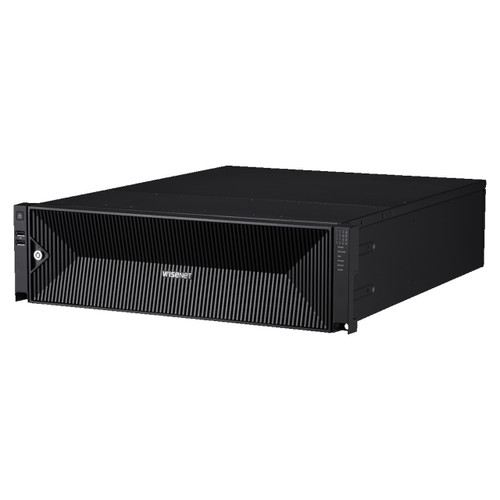
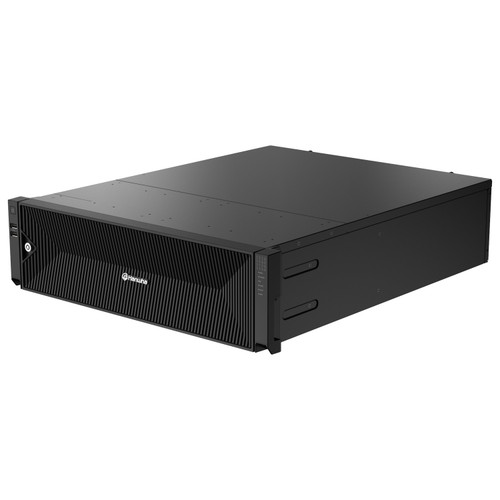
Both the Hanwha PRN-6400DB4 and XRN-6420DB4 are rack-mount, embedded-Linux NVRs in the same 64-channel, 16-bay SATA class, sharing identical chassis dimensions and the same dual-HDMI display architecture. The comparison is relevant for enterprise and large-campus installers evaluating Hanwha's current 64-channel lineup. Key differentiators span recording bandwidth, AI analytics depth, protocol support, and OS-level compatibility requirements — all of which affect long-term platform fit for Wisenet-centric or mixed-vendor camera ecosystems.
In This Guide
- Which NVR delivers higher recording bandwidth and how do the decode performance numbers compare?
- How do the AI analytics capabilities and camera protocol support differ between the two models?
- What are the differences in power consumption, OS/browser requirements, and remote management support?
- Which should you choose: the PRN-6400DB4 or the XRN-6420DB4?
- Side-by-Side Specs
- FAQ
Which NVR delivers higher recording bandwidth and how do the decode performance numbers compare?
The XRN-6420DB4 leads on raw recording bandwidth at 520 Mbps versus the PRN-6400DB4's 400 Mbps — a 30% advantage that matters in high-density 4K or multi-megapixel deployments where aggregate stream load approaches ceiling limits. Playback bandwidth similarly favors the XRN-6420DB4 at 200 Mbps versus the PRN-6400DB4's 64 Mbps for simultaneous 64-channel replay, a meaningful gap for forensic review workflows requiring concurrent channel access.
On decoding, both units output dual HDMI at 4K@30Hz and 1080p@60Hz and support up to 64-division multi-screen display. The PRN-6400DB4 explicitly documents a 32MP@15fps and 1080p@480fps decode ceiling; the XRN-6420DB4 states 32MP@15fps (H.265 only), 12MP@30fps, 8.3MP at 4-channel@30fps, and 1080p at 16-channel@30fps. Storage capacity is identical: 16 hot-swappable SATA bays, 10TB per HDD ceiling, 160TB maximum in non-RAID mode, plus iSCSI and RAID 5/6 across two 8-HDD arrays — no advantage to either unit on storage architecture.
How do the AI analytics capabilities and camera protocol support differ between the two models?
The PRN-6400DB4 carries an explicitly documented on-box AI Search engine covering four object attributes — person, face (with Wisenet AI cameras), vehicle, and license plate — with LPR supporting English and numeric plates via Wisenet AI P/X-series cameras. These are native NVR-side analytics running without an external server.
The XRN-6420DB4's spec states 'Compatible for Hanwha AI Camera' under Object Attribute but does not enumerate specific searchable attributes or LPR language support in the provided specifications. Whether it performs equivalent on-box AI search or defers to camera-side metadata only is not confirmed by the available data.
On camera protocols, the PRN-6400DB4 lists both Wisenet (SUNAPI) and ONVIF Profile-S, and its full IP stack explicitly includes SNMP, uPnP, IGMP, and DDNS via Hanwha's own service. The XRN-6420DB4 lists SUNAPI and ONVIF but does not enumerate SNMP or the full IP protocol stack in the provided specs. Both register cameras auto or manually. The PRN-6400DB4 also documents camera MD polygon setup and Hallway View in its camera setup item list; the XRN-6420DB4's spec omits Hallway View.
What are the differences in power consumption, OS/browser requirements, and remote management support?
Maximum rated power favors the XRN-6420DB4 slightly at 265W (904.2 BTU with 16 HDDs) versus the PRN-6400DB4's 285W (972.5 BTU) — a 20W difference that compounds in multi-rack deployments and affects UPS sizing. Both units share an identical chassis footprint (440.0 × 132.0 × 571.1 mm) and dual SMPS power inlets at 100–240 VAC, 50/60 Hz. The XRN-6420DB4 weighs 15.1 kg versus the PRN-6400DB4's 14.3 kg, an insignificant difference for rack installation.
The OS requirements diverge. The PRN-6400DB4 supports Windows 10 and macOS 10.13 for the web viewer; the XRN-6420DB4 requires Windows 10 or higher and macOS 13.5.2 or higher — a meaningful constraint for sites still running older macOS builds. Both support Chrome, Edge, and Safari. The PRN-6400DB4 documents viewer software explicitly: Webviewer, Smart Viewer, Wisenet Mobile, and CGI/SUNAPI. The XRN-6420DB4 does not enumerate a named viewer software list in the provided specs.
Both units support N+1 failover, ARB (Automatic Recovery Backup), PTZ with 300 presets, 2-way audio over 64 network channels (G.711/G.726/AAC), P2P QR-code setup is documented for the PRN-6400DB4 only. Remote user maximums are identical: 3 search, 10 live unicast, 20 multicast (the PRN-6400DB4 lists 20 multicast explicitly; the XRN-6420DB4 spec does not state a multicast ceiling). Log capacity is 100,000 entries per log type on both.
Which should you choose: the PRN-6400DB4 or the XRN-6420DB4?
Our take: The PRN-6400DB4 is the stronger choice when on-box AI analytics, broader client OS compatibility, and a fully documented Wisenet ecosystem integration are the priorities. Concretely: (1) the PRN-6400DB4 provides verified NVR-side AI search for person, face, vehicle, and LPR with English/numeric plate support, whereas the XRN-6420DB4's AI capability is listed only as 'compatible for Hanwha AI Camera' with no enumerated search attributes in the available specs; (2) the XRN-6420DB4 delivers 520 Mbps recording bandwidth versus 400 Mbps, a 30% higher ceiling relevant for dense 4K deployments; (3) the XRN-6420DB4's lower 265W maximum draw versus 285W reduces UPS and cooling load. Installers building Wisenet AI camera deployments who need confirmed on-NVR search and LPR should specify the PRN-6400DB4; those prioritizing raw bandwidth headroom in high-channel-density 4K environments and willing to verify AI search support independently should evaluate the XRN-6420DB4.
Side-by-Side Comparison
Spec-for-spec, from manufacturer data.
| Specification | Hanwha PRN-6400DB4 | Hanwha XRN-6420DB4 |
|---|---|---|
| Product Type | NVR | NVR |
| Max Camera Channels | 64 | 64 |
| Max Recording Bandwidth | 400 Mbps | 520 Mbps |
| Max Playback Bandwidth | 64 Mbps (64CH simultaneous) | 200 Mbps (64CH simultaneous) |
| Max Record/Decode Resolution | 32MP @ 15fps (H.265) | 32MP @ 15fps (H.265 only) |
| Local Display | Dual HDMI: 4K@30Hz + 1080p@60Hz | Dual HDMI: 4K@30Hz + 1080p@60Hz |
| Multi-Screen Divisions | Up to 64 (HDMI 36/16) | Up to 64 |
| HDD Slots / Max Capacity | 16 SATA hot-swap / 160TB (non-RAID) | 16 SATA hot-swap / 160TB (non-RAID) |
| RAID Support | RAID 5/6 (8 HDD × 2 array) | RAID 5/6 (8 HDD × 2 array) |
| External Storage | iSCSI | iSCSI |
| AI Search Attributes | Person, Face, Vehicle, License Plate | Listed as compatible with Hanwha AI Camera; attributes not specified |
| LPR Support | English, numeric (Wisenet AI P/X cameras) | Not specified in provided specs |
| Camera Protocols | Wisenet (SUNAPI), ONVIF Profile-S | SUNAPI, ONVIF |
| Redundancy | N+1 Failover, ARB | N+1 Failover, ARB |
| Max Power (with 16 HDDs) | 285W (972.5 BTU) | 265W (904.2 BTU) |
| Web Viewer OS (Mac) | macOS 10.13 or later | macOS 13.5.2 or later |
| Chassis Dimensions (W×H×D) | 440.0 × 132.0 × 571.1 mm | 440.0 × 132.0 × 571.1 mm |
| Weight (no HDDs) | 14.3 kg (31.5 lb) | 15.1 kg (33.3 lb) |
| Input Voltage | 100–240 VAC ±10%, 50/60 Hz (Dual SMPS) | 100–240 VAC ±10%, 50/60 Hz, 2.7A (Dual SMPS) |
| Operating Temperature | 0°C to +40°C | 0°C to +40°C |
| P2P / QR Code Setup | Supported | Not specified in provided specs |
| Viewer Software Named | Webviewer, Smart Viewer, Wisenet Mobile, CGI/SUNAPI | Not enumerated in provided specs |
Frequently Asked Questions
Which should you choose: the PRN-6400DB4 or the XRN-6420DB4?
The PRN-6400DB4 is the stronger choice when on-box AI analytics, broader client OS compatibility, and a fully documented Wisenet ecosystem integration are the priorities. Concretely: (1) the PRN-6400DB4 provides verified NVR-side AI search for person, face, vehicle, and LPR with English/numeric plate support, whereas the XRN-6420DB4's AI capability is listed only as 'compatible for Hanwha AI Camera' with no enumerated search attributes in the available specs; (2) the XRN-6420DB4 delivers 520 Mbps recording bandwidth versus 400 Mbps, a 30% higher ceiling relevant for dense 4K deployments; (3) the XRN-6420DB4's lower 265W maximum draw versus 285W reduces UPS and cooling load. Installers building Wisenet AI camera deployments who need confirmed on-NVR search and LPR should specify the PRN-6400DB4; those prioritizing raw bandwidth headroom in high-channel-density 4K environments and willing to verify AI search support independently should evaluate the XRN-6420DB4.
Is the PRN-6400DB4 or XRN-6420DB4 better for large-scale 4K deployments with many simultaneous streams?
The XRN-6420DB4 has the higher recording bandwidth ceiling at 520 Mbps versus the PRN-6400DB4's 400 Mbps, and a higher simultaneous playback bandwidth of 200 Mbps versus 64 Mbps. For deployments where aggregate 4K stream load is expected to push above 400 Mbps, or where forensic review of many channels simultaneously is routine, the XRN-6420DB4's bandwidth specs provide more headroom per the provided specifications.
Does either NVR support license plate recognition, and do I need specific cameras for it?
Yes — the PRN-6400DB4 explicitly documents LPR for English and numeric characters, requiring Wisenet AI P/X-series cameras. The XRN-6420DB4's provided specifications do not enumerate LPR capability or supported plate languages. If LPR is a project requirement, the PRN-6400DB4 has confirmed spec-level support; the XRN-6420DB4 should be verified directly with Hanwha before specifying.
Can I manage both NVRs from a Mac workstation running an older version of macOS?
The PRN-6400DB4 supports macOS 10.13 (High Sierra) or later for its web viewer. The XRN-6420DB4 requires macOS 13.5.2 (Ventura) or higher. Sites running macOS 10.13 through 12.x can only use the PRN-6400DB4 based on the provided specifications. Both support Chrome, Edge, and Safari browsers.
Get a Second Opinion on Your Camera Choice
Share your site layout, coverage goals, and budget. Our team will validate the camera selection, flag anything we would change, and recommend products that match the use case.