
Hanwha XRN-6420DB4 vs i-PRO NX400/3000T3: Specification Comparison
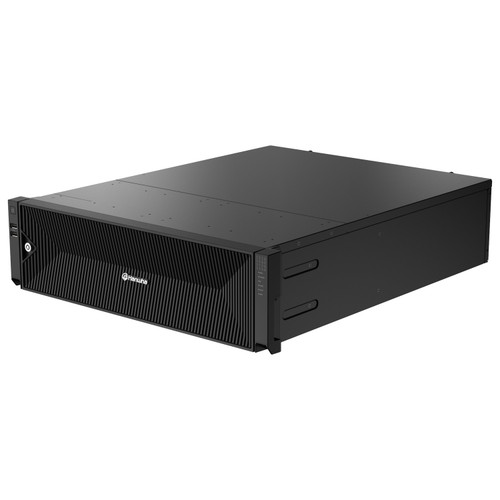
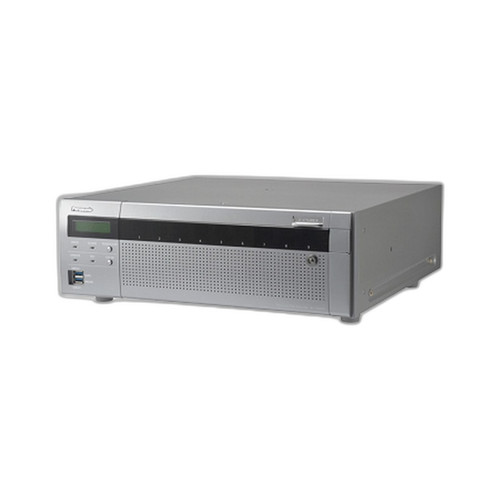
Both the Hanwha XRN-6420DB4 and the i-PRO WJ-NX400/3000T3 are rack-mount, 64-channel network video recorders designed for enterprise and large-site IP surveillance deployments. This comparison evaluates them across the three dimensions that most influence a systems integrator's purchase decision: recording capacity and storage architecture, bandwidth throughput and display capabilities, and ecosystem compatibility plus redundancy features. Neither unit ships with cameras; both target installers who need a centralized recording platform for multi-camera environments.
In This Guide
- Which NVR offers greater on-board storage capacity and more flexible redundancy options?
- Which unit delivers higher recording bandwidth and richer local display output?
- Which NVR integrates more broadly and provides stronger system-level redundancy?
- Which should you choose: the XRN-6420DB4 or the NX400/3000T3?
- Side-by-Side Specs
- FAQ
Which NVR offers greater on-board storage capacity and more flexible redundancy options?
The XRN-6420DB4 provides 16 SATA drive bays supporting up to 160TB of raw installed capacity, with RAID 5 and RAID 6 support organized as two eight-drive arrays, plus iSCSI expansion and hot-swap capability. Each individual drive is specified at up to 10TB.
The WJ-NX400/3000T3 ships with 3TB installed (one 3TB drive) and scales to a stated maximum of 324TB. It supports RAID 0, 1, 5, 6, and 10, giving it a broader set of RAID modes than the Hanwha. The number of physical drive bays and individual drive capacity ceiling are not specified in the provided data.
For installers sizing storage at deployment time, the Hanwha's 16-bay, 160TB ceiling with clearly documented hot-swap and iSCSI expansion offers deterministic capacity planning. The i-PRO's higher stated 324TB maximum and additional RAID 10 option are notable, but the bay count and per-drive limit needed to reach that figure are not available in the provided specifications.
Which unit delivers higher recording bandwidth and richer local display output?
The XRN-6420DB4 is specified at up to 520 Mbps recording bandwidth and up to 200 Mbps simultaneous 64-channel playback bandwidth. Local display output is dual HDMI: one port at 4K/30Hz and a second at 1080p/60Hz, supporting up to 64-division multi-screen layouts. The unit is connected via three RJ-45 GbE ports (LAN/WAN).
The WJ-NX400/3000T3's recording bandwidth, playback bandwidth, local display outputs, and network port count are not stated in the provided specifications.
For high-density deployments running many high-resolution streams concurrently, the Hanwha's documented 520 Mbps recording throughput and dual 4K+1080p display outputs are concrete, verifiable figures. No equivalent throughput or display specification is available for the i-PRO unit from the data provided, making direct numerical comparison impossible on this axis.
Which NVR integrates more broadly and provides stronger system-level redundancy?
The XRN-6420DB4 supports SUNAPI (Hanwha's proprietary API) and ONVIF, with AI object-attribute metadata compatible with Hanwha AI cameras. It supports N+1 failover, ARB (Automatic Recovery Backup), RAID 5/6, iSCSI external storage, and logs up to 100,000 system and event entries each. Mobile clients are available for iOS and Android. Remote access supports up to 10 live unicast users and three simultaneous search users.
The WJ-NX400/3000T3 supports ONVIF Profile S and is stated to be compatible with i-PRO IP cameras and major VMS platforms. It also notes compatibility with multi-site deployments. N+1 failover, ARB, and remote user concurrency limits are not specified in the provided data.
The Hanwha unit documents a fuller redundancy stack (N+1 failover, ARB, RAID 5/6, iSCSI, dual SMPS power supplies). The i-PRO's RAID 0/1/5/6/10 support and ONVIF Profile S compliance are clear strengths for brand-agnostic camera integration, but its system-level failover and high-availability features are not detailed in the available specifications.
Which should you choose: the XRN-6420DB4 or the NX400/3000T3?
Our take: The XRN-6420DB4 is the stronger choice when documented throughput, dual 4K display output, and a fully specified redundancy architecture are required. Concretely: it specifies 520 Mbps recording bandwidth and 200 Mbps simultaneous playback versus no stated figures for the WJ-NX400/3000T3; it provides 16 hot-swap SATA bays (160TB raw) versus a single 3TB installed drive on the i-PRO (maximum 324TB unconfirmed by bay count); and it documents N+1 failover, ARB, dual SMPS, and iSCSI expansion where the i-PRO's equivalent redundancy features are absent from the provided specs. The WJ-NX400/3000T3 is a viable alternative for integrators working within an ONVIF-first, brand-agnostic camera environment or where the 324TB stated maximum capacity ceiling and RAID 10 mode are specifically required, provided the missing specifications can be confirmed directly with i-PRO prior to bid.
Side-by-Side Comparison
Spec-for-spec, from manufacturer data.
| Specification | Hanwha XRN-6420DB4 | i-PRO NX400/3000T3 |
|---|---|---|
| Product Type | NVR | NVR |
| Camera Channels | 64 | 64 |
| Video Compression | H.265, H.264, MJPEG | H.265, H.264 |
| Recording Bandwidth | 520 Mbps | — |
| Playback Bandwidth | 200 Mbps (64CH simultaneous) | — |
| Drive Bays | 16 SATA (hot-swap) | — |
| Installed Storage | — | 3TB (1 drive) |
| Max Storage Capacity | 160TB | 324TB (stated) |
| RAID Modes | RAID 5, 6 | RAID 0, 1, 5, 6, 10 |
| External Storage | iSCSI | — |
| Local Display Output | Dual HDMI: 4K/30Hz + 1080p/60Hz | — |
| Network Ports | 3x RJ-45 GbE | — |
| Failover / ARB | N+1 failover, ARB supported | — |
| Protocol Support | SUNAPI, ONVIF | ONVIF Profile S |
| Power Supply | 100–240 VAC, Dual SMPS, 265W max | 12V DC |
| Operating Temperature | 0°C to +40°C | — |
Frequently Asked Questions
Which should you choose: the XRN-6420DB4 or the NX400/3000T3?
The XRN-6420DB4 is the stronger choice when documented throughput, dual 4K display output, and a fully specified redundancy architecture are required. Concretely: it specifies 520 Mbps recording bandwidth and 200 Mbps simultaneous playback versus no stated figures for the WJ-NX400/3000T3; it provides 16 hot-swap SATA bays (160TB raw) versus a single 3TB installed drive on the i-PRO (maximum 324TB unconfirmed by bay count); and it documents N+1 failover, ARB, dual SMPS, and iSCSI expansion where the i-PRO's equivalent redundancy features are absent from the provided specs. The WJ-NX400/3000T3 is a viable alternative for integrators working within an ONVIF-first, brand-agnostic camera environment or where the 324TB stated maximum capacity ceiling and RAID 10 mode are specifically required, provided the missing specifications can be confirmed directly with i-PRO prior to bid.
Is the XRN-6420DB4 or the WJ-NX400/3000T3 better for larger deployments that need maximum on-site storage?
The XRN-6420DB4 has 16 documented SATA bays supporting up to 160TB with hot-swap and iSCSI expansion. The WJ-NX400/3000T3 states a 324TB maximum capacity, but the number of physical drive bays and per-drive size limit needed to reach that figure are not provided in the available specifications, so the Hanwha offers more deterministic capacity planning at this time.
Can I mix cameras from different manufacturers on either of these NVRs?
Both units support ONVIF, which enables integration with third-party ONVIF-compliant cameras. The XRN-6420DB4 additionally supports Hanwha's SUNAPI protocol and AI object-attribute metadata, which requires Hanwha AI cameras to activate those features. The WJ-NX400/3000T3 specifies ONVIF Profile S and states compatibility with major VMS platforms, making it suitable for brand-agnostic deployments.
Which NVR has better built-in redundancy in case of a drive or system failure?
The XRN-6420DB4 documents RAID 5 and RAID 6, N+1 failover, ARB (Automatic Recovery Backup), hot-swap drive support, iSCSI external storage, and dual SMPS power supplies. The WJ-NX400/3000T3 supports RAID 0, 1, 5, 6, and 10, which includes RAID 10 not available on the Hanwha, but its failover, ARB, and power redundancy features are not stated in the provided specifications.
Get a Second Opinion on Your Camera Choice
Share your site layout, coverage goals, and budget. Our team will validate the camera selection, flag anything we would change, and recommend products that match the use case.