
Hanwha XRN-6420DB4 vs Hanwha XRN-6420DB4: Specification Comparison
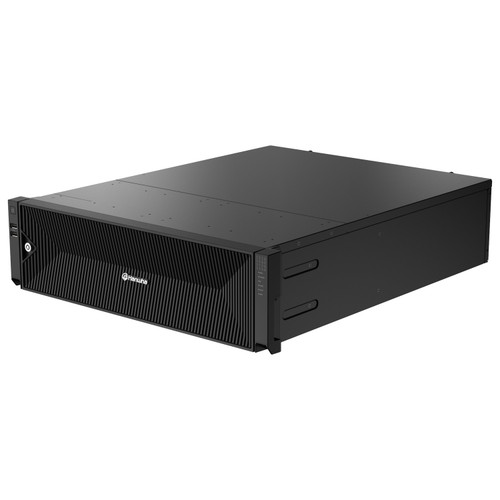
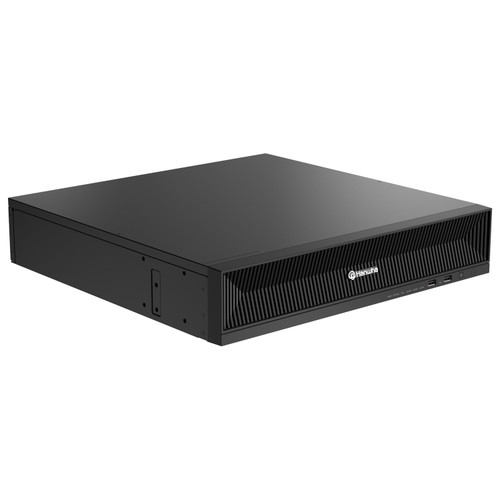
Both products are 64-channel network video recorders built on the same Hanwha XRN-6420DB4 platform, differentiated primarily by pre-configured storage. Product A (XRN-6420DB4) ships without HDDs installed, while Product B (XRN-6420DB4-128TB) arrives with 128TB pre-configured across its 16 SATA bays. Buyers evaluating large-scale enterprise surveillance deployments would legitimately cross-shop these two SKUs based on whether they prefer to source and seat their own drives or take a turnkey storage bundle. Both units are the same physical chassis targeting the same channel count and recorder class.
In This Guide
- How do recording capacity, channel count, and bandwidth compare between the two SKUs?
- Are there differences in physical build, power requirements, and operating environment between these two units?
- How do the two units compare on protocol support, VMS compatibility, and remote management features?
- Which should you choose: the XRN-6420DB4 or the XRN-6420DB4?
- Side-by-Side Specs
- FAQ
How do recording capacity, channel count, and bandwidth compare between the two SKUs?
Both units support 64 IP camera inputs and an identical maximum recording bandwidth of 520 Mbps. Resolution tiers are specified in detail for Product A: 32M at 15fps (H.265 only), 12M at 30fps (H.265 only), 8.3M at 4ch@30fps, 1080p at 16ch@30fps, 720p at 32ch@30fps, and D1 at 64ch@30fps. Product B lists 32MP at 30fps (multi-resolution) as its primary resolution claim but does not break out the full per-resolution frame-rate matrix provided by Product A.
On storage, both units use 16 SATA HDD bays with a specified maximum of 160TB in non-RAID mode and hot-swap capability. The key difference is that Product B arrives with 128TB pre-configured. Product A ships without HDDs (buyer-supplied), meaning usable capacity at delivery is 0TB versus 128TB. RAID 5/6 is listed for both, with Product A specifying an array size of 8 HDDs x 2 arrays. Product B confirms hot-swap HDD capability but does not repeat the per-array HDD count.
Playback bandwidth is specified only for Product A at up to 200 Mbps supporting 64CH simultaneously (Local 64CH, Remote 16CH per user). Product B does not provide a discrete playback bandwidth figure. Simultaneous playback maximum of 112CH (Local 64CH, Remote 16CH per user) and maximum 4 concurrent users (1 local, 3 remote) are stated for Product A only.
Are there differences in physical build, power requirements, and operating environment between these two units?
Product A provides a comprehensive physical specification: dimensions 440.0 x 132.0 x 571.1 mm, weight approximately 15.1 kg (HDD not included), color/material Black/Metal, input voltage 100–240 VAC ±10% at 50/60 Hz drawing 2.7A via Dual SMPS, and maximum power consumption of 265W (904.2 BTU with 16 HDDs installed). Operating temperature is 0°C to +40°C and operating humidity is 20%–85% RH.
Product B confirms the same weight (approximately 15.1 kg, HDD not included), the same maximum power of 265W, the same operating temperature range (0°C to +40°C), and the same Black/Metal color and material designation. Dimensions are not explicitly restated in Product B's spec block. Notably, Product B adds certifications not listed for Product A: NDAA-compliant and TPM 2.0 integrated, and explicitly calls out cybersecurity features (TPM 2.0, Embedded Linux). Product A does not reference NDAA compliance or TPM in its provided specifications.
Both units share Dual SMPS power supply architecture (inferred from Product A's spec; Product B does not explicitly restate this). The shared 265W maximum draw and identical thermal and humidity operating ranges confirm these are the same chassis from an environmental and power-planning standpoint.
How do the two units compare on protocol support, VMS compatibility, and remote management features?
Product A provides an extensive protocol and integration specification. Supported protocols include SUNAPI, ONVIF, RTP, RTSP, HTTP, and CGI (SUNAPI). Remote access supports up to 10 live unicast users and 3 search users. Mobile support covers iOS and Android. Browser support includes Google Chrome, Microsoft Edge, and Mac Safari on Windows 10 or higher and macOS 13.5.2 or higher. Failover mode N+1 and ARB (Automatic Recovery Backup) are both listed. Event triggers include Alarm Input, Video Loss, Sensor, Motion, and Analytics. Event actions include E-Mail, Push, PTZ Preset, Alarm Out, Buzzer, FTP, and SUNAPI.
Product B lists VMS compatibility as ONVIF, SUNAPI, Wisenet Viewer, and Wisenet Mobile, and confirms two-way audio and PoE compatibility. It does not specify the maximum number of remote users, failover mode, ARB support, browser compatibility list, supported OS versions, event trigger categories, or event action options. The addition of Wisenet Viewer and Wisenet Mobile as named VMS/app compatibility entries is specific to Product B's spec block and not explicitly named in Product A.
Product A specifies PTZ preset support at 300 presets, camera setup options including Simple Focus, Brightness/Contrast, Flip/Mirror, IRIS, WDR, D&N, SSNR, Shutter, SSDR, DIS, and Fisheye Dewarping (Local 1CH), and camera motion detection with 4- and 8-point polygon zones. These granular integration parameters are absent from Product B's specification. Log capacity of 100,000 entries each for System Log and Event Log is stated only for Product A.
Which should you choose: the XRN-6420DB4 or the XRN-6420DB4?
Our take: The XRN-6420DB4-128TB (Product B) is the stronger choice when immediate deployment with zero drive-sourcing lead time is the priority, as it arrives pre-configured with 128TB across 16 hot-swap SATA bays versus Product A's bare chassis requiring buyer-supplied HDDs. Product B also explicitly lists NDAA compliance and TPM 2.0 integration — certifications absent from Product A's provided specifications — which are non-negotiable for many government and enterprise procurement requirements. However, Product A carries a substantially more detailed specification profile: it documents 200 Mbps playback bandwidth, N+1 failover, ARB, 300 PTZ presets, a full per-resolution frame-rate matrix, 4-user concurrent access limits, 100,000-entry log capacity, and broad browser/OS compatibility. Buyers running Wisenet Viewer or Wisenet Mobile should note Product B explicitly confirms those integrations. For installations requiring NDAA compliance or turnkey storage, choose Product B. For integrators who need verified failover, ARB, and deep PTZ management documented before design sign-off, Product A's spec sheet provides that assurance.
Side-by-Side Comparison
Spec-for-spec, from manufacturer data.
| Specification | Hanwha XRN-6420DB4 | Hanwha XRN-6420DB4 |
|---|---|---|
| SKU | XRN-6420DB4 | XRN-6420DB4-128TB |
| Max Camera Inputs | 64 CH | 64 CH |
| Max Recording Resolution | 32MP @ 15fps (H.265 only) | 32MP @ 30fps (multi-resolution) |
| Recording Bandwidth | 520 Mbps | 520 Mbps |
| Playback Bandwidth | 200 Mbps (64CH simultaneous) | — |
| HDD Bays | 16 SATA, hot-swap | 16 SATA, hot-swap |
| Pre-installed Storage | None (buyer-supplied) | 128TB pre-configured |
| Max Storage Capacity | 160TB (non-RAID) | 160TB (expandable) |
| RAID Support | RAID 5/6 (8 HDDs x 2 arrays) | RAID 5/6 |
| Video Compression | H.265, H.264, MJPEG | H.265, H.264, MJPEG |
| Local Display Output | Dual HDMI: 4K@30Hz + 1080p@60Hz | — |
| Max Concurrent Users | 4 (1 local, 3 remote) | — |
| Failover / ARB | N+1 failover; ARB supported | — |
| NDAA Compliance | — | NDAA-compliant |
| Cybersecurity / TPM | — | TPM 2.0; Embedded Linux |
| Max Power | 265W (904.2 BTU with 16 HDDs) | 265W |
| Operating Temp | 0°C to +40°C | 0°C to +40°C |
| Weight (no HDDs) | ~15.1 kg (33.3 lb) | ~15.1 kg (33.3 lb) |
| Network Ports | RJ-45 3EA (LAN/WAN, 1Gbps) | RJ-45 3EA (LAN/WAN, 1Gbps) |
| OS | Embedded Linux | Embedded Linux |
| ONVIF | Yes | Yes |
Frequently Asked Questions
Which should you choose: the XRN-6420DB4 or the XRN-6420DB4?
The XRN-6420DB4-128TB (Product B) is the stronger choice when immediate deployment with zero drive-sourcing lead time is the priority, as it arrives pre-configured with 128TB across 16 hot-swap SATA bays versus Product A's bare chassis requiring buyer-supplied HDDs. Product B also explicitly lists NDAA compliance and TPM 2.0 integration — certifications absent from Product A's provided specifications — which are non-negotiable for many government and enterprise procurement requirements. However, Product A carries a substantially more detailed specification profile: it documents 200 Mbps playback bandwidth, N+1 failover, ARB, 300 PTZ presets, a full per-resolution frame-rate matrix, 4-user concurrent access limits, 100,000-entry log capacity, and broad browser/OS compatibility. Buyers running Wisenet Viewer or Wisenet Mobile should note Product B explicitly confirms those integrations. For installations requiring NDAA compliance or turnkey storage, choose Product B. For integrators who need verified failover, ARB, and deep PTZ management documented before design sign-off, Product A's spec sheet provides that assurance.
Is there any real hardware difference between the XRN-6420DB4 and the XRN-6420DB4-128TB, or is it just storage?
Based on the provided specifications, the two SKUs share the same chassis dimensions, 15.1 kg weight, 265W max power draw, 16 SATA bays, 520 Mbps recording bandwidth, dual SMPS power supply, and operating environment. The principal documented difference is that the XRN-6420DB4-128TB arrives with 128TB of HDDs pre-installed (expandable to 160TB), while the base XRN-6420DB4 ships without drives. Product B's spec block also adds NDAA compliance and TPM 2.0 listings not present in Product A's specifications.
Does either unit support RAID, and is one more protected against drive failure than the other?
Both units list RAID 5/6 support with hot-swap HDD capability. Product A specifies the array configuration as 8 HDDs x 2 arrays. Product B confirms RAID 5/6 and hot-swap but does not restate the per-array HDD count. Neither spec indicates a difference in RAID implementation; the protection level appears identical based on available data.
Which NVR is better suited for a government or NDAA-restricted deployment?
Product B (XRN-6420DB4-128TB) explicitly lists NDAA-compliant and TPM 2.0 certifications in its provided specifications. Product A's provided specifications do not include an NDAA compliance statement or TPM reference. Buyers with NDAA procurement requirements should verify compliance documentation independently, but based solely on the specs provided here, Product B is the only one of the two with an explicit NDAA-compliant listing.
Get a Second Opinion on Your Camera Choice
Share your site layout, coverage goals, and budget. Our team will validate the camera selection, flag anything we would change, and recommend products that match the use case.