
Hanwha XRN-420S-2TB vs Speco Technologies D4WVN6TB: Specification Comparison
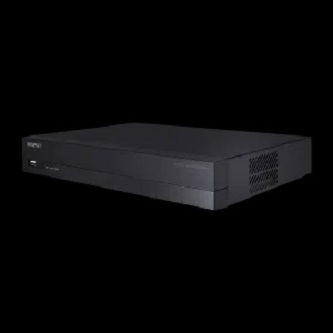
Both the Hanwha XRN-420S-2TB and the Speco D4WVN6TB are four-channel, wall-mount recorders with 6TB of onboard storage and H.265 compression, but they represent fundamentally different recording architectures. The Hanwha is an IP NVR designed for network-connected cameras, while the Speco is a TVI DVR built for analog high-definition coaxial-cable cameras. A buyer selecting a four-channel recording solution for a new or hybrid installation may legitimately evaluate both, particularly when deciding between an IP-camera infrastructure and a coax-based one.
In This Guide
- Which recording technology and camera ecosystem does each unit support?
- How does each unit deliver power to cameras, and what are the physical installation constraints?
- What analytics, third-party integration, and compliance certifications does each recorder offer?
- Which should you choose: the XRN-420S-2TB or the D4WVN6TB?
- Side-by-Side Specs
- FAQ
Which recording technology and camera ecosystem does each unit support?
The Hanwha XRN-420S-2TB is a Network Video Recorder (NVR) that accepts IP camera streams over Ethernet. It supports ONVIF, Hanwha SUNAPI, and Axis Camera Station VMS protocols, giving it broad third-party IP camera compatibility. Maximum recorded resolution is 8MP at a combined 120fps across all four channels. H.265 is the sole compression standard listed.
The Speco D4WVN6TB is a 4K TVI Digital Video Recorder (DVR) that accepts analog TVI camera signals over coaxial cable. Its VMS compatibility is listed only as '4K TVI,' indicating a closed coaxial ecosystem rather than open IP networking. It supports both H.265 and H.264 compression. No maximum per-channel or aggregate frame rate is specified in the provided data.
The practical consequence: the Hanwha requires Cat5e/6 cabling and IP cameras; the Speco requires coaxial runs and TVI cameras. These two infrastructures are not interchangeable. Buyers migrating from legacy analog systems may favor the Speco to preserve existing coax; greenfield or IP-first installations would require the Hanwha.
How does each unit deliver power to cameras, and what are the physical installation constraints?
The Hanwha XRN-420S-2TB provides four PoE ports rated to IEEE 802.3af (standard PoE) with a 50W total power budget, meaning an average of 12.5W per port. This is sufficient for most fixed IP cameras but may be limiting for PTZ cameras or cameras with built-in heaters that draw closer to 15W. The unit mounts on a wall; no dimensions or weight are provided in the specifications.
The Speco D4WVN6TB ships with PoE+ (802.3at) capability, which supports up to 30W per port—double the per-port ceiling of 802.3af. This matters for high-draw IP cameras, though the D4WVN6TB's primary camera interface is TVI coax, not Ethernet. The unit weighs 8.0 lbs and measures 17.5 × 15.5 × 4.8 inches. Its mount type listing includes wall, ceiling, pole, pendant, corner, and rack options—significantly more flexible than the Hanwha's wall-only spec.
The Speco also carries IP67 ingress protection and an IK10 impact rating, qualifying it for harsher environments such as exposed utility rooms or outdoor enclosures. No environmental or impact rating is listed for the Hanwha.
What analytics, third-party integration, and compliance certifications does each recorder offer?
The Hanwha XRN-420S-2TB offers AI Search (restricted to Wisenet AI cameras), Object Attribute detection, Video Analytics, and Motion Detection. The AI Search limitation is significant: buyers must pair the NVR with Hanwha's own AI camera line to unlock that capability. ONVIF and SUNAPI support enables broad IP camera integration beyond Hanwha, and Axis Camera Station VMS compatibility is explicitly listed.
The Speco D4WVN6TB lists 'Analytics' without further detail in the provided specifications. No specific analytics types, AI capabilities, or VMS integration protocols beyond '4K TVI' are documented. Two-way audio with a built-in microphone is present—a feature not listed for the Hanwha, which offers only selectable audio recording from the camera source.
On compliance, the Speco holds both TAA and NDAA certifications, which are mandatory for federal government, DOD, and many state and local government projects. No NDAA or TAA certification is listed for the Hanwha XRN-420S-2TB, which would disqualify it from those procurement channels. The Hanwha carries a five-year warranty versus Speco's three-year warranty.
Which should you choose: the XRN-420S-2TB or the D4WVN6TB?
Our take: The XRN-420S-2TB is the stronger choice when the installation is IP-camera-based and the buyer prioritizes advanced analytics, deeper VMS integration, and a longer warranty. Its 8MP ONVIF/SUNAPI/Axis Camera Station support, five-year warranty, and AI-capable analytics (with Wisenet cameras) deliver a richer feature set for modern IP deployments. The Speco D4WVN6TB is the correct choice when the project involves existing coaxial infrastructure, demands NDAA/TAA compliance for government procurement, or requires installation flexibility beyond a single wall-mount position—its IK10/IP67 ratings and six mount-type options also suit harsher physical environments. Neither unit is a substitute for the other: the Hanwha requires Ethernet and IP cameras; the Speco requires coax and TVI cameras. Platform lock-in is the decisive factor—choose the recorder that matches your camera cabling infrastructure.
Side-by-Side Comparison
Spec-for-spec, from manufacturer data.
| Specification | Hanwha XRN-420S-2TB | Speco Technologies D4WVN6TB |
|---|---|---|
| Recorder Type | IP NVR | TVI DVR |
| Channels | 4 | 4 |
| Max Resolution | 8MP | 4K TVI |
| Video Compression | H.265 | H.265; H.264 |
| Storage Capacity | 6TB | 6TB |
| Local Storage | microSD | — |
| PoE Standard | 802.3af (standard PoE) | 802.3at (PoE+) |
| Total PoE Budget | 50W | — |
| Frame Rate | 120fps @ 8MP (combined) | — |
| ONVIF | Yes | Yes |
| VMS Compatibility | ONVIF; SUNAPI; Axis Camera Station | 4K TVI |
| Analytics | AI Search (Wisenet AI only); Object Attribute; Video Analytics; Motion Detection | Analytics (detail not specified) |
| Audio | Selectable camera-source recording | Two-way; Built-in mic |
| Mount Type | Wall | Wall; Ceiling; Pole; Pendant; Corner; Rack |
| IP / IK Rating | — | IP67 / IK10 |
| NDAA / TAA Certified | — | Yes (both) |
| Warranty | 5 years | 3 years |
| Housing Color | White | White |
Frequently Asked Questions
Which should you choose: the XRN-420S-2TB or the D4WVN6TB?
The XRN-420S-2TB is the stronger choice when the installation is IP-camera-based and the buyer prioritizes advanced analytics, deeper VMS integration, and a longer warranty. Its 8MP ONVIF/SUNAPI/Axis Camera Station support, five-year warranty, and AI-capable analytics (with Wisenet cameras) deliver a richer feature set for modern IP deployments. The Speco D4WVN6TB is the correct choice when the project involves existing coaxial infrastructure, demands NDAA/TAA compliance for government procurement, or requires installation flexibility beyond a single wall-mount position—its IK10/IP67 ratings and six mount-type options also suit harsher physical environments. Neither unit is a substitute for the other: the Hanwha requires Ethernet and IP cameras; the Speco requires coax and TVI cameras. Platform lock-in is the decisive factor—choose the recorder that matches your camera cabling infrastructure.
Can I use my existing analog cameras with the Hanwha XRN-420S-2TB?
No. The XRN-420S-2TB is an IP NVR that accepts only network-connected IP cameras over Ethernet. Analog or TVI cameras connect via coaxial cable and require a DVR or hybrid recorder. If you have existing analog cameras, the Speco D4WVN6TB's TVI architecture is the appropriate platform.
Is either recorder approved for federal government or NDAA-compliant projects?
Only the Speco D4WVN6TB carries documented NDAA and TAA certifications based on the provided specifications. No NDAA or TAA certification is listed for the Hanwha XRN-420S-2TB, which would make it ineligible for procurement programs that require those certifications.
Which unit offers better PoE power per camera port?
The Speco D4WVN6TB provides PoE+ (802.3at) capable of up to 30W per port. The Hanwha XRN-420S-2TB provides standard PoE (802.3af) with a 50W total budget shared across four ports, averaging roughly 12.5W per port. For high-draw devices such as PTZ cameras with heaters, the Speco's PoE+ rating offers more headroom per port—though note that the Speco's primary camera interface is TVI coax, not Ethernet PoE.
Get a Second Opinion on Your Camera Choice
Share your site layout, coverage goals, and budget. Our team will validate the camera selection, flag anything we would change, and recommend products that match the use case.