
Hanwha XNO-6080R vs i-PRO X15300-V3L: Specification Comparison
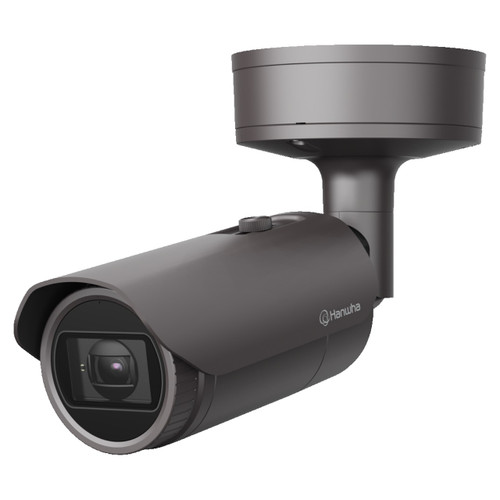
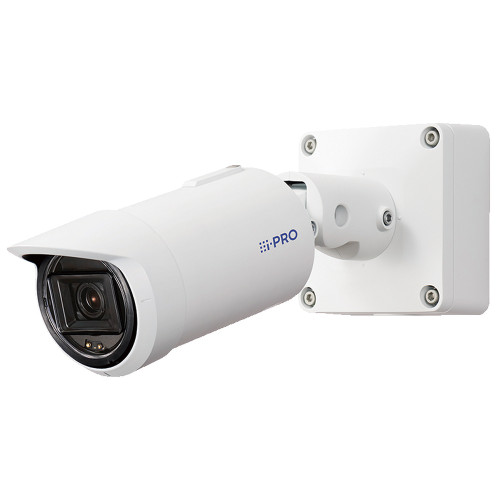
Both the Hanwha XNO-6080R and the i-PRO WV-X15300-V3L are 2MP outdoor bullet IP cameras targeting commercial and light-industrial surveillance installations. They share the same resolution class, bullet form factor, IP66/IP67 and IK10 ratings, and wired PoE connectivity, making them genuine cross-shop candidates for integrators evaluating mid-range outdoor fixed cameras with motorized varifocal lenses, on-board IR, and edge analytics. The comparison below is derived strictly from the manufacturer specifications provided for each model.
In This Guide
How do the imaging specs compare?
Both cameras use an approximately 1/2.8-inch CMOS sensor at 1920×1080 (2MP). The Hanwha XNO-6080R offers a 2.8–12 mm motorized varifocal lens with a 4.3x optical zoom ratio and a maximum aperture of F1.4 (wide) / F3.6 (tele), yielding a horizontal field of view of 119.5° at the wide end. The i-PRO WV-X15300-V3L uses a 2.9–9 mm motorized zoom / motorized focus lens providing 3.1x optical zoom, a maximum aperture of F1.3 (wide) / F2.5 (tele), and a horizontal field of view of 37–117° (16:9). The i-PRO lens is slightly wider in aperture at the wide end (F1.3 vs F1.4) and provides DORI distance data: Detect at 23.5 m (wide) to 114.8 m (tele); no equivalent DORI data is provided for the XNO-6080R. The Hanwha lens offers meaningfully more reach — 4.3x vs 3.1x optical zoom — and covers a wider horizontal angle of view at its maximum wide setting.
On low-light performance, the XNO-6080R is specified at 0.015 lux (color) and 0 lux (IR active), with an IR illumination range of 50 m (164 ft) and a 150 dB Wide Dynamic Range (WDR). The WV-X15300-V3L is rated at 0.007 lux color and 0.005 lux (B&W), also reaching 0 lux with IR active, with an IR range of 70 m (230 ft) and a maximum Super Dynamic range of 144 dB. The i-PRO unit therefore outreaches the Hanwha in IR distance by 20 m and achieves a lower color minimum illumination figure, while the Hanwha claims a wider dynamic range (150 dB vs 144 dB). Both support digital noise reduction and image stabilization; the i-PRO specifies a gyro sensor for its stabilizer while the Hanwha lists digital stabilization. Maximum frame rate is 60 fps on both cameras.
What about installation and environment?
Both cameras share IP66/IP67 and NEMA 4X environmental ratings and IK10 impact resistance, and both are rated for an operating temperature range of -40°C to +55°C (-40°F to +131°F). The i-PRO WV-X15300-V3L additionally specifies wind resistance up to 40 m/s (~89 mph) and lists a lower operating humidity floor of 10% (no condensation), while the Hanwha XNO-6080R is rated up to 90% RH. No wind resistance figure is provided for the XNO-6080R.
On power, the XNO-6080R accepts PoE (IEEE 802.3af, Class 3) or 12 VDC / 24 VAC, with a maximum draw of 12.95 W — a notable advantage for retrofits where only standard PoE switches are available. The WV-X15300-V3L requires PoE+ (802.3at, Class 4, 14 W) and DC 12 V; it does not list 24 VAC support. Form factor dimensions are similar — the Hanwha measures ø91 × 368.6 mm at 2.18 kg, and the i-PRO measures 133 × 133 × 383 mm at approximately 2.5 kg. Mounting flexibility on the i-PRO is documented with explicit ceiling (±180° pan, 0–100° tilt) and wall (±100° tilt) adjustment ranges; equivalent mounting adjustment data is not provided in the Hanwha spec sheet.
Which fits your VMS and analytics better?
Both cameras declare ONVIF Profile S, G, and T compliance. The i-PRO WV-X15300-V3L additionally declares ONVIF Profile M, which covers metadata streaming for analytics events — relevant for VMS platforms that consume standardized analytic metadata. The Hanwha XNO-6080R exposes SUNAPI (HTTP API) and Wisenet Open Platform in addition to ONVIF, giving it tighter native integration with Wisenet VMS and compatible third-party platforms. Security credentials differ: the i-PRO lists FIPS 140-2 Level 3, secure boot, and signed firmware; the Hanwha lists HTTPS/SSL, digest authentication, IP filtering, user access logging, and 802.1X (EAP-TLS, EAP-LEAP) but does not cite FIPS 140-2, secure boot, or signed firmware. Both support SNMPv1/v2c/v3, SRTP, and LLDP. Simultaneous users are specified at up to 20 (unicast) for the Hanwha and up to 14 for the i-PRO.
Analytics breadth is wider on the Hanwha XNO-6080R, which lists defocus detection, directional detection, fog detection, face detection, motion detection, digital auto tracking, appear/disappear, enter/exit, loitering, tampering, virtual line, audio detection, and sound classification — all specified in the provided data. The i-PRO WV-X15300-V3L specifies an AI video detection suite, AI sound classification (gunshot, yell, vehicle horn, glass break), Video Motion Detection (4 areas), and Scene Change Detection (1 area); broader AI analytics are referenced but not individually enumerated in the supplied spec. Both cameras include a microSD/SDXC slot supporting up to 512 GB. The Hanwha provides dual microSD slots; the i-PRO lists a single microSD slot. Audio support is present on both: the Hanwha offers a selectable mic/line in and line out; the i-PRO provides a 3.5 mm stereo input and a 3.5 mm mono output. Alarm I/O is 1 in / 1 out on the Hanwha versus 3 in / 1 in (alarm) + 1 AUX out on the i-PRO.
Which should you choose: the XNO-6080R or the X15300-V3L?
Our take: The XNO-6080R is the stronger choice when the installation demands greater optical reach, standard PoE infrastructure, or the widest available WDR headroom. Its 4.3x motorized zoom versus the i-PRO's 3.1x provides meaningfully more flexibility for distant target coverage, and its 150 dB WDR edges the i-PRO's 144 dB in high-contrast scenes. Crucially, its PoE Class 3 (802.3af) draw of 12.95 W avoids the PoE+ switch requirement imposed by the i-PRO's Class 4 / 14 W demand — a real cost factor on large deployments. The WV-X15300-V3L counters with a longer 70 m IR range (vs 50 m), a lower specified color minimum illumination (0.007 lux vs 0.015 lux), ONVIF Profile M for richer analytics metadata streaming, FIPS 140-2 Level 3 / secure boot / signed firmware for high-assurance networks, and a 5-year warranty versus the Hanwha's 3-year coverage. Choose the i-PRO where cybersecurity certifications, extended IR reach, or government/enterprise security compliance requirements dominate the decision criteria.
Side-by-Side Comparison
Spec-for-spec, from manufacturer data.
| Specification | Hanwha XNO-6080R | i-PRO X15300-V3L |
|---|---|---|
| Resolution | 2MP (1920×1080) | 2MP (1920×1080) |
| Image Sensor | 1/2.8" CMOS | Approx. 1/2.8" type CMOS |
| Lens / Focal Length | 2.8–12 mm motorized varifocal (4.3x) | 2.9–9 mm motorized zoom/focus (3.1x optical, up to 9.3x digital) |
| Max Aperture | F1.4 (wide) / F3.6 (tele) | F1.3 (wide) / F2.5 (tele) |
| Horizontal Field of View | 119.5° (wide) | 37–117° (16:9) |
| Min Illumination (Color) | 0.015 lux | 0.007 lux @ 30IRE |
| Min Illumination (B&W / IR) | 0 lux (IR) | 0.005 lux (B&W) / 0 lux (IR) |
| IR Range | 50 m (164 ft) | 70 m (230 ft) |
| Wide Dynamic Range | 150 dB | 144 dB (Super Dynamic, level 31) |
| Max Frame Rate | 60 fps | 60 fps |
| Video Compression | H.265, H.264, MJPEG | H.265, H.264, MJPEG |
| IP Rating | IP66 / IP67 / NEMA 4X | IP66 / IP67 / NEMA 4X (Type 4X) |
| Impact Rating | IK10 | IK10 |
| Operating Temperature | -40°C to +55°C | -40°C to +55°C (power-on: -30°C to +55°C) |
| Power Input / PoE Class | PoE 802.3af Class 3 / 12 VDC / 24 VAC; max 12.95 W | PoE+ 802.3at Class 4 / DC 12 V; 14 W |
| Edge Storage | Dual microSD/SDHC/SDXC up to 512 GB | Single microSD/SDHC/SDXC up to 512 GB |
| Alarm I/O | 1 input / 1 output | 3 alarm IN / 1 alarm OUT / 1 AUX OUT |
| ONVIF Profiles | S / G / T | S / G / T / M |
| Cybersecurity Certifications | HTTPS, 802.1X (EAP-TLS, EAP-LEAP), SNMPv3 | FIPS 140-2 Level 3, secure boot, signed firmware, 802.1X, HTTPS |
| Dimensions | ø91 × 368.6 mm (ø3.58" × 14.51") | 133 × 133 × 383 mm (5-1/4" × 5-1/4" × 15-3/32") |
| Weight | 2.18 kg (4.8 lb) | Approx. 2.5 kg (5.6 lb) |
| Warranty | 3 years | 5 years |
Frequently Asked Questions
Which should you choose: the XNO-6080R or the X15300-V3L?
The XNO-6080R is the stronger choice when the installation demands greater optical reach, standard PoE infrastructure, or the widest available WDR headroom. Its 4.3x motorized zoom versus the i-PRO's 3.1x provides meaningfully more flexibility for distant target coverage, and its 150 dB WDR edges the i-PRO's 144 dB in high-contrast scenes. Crucially, its PoE Class 3 (802.3af) draw of 12.95 W avoids the PoE+ switch requirement imposed by the i-PRO's Class 4 / 14 W demand — a real cost factor on large deployments. The WV-X15300-V3L counters with a longer 70 m IR range (vs 50 m), a lower specified color minimum illumination (0.007 lux vs 0.015 lux), ONVIF Profile M for richer analytics metadata streaming, FIPS 140-2 Level 3 / secure boot / signed firmware for high-assurance networks, and a 5-year warranty versus the Hanwha's 3-year coverage. Choose the i-PRO where cybersecurity certifications, extended IR reach, or government/enterprise security compliance requirements dominate the decision criteria.
Is the XNO-6080R or WV-X15300-V3L better for low-light performance?
Based on the provided specifications, the i-PRO WV-X15300-V3L has a lower rated color minimum illumination (0.007 lux vs 0.015 lux for the Hanwha) and a longer IR illumination range of 70 m versus the Hanwha's 50 m. Both cameras reach 0 lux with IR active. The Hanwha counters with a higher specified WDR of 150 dB versus the i-PRO's 144 dB, which may benefit scenes with simultaneous bright and dark areas rather than pure low-light conditions.
Can both cameras run on a standard PoE switch, or do I need PoE+?
The Hanwha XNO-6080R is specified for standard PoE (IEEE 802.3af, Class 3, max 12.95 W) and also accepts 12 VDC or 24 VAC, so it will operate on any 802.3af-capable switch or injector. The i-PRO WV-X15300-V3L requires PoE+ (802.3at, Class 4, 14 W); a standard 802.3af port will not supply sufficient power. If your existing infrastructure is 802.3af only, the XNO-6080R is compatible without switch upgrades.
Which camera has stronger cybersecurity features for enterprise or government installations?
The i-PRO WV-X15300-V3L provides FIPS 140-2 Level 3 compliance, secure boot, and signed firmware — credentials not listed in the Hanwha XNO-6080R specification. Both cameras support HTTPS, 802.1X authentication, SNMPv3, and SRTP. If a deployment requires FIPS 140-2 certification or verifiable firmware integrity through secure boot and signed firmware, the i-PRO meets those requirements based on the specs provided; equivalent certifications are not stated for the XNO-6080R.
Get a Second Opinion on Your Camera Choice
Share your site layout, coverage goals, and budget. Our team will validate the camera selection, flag anything we would change, and recommend products that match the use case.