
Hanwha XNO-6080R vs i-PRO U1532LA: Specification Comparison
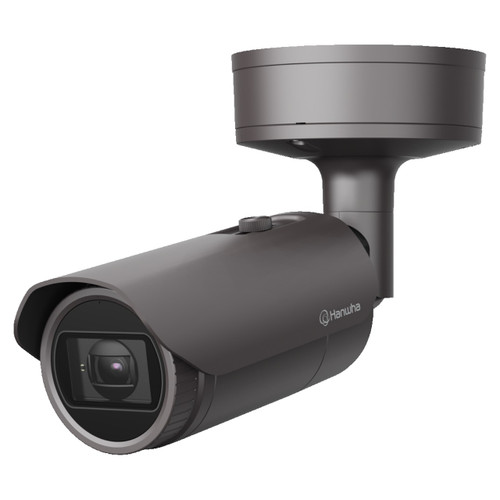
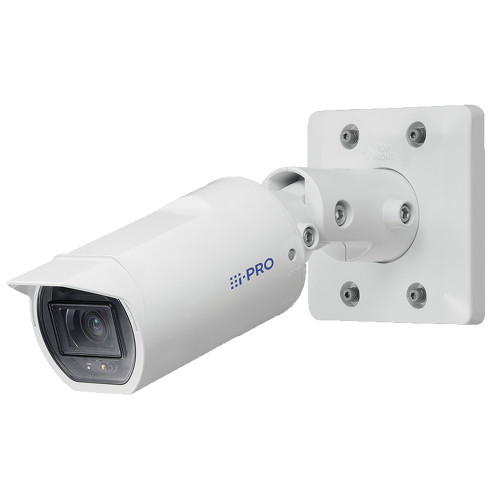
Both the Hanwha XNO-6080R and the i-PRO WV-U1532LA are 2MP outdoor bullet IP cameras designed for perimeter and general-purpose surveillance. They share a fixed (non-PTZ) form factor, wired PoE connectivity, motorized varifocal lenses, built-in IR illumination, and IP66/IK10 environmental ratings. A buyer evaluating either is likely looking for a cost-effective, ruggedized 2MP bullet with remote lens adjustment. The comparison below is drawn strictly from the provided specifications for each model.
In This Guide
How do the imaging specs compare?
The XNO-6080R uses a 1/2.8" CMOS sensor and achieves a minimum illumination of 0.015 lux in color and 0 lux in IR mode, with a 150 dB Wide Dynamic Range. Its motorized varifocal lens spans 2.8–12 mm (4.3x optical zoom) with a maximum aperture of F1.4 at wide end. The WV-U1532LA uses an approximately 1/3" CMOS sensor, with minimum illumination specified at 0.1 lux color and 0.04 lux B/W. Its Super Dynamic mode delivers up to 120 dB dynamic range (at level 31). Its motorized varifocal lens covers 2.9–7.3 mm (2.5x optical zoom, extendable to 3.8x at 720p), with a maximum aperture of F2.0 at wide end. On sensor size, aperture, low-light sensitivity, and WDR headroom, the XNO-6080R holds a measurable advantage across all four metrics.
On IR illumination, the XNO-6080R's built-in IR covers 50 m (164 ft), while the WV-U1532LA's IR is rated at 30 m (98 ft). The XNO-6080R also supports digital image stabilization, defog, and a broader analytics suite including directional detection, loitering, and sound classification. The WV-U1532LA offers scene change detection and fog compensation (0–8 levels), plus extra optical zoom at reduced resolution. Both cameras support H.265, H.264, and MJPEG compression, and both are rated at 30 fps at maximum resolution.
What about installation and environment?
Both cameras carry IP66 weatherproofing and IK10 impact resistance. The XNO-6080R adds IP67 and NEMA 4X ratings as well. Operating temperature for the XNO-6080R spans -40°C to +55°C (-40°F to +131°F), versus -30°C to +50°C (-22°F to +122°F) for the WV-U1532LA — a meaningful difference for installations in extreme cold or heat. The WV-U1532LA specifies wind resistance up to 40 m/s (~89 mph) and includes an anti-condensation system (Temish element); neither of these is specified for the XNO-6080R.
Both cameras are PoE 802.3af powered. The XNO-6080R draws up to 12.95 W (PoE Class 3) and also accepts 12 VDC or 24 VAC. The WV-U1532LA draws 6.7 W (PoE Class 0), making it significantly more power-efficient and compatible with a wider range of PoE switches without budget concerns. The XNO-6080R is substantially larger and heavier (ø91 × 368.6 mm, 2,180 g) compared to the WV-U1532LA (112.5 × 112.5 × 262 mm, 860 g), which may affect mounting hardware requirements and wind loading at exposed sites. The XNO-6080R offers two MicroSD card slots (up to 512 GB total); the WV-U1532LA has one microSD slot (up to 512 GB).
Which fits your VMS and analytics better?
Both cameras support ONVIF Profile S, G, and T, ensuring broad VMS compatibility. The XNO-6080R additionally exposes SUNAPI (HTTP API) and the Wisenet Open Platform for deeper integration with Hanwha's own ecosystem. The WV-U1532LA supports MQTT and LLDP protocols not explicitly listed for the XNO-6080R, and specifies compatibility with iOS and Android mobile terminals. The XNO-6080R supports up to 20 simultaneous unicast users and up to 10 streaming profiles; the WV-U1532LA supports up to 14 simultaneous users.
Analytics depth differs considerably. The XNO-6080R specifies defocus detection, directional detection, fog detection, face detection, digital auto tracking, appear/disappear, enter/exit, loitering, tampering, virtual line, audio detection, and sound classification — all on-camera. The WV-U1532LA's on-camera analytics are limited per the provided specs to VMD (4 areas) and scene change detection. The XNO-6080R includes a dedicated audio input (mic-in/line-in selectable) and line-level audio output; the WV-U1532LA's specifications list no audio input or output terminals and no audio compression format. The XNO-6080R also provides 8 polygonal motion detection zones versus 4 rectangular areas on the WV-U1532LA, and 32 privacy masking zones versus 8.
Which should you choose: the XNO-6080R or the U1532LA?
Our take: The XNO-6080R is the stronger choice when on-camera analytics depth, extended IR range, and extreme-temperature performance are priorities. Its 150 dB WDR outpaces the WV-U1532LA's 120 dB by 30 dB, its IR reach of 50 m doubles the WV-U1532LA's 30 m, and its operating range extends to -40°C versus -30°C — a critical gap for cold-climate installs. It also delivers a richer analytics library and two-way audio natively. The WV-U1532LA is a compelling alternative where power budget matters: at 6.7 W (PoE Class 0) versus 12.95 W (Class 3), it places far less demand on PoE infrastructure and is substantially lighter (860 g vs 2,180 g), easing bracket and conduit loads. The WV-U1532LA's five-year warranty versus the XNO-6080R's three-year warranty also reduces long-term service risk. Buyers on Hanwha's VMS (Wisenet WAVE) or needing edge AI analytics should favor the XNO-6080R; those on i-PRO's ecosystem or power-constrained deployments should consider the WV-U1532LA.
Side-by-Side Comparison
Spec-for-spec, from manufacturer data.
| Specification | Hanwha XNO-6080R | i-PRO U1532LA |
|---|---|---|
| Resolution | 2MP (1920×1080) | 2MP (1920×1080) |
| Image Sensor | 1/2.8" CMOS | Approx. 1/3" CMOS |
| Lens / Focal Length | 2.8–12mm motorized varifocal (4.3x) | 2.9–7.3mm motorized varifocal (2.5x) |
| Max Aperture (Wide) | F1.4 | F2.0 |
| Min Illumination (Color / B&W) | 0.015 lux color / 0 lux IR | 0.1 lux color / 0.04 lux B/W |
| IR Range | 50 m (164 ft) | 30 m (98 ft) |
| Wide Dynamic Range | 150 dB | 120 dB (Super Dynamic, Level 31) |
| Max Frame Rate | 60 fps | 30 fps |
| Video Compression | H.265, H.264, MJPEG | H.265, H.264, MJPEG |
| IP Rating | IP67 / IP66 / NEMA 4X | IP66 / NEMA 4X |
| Impact Rating | IK10 | IK10 |
| Operating Temperature | -40°C to +55°C | -30°C to +50°C |
| Power Input / PoE Class | PoE 802.3af Class 3 / 12 VDC / 24 VAC — 12.95 W max | PoE 802.3af Class 0 — 6.7 W |
| Edge Storage | 2x microSD/SDHC/SDXC up to 512 GB | 1x microSD up to 512 GB |
| Audio | Audio in (mic/line selectable) + line out | — (not specified) |
| On-Camera Analytics | Defocus, directional, fog, face, loitering, enter/exit, virtual line, sound classification, and more | VMD (4 areas), scene change detection |
| ONVIF Profiles | S / G / T | S / G / T |
| Dimensions | ø91 × 368.6 mm (ø3.85" × 14.51") | 112.5 × 112.5 × 262 mm (4-7/16" × 4-7/16" × 10-5/16") |
| Weight | 2,180 g (4.8 lb) | 860 g (1.90 lb) |
| Warranty | 3 years | 5 years |
Frequently Asked Questions
Which should you choose: the XNO-6080R or the U1532LA?
The XNO-6080R is the stronger choice when on-camera analytics depth, extended IR range, and extreme-temperature performance are priorities. Its 150 dB WDR outpaces the WV-U1532LA's 120 dB by 30 dB, its IR reach of 50 m doubles the WV-U1532LA's 30 m, and its operating range extends to -40°C versus -30°C — a critical gap for cold-climate installs. It also delivers a richer analytics library and two-way audio natively. The WV-U1532LA is a compelling alternative where power budget matters: at 6.7 W (PoE Class 0) versus 12.95 W (Class 3), it places far less demand on PoE infrastructure and is substantially lighter (860 g vs 2,180 g), easing bracket and conduit loads. The WV-U1532LA's five-year warranty versus the XNO-6080R's three-year warranty also reduces long-term service risk. Buyers on Hanwha's VMS (Wisenet WAVE) or needing edge AI analytics should favor the XNO-6080R; those on i-PRO's ecosystem or power-constrained deployments should consider the WV-U1532LA.
Is the XNO-6080R or WV-U1532LA better for low-light performance?
Based on the provided specifications, the XNO-6080R has a lower minimum illumination — 0.015 lux in color and 0 lux in IR mode — compared to the WV-U1532LA's 0.1 lux color and 0.04 lux B/W. The XNO-6080R also has a larger 1/2.8" sensor versus approximately 1/3" and a wider maximum aperture (F1.4 vs F2.0), and its IR range extends to 50 m versus 30 m. On every low-light metric in the provided specs, the XNO-6080R has the advantage.
Which camera puts less load on my PoE switch?
The WV-U1532LA draws only 6.7 W and is rated PoE Class 0 (802.3af), well within what most managed or unmanaged PoE switches can provide per port without budget concerns. The XNO-6080R draws up to 12.95 W at PoE Class 3, which is still within 802.3af limits (15.4 W) but consumes roughly twice the power. If you are powering many cameras from a switch with a total PoE watt budget, the WV-U1532LA is the more efficient choice.
Do both cameras work with third-party VMS platforms?
Yes. Both cameras support ONVIF Profile S, G, and T, which provides broad compatibility with third-party VMS platforms that implement those profiles. The XNO-6080R additionally offers SUNAPI (Hanwha's HTTP API) and the Wisenet Open Platform for deeper integration with Hanwha-native systems. The WV-U1532LA is i-PRO's platform but relies on ONVIF for third-party integration per the provided specifications.
Get a Second Opinion on Your Camera Choice
Share your site layout, coverage goals, and budget. Our team will validate the camera selection, flag anything we would change, and recommend products that match the use case.