
Hanwha XNF-9013RV vs Pelco SRXF3-12360-ERS: Specification Comparison
Both the Hanwha XNF-9013RV and the Pelco SRXF3-12360-ERS are 12MP outdoor fisheye IP cameras designed for 360° perimeter and area surveillance, powered via PoE+, and rated IK10/IP66. A buyer evaluating either would be selecting a single-sensor panoramic unit for open-area monitoring where wide-angle coverage eliminates the need for multiple fixed cameras. This comparison examines imaging performance, installation requirements, and VMS/analytics integration based strictly on published specifications for each model.
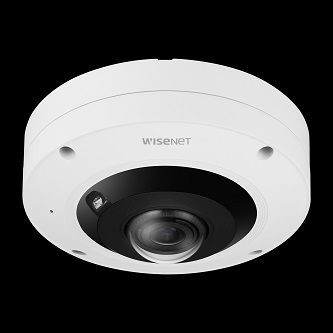
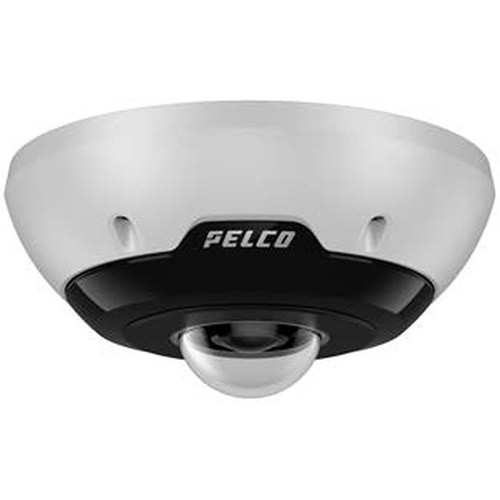
In This Guide
How do the imaging specs compare?
The Hanwha XNF-9013RV uses a 1/2.3" 12MP CMOS sensor producing a native 3008×3008 fisheye output at up to 30fps, with a 1.08mm f/2.2 fixed lens delivering a 187° angular field of view in all axes. Its minimum illumination is rated at 0.39 lux color and 0 lux with IR active (Wise IR, PoE: 8m / PoE+: 13m range). The camera features extremeWDR at 120dB. The Pelco SRXF3-12360-ERS produces a maximum resolution of 3840×2160 (also cited as 3520×1920 in one spec field), uses a 2.7mm f/2.0 lens, and captures at 12.5fps at full resolution. Its WDR is listed as up to 83dB. Pelco specs do not include a minimum illumination lux figure or sensor size.
Frame rate is a meaningful operational delta: the Hanwha delivers 30fps versus the Pelco's 12.5fps at full resolution, which affects motion clarity for fast-moving subjects. The Hanwha's extremeWDR at 120dB exceeds the Pelco's stated 83dB ceiling by 37dB — a material difference in mixed lighting environments such as building entrances with direct sunlight and shaded interiors. Both cameras include integrated IR illumination for day/night operation; however, the Hanwha specifies IR range (8m at PoE, 13m at PoE+) while the Pelco spec does not publish a rated IR distance.
What about installation and environment?
Both cameras share an IP66 ingress protection rating, IK10 impact resistance, NEMA 4X certification, and an operating temperature range of -40°C to +60°C, making them equally suited for exposed outdoor installations. Both are PoE+ powered (802.3af/at). The Hanwha additionally accepts 12VDC as an alternate input, which the Pelco spec does not list. The Hanwha's maximum power draw is specified at 12.95W; Pelco does not publish a wattage figure.
Physically, the Hanwha measures Ø160×72mm and weighs 1,170g (2.58 lb). The Pelco measures 153.5×153.5×71.3mm and weighs approximately 1.001kg (2.21 lb) with wall mount. The Hanwha spec lists a hanging mount accessory (SBP-167HMW) and skin cover (SBC-160BF). The Pelco spec lists Wall, Ceiling, Pole, Pendant, and Corner mount types, indicating broader out-of-the-box mounting flexibility as documented. The Hanwha includes 2 configurable alarm I/O ports; the Pelco spec does not list alarm I/O.
Which fits your VMS and analytics better?
The Hanwha XNF-9013RV supports ONVIF Profile S, G, T, and M, plus Hanwha's proprietary SUNAPI and Wisenet APIs. It encodes H.265, H.264 (Main/Baseline/High), and MJPEG, with WiseStream II and III smart codec compression. It supports up to 20 unicast users, 10 streaming profiles, and 5 virtual channels. The Pelco SRXF3-12360-ERS supports ONVIF Profile S and T, and encodes H.264 (H.265 is listed in one spec field but the primary spec table cites H.264 only). Pelco's smart codec technology (HDSM) is noted. Both cameras support microSD edge storage; the Hanwha provides dual microSD slots with up to 1TB total (512GB×2), while Pelco lists microSD support without specifying slot count or maximum capacity.
On analytics, the Hanwha provides AI-based object detection (person, face, vehicle, license plate), people counting, queue management, heatmap, virtual line crossing, loitering, and intrusion detection. The Pelco lists Pelco Smart Analytics with 8 behaviors but does not enumerate specific behavior types in the provided spec. For audio, the Hanwha specifies a selectable mic/line/built-in mic input with 2.5VDC phantom, line output at 1Vrms, and G.711/G.726 compression. The Pelco notes microphone support but does not specify audio output, compression format, or input impedance. Security protocols on the Hanwha include 802.1X (EAP-TLS, EAP-LEAP), HTTPS/SSL, digest authentication, IP filtering, and device certificates; Pelco specs list HTTPS encryption support but do not enumerate further security protocols.
Which should you choose: the XNF-9013RV or the SRXF3-12360-ERS?
Our take: The XNF-9013RV is the stronger choice when frame rate, WDR dynamic range, and documented AI analytics depth are primary selection criteria. The Hanwha delivers 30fps versus the Pelco's 12.5fps at full resolution — a 2.4× advantage for motion capture — and its extremeWDR rating of 120dB exceeds the Pelco's 83dB by 37dB, a meaningful gap in high-contrast environments. The Hanwha also specifies a named IR range (13m at PoE+) and dual-slot 1TB edge storage, while the Pelco spec does not publish equivalent figures for either. The Pelco's 5-year warranty versus the Hanwha's 3-year warranty is a material advantage for total cost of ownership, and the Pelco's broader documented mount type list (ceiling, pole, pendant, corner) offers more installation flexibility per spec. Buyers on Hanwha's Wisenet VMS ecosystem or requiring verified AI classification (person/vehicle/plate) should favor the XNF-9013RV; those standardized on Pelco/Genetec infrastructure with longer warranty expectations may favor the SRXF3-12360-ERS.
Side-by-Side Comparison
Spec-for-spec, from manufacturer data.
| Specification | Hanwha XNF-9013RV | Pelco SRXF3-12360-ERS |
|---|---|---|
| Resolution | 12MP (3008×3008) | 12MP (3840×2160 / 3520×1920) |
| Image Sensor | 1/2.3" CMOS | — |
| Lens / Focal Length | 1.08mm fixed, f/2.2 | 2.7mm fixed, f/2.0 |
| Angular Field of View | H/V/D: 187° | 180° / 360° |
| Max Frame Rate | 30fps | 12.5fps (full resolution) |
| Min. Illumination | 0.39 lux color / 0 lux IR | — |
| IR Range | 8m (PoE) / 13m (PoE+) | — |
| Wide Dynamic Range | extremeWDR 120dB | Up to 83dB |
| Video Compression | H.265 / H.264 / MJPEG | H.264 (H.265 noted in one field) |
| IP Rating | IP66 | IP66 / NEMA 4X |
| Impact Rating | IK10 | IK10 |
| Operating Temperature | -40°C to +60°C | -40°C to +60°C |
| Power Input / PoE Class | PoE (802.3af, Class 3) / PoE+ / 12VDC, max 12.95W | PoE+ |
| Edge Storage | Dual microSD/SDHC/SDXC, max 1TB (512GB×2) | microSD (capacity not specified) |
| Audio | Mic in / Line in / Built-in mic; Line out 1Vrms; G.711/G.726 | Microphone supported (output/compression not specified) |
| ONVIF Compliance | Profile S, G, T, M | Profile S, T |
| Alarm I/O | 2 configurable I/O ports | — |
| Dimensions | Ø160×72mm (6.23×2.84") | 153.5×153.5×71.3mm |
| Weight | 1,170g (2.58 lb) | ~1,001g (2.21 lb) with wall mount |
| Warranty | 3 years | 5 years |
Frequently Asked Questions
Which should you choose: the XNF-9013RV or the SRXF3-12360-ERS?
The XNF-9013RV is the stronger choice when frame rate, WDR dynamic range, and documented AI analytics depth are primary selection criteria. The Hanwha delivers 30fps versus the Pelco's 12.5fps at full resolution — a 2.4× advantage for motion capture — and its extremeWDR rating of 120dB exceeds the Pelco's 83dB by 37dB, a meaningful gap in high-contrast environments. The Hanwha also specifies a named IR range (13m at PoE+) and dual-slot 1TB edge storage, while the Pelco spec does not publish equivalent figures for either. The Pelco's 5-year warranty versus the Hanwha's 3-year warranty is a material advantage for total cost of ownership, and the Pelco's broader documented mount type list (ceiling, pole, pendant, corner) offers more installation flexibility per spec. Buyers on Hanwha's Wisenet VMS ecosystem or requiring verified AI classification (person/vehicle/plate) should favor the XNF-9013RV; those standardized on Pelco/Genetec infrastructure with longer warranty expectations may favor the SRXF3-12360-ERS.
Is the XNF-9013RV or SRXF3-12360-ERS better for low-light performance?
Based on published specs, the Hanwha XNF-9013RV has a documented minimum illumination of 0.39 lux color and 0 lux with IR active, with a specified IR range of up to 13m at PoE+. The Pelco SRXF3-12360-ERS spec does not publish a minimum lux rating or an IR distance figure, so a direct numerical comparison cannot be made from available data. The Hanwha's specs are more complete on this criterion.
Which camera records longer at the edge without a NAS?
The Hanwha XNF-9013RV supports dual microSD/SDHC/SDXC slots for up to 1TB total onboard storage (512GB per slot). The Pelco SRXF3-12360-ERS lists microSD storage support but does not specify slot count or maximum capacity in the provided specifications, so the Hanwha has a documented edge-storage advantage.
Does the warranty difference matter when choosing between these two cameras?
Yes, if total cost of ownership is a factor. The Pelco SRXF3-12360-ERS carries a 5-year warranty versus the Hanwha XNF-9013RV's 3-year warranty — a two-year difference that can reduce service and replacement costs over a typical deployment lifecycle. Neither spec publishes an extended warranty option, so the base warranty terms should be confirmed with the respective vendor before purchase.
Get a Second Opinion on Your Camera Choice
Share your site layout, coverage goals, and budget. Our team will validate the camera selection, flag anything we would change, and recommend products that match the use case.