
Hanwha XNB-8000 vs i-PRO X15500-V3L: Specification Comparison
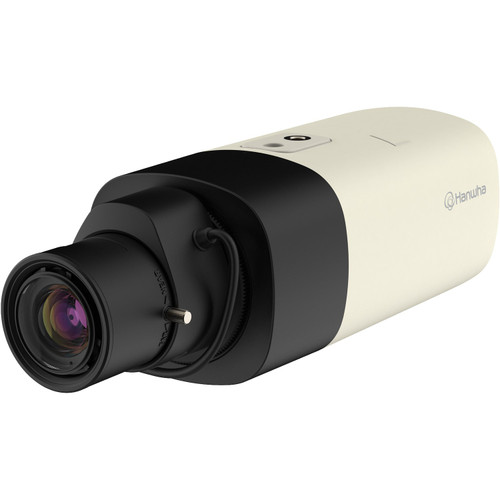
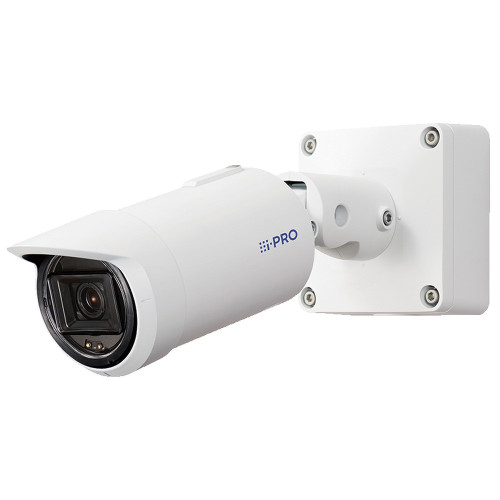
Both the Hanwha XNB-8000 and the i-PRO WV-X15500-V3L are 5MP wired outdoor bullet IP cameras targeting commercial and light-industrial fixed-surveillance applications. The XNB-8000 ships as a box-body camera requiring a separate lens, while the X15500-V3L is a self-contained bullet with a built-in motorized varifocal lens. Despite the shared 5MP class and bullet form factor, their sensor sizes, lens configurations, dynamic range ceilings, environmental ratings, and analytics engines differ meaningfully—making a spec-by-spec comparison directly relevant to installers choosing between them.
In This Guide
How do the imaging specs compare?
The XNB-8000 uses a larger 1/1.8-inch 6MP CMOS sensor outputting a 5MP (2560×1920) stream, while the X15500-V3L uses a smaller approximately 1/2.8-inch CMOS delivering a 3072×1728 (5.3MP) image. The larger sensor in the XNB-8000 typically supports better low-light photon collection; its specified minimum illumination is 0.07 lux color / 0.007 lux B/W. The X15500-V3L specifies 0.02 lux (B/W, 50IRE, F1.3, 1/30s)—a lower B/W floor than the XNB-8000's 0.007 lux figure under the same shutter condition is not directly comparable because i-PRO's figure references F1.3 and 50IRE; a direct sensor-size advantage still favors the Hanwha on paper. The X15500-V3L also provides a built-in 70m IR illuminator, whereas the XNB-8000 spec lists 'IR' under night-vision category but its datasheet does not specify an integrated IR range or illuminator distance—installers should verify whether integrated IR is actually present on this box-body variant.
Dynamic range is a clear differentiator: the X15500-V3L is rated at 132 dB (Super Dynamic On, Level 31), versus the XNB-8000's 120 dB WDR. The X15500-V3L also includes a 3.1x motorized varifocal lens (2.9–9mm, F1.3–F2.5) with motorized focus and up to 12.4x extra digital zoom, enabling remote lens adjustment post-install. The XNB-8000 is a C/CS-mount box camera with DC auto-iris or P-iris support and simple focus control—the installer must source and mount a lens separately. For fixed-lens applications this adds flexibility; for rapid deployment it adds a step. The X15500-V3L publishes DORI distances (Detect 46.3m wide / 201m tele; Identify 4.6m wide / 20.1m tele), which the XNB-8000 spec does not provide.
What about installation and environment?
Environmental protection is another key differentiator. The X15500-V3L is rated IP66/IP67 (IEC 60529), NEMA 4X (UL50E), and IK10 (IEC 62262), with wind resistance up to 40 m/s (~89 mph) and an operating temperature range of -40°C to +55°C. The XNB-8000 specifies an operating temperature of -10°C to +55°C; no IP ingress rating or IK impact rating is listed in the provided specifications. This is a material gap for installers working in harsh climates, high-humidity environments, or vandal-risk locations. The X15500-V3L also carries UL 62368-1, c-UL, CE, and IEC 62368-1 safety certifications and FCC/ICES-003/EN55032 Class A EMC marks; the XNB-8000 specs do not list equivalent certifications in the data provided.
For power, the XNB-8000 accepts PoE (IEEE 802.3af, Class 3, max 8.5W), 24VAC, or 12VDC—three input options that benefit retrofit sites with existing coax infrastructure. The X15500-V3L requires PoE+ (802.3at, Class 4, 14W) or DC12V 1.2A; only PoE+ or direct DC is supported. The XNB-8000 is physically compact at 73.1×66.6×147.8mm and 420g (0.93 lb), suited to tight enclosures. The X15500-V3L is substantially larger at 133×133×383mm and 2.5kg (5.6 lbs), and its aluminum die-cast / stainless steel construction reflects its hardened positioning. The XNB-8000's C/CS-mount body accepts a wide variety of third-party lenses but requires a separate housing for outdoor deployment unless one is bundled—installers should confirm housing requirements before specifying.
Which fits your VMS and analytics better?
Both cameras support ONVIF Profile S, G, and T. The X15500-V3L additionally supports ONVIF Profile M, which covers metadata including analytics events—relevant for VMS platforms consuming AI analytics streams. The XNB-8000 supports Wisenet SUNAPI and the Wisenet open platform, advantaging Hanwha-ecosystem VMS deployments (e.g., Wisenet WAVE). The X15500-V3L runs on an Ambarella CV52 SoC and supports AI analytics including motion, face, vehicle, and occupancy detection, plus AI sound classification (gunshot, yell, vehicle horn, glass break). The XNB-8000 analytics include motion detection, loitering, directional detection, fog detection, digital auto-tracking, sound classification, and handover—a broad on-camera set, though the AI chip or SoC is not specified in the provided data.
For edge storage, the XNB-8000 provides two microSD/SDHC/SDXC slots supporting up to 512GB each; the X15500-V3L provides a single microSD slot (up to 512GB). Dual-slot redundancy on the XNB-8000 is a clear advantage for edge recording applications. Audio: the XNB-8000 includes a selectable mic-in/line-in input with built-in mic and a line-out output; the X15500-V3L provides a 3.5mm stereo mic input and a 3.5mm stereo jack audio output. Both support two-way audio. The X15500-V3L lists 4 alarm I/O terminals (IN1, IN2, IN3, OUT, AUX) versus the XNB-8000's 1 alarm input / 1 alarm output. The X15500-V3L's cybersecurity posture includes FIPS 140-2 Level 3, device certificate, secure boot, and signed firmware; the XNB-8000 lists encrypted firmware and firmware protect, but FIPS 140-2 certification is not cited in the provided specifications.
Which should you choose: the XNB-8000 or the X15500-V3L?
Our take: The XNB-8000 is the stronger choice when the application calls for lens flexibility, multi-source power options, or a Hanwha-native VMS environment. Its larger 1/1.8-inch sensor, dual-slot 512GB edge storage, and support for PoE 802.3af / 24VAC / 12VDC give installers more optionality in cost-sensitive or retrofit projects. By contrast, the X15500-V3L is the stronger choice for hardened outdoor deployments requiring certified environmental and impact protection: its IP66/IP67/NEMA 4X/IK10 rating and -40°C lower operating limit versus the XNB-8000's unspecified IP rating and -10°C floor are decisive in cold climates or vandal-risk sites. The X15500-V3L's 132 dB dynamic range (vs. 120 dB), integrated 70m IR, FIPS 140-2 Level 3 cybersecurity certification, 5-year warranty (vs. 3-year), and ONVIF Profile M support reinforce its positioning as a premium hardened unit. Choose the X15500-V3L where environmental certification, long-range IR, and certified cybersecurity matter; choose the XNB-8000 where lens versatility, dual SD redundancy, and multi-voltage power are priorities.
Side-by-Side Comparison
Spec-for-spec, from manufacturer data.
| Specification | Hanwha XNB-8000 | i-PRO X15500-V3L |
|---|---|---|
| Resolution | 5MP (2560×1920) | 5MP (3072×1728) |
| Image Sensor | 1/1.8" 6MP CMOS | Approx. 1/2.8" CMOS |
| Lens / Focal Length | C/CS-mount (customer-supplied); DC auto-iris or P-iris | 3.1x motorized varifocal, 2.9–9mm, F1.3–F2.5 |
| Minimum Illumination | 0.07 lux color / 0.007 lux B/W | 0.02 lux B/W (F1.3, 50IRE, 1/30s) |
| IR Range | Not specified in provided data | 70m (230 ft) |
| Wide Dynamic Range | 120 dB | 132 dB (Super Dynamic On, Level 31) |
| Max Frame Rate | 30fps | 30fps |
| Video Compression | H.265, H.264 (Main/Baseline/High), MJPEG | H.265, H.264, MJPEG |
| IP / Ingress Rating | Not specified in provided data | IP66 / IP67 (IEC 60529), NEMA 4X |
| IK / Impact Rating | Not specified in provided data | IK10 (IEC 62262) |
| Operating Temperature | -10°C to +55°C | -40°C to +55°C |
| Power Input / PoE Class | PoE 802.3af Class 3 / 24VAC / 12VDC; max 8.5W | PoE+ 802.3at / DC12V 1.2A; 14W |
| Edge Storage | Dual microSD/SDHC/SDXC slots, up to 512GB each | Single microSDXC slot, up to 512GB |
| Alarm I/O | 1 input / 1 output | 4 terminals (IN1, IN2, IN3, OUT, AUX) |
| ONVIF Profiles | S, G, T | G, S, T, M |
| Cybersecurity | Encrypted firmware, firmware protect | FIPS 140-2 Level 3, device certificate, secure boot, signed firmware |
| Dimensions (W×H×D) | 73.1×66.6×147.8mm (2.88×2.62×5.82 in) | 133×133×383mm (5.25×5.25×15.09 in) |
| Weight | 420g (0.93 lb) | Approx. 2.5kg (5.6 lbs) |
| Warranty | 3 years | 5 years |
Frequently Asked Questions
Which should you choose: the XNB-8000 or the X15500-V3L?
The XNB-8000 is the stronger choice when the application calls for lens flexibility, multi-source power options, or a Hanwha-native VMS environment. Its larger 1/1.8-inch sensor, dual-slot 512GB edge storage, and support for PoE 802.3af / 24VAC / 12VDC give installers more optionality in cost-sensitive or retrofit projects. By contrast, the X15500-V3L is the stronger choice for hardened outdoor deployments requiring certified environmental and impact protection: its IP66/IP67/NEMA 4X/IK10 rating and -40°C lower operating limit versus the XNB-8000's unspecified IP rating and -10°C floor are decisive in cold climates or vandal-risk sites. The X15500-V3L's 132 dB dynamic range (vs. 120 dB), integrated 70m IR, FIPS 140-2 Level 3 cybersecurity certification, 5-year warranty (vs. 3-year), and ONVIF Profile M support reinforce its positioning as a premium hardened unit. Choose the X15500-V3L where environmental certification, long-range IR, and certified cybersecurity matter; choose the XNB-8000 where lens versatility, dual SD redundancy, and multi-voltage power are priorities.
Is the XNB-8000 or X15500-V3L better for low-light performance?
Based on specified minimums, the XNB-8000 lists 0.007 lux B/W and 0.07 lux color. The X15500-V3L lists 0.02 lux B/W at F1.3, 50IRE, 1/30s. The two figures use different reference conditions (aperture, IRE target) so a direct numeric comparison is not straightforward. The X15500-V3L's built-in 70m IR illuminator is an explicit spec; the XNB-8000's integrated IR range is not specified in the provided data, which is an important installation-planning variable to confirm with Hanwha.
Which camera is better suited for cold-climate or outdoor harsh-environment installations?
The X15500-V3L is rated for -40°C to +55°C operating temperature, carries IP66/IP67 and NEMA 4X ingress protection, and is IK10 impact-rated with wind resistance up to 40 m/s. The XNB-8000's specified operating range is -10°C to +55°C, and no IP ingress or IK impact rating is listed in the provided specifications. For cold climates, exposed coastal sites, or vandal-risk environments, the X15500-V3L holds a clear documented advantage.
Which camera offers better cybersecurity certification for government or regulated-site deployments?
The X15500-V3L specifies FIPS 140-2 Level 3 compliance, a device certificate, secure boot, and signed firmware—certifications commonly required on federal, state, or regulated commercial deployments. The XNB-8000 lists encrypted firmware and firmware protect, but FIPS 140-2 certification is not cited in the provided specifications. If FIPS 140-2 compliance is a procurement requirement, the X15500-V3L has documented certification; the XNB-8000's status on that standard should be confirmed directly with Hanwha before specifying.
Get a Second Opinion on Your Camera Choice
Share your site layout, coverage goals, and budget. Our team will validate the camera selection, flag anything we would change, and recommend products that match the use case.