
Hanwha SKY-SW28G-001 vs Pelco SM24TAT2SA-NA: Specification Comparison
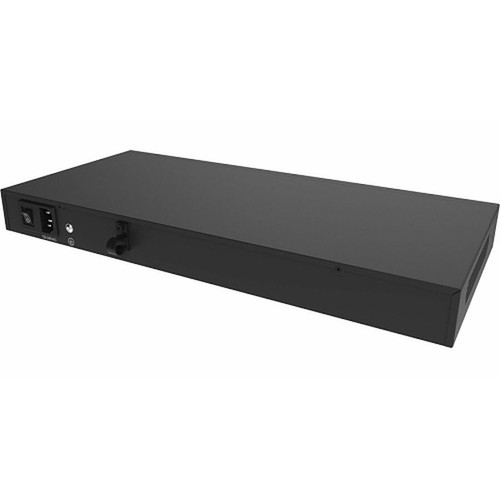
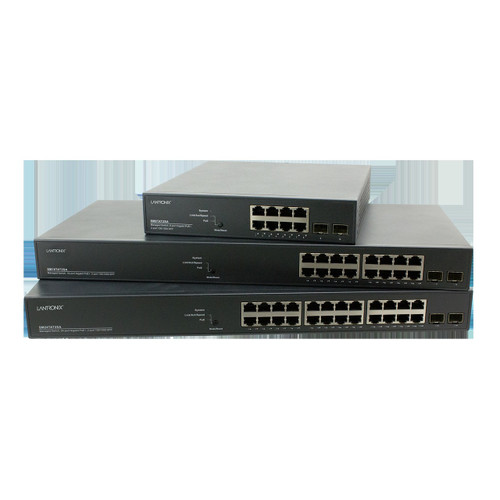
Both the Hanwha SKY-SW28G-001 and the Pelco SM24TAT2SA-NA are 26-port managed PoE+ switches purpose-built for IP surveillance deployments. Each delivers 24 PoE+ data ports plus uplink ports and a 370W aggregate power budget, placing them squarely in the same mid-size surveillance switching category. This comparison evaluates their port and throughput architecture, power and physical installation characteristics, and management, compliance, and ecosystem integration—the three axes most relevant to a security integrator specifying switching infrastructure for a camera deployment.
In This Guide
- How do the port configurations and switching throughput compare?
- How do the power standards, operating environment, and mounting options differ?
- Which switch offers stronger management features, compliance credentials, and ecosystem integration?
- Which should you choose: the SKY-SW28G-001 or the SM24TAT2SA-NA?
- Side-by-Side Specs
- FAQ
How do the port configurations and switching throughput compare?
The Hanwha SKY-SW28G-001 provides 24 PoE+ ports rated at 30W each, two RJ-45 Gigabit uplinks, and two SFP uplinks, for a total of 28 physical ports on a 56 Gbps non-blocking switching fabric. The dual-format uplink pair (RJ-45 plus SFP) gives integrators flexibility to connect to either copper or fiber backbone infrastructure without an additional media converter.
The Pelco SM24TAT2SA-NA also offers 24 PoE+ Gigabit ports, but its uplink tier consists of two SFP fiber ports only—no copper RJ-45 uplinks are specified. Switching fabric capacity is not stated in the provided specifications for the Pelco unit. Both switches share an identical 370W aggregate PoE+ power budget across their 24 downstream ports, though only the Hanwha spec explicitly documents a per-port maximum of 30W.
For deployments where upstream connectivity must be fiber, both units are accommodated. Where copper uplinks are needed or preferred, only the Hanwha spec confirms that capability. The absence of a stated switching fabric figure for the Pelco unit means non-blocking performance cannot be verified from available data.
How do the power standards, operating environment, and mounting options differ?
Both switches are rated for 802.3at PoE+ on downstream ports and carry a 370W total power budget. The Hanwha specification additionally notes 802.3af backward compatibility, which allows legacy cameras or access control readers drawing less than 15.4W to operate without a separate injector. The Pelco specification does not explicitly state 802.3af backward compatibility, though most 802.3at switches support it by design; absent a confirmed spec, it cannot be claimed here.
Operating temperature is documented for the Hanwha at 0°C to 50°C (32°F to 122°F). No operating temperature range is provided in the Pelco specifications, which is a meaningful gap for integrators assessing suitability for wiring closets with limited climate control.
For mounting, the Hanwha supports both rack and wall installation, which is confirmed in multiple spec fields. The Pelco is specified for rack mount only. Where conduit or cabinet space is constrained and wall mounting is the only option, the Hanwha is the documented choice. Housing color is white on both units.
Which switch offers stronger management features, compliance credentials, and ecosystem integration?
The Pelco SM24TAT2SA-NA explicitly lists VLAN, QoS, and port configuration as managed switching features, and carries documented NDAA Section 889 compliance—a procurement requirement for many federal, state, and education projects. The Hanwha SKY-SW28G-001 specifications do not enumerate specific Layer 2/3 management features such as VLAN or QoS, nor do they reference NDAA compliance.
On the ecosystem side, the Hanwha unit explicitly integrates with Wisenet SKY Cloud VMS, making it a natural fit for all-Hanwha surveillance architectures. The Pelco switch is specified as compatible with Pelco Camera Systems. Neither unit's spec addresses compatibility with third-party VMS platforms beyond their respective brand ecosystems.
Warranty coverage is a significant differentiator: Hanwha provides a 5-year warranty on the SKY-SW28G-001, while Pelco offers a 1-year limited warranty on the SM24TAT2SA-NA. For infrastructure components expected to remain in service for the life of a camera system, the longer warranty reduces total ownership risk.
Which should you choose: the SKY-SW28G-001 or the SM24TAT2SA-NA?
Our take: The SKY-SW28G-001 is the stronger choice when operating environment flexibility, uplink redundancy, and long-term warranty coverage are priorities. It documents a 56 Gbps non-blocking switching fabric versus no stated fabric speed for the Pelco; offers both RJ-45 and SFP uplinks versus SFP-only on the SM24TAT2SA-NA; and carries a 5-year warranty versus Pelco's 1-year limited coverage. Wall-mount support on the Hanwha also extends deployment flexibility beyond rack-only installation. The SM24TAT2SA-NA holds an advantage where NDAA Section 889 compliance is a contractual requirement—a spec the Hanwha does not document—and where explicit VLAN and QoS management feature documentation is required for IT procurement review. Choose the Hanwha for Wisenet SKY-anchored deployments needing proven throughput and longevity; choose the Pelco for federally compliant Pelco-ecosystem builds where management feature documentation must appear on the spec sheet.
Side-by-Side Comparison
Spec-for-spec, from manufacturer data.
| Specification | Hanwha SKY-SW28G-001 | Pelco SM24TAT2SA-NA |
|---|---|---|
| Total Ports | 28 (24 PoE+ + 2 RJ-45 + 2 SFP) | 26 (24 PoE+ + 2 SFP) |
| PoE+ Downstream Ports | 24 | 24 |
| Per-Port PoE Power | 30W max each | — |
| Aggregate PoE Power Budget | 370W | 370W |
| PoE Standard | 802.3at (PoE+), 802.3af backward compatible | 802.3at (PoE+) |
| Uplink Ports | 2x RJ-45 Gigabit + 2x SFP | 2x SFP fiber |
| Switching Fabric | 56 Gbps non-blocking | — |
| Operating Temperature | 0°C to 50°C (32°F to 122°F) | — |
| Mount Type | Rack and wall | Rack |
| Housing Color | White | White |
| Management Features | — | VLAN, QoS, port configuration |
| NDAA Section 889 Compliant | — | Yes |
| VMS / Ecosystem Integration | Wisenet SKY Cloud VMS | Pelco Camera Systems |
| Warranty | 5-year | 1-year limited |
| Form Factor | Switch | Switch |
| Classification | Switch | Security Camera Accessory |
Frequently Asked Questions
Which should you choose: the SKY-SW28G-001 or the SM24TAT2SA-NA?
The SKY-SW28G-001 is the stronger choice when operating environment flexibility, uplink redundancy, and long-term warranty coverage are priorities. It documents a 56 Gbps non-blocking switching fabric versus no stated fabric speed for the Pelco; offers both RJ-45 and SFP uplinks versus SFP-only on the SM24TAT2SA-NA; and carries a 5-year warranty versus Pelco's 1-year limited coverage. Wall-mount support on the Hanwha also extends deployment flexibility beyond rack-only installation. The SM24TAT2SA-NA holds an advantage where NDAA Section 889 compliance is a contractual requirement—a spec the Hanwha does not document—and where explicit VLAN and QoS management feature documentation is required for IT procurement review. Choose the Hanwha for Wisenet SKY-anchored deployments needing proven throughput and longevity; choose the Pelco for federally compliant Pelco-ecosystem builds where management feature documentation must appear on the spec sheet.
Is the SKY-SW28G-001 or SM24TAT2SA-NA better for larger deployments requiring fiber backbone connections?
Both switches provide SFP uplink ports for fiber backbone connectivity. The Hanwha SKY-SW28G-001 goes further by also including two RJ-45 Gigabit uplinks alongside the two SFP ports, giving integrators the option to use copper or fiber without additional hardware. The Pelco SM24TAT2SA-NA specifies SFP uplinks only. If your backbone is exclusively fiber, either switch is appropriate; if copper uplinks are needed, the Hanwha is the documented option.
Which switch is required for government or federally funded projects with NDAA Section 889 compliance mandates?
The Pelco SM24TAT2SA-NA is the switch with documented NDAA Section 889 compliance based on the provided specifications. The Hanwha SKY-SW28G-001 specifications do not reference NDAA compliance. For projects where this requirement is contractually binding—federal agencies, many state and local government contracts, and certain education deployments—the Pelco is the only option of the two with a confirmed compliance claim.
How does the warranty coverage differ, and does it affect total cost of ownership?
The Hanwha SKY-SW28G-001 carries a 5-year warranty, while the Pelco SM24TAT2SA-NA is covered by a 1-year limited warranty. For infrastructure installed behind walls or in ceiling spaces—where swap-out labor costs can exceed the hardware cost—the longer Hanwha warranty reduces risk over the typical 5-to-7-year lifecycle of a surveillance system. Buyers should factor in extended-warranty pricing for the Pelco unit if lifecycle parity is required.
More Network Switch Comparisons
Network Switch Buying Guides
Get a Second Opinion on Your Camera Choice
Share your site layout, coverage goals, and budget. Our team will validate the camera selection, flag anything we would change, and recommend products that match the use case.