
Hanwha QRN-830S vs Hanwha QRN-830S: Specification Comparison
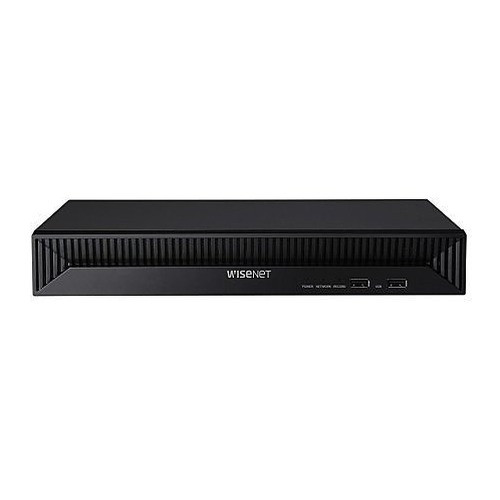
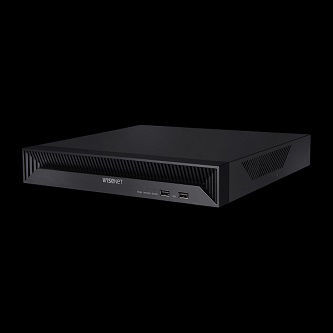
Both products are the Hanwha QRN-830S, an 8-channel PoE Network Video Recorder supporting up to 8MP resolution with H.265 compression. The comparison here is between two SKU variants of the same model: the QRN-830S-2TB (bundled with storage, listed as Product A) and the base QRN-830S (Product B). Despite sharing a model number, the provided specifications differ in detail depth, housing color notation, and a few reported values, making a spec-level review useful for buyers choosing between the two SKU configurations.
In This Guide
- How do the two QRN-830S SKUs compare in recording capacity, channel count, and throughput?
- What are the differences in power, physical build, and operating environment between the two SKUs?
- How do the two QRN-830S SKUs compare on VMS integration, network protocols, and remote management capabilities?
- Which should you choose: the QRN-830S or the QRN-830S?
- Side-by-Side Specs
- FAQ
How do the two QRN-830S SKUs compare in recording capacity, channel count, and throughput?
Both SKUs support a maximum of 8 IP camera channels and record up to 8MP resolution. Product B's datasheet specifies a maximum recording bandwidth of 80Mbps and a playback bandwidth of 32Mbps — figures absent from Product A's spec sheet. Both list H.265, H.264, and MJPEG compression. Frame rate alignment is consistent: 8MP at 60fps, 1080p at 240fps, 720p at 240fps, and D1 at 240fps are cited in Product B; Product A lists 240fps at 1080p as the headline and 60fps at 1080p in a secondary field, which is an internal inconsistency within Product A's own spec set rather than a difference between units.
Storage capacity is listed as up to 6TB (single SATA HDD slot) in both SKUs. Product A's SKU suffix '-2TB' implies it ships with a 2TB drive pre-installed, while Product B (base QRN-830S) does not specify an included drive. microSD local expansion is noted in Product A; Product B lists local storage as 'OK' without elaborating on the expansion interface. Product B specifies simultaneous playback of up to 32 channels (local 8CH, remote 8CH per user, max 4 users), a detail not present in Product A's spec sheet.
What are the differences in power, physical build, and operating environment between the two SKUs?
Product B provides explicit physical specifications: dimensions of 300 × 47.6 × 238.9 mm, weight of 1.32 kg, input voltage of 54VDC / 1.55A, and a maximum system power draw of 84W (287 BTU with one HDD and PoE active). The PoE budget is 65W across 8 ports (802.3af) on both SKUs. Product A does not list system dimensions, weight, or input voltage.
Product B specifies an operating temperature range of 0°C to +40°C and operating humidity of 20%–85% RH. Product A does not list these environmental parameters. Housing color is listed as White in both spec sheets, though Product B's physical description states 'Black / Metal' for color and material — an internal inconsistency within Product B's own data. Product B connects via a DC adapter power inlet; Product A does not specify the power inlet type. Both include HDMI output; Product B specifies 4K (3840×2160 at 30Hz). Product A does not state the HDMI resolution.
How do the two QRN-830S SKUs compare on VMS integration, network protocols, and remote management capabilities?
Both SKUs support ONVIF (Profile S) and SUNAPI. Product A additionally lists ONVIF Profile T, Wisenet Viewer, and Wisenet Mobile App as named VMS compatibility entries. Product B confirms Webviewer, Mobile App (iOS and Android), and SUNAPI integration, and specifies browser support for Google Chrome, Microsoft Edge, and Mac Safari on Windows 10 and macOS 11.
Product B provides a comprehensive protocol list: IPv4, IPv6, TCP/IP, UDP/IP, RTP, RTSP, NTP, HTTP, DHCP, SMTP, ICMP, IGMP, ARP, DNS, DDNS, uPnP, HTTPS, SNMP, and ONVIF Profile-S. It also details security features including IP address filtering, user access logs, 802.1x, encryption, device certificate (Hanwha Techwin Root CA), and signed firmware. Product A does not enumerate network protocols or security features beyond NDAA and FCC certifications. Product B further specifies N+1 failover redundancy and ARB (Automatic Recovery Backup) support, PTZ control with 300 presets, P2P setup via QR code, and a system log capacity of up to 100,000 entries — none of which appear in Product A's spec sheet.
Which should you choose: the QRN-830S or the QRN-830S?
Our take: The QRN-830S-2TB (Product A) is the stronger choice when a buyer needs a ready-to-record unit out of the box, as the '-2TB' SKU implies a pre-installed drive versus the base SKU's unspecified drive configuration. However, the base QRN-830S (Product B) carries a significantly more complete specification disclosure: it documents 80Mbps max recording bandwidth and 32Mbps playback bandwidth (absent in Product A), confirms 4K HDMI output at 3840×2160 (not stated in Product A), details N+1 failover and ARB redundancy (not listed in Product A), and provides explicit environmental ratings of 0°C–40°C and 20%–85% RH. For integrators evaluating platform security, Product B lists 802.1x, signed firmware, and Hanwha Techwin Root CA certificate support — none disclosed in Product A. Buyers on Wisenet/SUNAPI platforms requiring documented redundancy and security hardening should reference Product B's datasheet regardless of which SKU they purchase.
Side-by-Side Comparison
Spec-for-spec, from manufacturer data.
| Specification | Hanwha QRN-830S | Hanwha QRN-830S |
|---|---|---|
| Product Type | NVR | NVR |
| Max Channels | 8CH | 8CH |
| Max Resolution | 8MP | 8MP |
| Video Compression | H.265, H.264, MJPEG | H.265, H.264, MJPEG |
| Max Recording Bandwidth | — | 80Mbps |
| Max Playback Bandwidth | — | 32Mbps |
| Frame Rates | 8MP@60fps; 1080p@240fps; 720p@240fps; D1@240fps | 8MP@60fps; 1080p@240fps; 720p@240fps; D1@240fps |
| HDMI Output Resolution | — | 3840×2160 (30Hz) |
| Storage Capacity | Up to 6TB (1 SATA slot); microSD expansion | Up to 6TB (1 SATA slot, Max 6TB) |
| PoE Ports / Budget | 8 ports / 65W total (802.3af) | 8 ports / 65W total |
| VMS / Protocol Compatibility | ONVIF Profile S/T; SUNAPI; Wisenet Viewer; Wisenet Mobile App | ONVIF Profile S; SUNAPI; Webviewer; Mobile App (iOS/Android) |
| Redundancy | — | N+1 Failover; ARB |
| Security Features | NDAA, FCC | IP filtering; 802.1x; Signed firmware; Device certificate |
| Operating Temperature | — | 0°C to +40°C |
| Operating Humidity | — | 20%–85% RH |
| Max System Power Draw | — | 84W (287 BTU, 1HDD, PoE ON) |
| Dimensions (WxHxD) | — | 300 × 47.6 × 238.9 mm |
| Weight | — | 1.32 kg (2.91 lb) |
| PTZ Presets | — | 300 |
| Warranty | 5-Year | — |
Frequently Asked Questions
Which should you choose: the QRN-830S or the QRN-830S?
The QRN-830S-2TB (Product A) is the stronger choice when a buyer needs a ready-to-record unit out of the box, as the '-2TB' SKU implies a pre-installed drive versus the base SKU's unspecified drive configuration. However, the base QRN-830S (Product B) carries a significantly more complete specification disclosure: it documents 80Mbps max recording bandwidth and 32Mbps playback bandwidth (absent in Product A), confirms 4K HDMI output at 3840×2160 (not stated in Product A), details N+1 failover and ARB redundancy (not listed in Product A), and provides explicit environmental ratings of 0°C–40°C and 20%–85% RH. For integrators evaluating platform security, Product B lists 802.1x, signed firmware, and Hanwha Techwin Root CA certificate support — none disclosed in Product A. Buyers on Wisenet/SUNAPI platforms requiring documented redundancy and security hardening should reference Product B's datasheet regardless of which SKU they purchase.
Is the QRN-830S-2TB the same hardware as the base QRN-830S?
Based on the provided specifications, both share the same model number (QRN-830S) and core specs: 8 channels, 8MP max resolution, H.265/H.264/MJPEG compression, 65W PoE budget across 8 ports, and up to 6TB storage. The '-2TB' suffix in the first SKU indicates a bundled 2TB hard drive; the base SKU does not specify an included drive. All other hardware differences visible in the spec sheets appear to be disclosure-depth differences rather than confirmed hardware changes.
Does the QRN-830S support 4K monitor output?
Product B's specification sheet confirms HDMI output at 3840×2160 (30Hz), which is 4K UHD resolution. Product A's spec sheet does not state an HDMI output resolution. Both units share the same model number, so buyers should reference the Product B datasheet or the official Hanwha datasheet to confirm 4K output capability before specifying a 4K display.
Is the QRN-830S NDAA-compliant and suitable for government or regulated installations?
Product A explicitly lists NDAA and FCC as certifications. Product B's provided spec sheet does not list NDAA compliance. Both share the same model number, and NDAA compliance is typically a model-level certification rather than a SKU-level variation, but buyers in regulated environments should verify NDAA status directly with Hanwha documentation before procurement, as it is not confirmed in Product B's provided spec data.
Get a Second Opinion on Your Camera Choice
Share your site layout, coverage goals, and budget. Our team will validate the camera selection, flag anything we would change, and recommend products that match the use case.