
Hanwha QNV-8010R vs i-PRO S22500-F6L: Specification Comparison
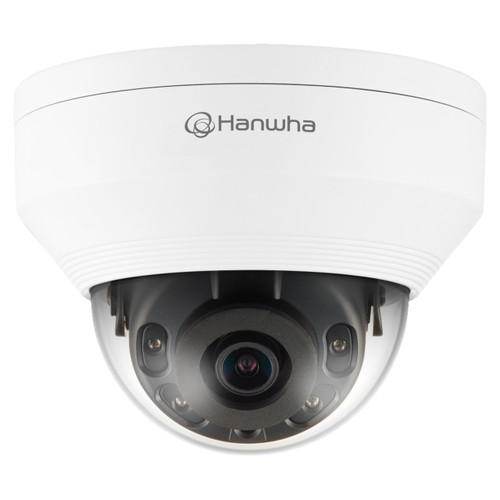
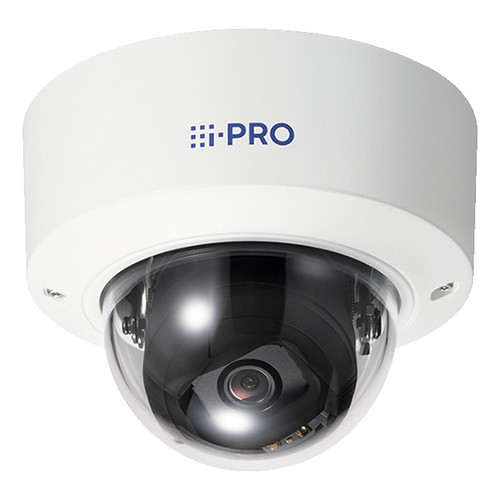
Both the Hanwha QNV-8010R and the i-PRO WV-S22500-F6L are 5MP fixed-lens indoor vandal-resistant dome cameras powered by PoE, making them direct cross-shop candidates for interior surveillance deployments requiring IK10 impact resistance. This comparison examines their imaging capabilities, installation and environmental specs, and integration features side by side, drawing exclusively from the published specifications for each model.
In This Guide
How do the imaging specs compare?
Both cameras use an approximate 1/2.8-inch CMOS sensor at 5MP resolution, but their native output formats differ: the QNV-8010R captures 2592×1944 (4:3), while the S22500-F6L supports both 3072×2304 (4:3) and 3072×1728 (16:9), giving it a modest pixel-count edge in 4:3 mode and more flexibility in widescreen output. The QNV-8010R ships with a 2.8mm fixed lens delivering a 105° horizontal field of view and F2.0 aperture; the S22500-F6L uses a 3.2mm fixed lens with a 48° horizontal FOV (16:9) and F1.6 aperture. The narrower FOV on the i-PRO unit significantly limits scene coverage compared to the Hanwha, though the faster F1.6 aperture collects more light.
In low-light performance, the S22500-F6L specifies 0.08 lx color / 0.07 lx B&W minimum illumination, compared to 0.15 lx color / 0 lx B&W (IR active) for the QNV-8010R. Both reach 0 lux with IR active. The QNV-8010R's IR illuminator is rated to 20m; the S22500-F6L spec sheet states 25m (30IRE) / 20m (50IRE). On wide dynamic range, the S22500-F6L claims up to 132dB (Super Dynamic On, Level 31), versus the QNV-8010R's specified 120dB WDR. The DORI detect range for the i-PRO at its 3.2mm lens reaches 138m, versus 40m for the Hanwha at 2.8mm — a direct consequence of the narrower FOV concentrating pixels at distance.
What about installation and environment?
Both cameras carry IK10 vandal resistance per IEC 62262 and ship in dome form factors. The QNV-8010R is rated IP66 (dust-tight and protected against powerful water jets) and is listed as outdoor-ready; the S22500-F6L spec sheet does not list an IP ingress rating and is described as indoor-rated, limiting its deployment flexibility. The Hanwha's operating temperature range is −30°C to +55°C; the i-PRO's is −10°C to +50°C (with a power-on minimum of 0°C), a meaningfully narrower thermal envelope.
Both cameras are powered via PoE IEEE 802.3af. The QNV-8010R draws a maximum of 7.5W (PoE Class 3); the S22500-F6L is listed as PoE Class 0, meaning the switch must budget up to 15.4W for it unless actual draw is confirmed separately — the spec lists DC12V 880mA (~10.6W) as an alternate input, suggesting real draw is notably higher than the Hanwha. The QNV-8010R also provides a CVBS analog video output for installation alignment. The Hanwha body is aluminum; the i-PRO uses aluminum die-cast with a polycarbonate dome. The S22500-F6L is larger and heavier (ø129.5mm × 102.5mm, 800g) than the QNV-8010R (ø120.3mm × 91.7mm, 510g).
Which fits your VMS and analytics better?
Both cameras support ONVIF Profile S, G, and T, ensuring broad VMS compatibility. The QNV-8010R adds ONVIF Profile G and Hanwha's SUNAPI/Wisenet open platform for tighter integration with Wisenet WAVE and third-party systems; the S22500-F6L adds ONVIF Profile M (which includes metadata for AI analytics). The QNV-8010R's built-in analytics cover motion detection, tampering, defocus detection, virtual line crossing, and directional crossing. The S22500-F6L extends this with AI-driven face detection, vehicle detection, and AI sound classification (gunshot, yell, vehicle horn, glass break) — capabilities the QNV-8010R does not list.
For audio, the S22500-F6L provides a 3.5mm mic input and 3.5mm audio output with full-duplex support and multiple compression formats (G.726, G.711); the QNV-8010R does not list any audio input or output. On alarm I/O, the i-PRO has 3 alarm terminals; the Hanwha has 1 input and 1 output. Edge storage on the QNV-8010R supports up to 128GB microSDXC; the S22500-F6L supports up to 512GB microSDXC. The i-PRO also supports SFTP and MQTT in addition to FTP and SMTP, and is FIPS 140-2 Level 3 certified with an NXP SE050F secure element — security credentials the Hanwha spec sheet does not match, though Hanwha does list firmware encryption and 802.1X EAP-TLS/LEAP/PEAP.
Which should you choose: the QNV-8010R or the S22500-F6L?
Our take: The QNV-8010R is the stronger choice when wide-area indoor-outdoor coverage, cold-environment deployment, or lower PoE budget is the priority. Its 105° horizontal FOV versus the S22500-F6L's 48° covers more than twice the scene width per camera, its IP66 rating enables outdoor or washdown installation the i-PRO's indoor-only spec does not support, and its −30°C cold-start floor handles harsh environments where the i-PRO's 0°C power-on minimum fails. The S22500-F6L is the stronger choice when narrow-angle identification distance, AI sound classification, full-duplex audio, higher-capacity edge storage (512GB vs 128GB), FIPS 140-2 Level 3 security certification, or a 5-year warranty (versus Hanwha's 3-year) are the deciding factors. Both share 5MP resolution, IK10 vandal resistance, ONVIF S/G/T, and 802.3af PoE, so VMS compatibility is equivalent on those axes.
Side-by-Side Comparison
Spec-for-spec, from manufacturer data.
| Specification | Hanwha QNV-8010R | i-PRO S22500-F6L |
|---|---|---|
| Resolution (max) | 2592×1944 (5MP, 4:3) | 3072×2304 (5MP, 4:3) / 3072×1728 (16:9) |
| Image Sensor | 1/2.8" CMOS | Approx. 1/2.8" CMOS |
| Lens / Focal Length | 2.8mm fixed, F2.0 | 3.2mm fixed, F1.6 |
| Horizontal FOV | 105° | 48° (16:9) |
| Min. Illumination (Color) | 0.15 lux | 0.08 lux |
| Min. Illumination (B&W / IR) | 0 lux (IR active) | 0.07 lux B&W / 0 lux (IR active) |
| IR Range | 20m (65.6ft) | 25m (30IRE) / 20m (50IRE) |
| Wide Dynamic Range | 120dB | Max. 132dB (Super Dynamic On, Level 31) |
| Max Frame Rate | 30fps @ 5MP | 30fps |
| Video Compression | H.265, H.264, MJPEG | H.265, H.264, MJPEG |
| IP Rating | IP66 | Not specified (indoor-rated) |
| IK / Impact Rating | IK10 | IK10 |
| Operating Temperature | −30°C to +55°C | −10°C to +50°C (power-on: 0°C min) |
| Power Input / PoE Class | PoE IEEE 802.3af, Class 3 (max 7.5W) | PoE IEEE 802.3af, Class 0; or DC12V 880mA |
| Edge Storage | microSD/SDHC/SDXC up to 128GB | microSDXC up to 512GB |
| Audio | — | Mic input + audio output, full duplex, G.726/G.711 |
| AI Analytics | Motion, tampering, defocus, virtual line/area | AI face, vehicle, motion detection; AI sound classification |
| ONVIF Profiles | S, G, T | G, M, S, T |
| Security Certification | Firmware encryption, 802.1X EAP-TLS/LEAP/PEAP | FIPS 140-2 Level 3, NXP SE050F |
| Alarm I/O | 1 input / 1 output | 3 terminals (alarm IN/OUT), 1 AUX OUT |
| Dimensions | ø120.3mm × 91.7mm | ø129.5mm × 102.5mm |
| Weight | 510g (1.12 lb) | 800g (1.77 lb) |
| Warranty | 3 years | 5 years |
Frequently Asked Questions
Which should you choose: the QNV-8010R or the S22500-F6L?
The QNV-8010R is the stronger choice when wide-area indoor-outdoor coverage, cold-environment deployment, or lower PoE budget is the priority. Its 105° horizontal FOV versus the S22500-F6L's 48° covers more than twice the scene width per camera, its IP66 rating enables outdoor or washdown installation the i-PRO's indoor-only spec does not support, and its −30°C cold-start floor handles harsh environments where the i-PRO's 0°C power-on minimum fails. The S22500-F6L is the stronger choice when narrow-angle identification distance, AI sound classification, full-duplex audio, higher-capacity edge storage (512GB vs 128GB), FIPS 140-2 Level 3 security certification, or a 5-year warranty (versus Hanwha's 3-year) are the deciding factors. Both share 5MP resolution, IK10 vandal resistance, ONVIF S/G/T, and 802.3af PoE, so VMS compatibility is equivalent on those axes.
Is the QNV-8010R or S22500-F6L better for low-light performance?
Both cameras reach 0 lux with IR active. In ambient-light (color) mode, the S22500-F6L specifies a lower minimum illumination of 0.08 lux versus 0.15 lux for the QNV-8010R, and its F1.6 aperture admits more light than the QNV-8010R's F2.0. However, both cameras' IR illuminators are rated to approximately 20m at comparable reference levels, so in pitch-dark scenes they are effectively equivalent. For dimly lit scenes where IR is not active, the S22500-F6L has the documented edge.
Can either camera be used outdoors?
The QNV-8010R carries an IP66 rating (dust-tight, protected against powerful water jets) and is listed as outdoor-ready by the manufacturer. The S22500-F6L's published specifications do not include an IP ingress protection rating and it is described as indoor-rated; installing it outdoors or in wet/washdown areas is not supported by its listed specs. If outdoor deployment is required, the QNV-8010R is the only one of the two with a documented rating for it.
Which camera has better built-in analytics?
The S22500-F6L offers a broader AI analytics suite per its published specs: AI-based motion detection, face detection, vehicle detection, and AI sound classification covering gunshot, yell, vehicle horn, and glass break events. The QNV-8010R's analytics include motion detection, tampering, defocus detection, and virtual line/area crossing (intrusion, enter, exit, direction). Neither camera's spec sheet lists the other's AI sound classification or face detection feature for the competing model, so if those specific capabilities are required, the S22500-F6L is the documented choice.
Get a Second Opinion on Your Camera Choice
Share your site layout, coverage goals, and budget. Our team will validate the camera selection, flag anything we would change, and recommend products that match the use case.