
Hanwha QNV-6012R1 vs i-PRO X35302-F2LM: Specification Comparison
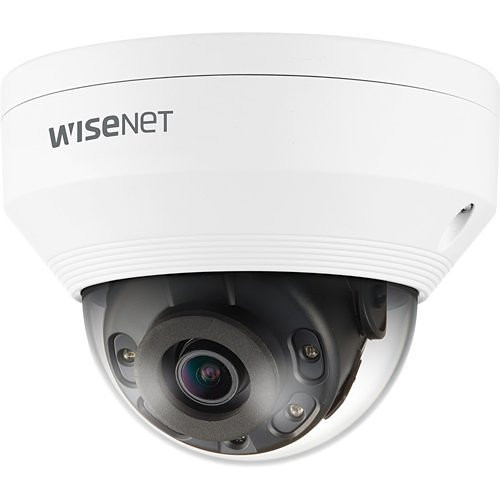
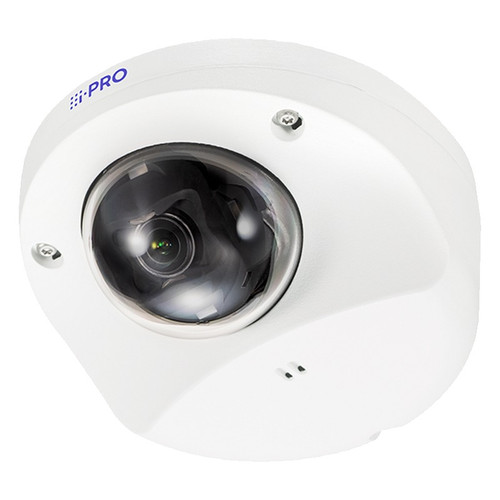
Both the Hanwha QNV-6012R1 and the i-PRO WV-X35302-F2LM are fixed outdoor IR dome cameras in the 2MP resolution class, designed for 24/7 perimeter and site surveillance with PoE power, IP66/IK10-rated housings, and H.265 compression. A buyer comparing these would be weighing Hanwha's mature WDR-and-analytics platform against i-PRO's AI-driven detection engine, wider dynamic range, and broader environmental certifications — at different price tiers within the same camera category.
In This Guide
How do the imaging specs compare?
Both cameras use a 1/2.8" 2MP CMOS sensor. The QNV-6012R1 delivers 1920×1080 at 30fps fixed, with a 2.8mm fixed lens yielding a 113.7° horizontal FOV, F2.0 aperture, and 120dB WDR. Minimum color illumination is 0.03 lux, dropping to 0 lux with its 20m IR range. The WV-X35302-F2LM outputs 2048×1536 (3MP-equivalent pixel array, though marketed as 2MP) at a variable frame rate, with a 2.4mm fixed lens at F2.1 aperture, yielding a wider 132° horizontal FOV. Its Super Dynamic WDR reaches 144dB — 24dB higher than the Hanwha — and minimum color illumination is 0.02 lux, with 0 lux IR and a stated IR range of 21m at 30 IRE (15m at 50 IRE).
On DORI performance, the QNV-6012R1 specifies Detect at 25.1m, Recognize at 5.0m, and Identify at 2.5m. The WV-X35302-F2LM specifies Detect at 17.1m, Recognize at 3.4m, and Identify at 1.7m — shorter across the board, consistent with its wider-angle lens compressing the scene into more pixels per degree but reducing effective range per DORI metric. The i-PRO unit also adds an Ambarella CV25M SoC enabling on-chip AI inference, fog compensation (0–8 adjustable), and AI sound classification (gunshot, yell, vehicle horn, glass break). The Hanwha provides fog-related features only through its WiseStream II smart codec; no AI sound classification is listed in its specs.
What about installation and environment?
Both cameras carry IP66 and IK10 ratings, confirming full dust ingress protection, sustained water jet resistance, and 20-joule impact resistance. The WV-X35302-F2LM adds NEMA 4X compliance (corrosion-resistant for hose-down environments), Type 4X per UL50E, and wind resistance rated to 40 m/s (approx. 89 mph). It also carries railway/vehicle certifications — EN50155, JIS E 5006, IEC62236, EN50121, IEC61373, EN45545 — relevant for transit deployments. The QNV-6012R1 lists no equivalent NEMA, wind, or transit certifications in the provided specs.
Operating temperature ranges diverge meaningfully. The WV-X35302-F2LM is rated −40°C to +60°C (power-on from −20°C), whereas the QNV-6012R1 is rated −10°C to +55°C — a 30-degree cold-weather gap. Both use PoE; the Hanwha is rated PoE Class 3 (max 7.4W) and also accepts 12VDC, while the i-PRO is PoE Class 0 (max 8.6W) with no secondary DC input listed. The i-PRO uses an M12 network connector, which is vibration- and moisture-resistant for industrial or vehicle applications; the Hanwha uses a standard RJ-45. The i-PRO body is aluminum die-cast (475g); the Hanwha is plastic (255g), making the Hanwha lighter but the i-PRO more structurally robust.
Which fits your VMS and analytics better?
Both cameras support ONVIF Profiles S, G, and T. The WV-X35302-F2LM adds ONVIF Profile M, which covers metadata streaming for AI analytics events — relevant for VMS platforms that consume structured AI metadata. The i-PRO supports up to 14 simultaneous users; the Hanwha supports 6 unicast users. The i-PRO also supports SFTP and MQTT in addition to standard FTP/SMTP, relevant for edge-to-cloud or IoT-integrated deployments.
On-board analytics differ substantially. The QNV-6012R1 provides defocus detection, directional detection, enter/exit, virtual line, and tampering — all rules-based. The WV-X35302-F2LM adds AI-driven Face Detection, People Detection, and Vehicle Detection on-chip, plus Scene Change Detection, Audio Detection, and AI Sound Classification across four event types. Both support microSD edge storage up to 512GB (SDXC). Audio: the i-PRO lists Audio Detection and audio compression codecs (G.726, G.711), indicating a built-in microphone and audio pipeline; the Hanwha QNV-6012R1 lists no audio input or output in the provided specifications. The i-PRO carries FIPS 140-2 Level 3 certification and signed firmware; the Hanwha lists HTTPS, 802.1X, and digest authentication but no FIPS certification is noted in the provided specs. Safety certifications for the i-PRO include UL62368-1, c-UL, CE, and IEC62368-1; equivalent certifications are not listed for the Hanwha in the provided specs.
Which should you choose: the QNV-6012R1 or the X35302-F2LM?
Our take: The WV-X35302-F2LM is the stronger choice when the deployment demands AI-class on-camera analytics, extreme-temperature operation, or industrial/transit certifications. Its 144dB Super Dynamic WDR outperforms the QNV-6012R1's 120dB by 24dB — a material advantage in high-contrast scenes such as building entrances with mixed sunlight and shadow. Its operating range of −40°C to +60°C versus the Hanwha's −10°C to +55°C makes it the only viable option in cold climates. It adds on-chip face, people, and vehicle AI detection plus AI sound classification, which the QNV-6012R1 does not provide. The QNV-6012R1 remains relevant where budget is the primary constraint, a standard RJ-45 connection is preferred over M12, 12VDC dual-power is needed, or the Hanwha/Wisenet VMS ecosystem is already in place. Its 3-year warranty is shorter than the i-PRO's 5-year coverage.
Side-by-Side Comparison
Spec-for-spec, from manufacturer data.
| Specification | Hanwha QNV-6012R1 | i-PRO X35302-F2LM |
|---|---|---|
| Resolution | 1920×1080 | 2048×1536 |
| Image Sensor | 1/2.8" 2MP CMOS | Approx. 1/2.8" CMOS |
| Lens / Focal Length | 2.8mm fixed | 2.4mm fixed |
| Max. Aperture | F2.0 | F2.1 |
| Horizontal FOV | 113.7° | 132° (16:9) |
| Min. Illumination (Color / IR) | 0.03 lux / 0 lux | 0.02 lux / 0 lux |
| IR Range | 20m (65.6 ft) | 21m @ 30 IRE / 15m @ 50 IRE |
| Wide Dynamic Range | 120dB | 144dB (Super Dynamic, Level 31) |
| Max Frame Rate | 30fps | Variable (max not specified in provided specs) |
| Video Compression | H.265, H.264, MJPEG | H.265, H.264, JPEG |
| IP Rating | IP66 | IP66, NEMA 4X, Type 4X (UL50E) |
| Vandal / Impact Rating | IK10 | IK10 |
| Operating Temperature | −10°C to +55°C | −40°C to +60°C (power-on from −20°C) |
| Power Input / PoE Class | PoE 802.3af Class 3; 12VDC | PoE Class 0; M12 connector |
| Max Power Consumption | 7.4W | 8.6W |
| Edge Storage | microSD/SDHC/SDXC up to 128GB | microSD 2GB / SDHC 4–32GB / SDXC 64–512GB |
| Audio | — | Audio detection; G.726, G.711 compression |
| AI Analytics | Rules-based (defocus, enter/exit, virtual line, tampering) | AI face, people, vehicle detection; AI sound classification |
| ONVIF Profiles | S, G, T | G, M, S, T |
| Simultaneous Users | 6 (unicast) | Up to 14 |
| Security Certifications | HTTPS, 802.1X, digest auth (no FIPS listed) | FIPS 140-2 Level 3, HTTPS, 802.1X |
| Safety Certifications | Not listed in provided specs | UL62368-1, c-UL, CE, IEC62368-1 |
| Dimensions | Ø110.0 × 86.0mm | 109mm (W) × 53mm (H) × 119mm (D) |
| Weight | 255g (0.56 lb) | approx. 475g (1.05 lb) |
| Housing Material | Plastic | Aluminum die-cast / PC resin |
| Warranty | 3 years | 5 years |
Frequently Asked Questions
Which should you choose: the QNV-6012R1 or the X35302-F2LM?
The WV-X35302-F2LM is the stronger choice when the deployment demands AI-class on-camera analytics, extreme-temperature operation, or industrial/transit certifications. Its 144dB Super Dynamic WDR outperforms the QNV-6012R1's 120dB by 24dB — a material advantage in high-contrast scenes such as building entrances with mixed sunlight and shadow. Its operating range of −40°C to +60°C versus the Hanwha's −10°C to +55°C makes it the only viable option in cold climates. It adds on-chip face, people, and vehicle AI detection plus AI sound classification, which the QNV-6012R1 does not provide. The QNV-6012R1 remains relevant where budget is the primary constraint, a standard RJ-45 connection is preferred over M12, 12VDC dual-power is needed, or the Hanwha/Wisenet VMS ecosystem is already in place. Its 3-year warranty is shorter than the i-PRO's 5-year coverage.
Is the QNV-6012R1 or WV-X35302-F2LM better for low-light performance?
Both reach 0 lux with IR active. The WV-X35302-F2LM has a slightly lower color minimum illumination (0.02 lux vs 0.03 lux on the Hanwha) and a marginally longer IR range (21m at 30 IRE vs 20m). The i-PRO also offers adjustable fog compensation (0–8 levels) not listed in the Hanwha's specs, which can aid visibility in hazy or foggy conditions.
Can either camera handle extreme cold — for example, a northern outdoor installation that drops below −10°C?
Only the WV-X35302-F2LM is rated for extreme cold. Its operating range extends to −40°C (power-on from −20°C). The QNV-6012R1 is rated only to −10°C operating minimum, so it is not specified for installations that regularly fall below that threshold.
Which camera is easier to integrate with a VMS that consumes AI metadata streams?
The WV-X35302-F2LM supports ONVIF Profile M in addition to S, G, and T — Profile M is the standard that covers AI/metadata event streaming, meaning a compatible VMS can receive structured face, people, and vehicle detection events over a standard interface. The QNV-6012R1 supports Profiles S, G, and T but not Profile M per the provided specs, so AI metadata streaming over ONVIF is not listed as a supported capability.
Get a Second Opinion on Your Camera Choice
Share your site layout, coverage goals, and budget. Our team will validate the camera selection, flag anything we would change, and recommend products that match the use case.