
Hanwha QNV-6012R1 vs i-PRO X35302-F2L: Specification Comparison
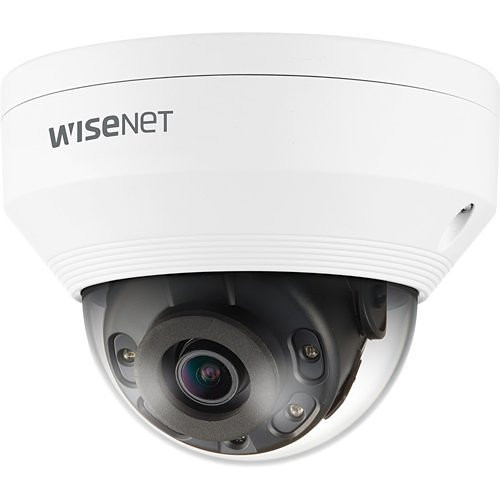
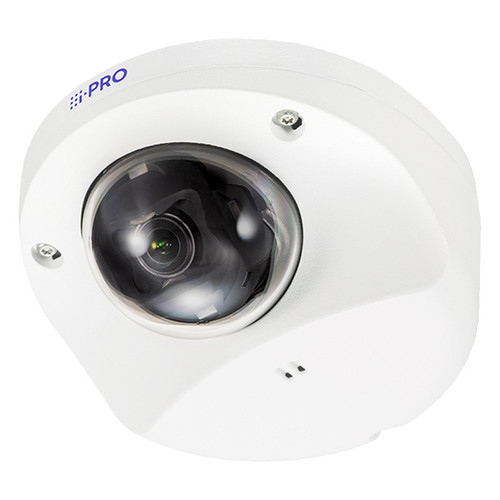
Both the Hanwha QNV-6012R1 and i-PRO WV-X35302-F2L are 2MP fixed outdoor IP dome cameras targeting perimeter and general surveillance applications. The Hanwha ships at 1920×1080 with a 2.8mm lens and 20m IR, while the i-PRO delivers a higher-density 2048×1536 frame with a 2.4mm lens, 21m IR, AI sound classification, and built-in audio. This comparison covers imaging performance, installation and environmental resilience, and VMS/analytics integration to help integrators and IT buyers determine which unit fits a given deployment.
In This Guide
How do the imaging specs compare?
The QNV-6012R1 uses a 1/2.8" 2MP CMOS to deliver 1920×1080 at up to 30fps with a 2.8mm fixed lens, a 113.7° horizontal field of view, and F2.0 aperture. Minimum illumination is rated at 0.03 lux color and 0 lux with IR active, with an IR viewable length of 20m (65.6ft). Wide dynamic range is specified at 120dB via Hanwha's SSDR/WDR stack. DORI detect distance is 25.1m.
The WV-X35302-F2L uses an approximately 1/2.8" CMOS with a 5.57×3.13mm scanning area, outputting 2048×1536 at a variable frame rate. The 2.4mm fixed lens provides a wider 132° horizontal field of view with F2.1 aperture. Minimum illumination is 0.02 lux color and 0 lux B&W with IR, a marginal sensitivity edge over the Hanwha. IR reach is 21m at 30 IRE / 15m at 50 IRE. Dynamic range reaches 144dB with Super Dynamic at level 31, 24dB above the Hanwha's rated 120dB. DORI detect distance is 17.1m, shorter than the QNV-6012R1's 25.1m due in part to its wider FOV. The i-PRO also includes fog compensation (0–8 levels) and adaptive black stretch, which are not specified for the Hanwha.
What about installation and environment?
Both cameras are rated IP66 and IK10, making them equally qualified for outdoor perimeter and vandal-risk locations. The Hanwha QNV-6012R1 operates from -10°C to +55°C, while the i-PRO WV-X35302-F2L is rated -40°C to +60°C for ambient operation (power-on from -20°C), a substantially broader thermal envelope that matters in cold-climate deployments. The i-PRO additionally carries NEMA 4X, wind resistance up to 40m/s (~89mph), and certifications for railway/vehicle applications (EN50155, IEC62236), none of which are specified for the Hanwha.
Both cameras are powered via PoE. The Hanwha is rated PoE Class 3 (max 7.4W) and also accepts 12VDC. The i-PRO is listed as PoE Class 0 in the product attributes with a maximum draw of 8.6W (IEEE 802.3af compliant per the spec), meaning switch port budget should account for the higher draw. The Hanwha also includes a CVBS analog output for installer alignment; the i-PRO spec does not list an analog output. The QNV-6012R1 provides a pan range of 0°–350°, tilt 0°–67°, and rotate 0°–355°; the i-PRO adjusts pan ±45°, tilt 0°–90°, and yaw ±90°.
Which fits your VMS and analytics better?
Both cameras support ONVIF Profile G/S/T, ensuring broad VMS compatibility. The Hanwha additionally lists ONVIF Profile M and exposes Wisenet SUNAPI and the Wisenet open platform, useful for Wisenet Wave/WAVE VMS environments. It supports up to 6 simultaneous Unicast streams (up to 3 profiles) and includes Hanwha WiseStream II smart codec. The i-PRO lists ONVIF Profile G/M/S/T, supports up to 14 simultaneous users, and adds GOP control smart coding. Both cameras compress video in H.265 and H.264; the Hanwha adds MJPEG while the i-PRO does not list MJPEG in its compression stack.
Analytics differentiate the two cameras significantly. The i-PRO includes AI Video Motion Detection, Face Detection, People Detection, and AI Sound Classification (gunshot, yell, vehicle horn, glass break), plus scene change detection and audio detection — all executed on an Ambarella CV25M SoC. It also includes a built-in microphone with G.726, G.711 audio compression. The Hanwha's analytics cover motion detection (4 polygonal zones), defocus detection, directional detection, enter/exit, tampering, and virtual line, but no AI-based person or face classification, and no audio support is specified. Edge storage: the Hanwha supports microSD/SDHC/SDXC up to 128GB (1 slot); the i-PRO supports microSDXC up to 512GB. The i-PRO also specifies FIPS 140-2 Level 3 and signed firmware; neither is listed for the Hanwha.
Which should you choose: the QNV-6012R1 or the X35302-F2L?
Our take: The WV-X35302-F2L is the stronger choice when the deployment demands AI-driven classification, audio detection, or extreme-temperature operation. Its 144dB dynamic range outpaces the QNV-6012R1's 120dB by 24dB — a material difference in high-contrast or backlit scenes. The -40°C cold-start floor (vs -10°C) makes it the only viable option in harsh northern or industrial environments. Its AI analytics (face, people, sound classification) reduce VMS server load and false-alarm rates without add-on licenses, and onboard storage scales to 512GB versus 128GB. The QNV-6012R1 is the more cost-appropriate choice for standard perimeter coverage where AI analytics are handled at the VMS, where PoE budget per port is constrained (7.4W vs 8.6W), where CVBS analog out aids installation, or where the Wisenet SUNAPI ecosystem and WiseStream II compression are already standardized. Both carry IP66/IK10 and ONVIF Profile S/G/T.
Side-by-Side Comparison
Spec-for-spec, from manufacturer data.
| Specification | Hanwha QNV-6012R1 | i-PRO X35302-F2L |
|---|---|---|
| Resolution | 1920×1080 (2MP) | 2048×1536 (2MP) |
| Image Sensor | 1/2.8" CMOS | Approx. 1/2.8" CMOS, 5.57mm×3.13mm scanning area |
| Focal Length | 2.8mm fixed | 2.4mm fixed |
| Horizontal FOV | 113.7° | 132° (16:9) |
| Max Aperture | F2.0 | F2.1 |
| Min Illumination (Color) | 0.03 lux | 0.02 lux |
| IR Range | 20m (65.6ft) | 21m at 30 IRE / 15m at 50 IRE |
| Wide Dynamic Range | 120dB | 144dB (Super Dynamic level 31) |
| Max Frame Rate | 30fps | Variable (not explicitly stated as max fps) |
| Video Compression | H.265, H.264, MJPEG | H.265, H.264 |
| IP Rating | IP66 | IP66, NEMA 4X |
| IK / Impact Rating | IK10 | IK10 |
| Operating Temperature | -10°C to +55°C | -40°C to +60°C (power-on from -20°C) |
| Power Input / PoE Class | PoE IEEE 802.3af Class 3 / 12VDC, 7.4W max | PoE IEEE 802.3af Class 0, 8.6W max |
| Edge Storage | microSD/SDHC/SDXC, 1 slot, up to 128GB | microSDXC up to 512GB, microSDHC up to 32GB |
| Audio | — | Built-in mic; G.726, G.711 compression; AI Sound Classification |
| AI Analytics | Motion, defocus, directional, enter/exit, tampering, virtual line | AI VMD, Face Detection, People Detection, AI Sound Classification |
| ONVIF Profiles | S / G / T | G / M / S / T |
| Security Certifications | HTTPS, 802.1X (EAP-TLS, EAP-LEAP) | FIPS 140-2 Level 3, HTTPS, IEEE 802.1X, Signed Firmware |
| Dimensions | Ø110.0×86.0mm | 109mm (W) × 53mm (H) × 119mm (D) |
| Weight | 255g (0.56 lb) | Approx. 475g (1.05 lb) |
| Warranty | 3-year | 5-year |
Frequently Asked Questions
Which should you choose: the QNV-6012R1 or the X35302-F2L?
The WV-X35302-F2L is the stronger choice when the deployment demands AI-driven classification, audio detection, or extreme-temperature operation. Its 144dB dynamic range outpaces the QNV-6012R1's 120dB by 24dB — a material difference in high-contrast or backlit scenes. The -40°C cold-start floor (vs -10°C) makes it the only viable option in harsh northern or industrial environments. Its AI analytics (face, people, sound classification) reduce VMS server load and false-alarm rates without add-on licenses, and onboard storage scales to 512GB versus 128GB. The QNV-6012R1 is the more cost-appropriate choice for standard perimeter coverage where AI analytics are handled at the VMS, where PoE budget per port is constrained (7.4W vs 8.6W), where CVBS analog out aids installation, or where the Wisenet SUNAPI ecosystem and WiseStream II compression are already standardized. Both carry IP66/IK10 and ONVIF Profile S/G/T.
Is the QNV-6012R1 or WV-X35302-F2L better for low-light performance?
Both reach 0 lux with IR active. In color/low-light conditions before IR kicks in, the i-PRO WV-X35302-F2L is rated at 0.02 lux versus the Hanwha QNV-6012R1's 0.03 lux — a marginal sensitivity advantage. IR range is comparable: 21m at 30 IRE (i-PRO) versus 20m (Hanwha). The i-PRO's 144dB dynamic range also handles mixed-light scenes — bright streetlights against dark areas — more aggressively than the Hanwha's rated 120dB.
Can either camera work in very cold climates, such as outdoor installations below -10°C?
Only the i-PRO WV-X35302-F2L is specified for cold-climate deployment. Its ambient operating range is -40°C to +60°C (power-on from -20°C). The Hanwha QNV-6012R1 is rated for operation down to -10°C only. For installations in northern regions, unheated enclosures, or transportation infrastructure where temperatures regularly drop below -10°C, the i-PRO is the appropriate choice based on published specifications.
Do both cameras support on-camera analytics without a separate license?
The i-PRO WV-X35302-F2L specifies AI Video Motion Detection, Face Detection, People Detection, and AI Sound Classification (gunshot, yell, vehicle horn, glass break) as built-in camera features. The Hanwha QNV-6012R1 includes motion detection with polygonal zones, defocus detection, directional detection, enter/exit, tampering, and virtual line detection as listed analytics. The Hanwha spec does not list face or people classification or audio-based event detection. Neither product's spec indicates whether any of these analytics require a separate paid license.
Get a Second Opinion on Your Camera Choice
Share your site layout, coverage goals, and budget. Our team will validate the camera selection, flag anything we would change, and recommend products that match the use case.