
Hanwha QNV-6012R1 vs i-PRO S35302-F2L: Specification Comparison
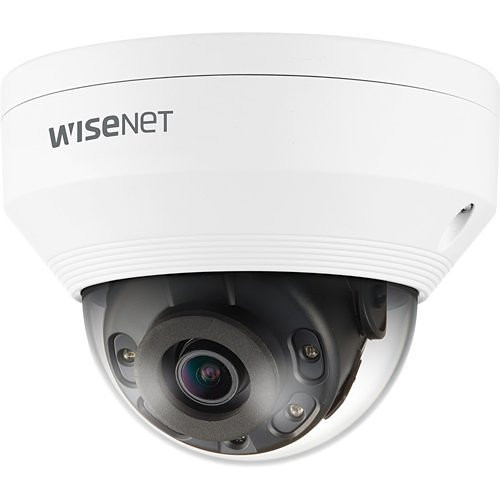
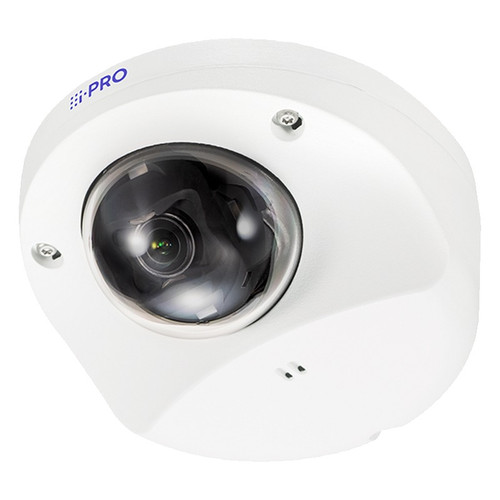
Both the Hanwha QNV-6012R1 and i-PRO WV-S35302-F2L are 2MP fixed outdoor IR dome cameras targeting perimeter surveillance in the same resolution class. The comparison covers imaging performance, environmental ratings, and VMS/analytics integration—areas where installers and IT buyers typically differentiate between an entry-level vandal dome and an AI-capable platform camera at a higher specification tier.
In This Guide
How do the imaging specs compare?
Both cameras use a 1/2.8" 2MP CMOS sensor, but their output resolutions differ: the QNV-6012R1 delivers 1920×1080, while the WV-S35302-F2L outputs 2048×1536—a 4:3 aspect ratio that provides more vertical coverage. The i-PRO model also holds a low-light edge, rated at 0.02 lux color versus Hanwha's 0.03 lux. IR reach is comparable: 20m for the QNV-6012R1 and 21m (at 30IRE) for the WV-S35302-F2L. Wide dynamic range favors the i-PRO significantly: 144dB (Super Dynamic) versus 120dB on the Hanwha.
Lens-wise, the QNV-6012R1 ships with a 2.8mm fixed lens at F2.0, delivering a 113.7° horizontal FOV. The WV-S35302-F2L uses a 2.4mm fixed lens at F2.1, yielding a wider 132° horizontal FOV—useful for broader scene coverage from a single mounting point. The Hanwha lists an explicit frame rate of 30fps; the i-PRO specs list frame rate as 'Variable' without a maximum fps figure in the supplied data. The QNV-6012R1 includes an analog CVBS output (1.0Vp-p / 75Ω) for installation alignment; no equivalent is specified for the WV-S35302-F2L.
What about installation and environment?
Both cameras carry IP66 and IK10 ratings, so weatherproofing and impact resistance are equivalent at that level. The i-PRO WV-S35302-F2L additionally holds NEMA 4X and UL Type 4X certifications, providing a recognized third-party environmental enclosure rating not listed for the QNV-6012R1. Wind resistance of up to 40 m/s (≈89 mph) is specified for the i-PRO; no wind resistance figure appears in the Hanwha spec.
Operating temperature range is a significant differentiator: the WV-S35302-F2L is rated −40°C to +50°C (PoE mode: −20°C to +50°C), versus −10°C to +55°C for the QNV-6012R1. The i-PRO's cold-start floor of −40°C makes it suitable for harsh winter deployments where the Hanwha would not meet spec. Both are PoE-powered (IEEE 802.3af); the QNV-6012R1 is PoE Class 3 at 7.4W max, while the WV-S35302-F2L is listed as PoE Class 0 at 8.6W max. Both also accept 12VDC; the i-PRO spec does not explicitly list a 12VDC input in the provided data. Physical size is similar: Hanwha Ø110×86mm at 255g; i-PRO 109×53×119mm at 475g.
Which fits your VMS and analytics better?
Both cameras support ONVIF Profile S/G/T and HTTPS/802.1X security. The QNV-6012R1 adds ONVIF Profile M and Wisenet SUNAPI (HTTP API) plus the Wisenet open platform. The WV-S35302-F2L adds ONVIF Profile M and MQTT support, and is certified to FIPS 140-2 Level 3—a cybersecurity certification not listed for the Hanwha, relevant for government or regulated-industry deployments. The i-PRO also lists signed firmware; this is not specified for the QNV-6012R1.
On analytics, the QNV-6012R1 provides motion detection (4 polygonal zones), defocus detection, directional detection, enter/exit, virtual line, and tampering. The WV-S35302-F2L adds AI-based face detection, occupancy/people detection, vehicle detection, audio detection, and AI sound classification (gunshot, yell, vehicle horn, glass break)—a materially broader on-camera analytics suite enabled by its Ambarella CV25M SoC. For audio, the i-PRO lists audio compression (G.726/G.711) and audio detection; the Hanwha QNV-6012R1 specifies no audio input or output in the provided data. Edge storage is microSD/SDXC up to 128GB on the Hanwha and up to 512GB (microSDXC) on the i-PRO. Up to 14 simultaneous streams are supported by the i-PRO; the Hanwha supports up to 6 unicast users with 3 profiles.
Which should you choose: the QNV-6012R1 or the S35302-F2L?
Our take: The WV-S35302-F2L is the stronger choice when the deployment demands AI-driven analytics, extreme cold-weather operation, or cybersecurity certification. It outperforms the QNV-6012R1 across three concrete dimensions: dynamic range (144dB vs. 120dB), operating temperature floor (−40°C vs. −10°C), and on-camera analytics (AI face, people, vehicle, and sound classification versus motion zones and line-crossing). It also carries FIPS 140-2 Level 3 certification and a 5-year warranty versus the Hanwha's 3-year coverage. Conversely, the QNV-6012R1 is the appropriate selection when budget, a Wisenet/SUNAPI-native VMS ecosystem, or a CVBS alignment output are the deciding factors—and when the operating environment stays above −10°C. Installers standardized on Wisenet infrastructure will gain tighter platform integration from the Hanwha; i-PRO or open-ONVIF VMS environments benefit from the i-PRO's broader AI feature set and wider protocol stack.
Side-by-Side Comparison
Spec-for-spec, from manufacturer data.
| Specification | Hanwha QNV-6012R1 | i-PRO S35302-F2L |
|---|---|---|
| Resolution | 1920×1080 (16:9) | 2048×1536 (4:3) |
| Image Sensor | 1/2.8" 2MP CMOS | Approx. 1/2.8" CMOS (5.57×3.13mm scanning area) |
| Focal Length / Lens | 2.8mm fixed, F2.0 | 2.4mm fixed, F2.1 |
| Horizontal FOV | 113.7° | 132° (16:9) |
| Min. Illumination (Color) | 0.03 lux | 0.02 lux |
| IR Range | 20m (65.6ft) | 21m (68.9ft, at 30IRE) |
| Wide Dynamic Range | 120dB | 144dB max (Super Dynamic On, Level 31) |
| Max Frame Rate | 30fps | Variable (maximum not specified in provided data) |
| Video Compression | H.265, H.264, MJPEG | H.265, H.264, JPEG |
| Audio | — | G.726 / G.711; audio detection; AI sound classification |
| IP Rating | IP66 | IP66, NEMA 4X, UL Type 4X |
| IK / Impact Rating | IK10 | IK10 |
| Operating Temperature | −10°C to +55°C | −40°C to +50°C (PoE: −20°C to +50°C) |
| Power Input / PoE Class | PoE 802.3af Class 3 / 12VDC; 7.4W max | PoE 802.3af Class 0; 8.6W max |
| Edge Storage | microSD/SDHC/SDXC up to 128GB | microSD/SDHC/SDXC up to 512GB |
| ONVIF Profiles | S / G / T / M | G / M / S / T |
| Analytics | Motion (4 zones), defocus, directional, enter/exit, virtual line, tampering | AI motion, face, occupancy, vehicle; audio detection; AI sound classification (gunshot, yell, horn, glass break) |
| Cybersecurity Certification | — | FIPS 140-2 Level 3; signed firmware |
| Simultaneous Users / Streams | 6 unicast / 3 profiles | Up to 14 users |
| Weight | 255g (0.56 lb) | 475g (1.05 lb) |
| Warranty | 3-year | 5-year |
Frequently Asked Questions
Which should you choose: the QNV-6012R1 or the S35302-F2L?
The WV-S35302-F2L is the stronger choice when the deployment demands AI-driven analytics, extreme cold-weather operation, or cybersecurity certification. It outperforms the QNV-6012R1 across three concrete dimensions: dynamic range (144dB vs. 120dB), operating temperature floor (−40°C vs. −10°C), and on-camera analytics (AI face, people, vehicle, and sound classification versus motion zones and line-crossing). It also carries FIPS 140-2 Level 3 certification and a 5-year warranty versus the Hanwha's 3-year coverage. Conversely, the QNV-6012R1 is the appropriate selection when budget, a Wisenet/SUNAPI-native VMS ecosystem, or a CVBS alignment output are the deciding factors—and when the operating environment stays above −10°C. Installers standardized on Wisenet infrastructure will gain tighter platform integration from the Hanwha; i-PRO or open-ONVIF VMS environments benefit from the i-PRO's broader AI feature set and wider protocol stack.
Is the QNV-6012R1 or WV-S35302-F2L better for low-light performance?
The WV-S35302-F2L has a slight edge: its minimum illumination is rated at 0.02 lux (color) versus 0.03 lux for the QNV-6012R1, and its wide dynamic range is specified at 144dB compared to 120dB on the Hanwha. IR range is nearly equal—21m for the i-PRO versus 20m for the Hanwha. For scenes with extreme contrast (e.g., headlights against dark areas), the higher WDR of the WV-S35302-F2L provides a measurable advantage.
Can either camera operate in very cold climates, such as northern winters?
Only the WV-S35302-F2L is rated for very cold conditions: its operating temperature extends to −40°C (with PoE, the floor is −20°C). The QNV-6012R1 is specified down to −10°C only. For installations in unheated outdoor enclosures in northern climates, the i-PRO is the spec-compliant choice; the Hanwha does not meet spec below −10°C.
Which camera is better suited for a government or high-security network environment?
The WV-S35302-F2L lists FIPS 140-2 Level 3 certification and signed firmware—both are explicitly specified in the provided data. Neither of these certifications is listed for the QNV-6012R1. For deployments requiring FIPS-validated cryptographic modules or firmware integrity verification, the i-PRO WV-S35302-F2L meets those criteria as documented; the Hanwha's certifications are not stated in the supplied spec sheet.
Get a Second Opinion on Your Camera Choice
Share your site layout, coverage goals, and budget. Our team will validate the camera selection, flag anything we would change, and recommend products that match the use case.