
Hanwha QNO-8080R vs Hanwha XNB-8000: Specification Comparison
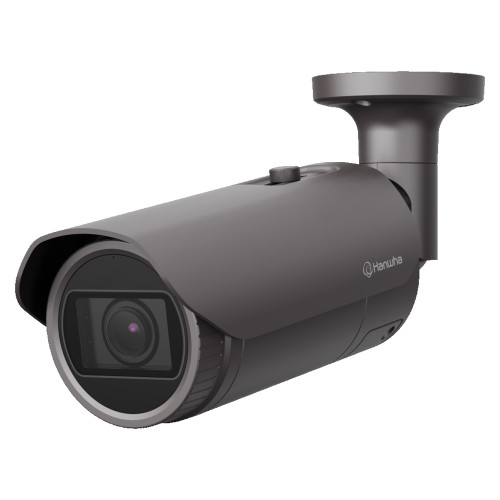
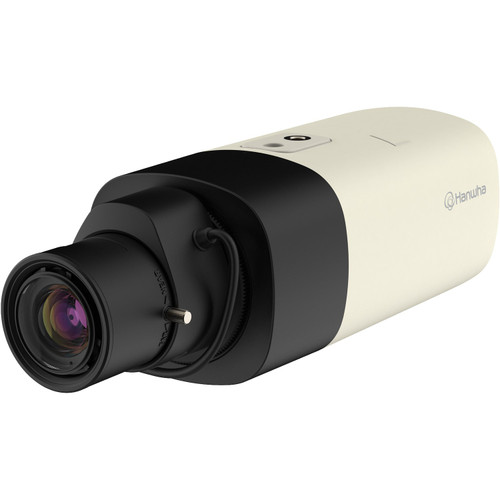
Both the Hanwha QNO-8080R and XNB-8000 are 5MP outdoor bullet IP cameras in the same resolution class, making them direct cross-shop candidates for integrators specifying fixed surveillance cameras. The QNO-8080R ships as a self-contained unit with a built-in motorized varifocal lens and IR illuminator, while the XNB-8000 is a box-style bullet accepting C/CS-mount lenses without an integrated IR source, targeting installations where lens selection and form factor compactness take priority. This comparison examines imaging performance, installation requirements, and VMS/analytics integration.
In This Guide
How do the imaging specs compare?
The QNO-8080R uses a 1/2.8" CMOS sensor producing 2592×1944 resolution, while the XNB-8000 uses a larger 1/1.8" CMOS rated at 6MP natively but outputting 5MP (2560×1920). The larger sensor on the XNB-8000 yields significantly better low-light sensitivity: 0.07 Lux color / 0.007 Lux B/W versus the QNO-8080R's 0.15 Lux color. The QNO-8080R adds an 850nm IR LED illuminator with a 30m (98 ft) range and 0 Lux IR capability; the XNB-8000 specs list no built-in IR illuminator, meaning external IR or a separate illuminator is required for zero-light operation. Both cameras deliver 120dB WDR at 30fps.
The QNO-8080R includes a built-in motorized varifocal lens (3.2–10mm, 3.1x zoom, F1.6–F2.9) with simple focus control and DORI distances specified: Detect to 185.7m (tele) and Identify to 18.6m (tele). The XNB-8000 accepts C-mount and CS-mount lenses (no focal length or aperture specs provided in the supplied data, as this is a lensless box camera). The XNB-8000 adds Digital Image Stabilization via a built-in gyro sensor and optical defog filter—neither of which is listed for the QNO-8080R.
What about installation and environment?
The QNO-8080R is rated IP66 and IK10, confirming dust-tight weatherproofing and resistance to 20-joule impacts (vandal-rated). Its operating temperature range is -30°C to +55°C, suitable for extreme cold climates. Power is PoE only (IEEE 802.3af, Class 3; max 9.50W, typical 7.30W). The camera body is aluminum and weighs 1,190g (2.62 lb) at ø91×322.9mm; a backbox SBO-126B is listed. The XNB-8000 lists no IK impact rating in the provided specifications. Its operating range is -10°C to +55°C—a narrower cold-weather floor of -10°C versus -30°C. Power options are broader: PoE (IEEE 802.3af, Class 3), 24VAC, or 12VDC, max 8.50W. The XNB-8000 body is plastic, weighing only 420g (0.93 lb) at 73.1×66.6×147.8mm, making it substantially more compact and lighter.
Mounting differs fundamentally: the QNO-8080R is a traditional bullet with pan/tilt/rotate ranges (0–360°/0–100°/0–360°) and installs on a surface mount. The XNB-8000 uses C-mount/CS-mount lens attachment, typical of box cameras requiring a separate mount bracket (wall/ceiling bracket included per package contents). The XNB-8000 also provides a Micro USB Type B video output for installation in addition to the CVBS output shared by both units.
Which fits your VMS and analytics better?
Both cameras support ONVIF Profile S/G/T, SUNAPI (HTTP API), Wisenet open platform, WiseStream II smart codec, H.265/H.264 CBR/VBR, MJPEG, and SNMPv1/v2c/v3. The XNB-8000 supports up to 10 simultaneous streaming profiles versus 6 on the QNO-8080R, and unicast to 20 users versus 6. The XNB-8000 also adds audio: a selectable mic-in/line-in/built-in microphone input and a line-level audio output, with G.711/G.726 audio compression. The QNO-8080R has no audio input or output listed in the provided specifications. The XNB-8000 also includes RS-485 for serial PTZ or ancillary device control.
Edge analytics differ in scope: the QNO-8080R provides motion detection (4 polygonal zones), tampering, defocus detection, virtual area (Intrusion/Enter/Exit), and virtual line (Crossing/Direction). The XNB-8000 offers motion detection (8 zones, 8-point polygonal), loitering, directional detection, fog detection, digital auto-tracking, sound classification, and handover—a broader built-in analytics suite. Privacy masking is more capable on the XNB-8000 (32 zones, 4-point polygonal, color-selectable, mosaic) versus 6 rectangular zones on the QNO-8080R. Edge storage is also substantially larger on the XNB-8000: dual microSD slots supporting up to 512GB total versus a single slot capped at 128GB on the QNO-8080R. The XNB-8000 also carries 1,024MB RAM versus 512MB on the QNO-8080R.
Which should you choose: the QNO-8080R or the XNB-8000?
Our take: The QNO-8080R is the stronger choice when a self-contained, vandal-hardened bullet with built-in IR is needed in cold-climate or high-impact-risk outdoor environments. It provides IK10 impact resistance (not listed for the XNB-8000), a -30°C cold-weather floor (versus -10°C), and a built-in 850nm IR illuminator with 30m range enabling true zero-lux operation—the XNB-8000 lists no integrated IR. Its motorized 3.2–10mm varifocal lens with documented DORI distances further aids quick field deployment. Conversely, the XNB-8000 is the better fit when lens flexibility, audio recording, advanced analytics, or higher-density storage are the priority: it offers C/CS-mount interchangeability, built-in microphone with audio compression, a broader analytics set (loitering, sound classification, auto-tracking), dual 512GB microSD slots versus a single 128GB slot, and 10 concurrent streaming profiles versus 6. Choose the QNO-8080R for rugged all-in-one outdoor deployment; choose the XNB-8000 for analytics-heavy or audio-required installations where lens selection matters.
Side-by-Side Comparison
Spec-for-spec, from manufacturer data.
| Specification | Hanwha QNO-8080R | Hanwha XNB-8000 |
|---|---|---|
| Resolution | 2592×1944 (5MP) | 2560×1920 (5MP) |
| Image Sensor | 1/2.8" CMOS | 1/1.8" 6MP CMOS |
| Lens / Focal Length | 3.2–10mm (3.1x) motorized varifocal, built-in | C-mount / CS-mount (no lens included) |
| Max Aperture | F1.6 (Wide) / F2.9 (Tele) | — |
| Min Illumination | 0.15 Lux color / 0 Lux IR | 0.07 Lux color / 0.007 Lux B/W |
| IR Illuminator | 850nm LED, 30m (98 ft) range | — (no built-in IR listed) |
| Wide Dynamic Range | 120dB | 120dB |
| Max Frame Rate | 30fps @ 5MP | 30fps |
| Video Compression | H.265 / H.264 / MJPEG | H.265 / H.264 / MJPEG |
| Concurrent Stream Profiles | Up to 3 profiles / 6 unicast users | Up to 10 profiles / 20 unicast users |
| IP Rating | IP66 | — (not listed in provided specs) |
| IK / Impact Rating | IK10 | — (not listed in provided specs) |
| Operating Temperature | -30°C to +55°C | -10°C to +55°C |
| Power Input / PoE Class | PoE IEEE 802.3af, Class 3 only; max 9.50W | PoE IEEE 802.3af Class 3 / 24VAC / 12VDC; max 8.50W |
| Edge Storage | 1× microSD slot, up to 128GB | 2× microSD slots, up to 512GB total |
| RAM | 512MB | 1,024MB |
| Audio | — (none listed) | Mic-in / Line-in / Built-in mic; Line-out; G.711 / G.726 |
| Serial Interface | — | RS-485 (multiple protocols) |
| Analytics | Motion, Tampering, Defocus, Virtual area/line (5 types) | Motion, Loitering, Directional, Fog, Auto-tracking, Sound classification, Handover (7 types) |
| Privacy Masking | 6 rectangular zones | 32 zones, 4-point polygonal, color/mosaic options |
| Housing Material | Aluminum | Plastic |
| Dimensions | ø91×322.9mm (ø3.58×12.71") | 73.1×66.6×147.8mm (2.88×2.62×5.82") |
| Weight | 1,190g (2.62 lb) | 420g (0.93 lb) |
| Warranty | 3 years | 3 years |
Frequently Asked Questions
Which should you choose: the QNO-8080R or the XNB-8000?
The QNO-8080R is the stronger choice when a self-contained, vandal-hardened bullet with built-in IR is needed in cold-climate or high-impact-risk outdoor environments. It provides IK10 impact resistance (not listed for the XNB-8000), a -30°C cold-weather floor (versus -10°C), and a built-in 850nm IR illuminator with 30m range enabling true zero-lux operation—the XNB-8000 lists no integrated IR. Its motorized 3.2–10mm varifocal lens with documented DORI distances further aids quick field deployment. Conversely, the XNB-8000 is the better fit when lens flexibility, audio recording, advanced analytics, or higher-density storage are the priority: it offers C/CS-mount interchangeability, built-in microphone with audio compression, a broader analytics set (loitering, sound classification, auto-tracking), dual 512GB microSD slots versus a single 128GB slot, and 10 concurrent streaming profiles versus 6. Choose the QNO-8080R for rugged all-in-one outdoor deployment; choose the XNB-8000 for analytics-heavy or audio-required installations where lens selection matters.
Is the QNO-8080R or XNB-8000 better for low-light performance?
For passive low-light performance, the XNB-8000's larger 1/1.8" sensor achieves 0.07 Lux color and 0.007 Lux B/W—significantly more sensitive than the QNO-8080R's 0.15 Lux color minimum. However, the QNO-8080R includes a built-in 850nm IR illuminator rated to 30m, enabling 0 Lux IR operation without any ambient light. The XNB-8000 has no built-in IR listed in the provided specifications, so it would require an external IR illuminator for zero-light coverage despite its superior passive sensitivity.
Can I use the XNB-8000 with my existing lens inventory?
Yes. The XNB-8000 accepts standard C-mount and CS-mount lenses, making it compatible with most professional lens inventories. The QNO-8080R is not a box camera—it ships with a fixed built-in motorized varifocal lens (3.2–10mm) and does not accept interchangeable lenses.
Which camera supports on-board audio recording?
Only the XNB-8000 supports audio. It provides a selectable mic-in/line-in/built-in microphone input, a line-level audio output, and G.711/G.726 audio compression. The QNO-8080R has no audio input or output listed in the provided specifications.
Get a Second Opinion on Your Camera Choice
Share your site layout, coverage goals, and budget. Our team will validate the camera selection, flag anything we would change, and recommend products that match the use case.