
Hanwha QNO-8010R vs i-PRO X15500-V3L: Specification Comparison
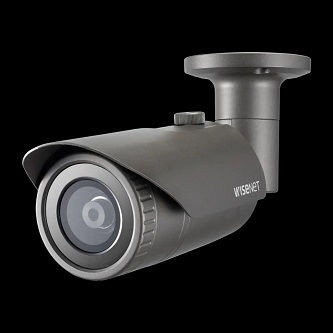
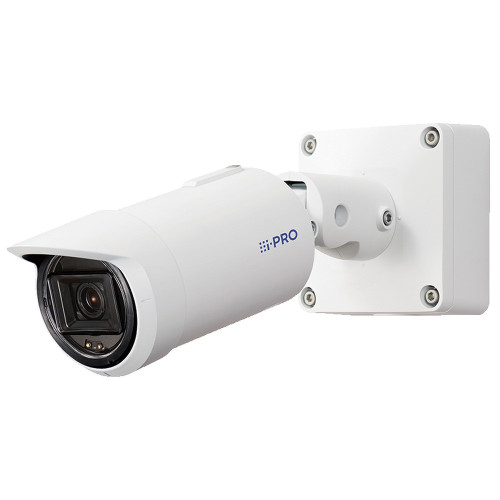
Both the Hanwha QNO-8010R and the i-PRO WV-X15500-V3L are 5MP outdoor bullet IP cameras aimed at perimeter and general surveillance applications. The QNO-8010R is a fixed-lens, PoE Class 3 unit targeting cost-sensitive deployments, while the WV-X15500-V3L is a motorized varifocal, PoE+ Class 4 camera with an AI-capable SoC and extended IR range. This comparison evaluates imaging performance, installation requirements, and VMS/analytics integration based solely on published specifications.
In This Guide
How do the imaging specs compare?
Both cameras use an approximately 1/2.8-inch CMOS sensor and deliver 5MP resolution, but their lens and low-light characteristics differ materially. The QNO-8010R ships with a fixed 2.8mm lens at F2.0, providing a 105° horizontal field of view with no optical zoom adjustment. The WV-X15500-V3L features a 3.1x motorized varifocal lens spanning 2.9–9mm at F1.3 (wide end), giving a horizontal field of view of 34–106° and enabling remote focus and zoom adjustment without physical access to the camera. The wider maximum aperture of F1.3 on the i-PRO unit allows more light to reach the sensor compared to the Hanwha's F2.0.
On dynamic range, the WV-X15500-V3L specifies 132 dB (Super Dynamic On, Level 31), versus 120 dB WDR on the QNO-8010R — a 12 dB advantage for the i-PRO. Minimum illumination also favors the i-PRO: 0.02 Lux (B&W, F1.3) versus 0.15 Lux color / 0 Lux IR on the Hanwha (the Hanwha's 0 Lux figure is IR-assisted only). IR illumination range is 70m (230 ft) on the WV-X15500-V3L versus 20m (65.6 ft) on the QNO-8010R — a 3.5× advantage in stated IR reach. The QNO-8010R resolution is 2592×1944 (5MP, 4:3); the WV-X15500-V3L outputs 3072×1728 (5MP, 16:9), reflecting different aspect-ratio sensor configurations at nominally the same megapixel count. DORI detect distances reflect this: i-PRO specifies 46.3m wide / 201m tele vs. Hanwha's fixed 40m detect range.
What about installation and environment?
Both cameras are rated IP66 and IK10, confirming dust-tight, water-jet-resistant, and IEC 62262 impact-resistant enclosures suitable for outdoor use. The WV-X15500-V3L adds IP67, NEMA 4X, and UL 50E Type 4X ratings not listed for the QNO-8010R, offering additional ingress protection and a recognized UL listing relevant to North American AHJ approvals. The i-PRO unit also specifies wind resistance up to 40 m/s (approximately 89 mph). The QNO-8010R enclosure is aluminum; the WV-X15500-V3L is aluminum die cast, resin, and stainless steel.
Power requirements differ: the QNO-8010R draws a maximum of 7.5W via PoE IEEE 802.3af (Class 3), while the WV-X15500-V3L requires PoE+ (802.3at, Class 4) at up to 14W, or DC 12V at 1.2A. Installers must confirm PoE+ availability at each switch port for the i-PRO unit; the Hanwha will work on any 802.3af-compliant switch. Operating temperature range is -30°C to +55°C for the QNO-8010R versus -40°C to +55°C for the WV-X15500-V3L, a 10°C cold-side advantage for the i-PRO in arctic or extreme-cold environments. The WV-X15500-V3L is substantially heavier and larger (2.5 kg / 133×383mm) compared to the QNO-8010R (680g / ø70×246mm), which affects mounting hardware selection.
Which fits your VMS and analytics better?
Both cameras support ONVIF Profile S, G, and T. The WV-X15500-V3L additionally supports ONVIF Profile M, which covers metadata streaming for analytics events — relevant when integrating AI-generated event data into a Profile M-capable VMS. The QNO-8010R exposes SUNAPI (Hanwha HTTP API) and Wisenet Open Platform; the WV-X15500-V3L is built on an Ambarella CV52 SoC and does not list a comparable open SDK in the provided specifications. Protocol coverage is broadly similar; the i-PRO spec lists SFTP and MQTT in addition to the standard suite, neither of which appears in the Hanwha spec.
On edge analytics, the WV-X15500-V3L specifies AI Motion, Face, Vehicle, and Occupancy Detection, plus AI Sound Classification (gunshot, yell, vehicle horn, glass break) using the on-board audio input (3.5mm jack, full-duplex capable). The QNO-8010R offers motion detection, tampering, defocus detection, and virtual line/area intrusion analytics but does not list AI-classified audio events or facial/vehicle AI detection. The QNO-8010R supports up to 128GB microSD (1 slot); the WV-X15500-V3L supports microSDXC up to 512GB. Simultaneous user sessions are 6 (unicast) on the Hanwha versus up to 14 on the i-PRO. The QNO-8010R includes 1 alarm input / 1 output; the WV-X15500-V3L provides 3 alarm inputs and 1 output (4-terminal block) plus audio I/O.
Which should you choose: the QNO-8010R or the X15500-V3L?
Our take: The WV-X15500-V3L is the stronger choice when IR range, AI analytics depth, or flexibility of field of view are primary requirements. Its 70m IR reach exceeds the QNO-8010R's 20m by 3.5×, its 132 dB Super Dynamic WDR outperforms the Hanwha's 120 dB by 12 dB, and its 3.1x motorized varifocal lens (2.9–9mm, F1.3) eliminates the need for physical lens adjustments post-installation — advantages the fixed 2.8mm F2.0 QNO-8010R cannot match. The i-PRO unit also adds ONVIF Profile M, AI sound classification, up to 512GB edge storage, and NEMA 4X / UL listing. The QNO-8010R is the stronger choice when budget, infrastructure simplicity, or PoE Class 3 switch compatibility are constraints: it operates within standard 802.3af budgets (7.5W max), is significantly lighter (680g vs 2.5 kg), and provides Hanwha SUNAPI/Wisenet platform integration for existing Wisenet VMS deployments. Specify the WV-X15500-V3L for long-range perimeter, AI-event workflows, or cold-climate sites; specify the QNO-8010R for standard PoE infrastructure with Wisenet ecosystem integration.
Side-by-Side Comparison
Spec-for-spec, from manufacturer data.
| Specification | Hanwha QNO-8010R | i-PRO X15500-V3L |
|---|---|---|
| Resolution | 2592×1944 (5MP, 4:3) | 3072×1728 (5MP, 16:9) |
| Image Sensor | 1/2.8" CMOS | Approx. 1/2.8" CMOS |
| Lens / Focal Length | 2.8mm fixed, F2.0 | 2.9–9mm motorized varifocal, F1.3 (wide) |
| Optical Zoom | — | 3.1x motorized (up to 12.4x extra zoom) |
| Horizontal Field of View | 105° (fixed) | 34–106° (varifocal) |
| Min. Illumination | 0.15 Lux color / 0 Lux IR | 0.02 Lux B&W (F1.3, 1/30s) |
| IR Range | 20m (65.6 ft) | 70m (230 ft) |
| Wide Dynamic Range | 120 dB | 132 dB (Super Dynamic On, Level 31) |
| Max Frame Rate | 30fps @ 5MP | 30fps (spec as provided) |
| Video Compression | H.265, H.264, MJPEG | H.265, H.264, MJPEG |
| ONVIF Profiles | S / G / T | G / S / T / M |
| Edge Analytics | Motion, tamper, defocus, virtual line/area | AI motion, face, vehicle, occupancy; AI sound classification |
| Audio | — | 3.5mm stereo input + output, G.726/G.711/AAC-LC |
| Alarm I/O | 1 input / 1 output | 3 inputs / 1 output |
| Edge Storage | microSD/SDHC/SDXC up to 128GB | microSDXC up to 512GB |
| Power Input / PoE Class | PoE 802.3af, Class 3, max 7.5W | PoE+ 802.3at, Class 4, max 14W; or DC 12V 1.2A |
| IP Rating | IP66 | IP66 / IP67 / NEMA 4X / UL Type 4X |
| Impact Rating | IK10 | IK10 |
| Operating Temperature | -30°C to +55°C | -40°C to +55°C |
| Dimensions | ø70.0 × 246.0 mm | 133 × 133 × 383 mm |
| Weight | 680g (1.50 lb) | Approx. 2.5 kg (5.6 lb) |
| Warranty | 3 years | 5 years |
Frequently Asked Questions
Which should you choose: the QNO-8010R or the X15500-V3L?
The WV-X15500-V3L is the stronger choice when IR range, AI analytics depth, or flexibility of field of view are primary requirements. Its 70m IR reach exceeds the QNO-8010R's 20m by 3.5×, its 132 dB Super Dynamic WDR outperforms the Hanwha's 120 dB by 12 dB, and its 3.1x motorized varifocal lens (2.9–9mm, F1.3) eliminates the need for physical lens adjustments post-installation — advantages the fixed 2.8mm F2.0 QNO-8010R cannot match. The i-PRO unit also adds ONVIF Profile M, AI sound classification, up to 512GB edge storage, and NEMA 4X / UL listing. The QNO-8010R is the stronger choice when budget, infrastructure simplicity, or PoE Class 3 switch compatibility are constraints: it operates within standard 802.3af budgets (7.5W max), is significantly lighter (680g vs 2.5 kg), and provides Hanwha SUNAPI/Wisenet platform integration for existing Wisenet VMS deployments. Specify the WV-X15500-V3L for long-range perimeter, AI-event workflows, or cold-climate sites; specify the QNO-8010R for standard PoE infrastructure with Wisenet ecosystem integration.
Is the QNO-8010R or WV-X15500-V3L better for low-light performance?
Based on published specs, the WV-X15500-V3L has the advantage on two low-light metrics: its minimum illumination is 0.02 Lux (B&W, F1.3) versus the QNO-8010R's 0.15 Lux color (without IR), and its IR illumination range is 70m compared to the QNO-8010R's 20m. The i-PRO's F1.3 maximum aperture also gathers more light than the Hanwha's F2.0. Both cameras reach 0 Lux operation with IR active.
Can I use the QNO-8010R on a standard PoE switch, or do I need PoE+?
The QNO-8010R draws a maximum of 7.5W and is rated for PoE IEEE 802.3af (Class 3), so it operates on any standard 802.3af-compliant switch port. The WV-X15500-V3L requires PoE+ (802.3at, up to 14W, Class 4); using it on an 802.3af-only switch port may result in insufficient power unless the DC 12V input is used instead.
Does either camera support AI-based people or vehicle detection on the edge?
The WV-X15500-V3L specifies on-board AI analytics for motion, face, vehicle, and occupancy detection, plus AI sound classification (gunshot, yell, vehicle horn, glass break) via its built-in audio input. The QNO-8010R provides virtual line/area intrusion, tampering, defocus detection, and 4-zone polygonal motion detection, but the provided specifications do not list AI-classified face, vehicle, or audio event detection.
Get a Second Opinion on Your Camera Choice
Share your site layout, coverage goals, and budget. Our team will validate the camera selection, flag anything we would change, and recommend products that match the use case.