
Hanwha QND-7082R vs Hanwha QNV-7082R: Specification Comparison
The Hanwha QND-7082R and QNV-7082R are both 4MP fixed IP dome cameras sharing the same sensor class, resolution, lens range, and core analytics platform. The comparison is meaningful for buyers choosing between an indoor-only deployment and an application requiring outdoor or vandal-resistant installation. Both ship from the same Hanwha Wisenet product family, making them genuine cross-shop candidates for integrators specifying a mixed indoor/outdoor site.
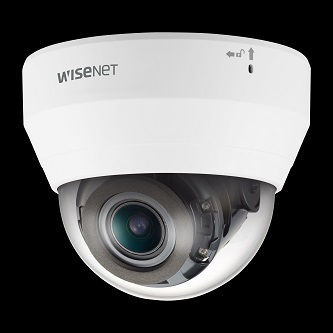
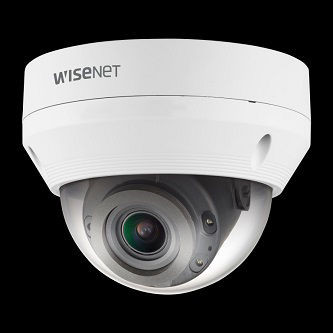
In This Guide
How do the imaging specs compare?
Both cameras use a 1/3" CMOS sensor producing 2560×1440 resolution at 30fps, with an identical 3.2–10mm (3.1×) motorized varifocal lens, F1.6 (Wide) to F2.9 (Tele) aperture, and a horizontal field of view spanning 98.6° wide to 30.8° tele. Minimum illumination is identical at 0.1 Lux color and 0 Lux in IR mode, and both deliver 120dB Wide Dynamic Range via BLC/WDR/SSDR and SSNR digital noise reduction. Focus control on both is Simple Focus with DC auto iris.
The meaningful imaging divergence is IR range: the QND-7082R specifies 20m (65.6 ft) of IR illumination, while the QNV-7082R extends that to 30m (98.4 ft). DORI performance tables are identical across both models (Detect 27m wide/129m tele, Observe 11m/52m, Recognize 6m/26m, Identify 3m/13m). The QNV-7082R spec sheet also lists an 850nm IR wavelength designation; the QND-7082R spec does not include that detail. All other imaging parameters — WDR depth, analytics engine, compression codecs, and WiseStream II — are spec-identical.
What about installation and environment?
The QNV-7082R carries IP66 ingress protection and an IK10 impact rating, and its aluminum housing is rated for -40°C to +55°C operation. The QND-7082R has no IP or IK certification listed in its specs, uses a plastic housing, and operates from -10°C to +55°C. That 30°C cold-end advantage on the QNV-7082R is significant for unheated spaces or outdoor enclosures in cold climates. Storage temperature floors also differ: -40°C for the QNV-7082R versus -30°C for the QND-7082R.
Both cameras accept PoE (IEEE 802.3af, Class 3) or 12VDC. Maximum power draw differs: the QND-7082R is rated at 8.6W versus 11.4W for the QNV-7082R, a 2.8W delta relevant when sizing midspan injectors or switch budgets on dense deployments. The QNV-7082R is physically larger and heavier (Ø137×106.1mm, 710g) than the QND-7082R (Ø119.8×98.8mm, 320g). Mounting accessories differ by model: the QNV-7082R uses SBP-301HMW2 (hanging mount) and SBV-136BW (backbox); the QND-7082R uses SBP-122HMW (hanging mount) with no backbox listed. Both support conduit entry, though the knockout configurations differ.
Which fits your VMS and analytics better?
Both cameras are specification-identical on VMS integration: ONVIF Profile S/G/T, Hanwha SUNAPI (HTTP API), H.265/H.264 (Main/High) and MJPEG compression, CBR/VBR bitrate control, WiseStream II smart codec with 5-area manual ROI, and identical protocol stacks including SNMPv1/v2c/v3, 802.1X, HTTPS/SSL, and RTSP. Streaming is unicast up to 6 users or multicast, with up to 3 simultaneous profiles. Edge storage is Micro SD/SDHC/SDXC up to 128GB (1 slot) on both.
Analytics are spec-identical: Defocus Detection, Directional Detection, Motion Detection (4 polygonal zones), Enter/Exit, Virtual Line, and Tampering. Privacy masking is 6 rectangular zones on both. Alarm I/O is 1 input / 1 output on both. The one integration difference is audio input type: the QND-7082R includes a built-in microphone, while the QNV-7082R provides a line-in connection requiring an external microphone. Neither model lists an audio output. The QNV-7082R spec additionally notes encrypted firmware protection; the QND-7082R spec does not mention this feature.
Which should you choose: the QND-7082R or the QNV-7082R?
Our take: The QND-7082R is the stronger choice when the installation is entirely indoors, space is constrained, and PoE switch power budgets are tight. The QNV-7082R is the required choice for any outdoor, exposed, or vandal-risk location. Three concrete spec deltas define the decision: (1) the QNV-7082R is IP66-rated and IK10-impact-rated; the QND-7082R has neither certification listed; (2) the QNV-7082R operates from -40°C versus the QND-7082R's -10°C cold-floor, a 30°C margin relevant for unheated parking structures or cold-climate exteriors; (3) the QNV-7082R delivers 30m IR range versus 20m on the QND-7082R, a 50% increase useful in longer corridors or exterior perimeters. The QND-7082R draws only 8.6W versus 11.4W and includes a built-in mic rather than a line-in, favoring low-power indoor interview rooms or lobbies. Both cameras integrate identically with ONVIF and Hanwha SUNAPI-based VMS platforms.
Side-by-Side Comparison
Spec-for-spec, from manufacturer data.
| Specification | Hanwha QND-7082R | Hanwha QNV-7082R |
|---|---|---|
| Resolution | 2560×1440 (4MP) | 2560×1440 (4MP) |
| Image Sensor | 1/3" CMOS | 1/3" CMOS |
| Max Frame Rate | 30fps | 30fps |
| Lens / Focal Length | 3.2–10mm (3.1×) motorized varifocal | 3.2–10mm (3.1×) motorized varifocal |
| Max Aperture | F1.6 (Wide) ~ F2.9 (Tele) | F1.6 (Wide) ~ F2.9 (Tele) |
| Min Illumination | 0.1 Lux color / 0 Lux IR | 0.1 Lux color / 0 Lux IR |
| IR Range | 20m (65.6 ft) | 30m (98.4 ft) |
| Wide Dynamic Range | 120dB | 120dB |
| Video Compression | H.265 / H.264 (Main/High) / MJPEG | H.265 / H.264 (Main/High) / MJPEG |
| IP Rating | — | IP66 |
| IK / Impact Rating | — | IK10 |
| Operating Temperature | -10°C to +55°C | -40°C to +55°C |
| Power Input / PoE Class | PoE 802.3af Class 3 / 12VDC | PoE 802.3af Class 3 / 12VDC |
| Max Power Draw | 8.6W | 11.4W |
| Audio | Built-in microphone | Line in (external mic required) |
| Housing Material | Plastic | Aluminum |
| Dimensions | Ø119.8 × 98.8mm | Ø137.0 × 106.1mm |
| Weight | 320g (0.71 lb) | 710g (1.57 lb) |
| Edge Storage | microSD/SDHC/SDXC up to 128GB | microSD/SDHC/SDXC up to 128GB |
| ONVIF | Profile S / G / T | Profile S / G / T |
| Environment Rating | Indoor | Outdoor |
| Warranty | 3 years | 3 years |
Frequently Asked Questions
Which should you choose: the QND-7082R or the QNV-7082R?
The QND-7082R is the stronger choice when the installation is entirely indoors, space is constrained, and PoE switch power budgets are tight. The QNV-7082R is the required choice for any outdoor, exposed, or vandal-risk location. Three concrete spec deltas define the decision: (1) the QNV-7082R is IP66-rated and IK10-impact-rated; the QND-7082R has neither certification listed; (2) the QNV-7082R operates from -40°C versus the QND-7082R's -10°C cold-floor, a 30°C margin relevant for unheated parking structures or cold-climate exteriors; (3) the QNV-7082R delivers 30m IR range versus 20m on the QND-7082R, a 50% increase useful in longer corridors or exterior perimeters. The QND-7082R draws only 8.6W versus 11.4W and includes a built-in mic rather than a line-in, favoring low-power indoor interview rooms or lobbies. Both cameras integrate identically with ONVIF and Hanwha SUNAPI-based VMS platforms.
Can I use the QND-7082R outdoors?
The QND-7082R specifications list no IP ingress rating and no IK impact rating, and its operating temperature floor is -10°C. It is not specified for outdoor use. The QNV-7082R carries IP66 and IK10 ratings with a -40°C operating floor and is the outdoor-rated model in this pair.
Is the QND-7082R or QNV-7082R better for low-light performance?
Both cameras share the same minimum illumination specification: 0.1 Lux in color mode and 0 Lux in IR mode. The QNV-7082R has a longer IR range (30m versus 20m), which provides better illumination coverage at distance in complete darkness. For close-range low-light use indoors, the two cameras are spec-equivalent.
Do both cameras work with the same VMS and NVR systems?
Yes. Both the QND-7082R and QNV-7082R support ONVIF Profile S, G, and T, as well as Hanwha SUNAPI (HTTP API). Codec support (H.265, H.264, MJPEG), streaming profiles, edge storage capacity (128GB microSD), and analytics capabilities are identical across both models, so either camera can be substituted on the same VMS without reconfiguration of video or analytics settings.
Get a Second Opinion on Your Camera Choice
Share your site layout, coverage goals, and budget. Our team will validate the camera selection, flag anything we would change, and recommend products that match the use case.