
Hanwha QND-6082R1 vs i-PRO X25300-V3LN: Specification Comparison
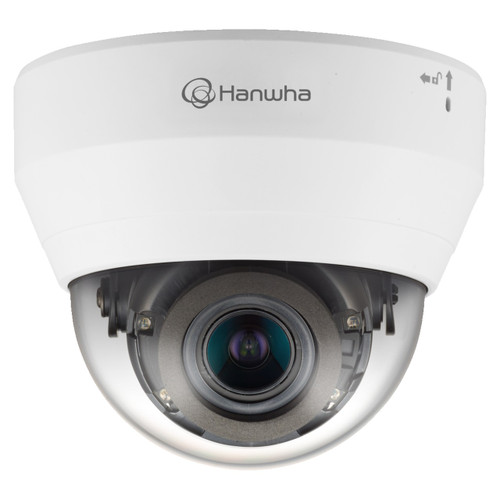
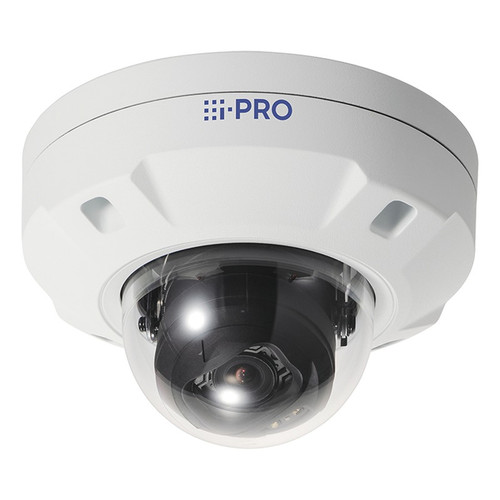
Both the Hanwha QND-6082R1 and the i-PRO WV-X25300-V3LN are 2MP (1920×1080) fixed varifocal dome cameras with motorized zoom, built-in IR illumination, H.265/H.264 compression, and ONVIF compatibility. They occupy the same resolution class and camera type, making them legitimate cross-shop candidates. Key differentiators span environmental hardening, low-light sensitivity, AI analytics depth, PoE class, and warranty length — all of which matter to integrators choosing between an indoor-leaning cost-efficient model and a ruggedized outdoor AI platform.
In This Guide
How do the imaging specs compare?
Both cameras share a 1/2.8-inch 2MP CMOS sensor delivering 1920×1080 at 30fps. The lens ranges are close — the QND-6082R1 covers 3.2–10mm (3.1x) at F1.6 wide, while the X25300-V3LN covers 2.9–9mm (3.1x) at F1.3 wide. That half-stop aperture advantage on the i-PRO translates directly into its minimum illumination figure of 0.005 lux (B&W), versus the Hanwha's 0.03 lux color / 0 lux IR. The i-PRO's IR reach is also dramatically longer at 70m (230ft) compared to the Hanwha's 20m (65.6ft).
Dynamic range is another clear split: the i-PRO X25300-V3LN claims 144dB Super Dynamic, with adjustable fog compensation (0–8 levels). The Hanwha QND-6082R1 specifies 120dB WDR (SSDR). The Hanwha includes Hallway View (90°/270° rotation) and digital noise reduction (SSNR), while the i-PRO adds a built-in gyro-based image stabilizer active in 30fps mode. DORI detection ranges at Tele are comparable: Hanwha 128.8m detect vs. i-PRO 118.2m detect, with the Hanwha holding a slight edge at the Detect tier due to its 10mm tele end vs. the i-PRO's 9mm.
What about installation and environment?
The environmental gap between these two cameras is substantial. The i-PRO WV-X25300-V3LN is rated IP66/IP67 (IEC 60529), Type 4X (UL50E), and NEMA 4X, with IK10 impact resistance (IEC 62262) and 50J shock resistance (IEC 60068-2-75). It also carries a wind resistance rating of up to 40 m/s (~89 mph) and an operating temperature range of -40°C to +55°C (power-on from -30°C). These ratings make it unambiguously an outdoor-rated camera. The Hanwha QND-6082R1 specifies no IP or IK rating and lists its environment rating as Indoor, with an operating range of -10°C to +55°C.
On power, the i-PRO requires PoE+ (802.3at, Class 4, 14W) or DC 12V 1.2A. The Hanwha runs on standard PoE (IEEE 802.3af, Class 3, 7.7W max), meaning existing Class 3 switches and injectors are sufficient without upgrades. The Hanwha is lighter and more compact (Ø119.8×98.8mm, 320g / 0.71 lb) versus the i-PRO (Ø154×105mm, 1.1kg / 2.43 lbs), which reflects the i-PRO's aluminum and stainless steel construction versus the Hanwha's plastic housing.
Which fits your VMS and analytics better?
Both cameras support ONVIF Profile S, G, and T. The i-PRO X25300-V3LN additionally supports ONVIF Profile M, which adds metadata streaming for AI analytics events — relevant for VMS platforms that ingest structured AI data. The i-PRO's analytics suite includes AI motion detection, face detection, people detection, vehicle detection, and AI sound classification (gunshot, yell, vehicle horn, glass break), plus Scene Change Detection across 1 zone and up to 8 privacy zones. The Hanwha QND-6082R1 provides analytics including defocus detection, directional detection, motion detection (4 polygonal zones), Enter/Exit, tampering, and virtual line, with 6 rectangular privacy zones. The Hanwha uses Wisenet's WiseStream II codec for adaptive bitrate reduction; i-PRO does not specify an equivalent named codec.
Audio handling differs meaningfully. The i-PRO provides a 3.5mm stereo mini jack input and 3.5mm mono output supporting G.726, G.711, and AAC-LC compression with half/full-duplex modes; the QND-6082R1 specifies no built-in audio input or output. For edge storage, the i-PRO supports microSDXC up to 512GB, while the Hanwha supports Micro SD/SDHC/SDXC up to 128GB. The i-PRO also supports up to 14 simultaneous users versus the Hanwha's 6 unicast users. Security posture on the i-PRO includes FIPS 140-2 Level 3 certification and signed firmware; the Hanwha specifies HTTPS/SSL, 802.1X (EAP-TLS, EAP-LEAP), and digest authentication but does not cite FIPS certification.
Which should you choose: the QND-6082R1 or the X25300-V3LN?
Our take: The QND-6082R1 is the stronger choice when deploying indoors on a budget-constrained PoE infrastructure where standard 802.3af Class 3 switches are already in place. The i-PRO WV-X25300-V3LN is the clear choice for outdoor or harsh-environment installations. Three concrete spec deltas drive that conclusion: IR range is 70m vs. 20m in favor of the i-PRO, minimum illumination is 0.005 lux vs. 0.03 lux in favor of the i-PRO, and dynamic range is 144dB vs. 120dB again favoring the i-PRO. The Hanwha's advantages — lighter weight (0.71 lb vs. 2.43 lbs), lower power draw (7.7W vs. 14W PoE+), and adequate indoor analytics — make it suitable for interior corridor or retail deployments. Choose the i-PRO when the install is outdoor, requires FIPS 140-2 Level 3 compliance, demands full-duplex audio, or relies on AI face/vehicle/sound classification integrated via ONVIF Profile M metadata.
Side-by-Side Comparison
Spec-for-spec, from manufacturer data.
| Specification | Hanwha QND-6082R1 | i-PRO X25300-V3LN |
|---|---|---|
| Resolution | 1920×1080 (2MP) | 1920×1080 (2MP) |
| Image Sensor | 1/2.8" 2MP CMOS | Approx. 1/2.8 type CMOS |
| Lens / Focal Length | 3.2–10mm, 3.1x motorized varifocal | 2.9–9mm, 3.1x motorized zoom/focus |
| Max Aperture (Wide) | F1.6 | F1.3 |
| Min. Illumination | 0.03 lux color / 0 lux IR | 0.005 lux B&W (50IRE, F1.5, 1/30s) |
| IR Range | 20m (65.6 ft) | 70m (230 ft) |
| Wide Dynamic Range | 120dB | 144dB (Super Dynamic On, Level 31) |
| Max Frame Rate | 30fps | 30fps |
| Video Compression | H.265, H.264, MJPEG | H.265, H.264, MJPEG |
| IP Rating | — | IP66 / IP67 / NEMA 4X |
| IK / Impact Rating | — | IK10 (IEC 62262), 50J shock |
| Operating Temperature | -10°C to +55°C | -40°C to +55°C (power-on: -30°C) |
| Power Input / PoE Class | PoE 802.3af, Class 3 (7.7W max) | PoE+ 802.3at, Class 4 (14W) or DC 12V 1.2A |
| Edge Storage | microSD/SDHC/SDXC up to 128GB | microSDXC up to 512GB |
| Audio | — | 3.5mm in / 3.5mm out; G.726, G.711, AAC-LC; full duplex |
| ONVIF Profiles | S, G, T | G, S, T, M |
| AI / Analytics | Motion, Enter/Exit, Virtual line, Tampering, Defocus, Directional | AI motion, face, people, vehicle detection; AI sound classification |
| Dimensions | Ø119.8×98.8mm | Ø154×105mm |
| Weight | 320g (0.71 lb) | 1.1kg (2.43 lbs) |
| Environment Rating | Indoor | Outdoor |
| Warranty | 3 years | 5 years |
Frequently Asked Questions
Which should you choose: the QND-6082R1 or the X25300-V3LN?
The QND-6082R1 is the stronger choice when deploying indoors on a budget-constrained PoE infrastructure where standard 802.3af Class 3 switches are already in place. The i-PRO WV-X25300-V3LN is the clear choice for outdoor or harsh-environment installations. Three concrete spec deltas drive that conclusion: IR range is 70m vs. 20m in favor of the i-PRO, minimum illumination is 0.005 lux vs. 0.03 lux in favor of the i-PRO, and dynamic range is 144dB vs. 120dB again favoring the i-PRO. The Hanwha's advantages — lighter weight (0.71 lb vs. 2.43 lbs), lower power draw (7.7W vs. 14W PoE+), and adequate indoor analytics — make it suitable for interior corridor or retail deployments. Choose the i-PRO when the install is outdoor, requires FIPS 140-2 Level 3 compliance, demands full-duplex audio, or relies on AI face/vehicle/sound classification integrated via ONVIF Profile M metadata.
Is the QND-6082R1 or WV-X25300-V3LN better for low-light performance?
The i-PRO WV-X25300-V3LN is significantly better in low light. Its minimum illumination is 0.005 lux (B&W) versus the Hanwha QND-6082R1's 0.03 lux color, and its IR illumination reaches 70m compared to the Hanwha's 20m. The i-PRO also has a wider maximum aperture (F1.3 vs. F1.6 at wide end), which contributes to its lower light threshold.
Can I power the WV-X25300-V3LN from a standard PoE switch?
No. The i-PRO WV-X25300-V3LN requires PoE+ (802.3at) at up to 14W, which is a Class 4 draw. Standard 802.3af switches supply a maximum of 15.4W at the port but are not guaranteed to deliver Class 4 power. You will need a PoE+ (802.3at) capable switch or midspan injector. The Hanwha QND-6082R1, by contrast, operates on standard PoE (802.3af, Class 3, 7.7W max) and will work with existing Class 3 infrastructure.
Which camera is rated for outdoor installation?
Only the i-PRO WV-X25300-V3LN is rated for outdoor use. It carries IP66/IP67 and NEMA 4X water and dust resistance, IK10 impact resistance, 50J shock resistance, wind tolerance up to 40 m/s, and an operating range starting at -40°C. The Hanwha QND-6082R1 has no stated IP or IK rating and is classified as an indoor camera; installing it in an exposed outdoor environment would void any environmental protection assumptions.
Get a Second Opinion on Your Camera Choice
Share your site layout, coverage goals, and budget. Our team will validate the camera selection, flag anything we would change, and recommend products that match the use case.