
Hanwha QND-6082R1 vs i-PRO S2236LA: Specification Comparison
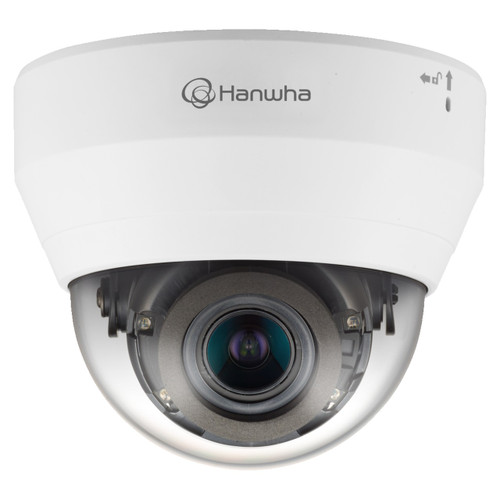
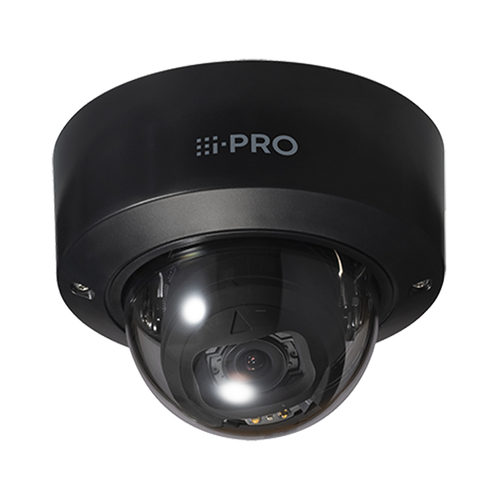
Both the Hanwha QND-6082R1 and i-PRO WV-S2236LA are 2MP (1920×1080) fixed indoor dome cameras with motorized varifocal lenses, built-in IR illumination, and PoE power — a pairing installers and IT buyers regularly cross-shop for interior surveillance in retail, corporate, and institutional environments. This comparison evaluates their imaging performance, physical installation requirements, and VMS/analytics integration using only the published specifications for each model.
In This Guide
How do the imaging specs compare?
Both cameras use a 1/2.8-inch 2MP CMOS sensor delivering 1920×1080 resolution, but their frame rate ceilings diverge sharply: the QND-6082R1 tops out at 30fps, while the WV-S2236LA supports 60fps — a meaningful advantage for capturing fast movement in retail or transit. Low-light performance also favors the i-PRO: minimum illumination is 0.007 lux color / 0.006 lux B&W (at F1.3), versus 0.03 lux color / 0 lux B&W (IR on) for the Hanwha. The WV-S2236LA's wider dynamic range — 144 dB (Super Dynamic level 31) — outpaces the QND-6082R1's 120 dB WDR, which matters in scenes with high contrast between windows and interiors.
On the lens side, the QND-6082R1 covers 3.2–10mm (3.1x, DC auto iris, F1.6 wide) with a minimum focus distance of 0.5m and DORI Detect range of 27.4m wide / 128.8m tele. The WV-S2236LA spans 2.9–9mm (3.1x motorized with motorized focus, F1.3 wide) and closes focus to 0.3m, with DORI Detect of 24.9m wide / 118.2m tele — comparable zoom ratios but the i-PRO's wider aperture and motorized focus give it an edge in low-light and remote commissioning scenarios. IR range is a decisive difference: the WV-S2236LA reaches 70m at 30 IRE (50m at 50 IRE), while the QND-6082R1 is rated to 20m.
What about installation and environment?
Both cameras are rated for indoor use only; neither carries an IP ingress rating per the provided specifications. The WV-S2236LA adds IK10 vandal resistance (IEC 62262), which the QND-6082R1 does not list — a significant differentiator in public-facing or accessible-ceiling installations. Operating temperature for the QND-6082R1 is −10°C to +55°C, slightly wider on the high end than the WV-S2236LA's −10°C to +50°C. The Hanwha also lists a storage temperature range (−30°C to +60°C); this is not specified for the i-PRO.
Both cameras accept PoE 802.3af. The QND-6082R1 also accepts 12VDC and draws a maximum of 7.7W (PoE Class 3). The WV-S2236LA draws 8.6W on DC12V or 8.7W via PoE (PoE Class 0 per the provided specs). The i-PRO is physically heavier (570g / 1.26 lbs vs. 320g / 0.71 lbs) and larger in footprint (ø129.5 × 102.5mm vs. ø119.8 × 98.8mm). Both offer a CVBS/VBS composite monitor output for on-site alignment. The QND-6082R1 lists a pan/tilt/rotate range (0–350° / 0–67° / 0–355°); the WV-S2236LA specifies horizontal ±120°, vertical ±85°, and yaw ±100°.
Which fits your VMS and analytics better?
Both cameras support ONVIF Profiles S, G, and T, ensuring broad VMS compatibility. The WV-S2236LA additionally supports ONVIF Profile M, which covers metadata including AI analytics events — relevant if the VMS is configured to consume object-classification metadata. The i-PRO also supports SRTP and SFTP/MQTT protocols not listed for the Hanwha, and its security posture includes FIPS 140-2 Level 3 certification and device certificates, versus the Hanwha's 802.1X (EAP-TLS, EAP-LEAP) and HTTPS/digest authentication. The i-PRO supports up to 14 simultaneous users; the Hanwha specifies unicast up to 6 users.
Analytics capability is a standout differentiator. The WV-S2236LA delivers on-camera AI analytics including face detection, people/vehicle detection, audio detection, and AI sound classification (gunshot, yell, vehicle horn, glass break). The QND-6082R1 offers motion detection, directional detection, enter/exit, virtual line, defocus detection, and tampering — useful but non-AI. On audio, the i-PRO provides both 3.5mm mic input and audio output with half/full-duplex modes and G.711/G.726 compression; the Hanwha lists no audio in or out in its specs. On-board storage reaches 512GB microSDXC on the i-PRO versus 128GB on the Hanwha. Both support three alarm inputs/outputs terminals, though the i-PRO provides three alarm input terminals plus one AUX output.
Which should you choose: the QND-6082R1 or the S2236LA?
Our take: The WV-S2236LA is the stronger choice when image fidelity in challenging light, vandal resistance, or AI-driven analytics are required. Its 60fps frame rate (vs. 30fps), 144 dB dynamic range (vs. 120 dB), 0.007 lux minimum illumination (vs. 0.03 lux color), and 70m IR range (vs. 20m) represent concrete imaging advantages. IK10 impact resistance adds physical security the QND-6082R1 does not list. The QND-6082R1 is the stronger choice when budget, lighter weight (320g vs. 570g), a broader operating temperature ceiling (+55°C vs. +50°C), 12VDC fallback power, or integration with a Wisenet/SUNAPI VMS ecosystem are the deciding factors. Buyers standardized on i-PRO VMD metadata or needing on-camera audio classification should favor the WV-S2236LA; those running Wisenet-native deployments or cost-sensitive rollouts will find the QND-6082R1 a practical fit.
Side-by-Side Comparison
Spec-for-spec, from manufacturer data.
| Specification | Hanwha QND-6082R1 | i-PRO S2236LA |
|---|---|---|
| Resolution | 1920×1080 (2MP) | 1920×1080 (2MP) |
| Image Sensor | 1/2.8" 2MP CMOS | Approx. 1/2.8 type CMOS |
| Max Frame Rate | 30 fps | 60 fps |
| Focal Length / Zoom | 3.2–10mm, 3.1x motorized varifocal | 2.9–9mm, 3.1x motorized zoom/focus |
| Max Aperture (Wide) | F1.6 | F1.3 |
| Min. Illumination (Color) | 0.03 lux | 0.007 lux @ 30IRE, F1.3 |
| Min. Illumination (B&W / IR) | 0 lux (IR) | 0.006 lux (B&W with IR) |
| IR Range | 20m (65.6ft) | 70m @ 30IRE / 50m @ 50IRE |
| Wide Dynamic Range | 120 dB | 144 dB (Super Dynamic, level 31) |
| IK / Impact Rating | — | IK10 (IEC 62262) |
| Operating Temperature | -10°C to +55°C | -10°C to +50°C |
| Power Input / PoE Class | PoE 802.3af (Class 3) / 12VDC, 7.7W max | PoE 802.3af (Class 0) / DC12V, 8.7W max |
| Edge Storage | Micro SD/SDHC/SDXC up to 128GB | microSDXC up to 512GB |
| Audio | — | Mic input + audio output (3.5mm), G.711/G.726 |
| AI / Edge Analytics | Motion, directional, virtual line, enter/exit, tampering, defocus | AI face/people/vehicle detection, AI sound classification (gunshot, yell, horn, glass break) |
| ONVIF Profiles | S / G / T | G / M / S / T |
| Dimensions | ø119.8 × 98.8mm | ø129.5 × 102.5mm |
| Weight | 320g (0.71 lbs) | 570g (1.26 lbs) |
| Warranty | 3-year | 5-year |
Frequently Asked Questions
Which should you choose: the QND-6082R1 or the S2236LA?
The WV-S2236LA is the stronger choice when image fidelity in challenging light, vandal resistance, or AI-driven analytics are required. Its 60fps frame rate (vs. 30fps), 144 dB dynamic range (vs. 120 dB), 0.007 lux minimum illumination (vs. 0.03 lux color), and 70m IR range (vs. 20m) represent concrete imaging advantages. IK10 impact resistance adds physical security the QND-6082R1 does not list. The QND-6082R1 is the stronger choice when budget, lighter weight (320g vs. 570g), a broader operating temperature ceiling (+55°C vs. +50°C), 12VDC fallback power, or integration with a Wisenet/SUNAPI VMS ecosystem are the deciding factors. Buyers standardized on i-PRO VMD metadata or needing on-camera audio classification should favor the WV-S2236LA; those running Wisenet-native deployments or cost-sensitive rollouts will find the QND-6082R1 a practical fit.
Is the QND-6082R1 or WV-S2236LA better for low-light performance?
The WV-S2236LA has the advantage across every low-light metric in the provided specs: minimum illumination of 0.007 lux color / 0.006 lux B&W versus the QND-6082R1's 0.03 lux color, a wider maximum aperture of F1.3 versus F1.6, a higher dynamic range of 144 dB versus 120 dB, and an IR range of 70m versus 20m. For scenes with significant darkness or high contrast, the i-PRO outperforms the Hanwha on all specified parameters.
Does either camera support on-board audio recording?
Yes — the WV-S2236LA provides both a 3.5mm stereo mic input and a 3.5mm audio output with half-duplex and full-duplex modes, and supports G.711 (64 kbps) and G.726 ADPCM (16/32 kbps) audio compression. It also includes AI sound classification for gunshot, yell, vehicle horn, and glass break. The QND-6082R1 does not list audio input or output in its published specifications.
Which camera is better suited for vandal-prone or public-area installations?
The WV-S2236LA is rated IK10 (IEC 62262) for impact resistance, making it appropriate for accessible ceilings, lobbies, or transit environments where physical tampering is a risk. The QND-6082R1 does not list an IK impact rating in its specifications. Neither camera lists an IP ingress protection rating, so both are limited to indoor, dry-environment installations per the provided specs.
Get a Second Opinion on Your Camera Choice
Share your site layout, coverage goals, and budget. Our team will validate the camera selection, flag anything we would change, and recommend products that match the use case.