
Hanwha L7012R vs i-PRO S35402-F2L1: Specification Comparison
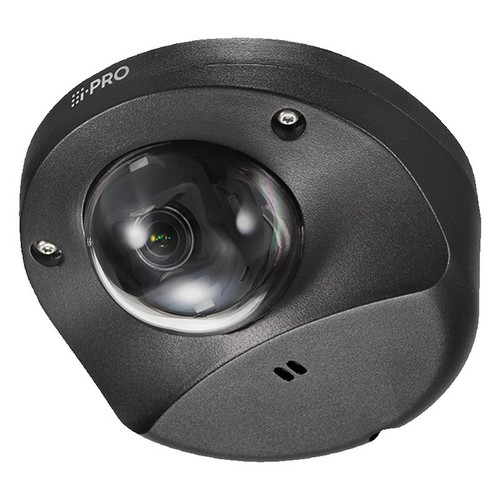
Both the Hanwha ANV-L7012R and the i-PRO WV-S35402-F2L1 are 4MP fixed-lens outdoor vandal dome IP cameras powered by PoE, making them directly cross-shoppable for perimeter and entry-point surveillance installations. The comparison covers imaging performance—sensor size, low-light capability, WDR, and IR range—alongside installation factors such as environmental ratings and temperature tolerance, and integration criteria including VMS compatibility, edge analytics depth, audio support, and on-board storage capacity.

In This Guide
How do the imaging specs compare?
The ANV-L7012R uses a 1/3" CMOS sensor with a 3 mm fixed lens at F1.6, delivering a 99° horizontal field of view and 20 m IR range at 850 nm. Its minimum color illumination is 0.13 lux. WDR is rated at 120 dB. The WV-S35402-F2L1 uses an approximately 1/2.8" CMOS sensor—physically larger—with a 2.4 mm fixed lens at F2.1, producing a wider 121° horizontal field of view. Its IR range is 14 m, and its minimum color illumination is 0.07 lux, giving it a measurable low-light advantage over the Hanwha in ambient-light conditions.
On dynamic range, the i-PRO claims 132 dB maximum (Super Dynamic level 31) versus the Hanwha's 120 dB—a 12 dB advantage that can matter in high-contrast entry scenes with mixed sunlight and shadow. DORI detection distances favor the Hanwha at 44.3 m versus i-PRO's 29.0 m, reflecting the Hanwha's narrower lens concentrating pixels on a longer axis. Both cameras deliver 4MP at up to 30 fps in H.265/H.264. The i-PRO adds an extra-zoom mode up to 4x at 640×360 resolution; the Hanwha does not specify a comparable digital zoom feature.
What about installation and environment?
Both cameras carry IP66 and IK10 ratings, confirming dust-tight, high-pressure water resistance and resistance to 20-joule mechanical impact—adequate for vandal-exposed outdoor mounting. The i-PRO additionally holds NEMA 4X and UL Type 4X certifications, which are required by some U.S. industrial and utility specifications. The Hanwha is not listed with NEMA 4X. The i-PRO also specifies wind resistance up to 40 m/s (~89 mph), a spec absent from the Hanwha datasheet.
On operating temperature, the i-PRO operates from -40 °C to +50 °C (-40 °F to +122 °F), while the Hanwha operates from -30 °C to +55 °C (-22 °F to +131 °F). The Hanwha tolerates 5 °C higher heat; the i-PRO tolerates 10 °C colder ambient—relevant in northern climates. Both are PoE-powered (IEEE 802.3af). The Hanwha draws a maximum of 7.5 W; the i-PRO draws 8.6 W maximum. The i-PRO is listed as PoE Class 0, while the Hanwha specifies Class 3. Form factor for both is a compact outdoor dome. Hanwha dimensions are ø120.3×91.7 mm at 410 g; i-PRO is 109×53×119 mm at approximately 475 g.
Which fits your VMS and analytics better?
Both cameras support ONVIF Profile S, G, and T. The i-PRO additionally supports ONVIF Profile M, which covers metadata streaming for AI analytics events—relevant if your VMS platform consumes Profile M event streams. The Hanwha supports SUNAPI (HTTP API), useful in Hanwha Wisenet VMS environments. Simultaneous user sessions are capped at 6 unicast users on the Hanwha versus up to 14 on the i-PRO, which matters in multi-client monitoring centers.
On edge analytics, the Hanwha provides motion detection (4 polygonal zones), defocus detection, directional detection, tampering detection, enter/exit, and WiseStream II adaptive bitrate. The i-PRO offers 7 AI video analytics detection types including face detection, people counting, vehicle detection, gunshot, yell, vehicle horn, and glass break audio classification—an AI sound classification capability the Hanwha spec does not list. The i-PRO includes a built-in microphone with audio detection; the Hanwha datasheet does not list a built-in microphone. Edge storage maximum is 128 GB microSD on the Hanwha versus 512 GB microSD on the i-PRO. Both support NAS recording on alarm triggers.
Which should you choose: the L7012R or the S35402-F2L1?
Our take: The WV-S35402-F2L1 is the stronger choice when AI analytics depth, audio classification, and maximum edge storage are decision drivers. Its 132 dB WDR outperforms the Hanwha's 120 dB by 12 dB, its minimum color illumination of 0.07 lux beats the Hanwha's 0.13 lux by nearly half, and its 512 GB microSD capacity is four times the Hanwha's 128 GB ceiling. It also adds NEMA 4X certification and a -40 °C cold-weather floor the Hanwha cannot match. The ANV-L7012R holds advantages in IR range (20 m vs. 14 m), DORI detection distance (44.3 m vs. 29.0 m), a narrower wiring budget (7.5 W vs. 8.6 W), a slightly higher heat tolerance (+55 °C vs. +50 °C), and tighter Hanwha VMS integration via SUNAPI. Choose the Hanwha where longer IR throw and leaner power draw matter most; choose the i-PRO where superior WDR, AI audio analytics, ONVIF Profile M, or NEMA 4X compliance is required.
Side-by-Side Comparison
Spec-for-spec, from manufacturer data.
| Specification | Hanwha L7012R | i-PRO S35402-F2L1 |
|---|---|---|
| Resolution | 4MP (2560×1440) | 4MP (2560×1440) |
| Image Sensor | 1/3" CMOS | Approx. 1/2.8" CMOS |
| Lens / Focal Length | 3 mm fixed, F1.6 | 2.4 mm fixed, F2.1 |
| Horizontal Field of View | 99° | 121° |
| Min. Illumination (Color) | 0.13 lux | 0.07 lux |
| IR Range | 20 m (65.6 ft) @ 850 nm | 14 m (30 IRE) / 10 m (50 IRE) |
| Wide Dynamic Range | 120 dB | 132 dB max (Super Dynamic) |
| Max Frame Rate | 30 fps @ 4MP | 25/30 fps |
| Video Compression | H.265, H.264, MJPEG | H.265, H.264, JPEG |
| ONVIF Profiles | S, G, T | G, M, S, T |
| IP Rating | IP66 | IP66, NEMA 4X, UL Type 4X |
| IK / Impact Rating | IK10 | IK10 |
| Operating Temperature | -30 °C to +55 °C | -40 °C to +50 °C |
| Power Input / PoE Class | PoE IEEE 802.3af, Class 3, 7.5 W max | PoE IEEE 802.3af, Class 0, 8.6 W max |
| Edge Storage | microSD/SDHC/SDXC up to 128 GB | microSD up to 512 GB |
| Audio Support | Not specified in datasheet | Built-in microphone; audio detection; AI sound classification |
| Dimensions | ø120.3 × 91.7 mm | 109 × 53 × 119 mm |
| Weight | 410 g | Approx. 475 g |
| Warranty | 3-year | 5-year |
Frequently Asked Questions
Which should you choose: the L7012R or the S35402-F2L1?
The WV-S35402-F2L1 is the stronger choice when AI analytics depth, audio classification, and maximum edge storage are decision drivers. Its 132 dB WDR outperforms the Hanwha's 120 dB by 12 dB, its minimum color illumination of 0.07 lux beats the Hanwha's 0.13 lux by nearly half, and its 512 GB microSD capacity is four times the Hanwha's 128 GB ceiling. It also adds NEMA 4X certification and a -40 °C cold-weather floor the Hanwha cannot match. The ANV-L7012R holds advantages in IR range (20 m vs. 14 m), DORI detection distance (44.3 m vs. 29.0 m), a narrower wiring budget (7.5 W vs. 8.6 W), a slightly higher heat tolerance (+55 °C vs. +50 °C), and tighter Hanwha VMS integration via SUNAPI. Choose the Hanwha where longer IR throw and leaner power draw matter most; choose the i-PRO where superior WDR, AI audio analytics, ONVIF Profile M, or NEMA 4X compliance is required.
Is the ANV-L7012R or WV-S35402-F2L1 better for low-light performance?
The WV-S35402-F2L1 has a lower minimum color illumination (0.07 lux vs. 0.13 lux) and a larger approximately 1/2.8" sensor versus the Hanwha's 1/3" sensor, giving it an edge in ambient low-light scenes. However, the ANV-L7012R provides a longer IR illumination range of 20 m compared to the i-PRO's 14 m, so in complete darkness the Hanwha illuminates a greater distance.
Which camera supports more advanced analytics—the ANV-L7012R or the WV-S35402-F2L1?
The WV-S35402-F2L1 offers broader AI analytics per its spec sheet, including 7 detection types, face detection, vehicle detection, people counting, and AI sound classification for gunshot, yell, vehicle horn, and glass break—plus a built-in microphone for audio detection. The ANV-L7012R provides motion, defocus, directional, tampering, and enter/exit detection along with WiseStream II, but does not list AI sound classification or a built-in microphone in its specifications.
Can either camera operate in extreme cold, and does NEMA 4X matter for my installation?
The WV-S35402-F2L1 is rated to -40 °C and carries NEMA 4X / UL Type 4X certification, which is required for some U.S. industrial, utility, and outdoor enclosure standards. The ANV-L7012R is rated to -30 °C and does not list NEMA 4X certification. If your project specification calls for NEMA 4X compliance or the site experiences temperatures below -30 °C, the i-PRO is the only option of the two that meets those requirements.
Get a Second Opinion on Your Camera Choice
Share your site layout, coverage goals, and budget. Our team will validate the camera selection, flag anything we would change, and recommend products that match the use case.