
Hanwha HRX-835A-6TB vs Hanwha QRN-830S: Specification Comparison
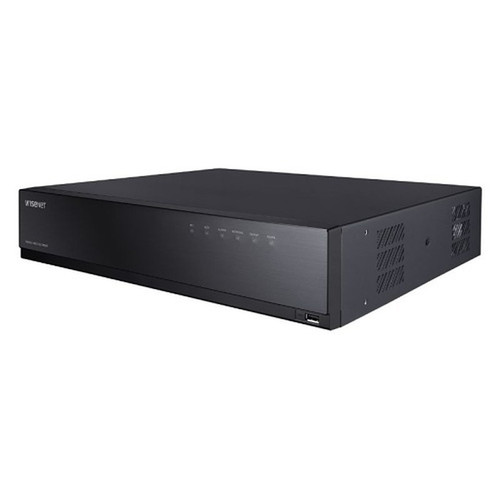
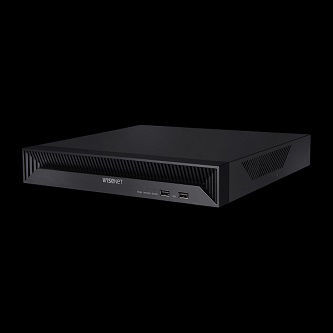
Both the Hanwha HRX-835A-6TB and the Hanwha QRN-830S are 8-channel recorders sharing the same brand family, maximum 80 Mbps recording bandwidth, and H.265/H.264/MJPEG codec support. The critical architectural divide is recorder type: the HRX-835A-6TB is a pentabrid DVR accepting analog (AHD/HDTVI/HDCVI/CVBS) plus IP cameras, while the QRN-830S is a pure IP NVR. Buyers choosing between them are weighing an analog-legacy-compatible hybrid platform against a dedicated IP-only system with deeper network feature sets.
In This Guide
- How do channel capacity and storage scalability compare between the two recorders?
- What are the differences in physical connectivity, power, and operating environment between the two units?
- Which recorder offers broader integration, analytics, and remote management capabilities?
- Which should you choose: the HRX-835A-6TB or the QRN-830S?
- Side-by-Side Specs
- FAQ
How do channel capacity and storage scalability compare between the two recorders?
The HRX-835A-6TB supports 8 analog channels (AHD/HDTVI/HDCVI/CVBS) plus 2 to 10 additional IP channels, yielding up to 18 total channels in a mixed deployment. It ships with 6TB pre-installed across one of four SATA HDD slots and is expandable to 24TB total. The QRN-830S is capped at 8 IP channels with a single SATA HDD slot supporting a maximum of 6TB and no stated expansion path beyond that ceiling.
For deployments that need to grow storage over time, the HRX-835A-6TB's four-slot, 24TB ceiling offers a clear advantage. The QRN-830S's single-slot design limits on-board storage to 6TB, though its simultaneous playback specification—up to 32 channels (local 8, remote 8 per user across 3 remote users)—suggests it is optimized for networked rather than local-storage-centric architectures.
What are the differences in physical connectivity, power, and operating environment between the two units?
The QRN-830S includes a built-in 8-port PoE switch (8× RJ-45, 10/100 Mbps) with a 65W PoE budget and a separate 1 Gbps LAN/WAN port, powered at 54VDC/1.55A with a maximum draw of 84W including PoE. It operates from 0°C to +40°C at 20–85% RH, weighs 1.32 kg, and measures 300×47.6×238.9 mm in a 1U black metal chassis.
The HRX-835A-6TB lists PoE++ (802.3bt) support, an IK10 impact rating, and an IP66/NEMA 4X environmental rating—specifications that suggest suitability for harsher or semi-exposed installations. However, the provided specs do not state an operating temperature range, exact power consumption, chassis dimensions, or weight for the HRX-835A-6TB, so a direct numerical comparison on those points is not possible.
The QRN-830S provides 4K HDMI output at 3840×2160 (30Hz) with flexible multi-screen layouts (1/2H/2V/3V/4/6/8/9 screens). A corresponding local display specification for the HRX-835A-6TB is not present in the supplied data.
Which recorder offers broader integration, analytics, and remote management capabilities?
The QRN-830S carries a detailed network feature set: IPv4/IPv6, RTSP, SNMP, ONVIF Profile-S, SUNAPI (server and client), 802.1x port security, device certificate authentication via Hanwha Techwin Root CA, signed firmware, IP address filtering, and a 100,000-entry system and event log. Remote access supports up to 10 live unicast users, 20 multicast users, and 3 concurrent search users. N+1 failover and ARB (Automatic Recovery Backup) redundancy are specified. Fisheye dewarping is available via CMS, and PTZ preset capacity is listed at 300 presets.
The HRX-835A-6TB specifies ONVIF compliance, Deep Learning (DLPU)-based analytics, and People Counting—capabilities not listed for the QRN-830S in the provided data. Two-way audio is confirmed for both units; the HRX-835A-6TB lists 8-channel audio input and 1-channel output from its dedicated specs, while the QRN-830S specifies 8-channel network audio input/output with G.711, G.726, and AAC (16/48 kHz) compression formats.
The QRN-830S supports Windows 10 and macOS 11 web viewers (Chrome, Edge, Safari), iOS and Android mobile apps, P2P QR-code setup, and SUNAPI integration. Camera-level configuration items—bitrate, GOP, MD polygons, WDR, SSNR, DIS, and hallway view—are accessible from the NVR GUI. Equivalent remote management depth for the HRX-835A-6TB is not detailed in the supplied specifications.
Which should you choose: the HRX-835A-6TB or the QRN-830S?
Our take: The HRX-835A-6TB is the stronger choice when a site has existing analog cameras (AHD/HDTVI/HDCVI/CVBS) that must be retained alongside new IP cameras, or when storage growth beyond 6TB is required—its four SATA slots expand to 24TB versus the QRN-830S's single-slot 6TB ceiling. It also adds DLPU-based analytics and People Counting not listed for the QRN-830S. Conversely, the QRN-830S is the better fit for all-IP deployments: its built-in 8-port PoE switch (65W budget) eliminates a separate switch, its 4K HDMI output (3840×2160) exceeds any display spec provided for the DVR, and its N+1 failover, ARB redundancy, 802.1x security, signed firmware, and SUNAPI ecosystem make it the more network-mature platform. Choose the HRX-835A-6TB for hybrid analog/IP migrations with multi-TB growth needs; choose the QRN-830S for greenfield IP-only installations prioritizing network resilience and integrated camera power.
Side-by-Side Comparison
Spec-for-spec, from manufacturer data.
| Specification | Hanwha HRX-835A-6TB | Hanwha QRN-830S |
|---|---|---|
| Recorder Type | Pentabrid DVR (analog + IP) | IP NVR |
| Analog Channel Inputs | 8 (AHD/HDTVI/HDCVI/CVBS) | — |
| IP Camera Channels | 2–10 (max 18 total) | Max. 8 |
| Max Recording Bandwidth | 80 Mbps | 80 Mbps |
| Max Playback Bandwidth | 32 Mbps (10-CH simultaneous) | 32 Mbps |
| Video Compression | H.265, H.264, MJPEG | H.265, H.264, MJPEG |
| Max Resolution (IP) | Up to 8MP | 8MP @ 60fps |
| HDD Slots | 4× SATA | 1× SATA |
| Storage (Pre-installed / Max) | 6TB / 24TB | — / 6TB |
| Built-in PoE Switch | — | 8× RJ-45 (10/100), 65W budget |
| Local Display Output | — | HDMI 3840×2160 (30Hz) |
| Audio | 8-CH in, 1-CH out, two-way | 8-CH network in/out, two-way (G.711/G.726/AAC) |
| ONVIF | Yes | Yes (Profile-S) |
| Analytics | Deep Learning (DLPU), People Counting | — |
| Redundancy / Failover | — | N+1 Failover, ARB |
| Operating Temperature | — | 0°C to +40°C |
Frequently Asked Questions
Which should you choose: the HRX-835A-6TB or the QRN-830S?
The HRX-835A-6TB is the stronger choice when a site has existing analog cameras (AHD/HDTVI/HDCVI/CVBS) that must be retained alongside new IP cameras, or when storage growth beyond 6TB is required—its four SATA slots expand to 24TB versus the QRN-830S's single-slot 6TB ceiling. It also adds DLPU-based analytics and People Counting not listed for the QRN-830S. Conversely, the QRN-830S is the better fit for all-IP deployments: its built-in 8-port PoE switch (65W budget) eliminates a separate switch, its 4K HDMI output (3840×2160) exceeds any display spec provided for the DVR, and its N+1 failover, ARB redundancy, 802.1x security, signed firmware, and SUNAPI ecosystem make it the more network-mature platform. Choose the HRX-835A-6TB for hybrid analog/IP migrations with multi-TB growth needs; choose the QRN-830S for greenfield IP-only installations prioritizing network resilience and integrated camera power.
Can the HRX-835A-6TB or QRN-830S use my existing analog CCTV cameras?
Only the HRX-835A-6TB supports analog cameras. It accepts AHD, HDTVI, HDCVI, and CVBS signals across its 8 analog channels. The QRN-830S is a pure IP NVR and has no analog inputs; all cameras must connect over the network.
Which recorder gives me more storage room to grow?
The HRX-835A-6TB ships with 6TB installed and has four SATA slots expandable to 24TB total. The QRN-830S has a single SATA slot with a stated maximum of 6TB and no documented expansion path beyond that limit.
Is the HRX-835A-6TB or QRN-830S better suited for a fully IP camera system with remote monitoring?
The QRN-830S is purpose-built for that use case. It includes a built-in 8-port PoE switch (65W budget), supports up to 10 concurrent live unicast remote users and 20 multicast users, offers N+1 failover and ARB redundancy, and integrates with Hanwha's SUNAPI ecosystem. The HRX-835A-6TB's remote management depth is not fully detailed in the available specifications.
Get a Second Opinion on Your Camera Choice
Share your site layout, coverage goals, and budget. Our team will validate the camera selection, flag anything we would change, and recommend products that match the use case.