
Hanwha HRX-435 vs Speco Technologies D4WVN8TB: Specification Comparison
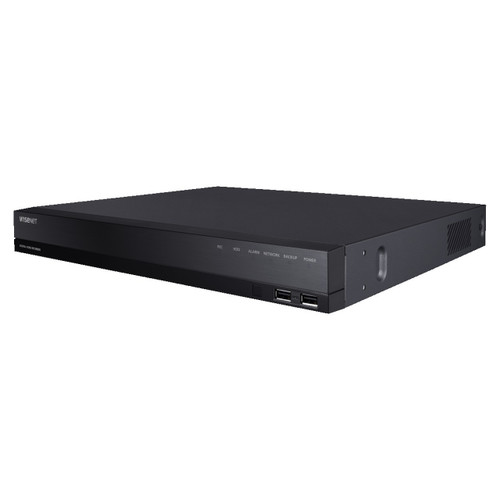
The Hanwha HRX-435 and Speco Technologies D4WVN8TB are both 4-channel hybrid analog DVRs targeting small-site surveillance installations where legacy analog cameras must coexist with IP channels. The HRX-435 is a 1U rack-mount pentabrid unit supporting AHD, HDTVI, HDCVI, and CVBS signals up to 8MP alongside up to 6 IP channels. The D4WVN8TB is a wall-mount 4K TVI DVR with 8TB pre-installed storage and NDAA/TAA compliance. This comparison evaluates recording capacity and channel flexibility, physical form factor and installation environment, and integration, compliance, and remote management capabilities.
In This Guide
- Which recorder offers more channel flexibility and storage capacity?
- How do the physical form factor and installation environment requirements differ?
- Which unit offers stronger integration, compliance credentials, and remote management?
- Which should you choose: the HRX-435 or the D4WVN8TB?
- Side-by-Side Specs
- FAQ
Which recorder offers more channel flexibility and storage capacity?
The HRX-435 accepts 4 analog inputs (BNC, 1Vp-p, 75Ω) supporting AHD, HDTVI, HDCVI, and CVBS signals up to 8MP, and extends to a maximum of 6 IP network camera channels simultaneously — giving a hybrid total that can reach 6 active channels with the right mix. Recording bandwidth is capped at 30Mbps analog and 32Mbps playback. Storage is handled by two SATA bays supporting up to 6TB per drive for a maximum of 12TB total capacity; no pre-installed drive is included per spec.
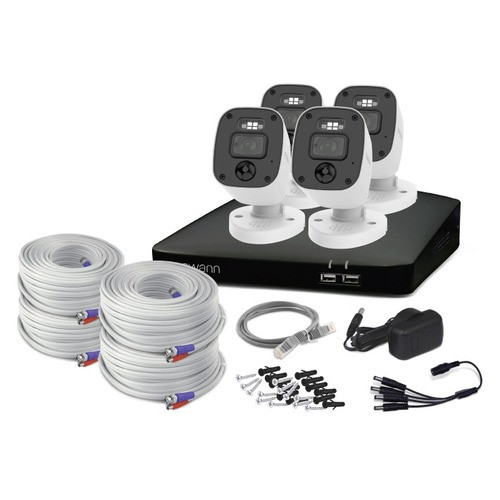
The D4WVN8TB is specified as a 4-channel 4K TVI recorder with 8TB of pre-installed hard drive storage. The spec sheet does not disclose analog signal type support beyond TVI, does not list an IP camera channel expansion count, and does not state per-drive or bay count beyond the 8TB total. For a buyer who needs a ready-to-record unit with storage included, the D4WVN8TB ships deployment-ready. For a buyer who needs hybrid IP expansion or maximum raw storage headroom up to 12TB, the HRX-435's dual-bay architecture and 6-channel IP ceiling are the deciding factors — though the buyer must supply and install drives separately.
How do the physical form factor and installation environment requirements differ?
The HRX-435 is a metal-chassis, rack-mount unit measuring 370mm × 44mm × 320mm (approximately 14.6" × 1.73" × 12.6") and weighing approximately 2.3 kg (5.07 lb) with one 4TB HDD installed. It is rated for operation between 0°C and +40°C at 20–85% RH non-condensing and draws up to 40W at maximum HDD load (4× 6TB). Its 1U rack profile suits IT closets and head-end racks with standard rack infrastructure. Power input is DC 12V via a jack, implying an included or separate power brick rather than direct mains wiring.
The D4WVN8TB is a wall-mount chassis measuring 17.5" × 15.5" × 4.8" and weighing 8.0 lbs (approximately 3.6 kg). Its wall-mount design is purpose-built for installations where rack space is unavailable — small retail locations, storage rooms, or remote outbuildings. Operating temperature, humidity range, and power consumption are not disclosed in the available spec data. The D4WVN8TB is notably larger in footprint than the HRX-435's 1U rack form, but eliminates the need for a rack enclosure entirely. Installers must account for wall-mount hardware and cable management at the installation point rather than at a central rack.
Which unit offers stronger integration, compliance credentials, and remote management?
The HRX-435 provides a rich integration stack: ONVIF Profile-S, SUNAPI (Wisenet/Hanwha native API), and a full TCP/IP protocol suite including RTP, RTSP, HTTP, HTTPS, DHCP, PPPoE, SMTP, SNMP, DDNS (Wisenet DDNS), and 802.1x authentication. Remote access is supported via Wisenet Mobile (iOS and Android), SSM, Smart Viewer, and a web viewer, with a maximum of 10 live unicast and 20 multicast remote users simultaneously. PTZ control is available via RS-485/422 supporting Pelco-D, Pelco-P, and Samsung-T protocols. Security features include IP address filtering, user access logging, ID/PW encryption, recording encryption, transmission encryption, backup encryption, and Hanwha Techwin Root CA device certificates. Certifications listed are UL, CE, FCC, and KC. ARB (Automatic Recovery Backup) redundancy is supported.
The D4WVN8TB's most significant compliance differentiator is NDAA (National Defense Authorization Act) and TAA (Trade Agreements Act) compliance — a hard requirement for US federal government projects, DoD-adjacent installations, and many state/local government procurement programs where Chinese-origin components are prohibited. The D4WVN8TB also supports ONVIF and H.265/H.264 compression, and lists two-way audio with a built-in microphone and analytics capability. However, the spec sheet does not disclose remote user limits, supported VMS/CMS platforms, specific network protocol support, PTZ control protocols, or security feature details. The HRX-435 carries no stated NDAA or TAA compliance. For government or sensitive commercial deployments, the D4WVN8TB's compliance credentials are non-negotiable; for commercial deployments prioritizing ecosystem depth and remote management feature set, the HRX-435 specification is substantially more detailed.
Which should you choose: the HRX-435 or the D4WVN8TB?
Our take: The HRX-435 is the stronger choice when ecosystem depth, hybrid channel flexibility, and documented remote-management features are the priority. It supports four analog signal types (AHD/HDTVI/HDCVI/CVBS) versus the D4WVN8TB's TVI-only disclosure, expands to 6 simultaneous IP channels versus no stated IP expansion for the D4WVN8TB, and delivers up to 12TB raw storage capacity across two SATA bays versus the D4WVN8TB's fixed 8TB pre-installed. The HRX-435 also documents 10 live unicast + 20 multicast remote users, 802.1x authentication, and full Wisenet ecosystem integration — none of which are specified for the D4WVN8TB. Conversely, the D4WVN8TB's NDAA and TAA compliance makes it the only viable option for US federal, DoD-adjacent, or government-mandated deployments where Chinese-origin component restrictions apply. Its wall-mount chassis also suits sites with no rack infrastructure. Choose the HRX-435 for commercial Wisenet or ONVIF hybrid deployments; choose the D4WVN8TB for compliance-gated government or wall-mount-only installations.
Side-by-Side Comparison
Spec-for-spec, from manufacturer data.
| Specification | Hanwha HRX-435 | Speco Technologies D4WVN8TB |
|---|---|---|
| Analog Channels | 4 (BNC, 1Vp-p, 75Ω) | 4 |
| Analog Signal Types Supported | AHD / HDTVI / HDCVI / CVBS | 4K TVI (others not specified) |
| Max Analog Resolution | 8MP | 4K (per product title) |
| IP Camera Channel Expansion | Up to 6 IP channels | — |
| Max Storage Capacity | 12TB (2× SATA, up to 6TB each) | 8TB (pre-installed) |
| HDD Bays | 2× SATA | — (not specified) |
| Video Compression | H.265 / H.264 / MJPEG | H.265 / H.264 |
| ONVIF | Yes (Profile-S) | Yes |
| Form Factor / Mount | 1U Rack-mount | Wall-mount |
| Dimensions (W×H×D) | 370 × 44 × 320 mm (14.6" × 1.73" × 12.6") | 17.5" × 15.5" × 4.8" |
| Weight | Approx. 2.3 kg (5.07 lb) | 8.0 lbs (3.6 kg) |
| Operating Temperature | 0°C to +40°C | — |
| Max Power Draw | 40W (with 4× 6TB HDDs) | — |
| Remote Access Apps | iOS / Android (Wisenet Mobile) | — (not specified) |
| NDAA / TAA Compliance | — | NDAA and TAA compliant |
| Certifications | UL, CE, FCC, KC | NDAA; TAA |
| Warranty | — | 3-year |
| Two-Way Audio | Yes (4 line in / 1 line out) | Yes (built-in mic) |
Frequently Asked Questions
Which should you choose: the HRX-435 or the D4WVN8TB?
The HRX-435 is the stronger choice when ecosystem depth, hybrid channel flexibility, and documented remote-management features are the priority. It supports four analog signal types (AHD/HDTVI/HDCVI/CVBS) versus the D4WVN8TB's TVI-only disclosure, expands to 6 simultaneous IP channels versus no stated IP expansion for the D4WVN8TB, and delivers up to 12TB raw storage capacity across two SATA bays versus the D4WVN8TB's fixed 8TB pre-installed. The HRX-435 also documents 10 live unicast + 20 multicast remote users, 802.1x authentication, and full Wisenet ecosystem integration — none of which are specified for the D4WVN8TB. Conversely, the D4WVN8TB's NDAA and TAA compliance makes it the only viable option for US federal, DoD-adjacent, or government-mandated deployments where Chinese-origin component restrictions apply. Its wall-mount chassis also suits sites with no rack infrastructure. Choose the HRX-435 for commercial Wisenet or ONVIF hybrid deployments; choose the D4WVN8TB for compliance-gated government or wall-mount-only installations.
Can the HRX-435 or D4WVN8TB be used on a US federal government project?
Only the D4WVN8TB is specified as NDAA and TAA compliant, which are common hard requirements for US federal, DoD-adjacent, and many state/local government procurements. The HRX-435 carries no stated NDAA or TAA compliance in its published specifications. If your project's solicitation or agency policy requires NDAA/TAA compliance, the D4WVN8TB is the only eligible option of these two units.
Which recorder supports more cameras as the site grows?
The HRX-435 is specified to support up to 6 IP network camera channels in addition to its 4 analog BNC inputs, enabling a hybrid expansion path beyond the base 4-channel analog count. The D4WVN8TB is specified as a 4-channel unit; its spec sheet does not disclose an IP camera expansion count or hybrid channel ceiling. If scalability beyond 4 channels is a requirement, the HRX-435's documented 6-channel IP ceiling gives it a clear advantage based on available specs.
Which unit is easier to install in a location without a server rack?
The D4WVN8TB is purpose-designed for wall-mount installation, measuring 17.5" × 15.5" × 4.8" with a chassis intended to mount directly to a wall surface — no rack enclosure required. The HRX-435 is a 1U rack-mount unit (370mm × 44mm × 320mm) that requires a standard equipment rack or rack cabinet. For closets, back offices, or remote locations without rack infrastructure, the D4WVN8TB's wall-mount form factor is the practical choice.
Get a Second Opinion on Your Camera Choice
Share your site layout, coverage goals, and budget. Our team will validate the camera selection, flag anything we would change, and recommend products that match the use case.