
Hanwha HRX-435 vs Speco Technologies D4WVN10TB: Specification Comparison
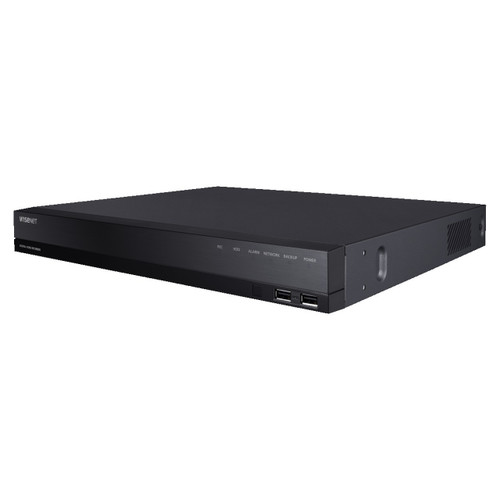
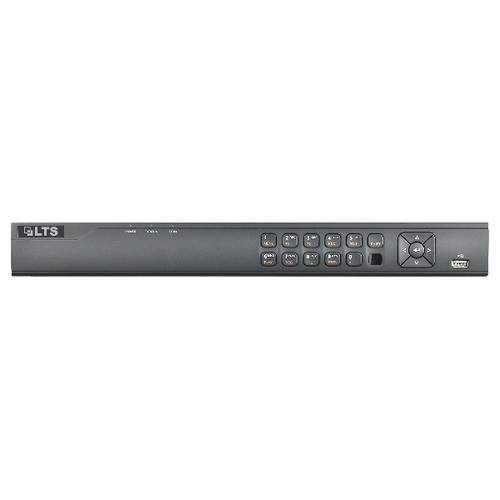
Both the Hanwha HRX-435 and the Speco Technologies D4WVN10TB are 4-channel digital video recorders targeting small-site surveillance deployments. The HRX-435 is a pentabrid desktop/rack unit supporting AHD, HDTVI, HDCVI, CVBS, and IP cameras up to 8MP, while the D4WVN10TB is a wall-mount 4K TVI-focused DVR with 10TB onboard storage and NDAA/TAA compliance. A buyer choosing between them is weighing analog-protocol flexibility and IP expansion against a compact wall-mount form factor and federal-procurement eligibility.
In This Guide
- How do channel capacity, camera compatibility, and maximum recording resolution compare?
- What are the storage capacity, physical form factor, and power requirements?
- How do the units compare on system integration, compliance certifications, and remote management?
- Which should you choose: the HRX-435 or the D4WVN10TB?
- Side-by-Side Specs
- FAQ
How do channel capacity, camera compatibility, and maximum recording resolution compare?
The HRX-435 supports 4 analog channels (BNC, 1Vp-p, 75 ohm) accepting AHD, HDTVI, HDCVI, and CVBS signals up to 8MP, plus up to 6 additional IP network camera channels via SUNAPI (Wisenet) or ONVIF—giving a maximum of 6 simultaneous channels total. Analog recording tops out at 30 fps per channel, with 8MP analog streams delivered at 8 fps per channel (NTSC). Maximum recording bandwidth is 30 Mbps; playback bandwidth reaches 32 Mbps across 6 channels simultaneously.
The D4WVN10TB is specified as a 4-channel 4K TVI recorder. Its datasheet does not publish an analog frame-rate table, a maximum recording bandwidth figure, or an IP channel expansion count. The 4K TVI designation implies a maximum per-channel resolution of approximately 8MP (3840×2160), which is on par with the HRX-435's 8MP ceiling, but Speco does not confirm this numerically in the provided specs. ONVIF support is listed for the D4WVN10TB, but protocol details beyond that are not specified.
For buyers needing mixed analog-protocol support (AHD, CVI, TVI, CVBS on the same unit) or IP camera expansion beyond 4 channels, the HRX-435 provides documented flexibility. The D4WVN10TB's channel architecture beyond 4-channel 4K TVI is not confirmed by the available specifications.
What are the storage capacity, physical form factor, and power requirements?
The HRX-435 ships with two internal SATA bays and supports up to 6TB per drive, for a maximum of 12TB total installed storage. The unit measures 370 mm × 44 mm × 320 mm (approximately 14.6" × 1.7" × 12.6") and is designed for desktop or 1U rack installation. Input voltage is specified as DC 12V with a maximum power draw of 40W (measured with four 6TB HDDs populated). Operating temperature range is 0°C to +40°C at 20%–85% RH non-condensing.
The D4WVN10TB comes with 10TB of onboard storage already installed—2TB more than the HRX-435's 12TB maximum only if both SATA bays are filled with 6TB drives; the D4WVN10TB's storage expandability or HDD bay count is not specified. Its wall-mount form factor measures 17.5" × 15.5" × 4.8" and weighs 8.0 lbs. Input voltage, power consumption, and operating temperature are not listed in the provided specifications for the D4WVN10TB.
The D4WVN10TB's wall-mount design is a meaningful differentiator for installations where rack or desktop space is unavailable. The HRX-435 offers a known, expandable dual-bay storage architecture with a documented thermal envelope; the D4WVN10TB's environmental and power specs are absent from the provided data.
How do the units compare on system integration, compliance certifications, and remote management?
The HRX-435 carries UL, CE, FCC, and KC certifications. It supports a broad network protocol stack: TCP/IP, UDP, RTP, RTSP, HTTP, HTTPS, DHCP, PPPoE, SMTP, SNMP, DDNS (Wisenet), ONVIF Profile-S, and SUNAPI. Remote access is provided through Wisenet SSM, SmartViewer, Webviewer, and Wisenet Mobile (iOS and Android). It supports up to 10 simultaneous live unicast remote users and 20 multicast users, with a maximum of 3 concurrent remote search sessions. Security features include IP address filtering, 802.1x authentication, and end-to-end encryption (ID/PW, recording, transmission, backup). PTZ control is available via RS-485/422 (Pelco-D, Pelco-P, Samsung-T) and coaxial (Pelco-C, AHD, CVI, TVI). P2P setup via QR code and ARB redundancy recording are also documented.
The D4WVN10TB holds TAA (Trade Agreements Act) and NDAA (National Defense Authorization Act) Section 889 compliance certifications—neither of which the HRX-435 lists. These certifications are mandatory for U.S. federal, state, and many municipal government procurements. The D4WVN10TB also lists ONVIF support and two-way audio with a built-in microphone, plus an analytics capability. However, specific remote management software, supported network protocols, maximum remote user counts, PTZ control methods, and security feature details are not provided in the available specifications.
For government and federally funded deployments, the D4WVN10TB's NDAA/TAA compliance is a hard procurement requirement the HRX-435 does not meet based on the specs provided. For commercial deployments requiring deep VMS integration, multi-user remote access, and documented security hardening, the HRX-435's specification set is substantially more detailed.
Which should you choose: the HRX-435 or the D4WVN10TB?
Our take: The HRX-435 is the stronger choice when multi-protocol analog flexibility, documented IP camera expansion, and deep VMS integration are the primary requirements; the D4WVN10TB is the mandated choice for any deployment subject to NDAA Section 889 or TAA compliance requirements. Concretely: the HRX-435 supports 4 analog plus up to 6 IP channels versus the D4WVN10TB's specified 4-channel TVI-only architecture; the HRX-435 documents up to 12TB across dual SATA bays while the D4WVN10TB ships with 10TB (expandability unspecified); and the HRX-435 lists 10 simultaneous remote live unicast users with SUNAPI/ONVIF/SNMP/HTTPS where the D4WVN10TB's remote-access specifications are absent. Conversely, the D4WVN10TB's wall-mount form factor and NDAA/TAA certification are not available on the HRX-435. Choose the HRX-435 for commercial mixed-analog or hybrid analog-IP sites on Wisenet infrastructure; specify the D4WVN10TB for government, education, or federally funded projects requiring compliant hardware in space-constrained enclosures.
Side-by-Side Comparison
Spec-for-spec, from manufacturer data.
| Specification | Hanwha HRX-435 | Speco Technologies D4WVN10TB |
|---|---|---|
| Device Type | Pentabrid DVR (AHD/TVI/CVI/CVBS/IP) | 4K TVI Wall-Mount DVR |
| Analog Input Channels | 4 (BNC, 1Vp-p, 75 ohm) | 4 (TVI) |
| IP Camera Channels (Max) | Up to 6 | — |
| Max Analog Resolution | 8MP | 4K TVI (exact MP not specified) |
| Analog Frame Rate (Max) | 30 fps per channel | — |
| Max Recording Bandwidth | 30 Mbps | — |
| Video Compression | H.265, H.264, MJPEG | H.265, H.264 |
| HDD Bays / Max Storage | 2× SATA / 12TB | 10TB onboard (bays not specified) |
| Form Factor / Mount | Desktop / Rack (1U) | Wall-Mount |
| Dimensions (W×H×D) | 370 × 44 × 320 mm (14.6"×1.7"×12.6") | 17.5" × 15.5" × 4.8" |
| Weight | Approx. 2.3 kg (5.07 lb) | 8.0 lbs |
| Input Voltage / Max Power | DC 12V / 40W (4× 6TB HDDs) | — |
| Operating Temperature | 0°C to +40°C | — |
| ONVIF Support | Yes (Profile-S) | Yes |
| Remote Users (Live Unicast) | 10 | — |
| Certifications | UL, CE, FCC, KC | NDAA, TAA |
| PTZ Control | RS-485/422, Coaxial (Pelco-D/P/C, AHD, CVI, TVI) | — |
| Audio | 4 line in / 1 line out, 2-way | 2-way, built-in mic |
| Warranty | — | 3 years |
Frequently Asked Questions
Which should you choose: the HRX-435 or the D4WVN10TB?
The HRX-435 is the stronger choice when multi-protocol analog flexibility, documented IP camera expansion, and deep VMS integration are the primary requirements; the D4WVN10TB is the mandated choice for any deployment subject to NDAA Section 889 or TAA compliance requirements. Concretely: the HRX-435 supports 4 analog plus up to 6 IP channels versus the D4WVN10TB's specified 4-channel TVI-only architecture; the HRX-435 documents up to 12TB across dual SATA bays while the D4WVN10TB ships with 10TB (expandability unspecified); and the HRX-435 lists 10 simultaneous remote live unicast users with SUNAPI/ONVIF/SNMP/HTTPS where the D4WVN10TB's remote-access specifications are absent. Conversely, the D4WVN10TB's wall-mount form factor and NDAA/TAA certification are not available on the HRX-435. Choose the HRX-435 for commercial mixed-analog or hybrid analog-IP sites on Wisenet infrastructure; specify the D4WVN10TB for government, education, or federally funded projects requiring compliant hardware in space-constrained enclosures.
Can the HRX-435 or D4WVN10TB be used on U.S. government projects?
Only the D4WVN10TB is listed as TAA and NDAA Section 889 compliant in the provided specifications, making it eligible for federal, state, and many municipal government procurements. The HRX-435 carries UL, CE, FCC, and KC certifications but NDAA or TAA compliance is not listed in its specifications—verify with Hanwha before specifying it on a government project.
Which recorder supports more cameras if the site grows beyond four channels?
The HRX-435 is specified to accept up to 6 IP network cameras in addition to its 4 analog BNC inputs, for a maximum of 6 simultaneous channels (analog and IP combined). The D4WVN10TB's specifications do not document an IP channel expansion capability or a total channel count beyond its 4-channel 4K TVI designation—confirm expandability with Speco before relying on future IP additions.
Which unit offers more onboard storage, and can either be upgraded?
The D4WVN10TB ships with 10TB of onboard storage installed; its HDD bay count and upgrade path are not specified in the available data. The HRX-435 has two SATA bays supporting up to 6TB each for a maximum of 12TB total, and that upgrade path is documented. If maximum storage capacity matters, the HRX-435's dual-bay architecture provides a known ceiling of 12TB with off-the-shelf SATA drives.
Get a Second Opinion on Your Camera Choice
Share your site layout, coverage goals, and budget. Our team will validate the camera selection, flag anything we would change, and recommend products that match the use case.