
Hanwha HRX-1635 vs Vivotek ND9426P: Specification Comparison
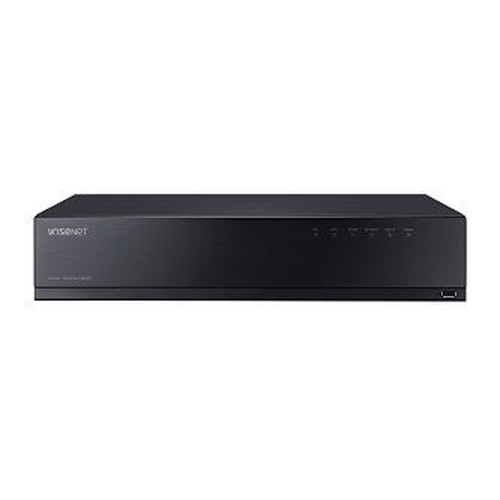
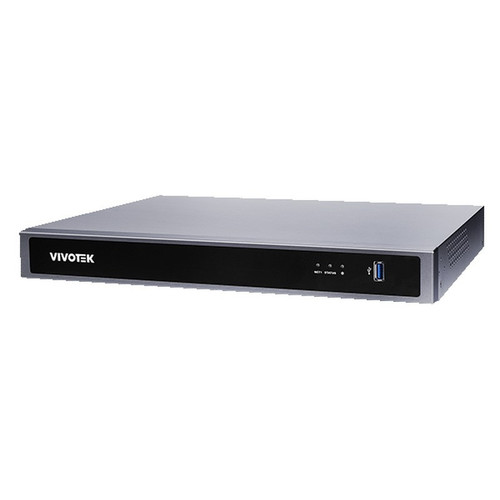
Both the Hanwha HRX-1635 and the Vivotek ND9426P are 16-channel recorders targeting professional security installations, but they serve fundamentally different camera infrastructures. The HRX-1635 is a pentabrid DVR that simultaneously supports analog coax cameras (AHD/TVI/CVI/CVBS) alongside up to 18 IP channels, while the ND9426P is a pure IP NVR with built-in 16-port PoE+. Buyers cross-shopping these units are typically weighing a hybrid analog-migration path against a clean all-IP PoE deployment at a similar channel count.
In This Guide
- Which recorder delivers higher channel capacity, throughput, and storage headroom?
- How do the two units compare on PoE power delivery, operating environment, and physical build?
- Which unit offers broader camera integration, analytics, and remote management capabilities?
- Which should you choose: the HRX-1635 or the ND9426P?
- Side-by-Side Specs
- FAQ
Which recorder delivers higher channel capacity, throughput, and storage headroom?
The HRX-1635 supports 16 analog coax inputs (BNC, 1Vp-p, 75Ω) plus an expandable 2–18 IP camera channels, for a maximum combined total of 18 channels. Its recording bandwidth peaks at 128 Mbps, with playback capped at 32 Mbps across 18 simultaneous channels. Analog record rates top out at 8MP@8fps or 4MP@15fps or 2MP@30fps per the spec sheet. Storage is handled by 8 SATA bays supporting drives up to 6TB each, yielding a maximum raw capacity of 48TB. There is no RAID support stated in the provided specs.
The ND9426P is a dedicated 16-channel IP NVR. Recording throughput is specified at 192 Mbps, and network throughput (input/output combined) reaches 224 Mbps. The hardware H.265 decoder is rated at 3840×2160@120fps or 1920×1080@480fps aggregate. Storage is limited to 2 internal 3.5-inch HDD bays with RAID 0 and RAID 1 support; maximum raw capacity depends on the drives installed and is not given a TB ceiling in the provided specs. External backup via USB 3.0 and scheduled FTP is supported.
On raw recording bandwidth the ND9426P holds a 64 Mbps advantage (192 vs 128 Mbps). On physical storage headroom the HRX-1635 is markedly superior with 8 drive bays vs 2, and an explicit 48TB maximum. The RAID 0/1 option on the ND9426P adds resilience the HRX-1635 does not list.
How do the two units compare on PoE power delivery, operating environment, and physical build?
The HRX-1635 has no built-in PoE capability; cameras connect via coax (analog) or require external PoE switches for IP channels. It accepts 100–240 VAC ±10% at 50/60Hz and draws up to 200W (measured with 8×6TB HDDs installed). The chassis is black metal, 440×88×384.8mm (a 2U rack form factor), and weighs approximately 7.70kg with one 4TB HDD. Operating temperature is 0°C to +40°C at 20–85% RH. Certifications include UL, CE, FCC, KC, and UKCA.
The ND9426P delivers PoE+ (802.3at) across all 16 camera ports, eliminating the need for external switches or separate power injectors. It draws up to 270W maximum and accepts 100–240VAC at 50/60Hz. The chassis is 365×315×44mm and weighs only 2.78kg—substantially lighter and shallower. Its operating range extends from -10°C to +55°C at 0–95% RH, a considerably wider thermal and humidity envelope than the HRX-1635. Certifications include CE, FCC, VCCI, C-Tick, UL, CB, BSMI, and BIS.
The ND9426P has a clear advantage in deployment simplicity (integrated PoE+) and environmental tolerance (15°C wider cold-side and 15°C wider hot-side operating range). The HRX-1635 draws less power (200W vs 270W) but that figure includes up to eight spinning HDDs, while the ND9426P's 270W budget must supply PoE to up to 16 cameras.
Which unit offers broader camera integration, analytics, and remote management capabilities?
The HRX-1635 supports analog cameras via coaxial control (CVBS/Pelco-C, AHD, CVI, TVI) and IP cameras via SUNAPI (Wisenet) and ONVIF Profile-S. PTZ control is available over RS-485/422 using Samsung-T, Pelco-D, and Pelco-P protocols. Event triggers include motion detection, video loss, tampering, and defocus; actions include email, FTP, PTZ preset, alarm output, buzzer, and SUNAPI command. Remote access supports up to 10 live unicast and 20 multicast users. Mobile apps (iOS/Android) allow 16-channel live and 4-channel 2MP playback. Security features include 802.1x, IP filtering, and transmission/recording encryption with Hanwha Techwin Root CA device certificates.
The ND9426P integrates exclusively with IP cameras via ONVIF Profile-S; no analog or coaxial input is available. Its event engine includes motion detection, Smart VCA events, cyber-attack detection, PIR, tampering, camera DI/DO, PoE error, disk failure/full, and video loss. Scene analytics include line crossing, intrusion, and loitering detection. Attribute search covers gender, age, clothing color, and accessories for people, plus vehicle type and color. Trend Micro IoT Security and a dedicated Cybersecurity Management module are listed. Compatible management software includes Shepherd and VSS (VAST Security Station). Mobile apps include iViewer, VIVOCloud, and VORTEX (Android and iOS). Web browser access is limited to Chrome per the spec sheet.
The HRX-1635 offers a unique advantage for hybrid or legacy sites: full coaxial protocol support alongside IP. The ND9426P counters with significantly deeper built-in analytics—object/scene/attribute search, VCA counting, and dedicated cybersecurity tooling—that the HRX-1635 specs do not list. Management software ecosystems are distinct (Wisenet/SmartViewer vs Vivotek VSS/Shepherd), making mixed-brand deployments a platform decision.
Which should you choose: the HRX-1635 or the ND9426P?
Our take: The HRX-1635 is the stronger choice when a site has existing analog coax infrastructure to preserve or requires massive on-unit storage, while the ND9426P is the stronger choice for new all-IP deployments where built-in PoE, wider operating temperatures, and deeper video analytics are priorities. Key spec deltas: the HRX-1635 supports 8 HDD bays for up to 48TB raw versus the ND9426P's 2 bays with no stated TB ceiling; the ND9426P records at 192 Mbps versus the HRX-1635's 128 Mbps; and the ND9426P operates from -10°C to +55°C versus the HRX-1635's 0°C to +40°C. Installers migrating from analog-HD coax cameras should evaluate the HRX-1635; integrators building a pure-IP Vivotek camera ecosystem with PoE simplicity and VCA analytics should favor the ND9426P.
Side-by-Side Comparison
Spec-for-spec, from manufacturer data.
| Specification | Hanwha HRX-1635 | Vivotek ND9426P |
|---|---|---|
| Product Type | Pentabrid DVR (Analog + IP) | Pure IP NVR |
| Channel Count | 16 analog + 2–18 IP (max 18 total) | 16 IP |
| Analog Input | 16× BNC (AHD/TVI/CVI/NTSC/PAL) | — |
| Built-in PoE | — | PoE+ (802.3at), 16 ports |
| Recording Bandwidth | Max 128 Mbps | Max 192 Mbps |
| Max Resolution | 8MP | 8MP (4K) |
| Video Compression | H.265, H.264, MJPEG | H.265, H.264, MJPEG |
| HDD Bays | 8× SATA (max 48TB / 6TB per drive) | 2× 3.5" internal (capacity not specified) |
| RAID Support | — | RAID 0, 1 |
| Video Outputs | 1× HDMI, 1× VGA (up to 4K) | 1× HDMI, 1× VGA (up to 3840×2160) |
| Alarm Inputs / Outputs | 16 in / 4 out | 4 in / 1 out |
| Audio | 16× RCA Line In / 1× RCA Line Out | 3.5mm jack in / 3.5mm jack out |
| Operating Temperature | 0°C to +40°C | -10°C to +55°C |
| Operating Humidity | 20–85% RH | 0–95% RH |
| Max Power Draw | 200W (with 8× 6TB HDD) | 270W |
| Certifications | UL, CE, FCC, KC, UKCA | CE, FCC, VCCI, C-Tick, UL, CB, BSMI, BIS |
Frequently Asked Questions
Which should you choose: the HRX-1635 or the ND9426P?
The HRX-1635 is the stronger choice when a site has existing analog coax infrastructure to preserve or requires massive on-unit storage, while the ND9426P is the stronger choice for new all-IP deployments where built-in PoE, wider operating temperatures, and deeper video analytics are priorities. Key spec deltas: the HRX-1635 supports 8 HDD bays for up to 48TB raw versus the ND9426P's 2 bays with no stated TB ceiling; the ND9426P records at 192 Mbps versus the HRX-1635's 128 Mbps; and the ND9426P operates from -10°C to +55°C versus the HRX-1635's 0°C to +40°C. Installers migrating from analog-HD coax cameras should evaluate the HRX-1635; integrators building a pure-IP Vivotek camera ecosystem with PoE simplicity and VCA analytics should favor the ND9426P.
Can I connect my existing analog HD cameras to either of these recorders?
Only the HRX-1635 supports analog cameras. It accepts AHD, HDTVI, HDCVI, and NTSC/PAL signals on 16 BNC inputs and also provides coaxial PTZ control via CVBS/Pelco-C, AHD, CVI, and TVI protocols. The ND9426P is a pure IP NVR with no analog or BNC inputs; all cameras must connect over the network using ONVIF Profile-S or Vivotek's native protocol.
Which unit is better suited for an outdoor or unconditioned equipment room?
The ND9426P has a significantly wider operating temperature range (-10°C to +55°C) and humidity tolerance (0–95% RH) compared to the HRX-1635 (0°C to +40°C, 20–85% RH). For installations in unconditioned spaces subject to cold or high heat, the ND9426P has a meaningful environmental advantage per the published specifications.
Does either recorder include built-in PoE to power IP cameras directly?
Yes—the ND9426P includes integrated PoE+ (802.3at) on all 16 camera ports, allowing IP cameras to receive both data and power over a single Ethernet cable without an external switch. The HRX-1635 has no built-in PoE capability; IP cameras connected to it require a separate PoE switch or injector.
Get a Second Opinion on Your Camera Choice
Share your site layout, coverage goals, and budget. Our team will validate the camera selection, flag anything we would change, and recommend products that match the use case.