
Hanwha C9303RW vs Hanwha XNP-9250R: Specification Comparison
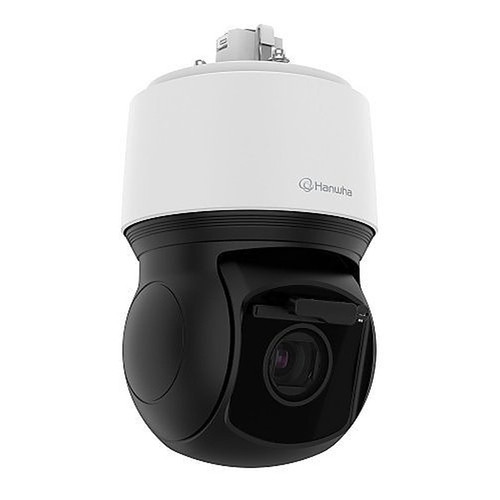
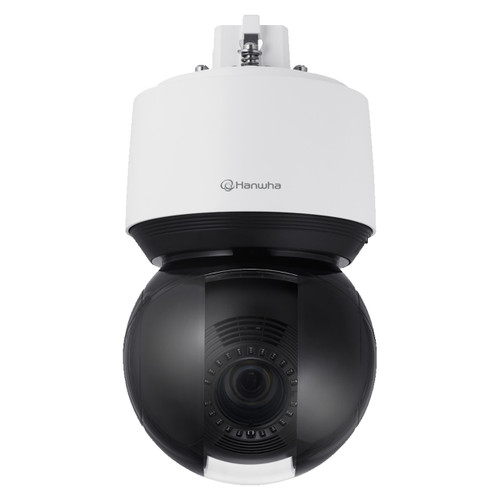
Both the Hanwha XNP-C9303RW and XNP-9250R are outdoor 8MP (3840×2160) PTZ network cameras sharing the same sensor class, IP66/IK10 housing, and Wise IR 200m illumination—products a systems integrator would legitimately cross-shop for perimeter or wide-area PTZ deployments. The comparison focuses on where the two diverge: optical zoom reach, frame rate, PTZ speed, smart-codec generation, cybersecurity posture, and physical size, all of which affect site-fit decisions at the pre-bid stage.
In This Guide
How do the imaging specs compare?
Both cameras share the same 1/2.8" CMOS sensor, 3840×2160 (8MP) resolution, 120dB Extreme WDR, F1.6 wide aperture, minimum illumination of 0.1 Lux color / 0 Lux IR, and Wise IR reach of 200m (656ft). The XNP-C9303RW steps up to 60fps capture and a 5–150mm lens delivering 30x optical zoom with 32x digital for 960x total magnification; the XNP-9250R is specified at 30fps and a 5–125mm lens for 25x optical zoom with 32x digital, totalling 800x. At maximum tele, the C9303RW's DORI identify distance reaches 401.8m vs the 9250R's 324.7m—a 24% advantage in identification range attributable to the longer focal length.
On noise reduction, the C9303RW lists WiseNR II (AI-engine-based) plus SSNR V, while the XNP-9250R specifies SSNR V only—the AI-assisted noise path is absent from the 9250R's published spec. The C9303RW also specifies full 60fps streaming at 8MP in its feature set, whereas the 9250R's documented maximum frame rate is 30fps at 8MP. Both cameras support Day/Night (Auto ICR), BLC/HLC/WDR/SSDR, defog, DIS with gyro, and Flip/Mirror rotation. Water removal differs: the C9303RW uses a wiper plus lens heater; the 9250R uses spinning-dry only.
What about installation and environment?
Both cameras carry IP66, IK10, and NEMA 4X ratings and operate from -40°C to +55°C (C9303RW) versus -40°C to +60°C per the 9250R's alternate spec field—a 5°C upper-limit advantage for the 9250R if the +60°C figure is confirmed by the installer against the datasheet. Both are powered by HPoE/PoE++ (IEEE 802.3bt, Class 6, Type 3) with an injector included. Typical/max power differs: C9303RW is 26W typical / 46W max; XNP-9250R is 20W typical / 40W max, making the 9250R the lighter draw on the PoE budget.
Physically the cameras diverge notably: the C9303RW measures Ø184.9×318.8mm and weighs 5,600g (12.34lb), while the XNP-9250R is Ø158×293.3mm and 3,200g (7.05lb)—a 43% weight reduction that simplifies pole-mount and parapet-mount load calculations. PTZ speed also differs: the C9303RW pans at up to 500°/sec and tilts at up to 350°/sec; the XNP-9250R pans faster at up to 700°/sec and tilts at up to 500°/sec, which is relevant for large-area slew-to-cue applications. Mounting accessories for the C9303RW are explicitly itemised in the spec (SBP-156HMW, SBP-156WMW, SBP-390WMW2, SBP-300PMW2, SBP-156LMW/LMW1, SBP-300LMW, SBP-156KMW, SBP-300KMW1, SBP-300NBW); the XNP-9250R spec lists no specific accessory part numbers.
Which fits your VMS and analytics better?
Both cameras support ONVIF Profile S/G/T and Hanwha SUNAPI. The C9303RW additionally lists ONVIF Profile M (metadata) and NTCIP 1205 (traffic-management protocol), which the XNP-9250R spec does not include. Analytics depth also differs: the C9303RW specifies AI-classified object types (Person, Face, Vehicle, License Plate) with vehicle sub-attributes (car/bus/truck/motorcycle/bicycle), virtual line crossing with direction, virtual area intrusion, and DetectionShot; the XNP-9250R lists object auto-tracking (Person/Vehicle), target lock tracking, directional detection, fog detection, face detection, motion detection, and appear/disappear—a broader event list but without vehicle sub-classification or license plate detection per published spec. Smart codec on the C9303RW is WiseStream II + WiseStream III; the 9250R lists WiseStream II only.
Cybersecurity posture is materially stronger on the C9303RW: it adds secure boot, signed firmware, firmware encryption, TPM/HTPM, SD card encryption, TPM with FIPS 140-2 Level 2, AES encryption, SRTP (TCP and UDP unicast), WSS (Web Socket Secure), MQTT support, and a brute-force attack prevention mechanism. The XNP-9250R spec documents HTTPS/SSL, digest authentication, IP filtering, user access log, 802.1X (EAP-TLS/EAP-LEAP), and device certificate—solid baseline, but none of the FIPS, TPM, or firmware-signing features. Edge storage is identical on paper: 2× Micro SD/SDHC/SDXC slots, up to 1TB (512GB×2). Alarm I/O on both cameras requires an optional external I/O box (SPM-4210 referenced for C9303RW); neither has built-in alarm terminals per spec. The C9303RW spec includes a 3-year warranty statement; no warranty term appears in the XNP-9250R spec as provided.
Which should you choose: the C9303RW or the XNP-9250R?
Our take: The XNP-C9303RW is the stronger choice when longer identification range, higher frame rate, AI sub-classification analytics, and hardened cybersecurity are primary requirements. Three concrete spec deltas drive this: (1) 30x / 960x total zoom vs 25x / 800x, translating to a DORI identify distance of 401.8m vs 324.7m—a 77-metre advantage at tele; (2) 60fps vs 30fps at 8MP, reducing motion blur on fast-moving targets; (3) FIPS 140-2 Level 2 TPM, signed firmware, and MQTT versus the 9250R's baseline HTTPS/802.1X stack, a decisive differentiator for government or critical-infrastructure projects. Conversely, the XNP-9250R is preferable when pole or parapet structural load is constrained (3.2kg vs 5.6kg), when PoE switch headroom is tight (40W max vs 46W), or when faster slew speed (700°/sec pan vs 500°/sec) is operationally critical. Confirm the 9250R's +60°C upper operating limit against its physical datasheet before specifying for high-ambient environments.
Side-by-Side Comparison
Spec-for-spec, from manufacturer data.
| Specification | Hanwha C9303RW | Hanwha XNP-9250R |
|---|---|---|
| Resolution | 8MP (3840×2160) | 8MP (3840×2160) |
| Image Sensor | 1/2.8" CMOS | 1/2.8" CMOS |
| Max Frame Rate | 60fps (8MP) | 30fps (8MP) |
| Optical Zoom / Focal Length | 30x / 5–150mm | 25x / 5–125mm |
| Total Magnification | 960x (30x optical + 32x digital) | 800x (25x optical + 32x digital) |
| DORI Identify (Tele) | 401.8m (1318.3ft) | 324.7m (1065.2ft) |
| Min. Illumination | 0.1 Lux color / 0 Lux IR | 0.1 Lux color / 0 Lux IR |
| IR Range | 200m (656ft) Wise IR | 200m (656ft) Wise IR |
| Wide Dynamic Range | Extreme WDR (120dB) | Extreme WDR (120dB) |
| Pan Speed (Max) | 500°/sec | 700°/sec |
| Tilt Speed (Max) | 350°/sec | 500°/sec |
| Power Input / PoE Class | PoE++ IEEE 802.3bt Class 6 Type 3 | HPoE IEEE 802.3bt Class 6 Type 3 |
| Power Consumption | Typical 26W / Max 46W | Typical 20W / Max 40W |
| IP / IK Rating | IP66 / IK10 | IP66 / IK10 |
| Operating Temperature | -40°C to +55°C | -40°C to +60°C |
| Dimensions / Weight | Ø184.9×318.8mm / 5,600g (12.34lb) | Ø158×293.3mm / 3,200g (7.05lb) |
| Edge Storage | 2× microSD up to 1TB (512GB×2) | 2× microSD up to 1TB |
| ONVIF Profiles | S / G / T / M | S / G / T |
| Video Compression | H.265 / H.264 / MJPEG | H.265 / H.264 / MJPEG |
| Smart Codec | WiseStream II + WiseStream III | WiseStream II |
| Noise Reduction | WiseNR II (AI) + SSNR V | SSNR V |
| Analytics | Person / Face / Vehicle (type) / License Plate; virtual line & area; DetectionShot | Person / Vehicle tracking; target lock; directional; fog; face; appear/disappear |
| Security Features | Secure boot; signed firmware; FIPS 140-2 L2 TPM; AES; SRTP; MQTT; brute-force prevention | HTTPS/SSL; digest auth; IP filtering; 802.1X (EAP-TLS/EAP-LEAP); device certificate |
| Water Removal | Wiper + lens heater | Spinning dry |
| Warranty | 3-year | — |
Frequently Asked Questions
Which should you choose: the C9303RW or the XNP-9250R?
The XNP-C9303RW is the stronger choice when longer identification range, higher frame rate, AI sub-classification analytics, and hardened cybersecurity are primary requirements. Three concrete spec deltas drive this: (1) 30x / 960x total zoom vs 25x / 800x, translating to a DORI identify distance of 401.8m vs 324.7m—a 77-metre advantage at tele; (2) 60fps vs 30fps at 8MP, reducing motion blur on fast-moving targets; (3) FIPS 140-2 Level 2 TPM, signed firmware, and MQTT versus the 9250R's baseline HTTPS/802.1X stack, a decisive differentiator for government or critical-infrastructure projects. Conversely, the XNP-9250R is preferable when pole or parapet structural load is constrained (3.2kg vs 5.6kg), when PoE switch headroom is tight (40W max vs 46W), or when faster slew speed (700°/sec pan vs 500°/sec) is operationally critical. Confirm the 9250R's +60°C upper operating limit against its physical datasheet before specifying for high-ambient environments.
Is the XNP-C9303RW or XNP-9250R better for low-light performance?
Both cameras share identical minimum illumination figures—0.1 Lux color and 0 Lux IR—and the same Wise IR range of 200m. Neither has a documented low-light advantage over the other based on the published specifications. The C9303RW does add AI-based WiseNR II noise reduction on top of SSNR V, which the 9250R spec does not list, potentially improving image quality at low-light extremes, but no lux figures differentiate the two at that level.
Which camera is easier to mount on a pole or parapet?
The XNP-9250R is significantly lighter at 3.2kg (7.05lb) versus the C9303RW at 5.6kg (12.34lb)—a 43% weight reduction. Smaller diameter (Ø158mm vs Ø184.9mm) also reduces wind-load surface area. For pole or parapet installations where structural rating or bracket payload limits apply, the 9250R imposes a lower burden. Note that the C9303RW spec itemises compatible mounting accessories by part number; the 9250R spec does not list specific accessory SKUs.
Does either camera support license plate detection or NTCIP for traffic applications?
Only the XNP-C9303RW lists license plate as a classified object type and includes NTCIP 1205 in its protocol stack per the published specifications. The XNP-9250R spec includes neither license plate detection nor NTCIP 1205. If the deployment involves traffic enforcement, tolling integration, or ITS VMS compatibility, the C9303RW is the only specified option of the two.
Get a Second Opinion on Your Camera Choice
Share your site layout, coverage goals, and budget. Our team will validate the camera selection, flag anything we would change, and recommend products that match the use case.