
Hanwha C9253R vs Hanwha C9303RW: Specification Comparison
The Hanwha XNP-C9253R and XNP-C9303RW are both 8MP (3840×2160) outdoor PTZ cameras from Hanwha's Wisenet C-series, sharing the same sensor class, AI analytics engine, and PoE++ power standard. A buyer considering one would reasonably evaluate the other. The key differentiators are optical zoom range, lens reach and corresponding DORI distances, water-removal mechanism, pan/tilt speeds, physical size and weight, and minor networking and power consumption differences. This comparison is based strictly on the manufacturer specifications provided.
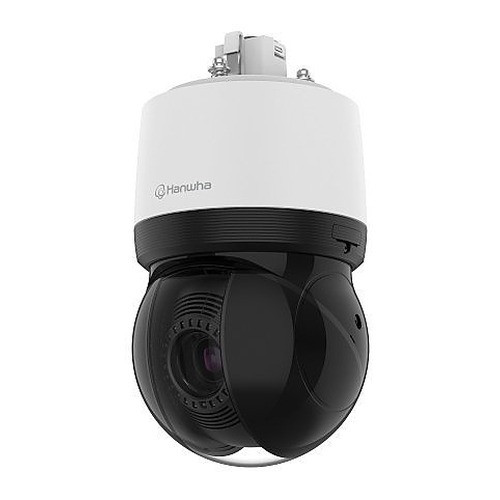
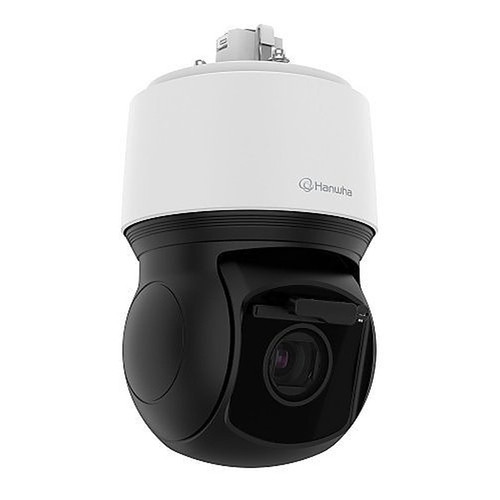
In This Guide
How do the imaging specs compare?
Both cameras use a 1/2.8" CMOS sensor delivering 3840×2160 at up to 30fps, with a minimum illumination of 0.1 Lux color and 0 Lux IR, and Extreme WDR at 120dB. The critical optical difference is zoom ratio: the C9253R offers a 5–125mm lens at 25x optical zoom with 32x digital for 800x total, while the C9303RW steps up to a 5–150mm lens at 30x optical zoom with 32x digital for 960x total. Both share the same wide-end horizontal field of view (57.42°), so the difference manifests exclusively at tele end.
That extra optical reach translates directly into DORI performance. At tele, the C9253R detects at 3,246.9m and identifies at 324.7m. The C9303RW detects at 4,018.1m (+23.7%) and identifies at 401.8m (+23.7%), a meaningful gap for perimeter surveillance where tele-end identification range governs deployment spacing. Minimum object distance also differs: the C9253R requires 5m (16.4ft) while the C9303RW closes to 3m (9.84ft). Both carry Wise IR at 200m. White balance presets differ slightly — the C9253R adds Mercury and Sodium options not listed for the C9303RW.
What about installation and environment?
Both units carry identical environmental ratings: IP66, IK10, NEMA 4X, and NEMA-TS 2 (2.2.7, 2.2.8, 2.2.9), with an operating range of -40°C to +55°C and storage down to -50°C. Both are PoE++ (IEEE 802.3bt, Class 6, Type 3) with injector included. Power consumption differs: the C9253R draws typical 24W / max 40W versus the C9303RW's typical 26W / max 46W — the larger zoom mechanism and heavier optics account for the delta. Installers on constrained PoE++ switch budgets should account for this 6W max difference across large deployments.
The physical footprint diverges noticeably. The C9253R measures ø158×293.3mm and weighs 3,200g (7.05 lb). The C9303RW is substantially larger at ø184.9×318.8mm and weighs 5,600g (12.34 lb) — 75% heavier. This affects pole, parapet, and corner mount structural loading. Water removal also differs: the C9253R uses Spin Dry plus a lens heater, while the C9303RW uses a Wiper plus a lens heater. The C9253R lists an in-ceiling mount (SHP-1563FPW / SHP-1563FW) and a dedicated outdoor enclosure (SPB-PTZ85W) not listed for the C9303RW. Pan speed favors the C9253R (max 700°/sec vs 500°/sec); tilt speed likewise (500°/sec vs 350°/sec) — relevant for fast-moving target auto-tracking response time.
Which fits your VMS and analytics better?
Both cameras are ONVIF Profile S/G/T/M compliant and support SUNAPI and the Wisenet SDK. Video compression is identical: H.265/H.264 (Main/Baseline/High) and MJPEG, with WiseStream II and WiseStream III smart codecs. Streaming supports up to 20 unicast and 128 multicast users with 10 configurable profiles. Protocol stacks are listed as identical, including NTCIP1205 and MQTT — useful for traffic and smart-city integrations. Both AI analytics engines classify Person, Face, Vehicle (with sub-type attributes: car/bus/truck/motorcycle/bicycle), and License Plate, with virtual line and virtual area events.
Edge storage is identical: dual Micro SD/SDHC/SDXC slots supporting up to 1TB (2×512GB), with SD card encryption. Both include TPM/HTPM secure storage with FIPS 140-2 Level 2 certification, secure boot, signed firmware, 802.1X network authentication, and ARP/brute-force protections. The C9253R lists Data Protect as 'Authentication & ZIP encryption'; the C9303RW lists 'AES encryption, ZIP compression' — a potentially meaningful difference for high-security deployments requiring AES at rest. Audio is not fully specified in the provided data for either model; alarm output is noted as incomplete in both spec sheets ('* Alarm output / Audi' truncated). Neither model's audio I/O can be confirmed from these specs alone.
Which should you choose: the C9253R or the C9303RW?
Our take: The C9303RW is the stronger choice when maximum tele-end identification range and closer minimum object distance are the primary requirements — its 30x optical zoom (vs 25x) extends tele identification to 401.8m vs 324.7m, and it focuses as close as 3m vs 5m. The C9253R is the stronger choice when fast PTZ response, lower weight, or constrained mounting structures are the deciding factors: it spins at 700°/sec pan vs 500°/sec and weighs 3,200g vs 5,600g, reducing structural load by 2.4kg on pole and parapet mounts. The C9253R also draws up to 6W less peak power (40W vs 46W), which matters on large multi-camera PoE++ switch deployments. Both units are functionally equivalent on sensor, resolution, IR range, analytics, VMS compatibility, and environmental ratings. Specify the C9303RW for wide-area perimeter applications where tele reach governs; specify the C9253R where mounting load, PTZ speed, or power budget is constrained.
Side-by-Side Comparison
Spec-for-spec, from manufacturer data.
| Specification | Hanwha C9253R | Hanwha C9303RW |
|---|---|---|
| Resolution | 3840×2160 (8MP) | 3840×2160 (8MP) |
| Image Sensor | 1/2.8" CMOS | 1/2.8" CMOS |
| Focal Length / Zoom | 5–125mm, 25x optical, 32x digital, 800x total | 5–150mm, 30x optical, 32x digital, 960x total |
| Max Aperture | F1.6 (Wide) – F3.73 (Tele) | F1.6 (Wide) – F4.56 (Tele) |
| Min Illumination | 0.1 Lux color / 0 Lux IR | 0.1 Lux color / 0 Lux IR |
| IR Range (Wise IR) | 200m (656ft) | 200m (656ft) |
| Wide Dynamic Range | Extreme WDR 120dB | Extreme WDR 120dB |
| Max Frame Rate | 30fps @ 8MP | 30fps @ 8MP |
| Pan Speed (Max) | 700°/sec | 500°/sec |
| Tilt Speed (Max) | 500°/sec | 350°/sec |
| Min Object Distance | 5m (16.4ft) | 3m (9.84ft) |
| DORI Identify (Tele) | 324.7m (1,065.2ft) | 401.8m (1,318.3ft) |
| Water Removal | Spin Dry + Lens Heater | Wiper + Lens Heater |
| IP / IK Rating | IP66 / IK10 | IP66 / IK10 |
| NEMA Rating | NEMA 4X, NEMA-TS 2 (2.2.7/2.2.8/2.2.9) | NEMA 4X, NEMA-TS 2 (2.2.7/2.2.8/2.2.9) |
| Operating Temperature | -40°C to +55°C | -40°C to +55°C |
| Power Input / PoE Class | PoE++ IEEE 802.3bt, Class 6, Type 3 | PoE++ IEEE 802.3bt, Class 6, Type 3 |
| Power Consumption | Typical 24W / Max 40W | Typical 26W / Max 46W |
| Edge Storage | 2× Micro SD/SDHC/SDXC, max 1TB (512GB×2) | 2× Micro SD/SDHC/SDXC, max 1TB (512GB×2) |
| RAM / Flash | 4GB RAM / 512MB Flash | 4GB RAM / 512MB Flash |
| Video Compression | H.265, H.264 (Main/Baseline/High), MJPEG | H.265, H.264 (Main/Baseline/High), MJPEG |
| ONVIF Profiles | S/G/T/M | S/G/T/M |
| Data Protection | Authentication & ZIP encryption | AES encryption, ZIP compression |
| Dimensions (ø×H) | ø158×293.3mm (6.22×11.55") | ø184.9×318.8mm (7.28×12.55") |
| Weight | 3,200g (7.05 lb) | 5,600g (12.34 lb) |
| Warranty | 3-year | 3-year |
Frequently Asked Questions
Which should you choose: the C9253R or the C9303RW?
The C9303RW is the stronger choice when maximum tele-end identification range and closer minimum object distance are the primary requirements — its 30x optical zoom (vs 25x) extends tele identification to 401.8m vs 324.7m, and it focuses as close as 3m vs 5m. The C9253R is the stronger choice when fast PTZ response, lower weight, or constrained mounting structures are the deciding factors: it spins at 700°/sec pan vs 500°/sec and weighs 3,200g vs 5,600g, reducing structural load by 2.4kg on pole and parapet mounts. The C9253R also draws up to 6W less peak power (40W vs 46W), which matters on large multi-camera PoE++ switch deployments. Both units are functionally equivalent on sensor, resolution, IR range, analytics, VMS compatibility, and environmental ratings. Specify the C9303RW for wide-area perimeter applications where tele reach governs; specify the C9253R where mounting load, PTZ speed, or power budget is constrained.
Does the C9303RW see farther than the C9253R at full zoom?
Yes. Per the provided DORI specs, the C9303RW identifies targets at 401.8m at tele versus 324.7m for the C9253R — a 23.7% improvement driven by its 30x optical zoom (5–150mm) versus the C9253R's 25x (5–125mm). Detection range at tele is 4,018.1m vs 3,246.9m respectively.
Which camera is easier to mount on a pole or parapet?
The C9253R is significantly lighter at 3,200g (7.05 lb) versus the C9303RW at 5,600g (12.34 lb). Both share the same pole mount (SBP-300PMW2) and parapet mount accessories, but the 2.4kg weight difference meaningfully reduces structural loading, particularly on slender poles or older parapet brackets. The C9253R also lists a dedicated outdoor enclosure (SPB-PTZ85W) not listed for the C9303RW.
How does each camera handle rain on the lens?
The two models use different water-removal mechanisms. The C9253R uses Spin Dry (the dome spins to centrifugally shed water) plus a lens heater. The C9303RW uses a Wiper plus a lens heater. Both are rated IP66. Spin Dry has no mechanical wiper blade to wear or streak; a wiper physically clears droplets but introduces a consumable component. The right choice depends on expected rainfall intensity and maintenance preferences.
Get a Second Opinion on Your Camera Choice
Share your site layout, coverage goals, and budget. Our team will validate the camera selection, flag anything we would change, and recommend products that match the use case.