
Hanwha C9253 vs Hanwha C9253R: Specification Comparison
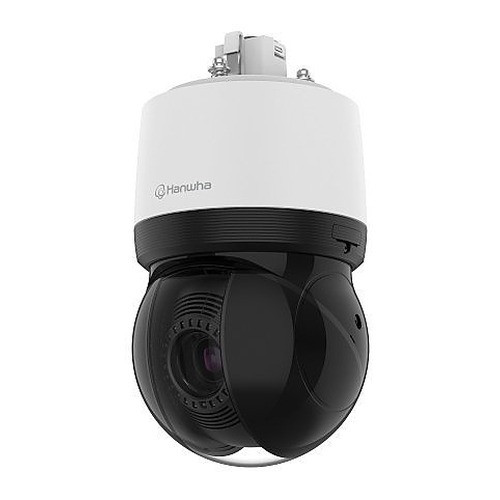
The Hanwha XNP-C9253 and XNP-C9253R are both 8MP outdoor PTZ dome cameras sharing the same sensor, 25x optical zoom lens, pan/tilt mechanics, AI analytics engine, and physical enclosure. They occupy the same resolution class and camera type, making them direct cross-shop candidates. The key differentiator is the 'R' suffix: the C9253R adds an integrated Wise IR illuminator rated to 200m and requires PoE++ (802.3bt Class 6) to power it, while the C9253 operates on PoE+ (802.3at Class 4) without onboard IR.
In This Guide
How do the imaging specs compare?
Both cameras use a 1/2.8" CMOS sensor, deliver 3840×2160 resolution at up to 30fps at full 8MP (60fps listed as a feature header applies to lower-resolution streams), and share identical optics: a 5–125mm DC auto-iris lens providing 25x optical zoom, F1.6 (wide) to F3.73 (tele) aperture, and the same angular field of view (H: 57.42°, V: 33.54°). Both provide Extreme WDR at 120dB, WiseNR II AI-based noise reduction, SSNR V, built-in gyro-based digital image stabilization, and defog. DORI performance is identical: Detect 140.2m (wide) / 3,246.9m (tele); Identify 14.0m (wide) / 324.7m (tele).
The meaningful imaging divergence is in low-light performance. The C9253 specifies minimum illumination at 0.1 Lux color / 0.01 Lux B&W (no onboard IR). The C9253R specifies 0.1 Lux color / 0 Lux IR, reflecting its integrated Wise IR illuminator rated to 200m (656ft). The C9253R also lists two additional white balance modes — Mercury and Sodium — absent from the C9253 spec sheet. The C9253 spec notes IR Distance as 5m and Built-in IR as Yes in its attribute fields, which appears inconsistent with its datasheet notation of 'external IR illuminator required'; buyers should verify against the official datasheet before specifying.
What about installation and environment?
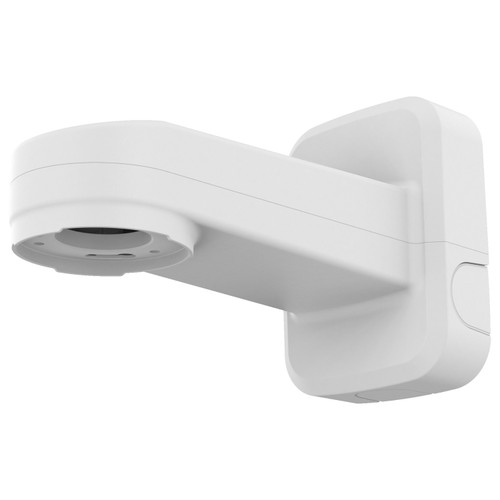
Both cameras share the same physical enclosure: ø158×293.3mm, 3,200g (7.05lb), white aluminum body with black polycarbonate head, IP66, IK10, NEMA 4X, and NEMA-TS 2 (2.2.7, 2.2.8, 2.2.9) ratings. Operating temperature range is identical at -40°C to +55°C. Both include spin-dry water removal and lens heater. Mounting accessory compatibility is identical across hanging, ceiling, wall, pole, in-ceiling, parapet, corner, and cabinet options.
Power is the critical installation differentiator. The C9253 runs on PoE+ (IEEE 802.3at, Class 4), with typical draw of 24W and max 25.5W — compatible with the vast majority of existing PoE+ switches. The C9253R requires PoE++ (IEEE 802.3bt, Class 6, Type 3) with max draw of 40W to power its IR illuminator; Hanwha includes a PoE++ injector in the box. Installers must confirm switch port capability or budget for the included/additional injectors before specifying the C9253R at scale.
Which fits your VMS and analytics better?
Network and VMS integration is effectively identical between the two models. Both support ONVIF Profile S/G/T/M, SUNAPI, and Wisenet SDK. Protocol stacks are identical, including IPv4/IPv6, RTSP, SRTP, MQTT, NTCIP1205, SNMPv1/v2c/v3, and 802.1X (EAP-TLS/LEAP/PEAP). Both run WiseStream II and III smart codecs with H.265/H.264 (CBR/VBR) and MJPEG, support up to 20 unicast and 128 multicast users, and allow up to 10 streaming profiles. Edge storage is 2× Micro SD/SDHC/SDXC slots (512GB each, 1TB total), and both carry 4GB RAM / 512MB Flash.
AI analytics capabilities are identical: object classification (Person, Face, Vehicle, License Plate), vehicle type attributes (car/bus/truck/motorcycle/bicycle), DetectionShot, object detection, virtual line crossing/direction, and virtual area. Auto-tracking covers persons and vehicles on both models. Security posture is nearly identical — both carry TPM with FIPS 140-2 Level 2, secure boot, signed firmware, and firmware encryption. One noted difference: the C9253 specifies 'encrypted SD card' under Secure Storage, while the C9253R lists 'SD card encryption'; and Data Protect is described as 'Authentication & data encryption' (C9253) vs 'Authentication & ZIP encryption' (C9253R). Neither model lists a built-in audio I/O in the provided specs; alarm I/O requires the optional SPM-4210 I/O box on both.
Which should you choose: the C9253 or the C9253R?
Our take: The C9253R is the stronger choice when the installation site lacks adequate ambient or supplemental lighting and 200m IR reach is required, while the C9253 is the correct specification when PoE+ infrastructure is already in place and external illumination is provided or unnecessary. The single decisive spec delta is the integrated Wise IR illuminator on the C9253R, rated to 200m (656ft) vs. no onboard IR on the C9253. That illuminator drives the second key delta: max power draw jumps from 25.5W (PoE+ / 802.3at Class 4) to 40W (PoE++ / 802.3bt Class 6), requiring switch upgrades or per-port injectors. The third delta is minor: the C9253R adds Mercury and Sodium white balance modes absent from the C9253. All other specs — sensor, optics, DORI, WDR, analytics, VMS integration, storage, enclosure, and certifications — are identical. Specify the C9253R for unlit or low-ambient outdoor perimeters; specify the C9253 where lighting infrastructure exists and PoE++ ports are unavailable.
Side-by-Side Comparison
Spec-for-spec, from manufacturer data.
| Specification | Hanwha C9253 | Hanwha C9253R |
|---|---|---|
| Resolution | 3840×2160 (8MP) | 3840×2160 (8MP) |
| Image Sensor | 1/2.8" CMOS | 1/2.8" CMOS |
| Focal Length / Zoom | 5–125mm, 25x optical (800x total) | 5–125mm, 25x optical (800x total) |
| Max Aperture | F1.6 (Wide) – F3.73 (Tele) | F1.6 (Wide) – F3.73 (Tele) |
| Max Frame Rate | 30fps @ 8MP | 30fps @ 8MP |
| Min. Illumination | 0.1 Lux color / 0.01 Lux B&W (no onboard IR) | 0.1 Lux color / 0 Lux IR |
| IR Illuminator / Range | None per datasheet (external required) | Wise IR, 200m (656ft) |
| Wide Dynamic Range | Extreme WDR, 120dB | Extreme WDR, 120dB |
| Power Input / PoE Class | PoE+ (802.3at, Class 4) | PoE++ (802.3bt, Class 6, Type 3) |
| Max Power Draw | Typical 24W, Max 25.5W | Typical 24W, Max 40W |
| IP / IK Rating | IP66 / IK10 | IP66 / IK10 |
| Operating Temperature | -40°C to +55°C | -40°C to +55°C |
| Video Compression | H.265, H.264 (Main/Baseline/High), MJPEG | H.265, H.264 (Main/Baseline/High), MJPEG |
| ONVIF | Profile S/G/T/M | Profile S/G/T/M |
| Edge Storage | 2× microSD/SDHC/SDXC, max 1TB (512GB×2) | 2× microSD/SDHC/SDXC, max 1TB (512GB×2) |
| Dimensions / Weight | ø158×293.3mm / 3,200g (7.05lb) | ø158×293.3mm / 3,200g (7.05lb) |
| Warranty | 3 years | 3 years |
Frequently Asked Questions
Which should you choose: the C9253 or the C9253R?
The C9253R is the stronger choice when the installation site lacks adequate ambient or supplemental lighting and 200m IR reach is required, while the C9253 is the correct specification when PoE+ infrastructure is already in place and external illumination is provided or unnecessary. The single decisive spec delta is the integrated Wise IR illuminator on the C9253R, rated to 200m (656ft) vs. no onboard IR on the C9253. That illuminator drives the second key delta: max power draw jumps from 25.5W (PoE+ / 802.3at Class 4) to 40W (PoE++ / 802.3bt Class 6), requiring switch upgrades or per-port injectors. The third delta is minor: the C9253R adds Mercury and Sodium white balance modes absent from the C9253. All other specs — sensor, optics, DORI, WDR, analytics, VMS integration, storage, enclosure, and certifications — are identical. Specify the C9253R for unlit or low-ambient outdoor perimeters; specify the C9253 where lighting infrastructure exists and PoE++ ports are unavailable.
Is the C9253 or C9253R better for low-light or nighttime coverage?
The C9253R is the specified choice for low-light or nighttime use. It includes a Wise IR illuminator rated to 200m (656ft) and achieves 0 Lux minimum illumination in IR mode. The C9253 has no onboard IR illuminator per its datasheet notation, specifying 0.01 Lux B&W minimum illumination; nighttime coverage would require external illumination. Both cameras are otherwise identical in sensor, lens, and WDR performance.
Can I use the C9253R on my existing PoE+ switch?
Not without additional hardware. The C9253R requires PoE++ (IEEE 802.3bt, Class 6, Type 3) with a maximum draw of 40W to power its integrated IR illuminator. Standard PoE+ (802.3at) switches deliver a maximum of 30W per port, which is insufficient. Hanwha includes a PoE++ injector with the C9253R. The C9253, by contrast, operates on PoE+ (802.3at, Class 4) at a maximum of 25.5W and is compatible with most existing PoE+ switches.
Do the C9253 and C9253R support the same VMS platforms and analytics?
Yes. Both models are identical in VMS and analytics integration: both support ONVIF Profile S/G/T/M, SUNAPI, Wisenet SDK, and the same full protocol stack. AI analytics — object detection, auto-tracking of persons and vehicles, virtual line/area, and object classification including license plates — are the same on both. Edge storage (2× microSD up to 1TB total), streaming profiles, and security certifications (FIPS 140-2 Level 2 TPM) are also identical across both models.
Get a Second Opinion on Your Camera Choice
Share your site layout, coverage goals, and budget. Our team will validate the camera selection, flag anything we would change, and recommend products that match the use case.