
Hanwha C8253R vs i-PRO X66600-Z3S: Specification Comparison
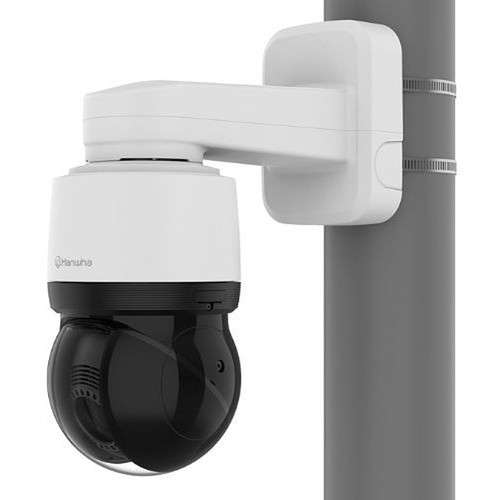
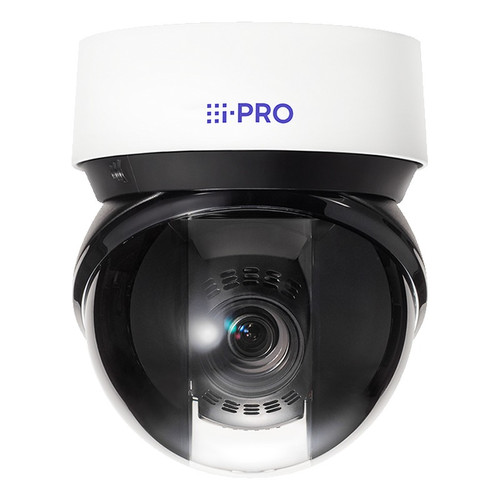
Both the Hanwha XNP-C8253R and the i-PRO WV-X66600-Z3S are 6MP outdoor PTZ dome cameras targeting perimeter and large-area surveillance applications. Each ships with onboard AI analytics, PoE++ power, IP66/IK10 environmental ratings, and ONVIF Profile S/G/T/M support. Buyers cross-shopping these two will weigh optical zoom range, IR reach, WDR headroom, edge-storage capacity, audio capability, and warranty length against VMS ecosystem alignment and platform-specific analytics depth.
In This Guide
How do the imaging specs compare?
Both cameras share a 1/2.8" CMOS sensor at 3328×1872 (6MP) resolution. The Hanwha XNP-C8253R delivers a 25x optical zoom (5–125mm, F1.6–F3.73) with a maximum frame rate of 30fps at full 6MP, plus a digital 32x for a combined 800x. The i-PRO WV-X66600-Z3S provides a 30x optical zoom (4.5–135mm, F1.8–F4.7) with an extra-zoom mode reaching 78x at 1280×720. The i-PRO's wider aperture at tele (F4.7 vs F3.73) means it admits slightly less light at maximum zoom, though both specify 0.1 Lux color minimum illumination. The Hanwha's F1.6 wide-end aperture is modestly faster than the i-PRO's F1.8.
WDR headroom differs meaningfully: the Hanwha specifies Extreme WDR at 120 dB while the i-PRO specifies Super Dynamic at up to 132 dB (at level 31). The Hanwha's onboard Wise IR covers 200m (656 ft); the i-PRO's IR range per its spec listing is 20–30m — a substantial gap for long-range night coverage. On DORI at tele, the Hanwha identifies at 281.4m vs the i-PRO's 305.0m, giving the i-PRO a slight telephoto identification advantage despite the shorter IR throw. The Hanwha adds a built-in gyro-based digital image stabilizer; the i-PRO also lists a built-in gyro image stabilizer.
What about installation and environment?
Both cameras are rated IP66 and IK10, and both carry NEMA-TS2 certification. The Hanwha adds NEMA 4X, which the i-PRO spec does not explicitly claim. Operating temperature ranges diverge: the Hanwha is rated –40°C to +55°C, while the i-PRO is rated –30°C to +60°C (power-on); the i-PRO's storage spec extends to –50°C. For cold-climate installs the Hanwha's –40°C power-on floor is a meaningful advantage; for high-heat environments the i-PRO's +60°C ceiling has a 5°C edge. The i-PRO additionally specifies wind resistance up to 40 m/s (~89 mph), which the Hanwha spec does not address.
Both draw PoE++ (IEEE 802.3bt, Class 6). The Hanwha spec states typical 24W / max 40W; the i-PRO spec states 37.8W. Physical footprint differs: the Hanwha is ø158×293.3mm at 3,200g versus the i-PRO at ø167×205mm at approximately 3,000g — the Hanwha is taller, the i-PRO slightly wider and lighter. The Hanwha includes a water-removal spin-dry function and lens heater. Hanwha documents an extensive accessory ecosystem (wall, pole, parapet, corner, in-ceiling mounts); i-PRO mount compatibility is not detailed in the supplied spec.
Which fits your VMS and analytics better?
Both cameras support ONVIF Profile S/G/T/M and H.265/H.264/MJPEG compression. The Hanwha supports up to 20 unicast users and 128 multicast users across up to 10 streaming profiles and also lists SUNAPI and Wisenet SDK integration. The i-PRO supports up to 14 simultaneous users, with GOP-control smart coding. The Hanwha's AI analytics (Wisenet 7 engine) cover object detection, virtual line crossing, virtual area, person/face/vehicle/license-plate classification with attribute detail (car/bus/truck/motorcycle/bicycle), plus AI auto-tracking of persons and vehicles. The i-PRO's AI covers motion, privacy masking, face detection, people detection, vehicle detection, auto-tracking, and AI sound classification (gunshot, yell, vehicle horn, glass break). Audio I/O is present on the i-PRO (3.5mm stereo in/out, G.711/G.726/AAC-LC, half/full duplex); the Hanwha spec references audio output and MQTT publication in alarm events but does not list dedicated audio I/O terminals in the provided spec.
Edge storage capacity favors the Hanwha significantly: two microSD/SDHC/SDXC slots supporting up to 1TB total (512GB×2), versus the i-PRO's single slot supporting 64GB–512GB microSDXC. Both support scheduled, alarm-triggered, and manual recording. The Hanwha lists TPM with FIPS 140-2 Level 2 certification, SD card encryption, secure boot, and signed/encrypted firmware; the i-PRO lists signed firmware. Protocol support is comparable: both include MQTT, SNMP v1/v2c/v3, SRTP, HTTPS, 802.1X, and NTP. The i-PRO adds explicit IPv6 protocol listing. The Hanwha specifies 256 preset positions; the i-PRO also specifies 256 presets. Warranty is 3 years for the Hanwha and 5 years for the i-PRO.
Which should you choose: the C8253R or the X66600-Z3S?
Our take: The XNP-C8253R is the stronger choice when IR night coverage and dual-slot edge redundancy are primary requirements, while the WV-X66600-Z3S is preferable when maximum WDR headroom, audio I/O, and a longer warranty matter most. Key spec deltas: the Hanwha's IR reach is 200m versus the i-PRO's 20–30m — a decisive gap for unlit perimeter work. The i-PRO's Super Dynamic WDR peaks at 132 dB versus the Hanwha's 120 dB Extreme WDR, an advantage in high-contrast scenes. The i-PRO carries a 5-year warranty versus the Hanwha's 3-year warranty. The Hanwha's dual microSD slots support up to 1TB on-camera storage versus the i-PRO's single 512GB maximum. Platform qualifier: Wisenet VMS deployments will leverage SUNAPI and Wisenet 7 AI depth on the Hanwha; i-PRO/Panasonic VMS environments will benefit from the X66600-Z3S's native integration and audio classification features.
Side-by-Side Comparison
Spec-for-spec, from manufacturer data.
| Specification | Hanwha C8253R | i-PRO X66600-Z3S |
|---|---|---|
| Resolution | 3328×1872 (6MP) | 3328×1872 (6MP) |
| Image Sensor | 1/2.8" CMOS | Approx. 1/2.8" CMOS |
| Optical Zoom / Focal Length | 25x / 5–125mm | 30x / 4.5–135mm |
| Max Aperture (Wide / Tele) | F1.6 (Wide) / F3.73 (Tele) | F1.8 (Wide) / F4.7 (Tele) |
| Min Illumination | 0.1 Lux color / 0 Lux IR | 0.1 Lux (BW, 50IRE, F1.8, 1/30s) |
| IR Range | 200m (656ft) | 20–30m |
| WDR | Extreme WDR 120dB | Super Dynamic up to 132dB |
| Max Frame Rate | 30fps @ 6MP | 30fps |
| Video Compression | H.265, H.264, MJPEG | H.265, H.264, MJPEG |
| IP Rating | IP66 | IP66 |
| IK / Impact Rating | IK10 | IK10 |
| Operating Temperature | -40°C to +55°C | -30°C to +60°C (power-on) |
| Power Input / PoE Class | PoE++ (802.3bt, Class 6) / Typ 24W, Max 40W | PoE++ / 37.8W |
| Edge Storage | Dual microSD/SDHC/SDXC up to 1TB (512GB×2) | Single microSDXC up to 512GB |
| Audio I/O | — | 3.5mm stereo in / mono out; half/full duplex |
| ONVIF Profiles | S / G / T / M | G / M / S / T |
| Preset Positions | 256 | 256 |
| Warranty | 3 years | 5 years |
Frequently Asked Questions
Which should you choose: the C8253R or the X66600-Z3S?
The XNP-C8253R is the stronger choice when IR night coverage and dual-slot edge redundancy are primary requirements, while the WV-X66600-Z3S is preferable when maximum WDR headroom, audio I/O, and a longer warranty matter most. Key spec deltas: the Hanwha's IR reach is 200m versus the i-PRO's 20–30m — a decisive gap for unlit perimeter work. The i-PRO's Super Dynamic WDR peaks at 132 dB versus the Hanwha's 120 dB Extreme WDR, an advantage in high-contrast scenes. The i-PRO carries a 5-year warranty versus the Hanwha's 3-year warranty. The Hanwha's dual microSD slots support up to 1TB on-camera storage versus the i-PRO's single 512GB maximum. Platform qualifier: Wisenet VMS deployments will leverage SUNAPI and Wisenet 7 AI depth on the Hanwha; i-PRO/Panasonic VMS environments will benefit from the X66600-Z3S's native integration and audio classification features.
Is the XNP-C8253R or WV-X66600-Z3S better for low-light and night surveillance?
Both cameras specify the same minimum color illumination of 0.1 Lux. However, the Hanwha XNP-C8253R's Wise IR illuminates to 200m (656ft), while the i-PRO WV-X66600-Z3S's IR range is listed at 20–30m per the provided spec. For unlit or poorly lit perimeter scenes beyond 30m, the Hanwha holds a substantial practical advantage.
Which camera has better onboard storage for failover recording?
The Hanwha XNP-C8253R provides two microSD card slots supporting up to 1TB total (512GB per slot). The i-PRO WV-X66600-Z3S has a single microSD slot supporting up to 512GB. If redundant or higher-capacity local recording is a requirement, the Hanwha's dual-slot design provides more flexibility.
Does either camera support two-way audio?
The i-PRO WV-X66600-Z3S explicitly specifies a 3.5mm stereo audio input and mono audio output with half-duplex and full-duplex modes, plus AI sound classification. The Hanwha XNP-C8253R's provided spec references audio output in alarm event actions but does not list dedicated audio input/output terminals or two-way audio modes in the supplied specification data.
Get a Second Opinion on Your Camera Choice
Share your site layout, coverage goals, and budget. Our team will validate the camera selection, flag anything we would change, and recommend products that match the use case.