
Hanwha C8253R vs i-PRO X66600-Z3K: Specification Comparison
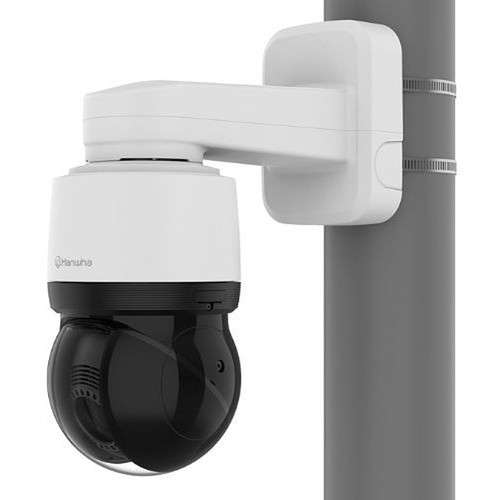
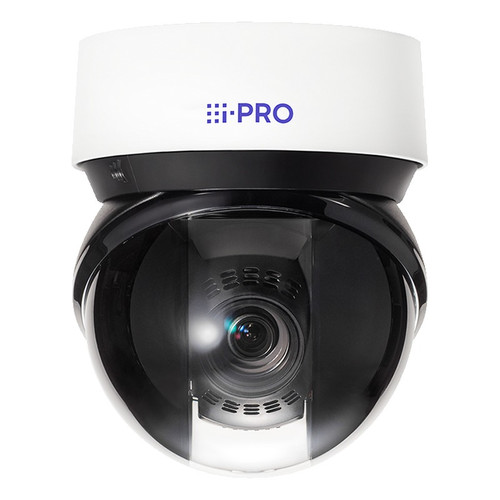
Both the Hanwha XNP-C8253R and the i-PRO WV-X66600-Z3K are 6MP outdoor PTZ dome cameras aimed at wide-area surveillance deployments where optical reach, AI analytics, and all-weather durability are primary requirements. They share the same 1/2.8" CMOS sensor format and 3328×1872 resolution, making them direct cross-shop candidates for system integrators evaluating AI-capable PTZ platforms in the mid-to-high tier. This comparison is driven entirely by published specifications for both models.
In This Guide
How do the imaging specs compare?
On optical zoom, the i-PRO WV-X66600-Z3K leads with a 30x optical zoom (4.5–135 mm, F1.8–F4.7), versus the Hanwha XNP-C8253R's 25x optical zoom (5–125 mm, F1.6–F3.73). The i-PRO also offers an extra zoom mode up to 78x at 1280×720 and digital zoom to 480x, while the Hanwha specifies a digital 32x for a combined 800x total. At wide angle the Hanwha's F1.6 aperture is slightly faster than the i-PRO's F1.8, which can benefit low-light sensitivity at shorter distances. Both cameras resolve 3328×1872 at 6MP from an identically sized 1/2.8" CMOS imager.
For low-light and IR performance, the Hanwha XNP-C8253R specifies 0.1 lux (color) and 0 lux (IR) minimum illumination with Wise IR reaching 200 m (656 ft). The i-PRO WV-X66600-Z3K lists an IR distance of only 3.0 m per its published spec sheet, making its IR capability negligible compared to the Hanwha's 200 m illuminator. The i-PRO spec does note day/night capability and image stabilization, but no lux figure or long-range IR spec is provided in the available data. Both cameras support Extreme/Wide Dynamic Range (WDR), with Hanwha explicitly rating its WDR at 120 dB; no dB figure is published for the i-PRO.
What about installation and environment?
Both cameras carry IP66 and IK10 ratings and are designed for outdoor deployment. The Hanwha XNP-C8253R adds NEMA 4X and NEMA-TS 2 certifications and specifies an operating range of -40°C to +55°C. The i-PRO WV-X66600-Z3K extends the cold end further to -50°C and the hot end to +60°C, and additionally specifies wind resistance up to 40 m/s — a spec not present in the Hanwha's published data. The i-PRO is physically more compact (167 mm diameter × 205 mm height, approx. 3 kg) versus the Hanwha (158 mm diameter × 293.3 mm height, 3,200 g).
Both cameras are powered via PoE++ (IEEE 802.3bt, Class 6). The Hanwha draws a typical 24 W and a maximum of 40 W and includes a PoE++ injector in the box; the i-PRO draws approximately 37.8 W maximum and additionally accepts DC 54 V as an alternate power source. The Hanwha ships with a broad mounting accessory ecosystem (wall, pole, parapet, corner, in-ceiling, cabinet mounts specified by model number). Mounting accessory part numbers for the i-PRO are not included in the provided specifications.
Which fits your VMS and analytics better?
Both cameras declare ONVIF Profile S, G, T, and M compliance, ensuring broad VMS interoperability. The Hanwha XNP-C8253R adds Wisenet SUNAPI and native integration with Wisenet ecosystem tools, plus NTCIP 1205 and MQTT protocol support. The i-PRO WV-X66600-Z3K runs on an Ambarella CV22 SoC and supports up to 3 simultaneous edge AI analytics applications; the published spec lists facial recognition as one available analytic. The Hanwha's AI engine (Wisenet 7) covers object detection, person/vehicle/face/license-plate classification, virtual line crossing, virtual area, and AI auto-tracking of persons and vehicles as built-in onboard functions with no app-count cap published. Both cameras provide on-board microSD/SDHC/SDXC edge storage; the Hanwha specifies dual slots for up to 1 TB (512 GB × 2), while the i-PRO lists microSD support without a published capacity ceiling in the provided data.
On audio, the i-PRO WV-X66600-Z3K includes both a 3.5 mm stereo audio input and a 3.5 mm audio output jack, enabling two-way audio integration. No built-in audio input or output is listed in the Hanwha XNP-C8253R's specifications; its alarm I/O is noted as requiring the optional SPM-4210 I/O box. The i-PRO also lists 3 hardware alarm input terminals. Both cameras support HTTPS, signed firmware, and 802.1X network authentication; the Hanwha additionally specifies TPM (FIPS 140-2 Level 2), AES encryption, secure boot, and firmware encryption as published security features.
Which should you choose: the C8253R or the X66600-Z3K?
Our take: The XNP-C8253R is the stronger choice when long-range IR illumination and onboard AI auto-tracking are the primary requirements, while the WV-X66600-Z3K is better suited to deployments demanding broader operating temperature range and flexible edge AI application loading. Concrete spec deltas: the Hanwha's Wise IR reaches 200 m versus the i-PRO's 3.0 m — a decisive difference for large perimeter sites at night. The i-PRO's 30x optical zoom versus the Hanwha's 25x provides a measurable reach advantage in daylight or well-lit scenes. The i-PRO operates down to -50°C versus the Hanwha's -40°C floor, meaningful in extreme-cold climates. Platform qualifier: Hanwha-centric VMS environments benefit from the XNP-C8253R's SUNAPI and Wisenet 7 AI stack, while integrators standardizing on i-PRO or open-platform VMSs with modular AI app deployment will find the X66600-Z3K's Ambarella CV22 edge AI framework and dual-audio I/O more operationally flexible.
Side-by-Side Comparison
Spec-for-spec, from manufacturer data.
| Specification | Hanwha C8253R | i-PRO X66600-Z3K |
|---|---|---|
| Resolution | 6MP (3328×1872) | 6MP (3328×1872) |
| Image Sensor | 1/2.8" CMOS | 1/2.8" CMOS |
| Optical Zoom / Focal Length | 25x / 5–125 mm | 30x / 4.5–135 mm |
| Max Aperture (Wide) | F1.6 | F1.8 |
| Min. Illumination | 0.1 lux (color) / 0 lux (IR) | — |
| IR Range | 200 m (656 ft) Wise IR | 3.0 m |
| WDR | Extreme WDR — 120 dB | WDR — dB not specified |
| Max Frame Rate | 30 fps @ 6MP | — |
| Video Compression | H.265 / H.264 / MJPEG | H.265 / H.264 / JPEG |
| IP Rating | IP66 / NEMA 4X / NEMA-TS 2 | IP66 |
| Impact Rating | IK10 | IK10 |
| Operating Temperature | -40°C to +55°C | -50°C to +60°C |
| Power Input / PoE Class | PoE++ (802.3bt, Class 6) — injector included | PoE++ (802.3bt, Class 6) or DC 54 V |
| Max Power Consumption | 40 W | 37.8 W |
| Edge Storage | Dual microSD/SDHC/SDXC — up to 1 TB (512 GB × 2) | microSD — capacity not specified |
| Audio I/O | — | 3.5 mm stereo in + 3.5 mm out |
| Edge AI Analytics | Wisenet 7 AI — object detection, auto-tracking, classification (built-in) | Up to 3 concurrent edge AI apps (Ambarella CV22 SoC) |
| ONVIF Profiles | S / G / T / M | S / G / T / M |
| Dimensions (D × H) | 158 mm × 293.3 mm | 167 mm × 205 mm |
| Weight | 3,200 g (7.05 lb) | Approx. 3,000 g |
| Warranty | 3 years | — |
Frequently Asked Questions
Which should you choose: the C8253R or the X66600-Z3K?
The XNP-C8253R is the stronger choice when long-range IR illumination and onboard AI auto-tracking are the primary requirements, while the WV-X66600-Z3K is better suited to deployments demanding broader operating temperature range and flexible edge AI application loading. Concrete spec deltas: the Hanwha's Wise IR reaches 200 m versus the i-PRO's 3.0 m — a decisive difference for large perimeter sites at night. The i-PRO's 30x optical zoom versus the Hanwha's 25x provides a measurable reach advantage in daylight or well-lit scenes. The i-PRO operates down to -50°C versus the Hanwha's -40°C floor, meaningful in extreme-cold climates. Platform qualifier: Hanwha-centric VMS environments benefit from the XNP-C8253R's SUNAPI and Wisenet 7 AI stack, while integrators standardizing on i-PRO or open-platform VMSs with modular AI app deployment will find the X66600-Z3K's Ambarella CV22 edge AI framework and dual-audio I/O more operationally flexible.
Is the XNP-C8253R or WV-X66600-Z3K better for low-light and night coverage?
Based on published specs, the Hanwha XNP-C8253R is significantly stronger for night coverage: it specifies 0 lux minimum illumination in IR mode and an IR illuminator range of 200 m (656 ft). The i-PRO WV-X66600-Z3K lists only 3.0 m of IR distance in its published specifications. No minimum lux figure is provided for the i-PRO in the available data. For any deployment requiring meaningful IR coverage beyond a few feet, the Hanwha is the spec-supported choice.
Which camera has the longer optical zoom reach — the XNP-C8253R or WV-X66600-Z3K?
The i-PRO WV-X66600-Z3K has the longer published optical zoom: 30x (4.5–135 mm focal length) compared to the Hanwha XNP-C8253R's 25x (5–125 mm). The i-PRO also offers an extra zoom mode up to 78x at reduced resolution (1280×720). The Hanwha specifies a combined 800x total zoom (25x optical × 32x digital), but optical reach alone favors the i-PRO at 30x.
Can either camera operate in extreme cold, and does one handle harsher environments?
Both cameras are IP66 and IK10 rated for outdoor and vandal-resistant use. The i-PRO WV-X66600-Z3K has a wider operating temperature range (-50°C to +60°C) versus the Hanwha XNP-C8253R (-40°C to +55°C), and the i-PRO additionally specifies wind resistance up to 40 m/s — a spec absent from the Hanwha's published data. The Hanwha adds NEMA 4X and NEMA-TS 2 certifications not listed for the i-PRO. For the most extreme cold environments, the i-PRO's lower temperature floor gives it a published spec advantage.
Get a Second Opinion on Your Camera Choice
Share your site layout, coverage goals, and budget. Our team will validate the camera selection, flag anything we would change, and recommend products that match the use case.