
Hanwha C6083R vs i-PRO U1532LA: Specification Comparison
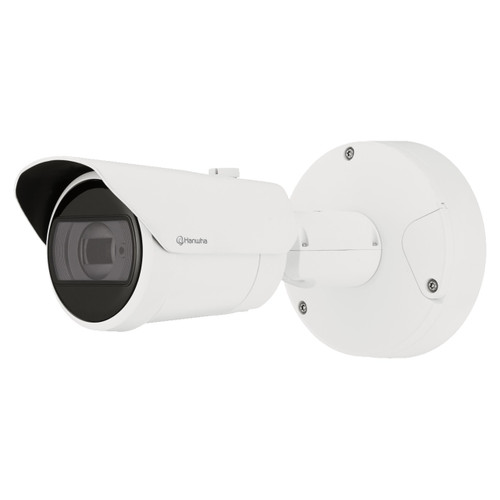
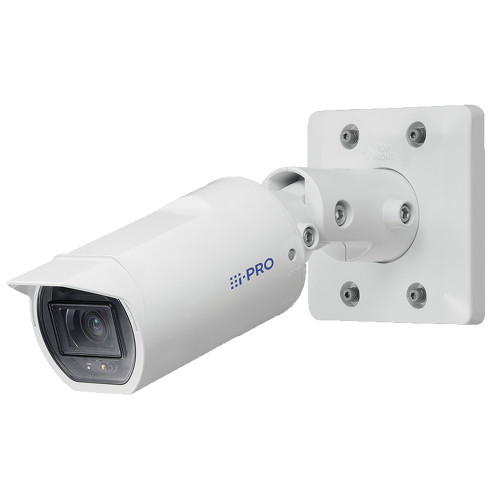
Both the Hanwha XNO-C6083R and the i-PRO WV-U1532LA are 2MP outdoor bullet cameras powered by PoE, aimed at professional installers evaluating a fixed varifocal IR bullet for perimeter or parking-lot coverage. They share the same resolution class, the same form factor, and the same wired-network delivery model, making them genuine cross-shop candidates for B2B buyers specifying mid-range outdoor surveillance. The comparison covers imaging performance, environmental and installation characteristics, and VMS/analytics integration depth.
In This Guide
How do the imaging specs compare?
The XNO-C6083R uses a 1/2.8" progressive CMOS sensor producing 1920×1080 at up to 60 fps, while the WV-U1532LA uses an approximately 1/3" CMOS sensor capped at 30 fps at the same 1920×1080 resolution. The Hanwha's larger sensor format and double the frame rate are meaningful advantages in motion-critical scenes. On dynamic range, the XNO-C6083R specifies extremeWDR at 150 dB; the WV-U1532LA specifies Super Dynamic at a maximum of 120 dB — a 30 dB gap in spec. Minimum illumination also differs: the XNO-C6083R is rated 0.01 lux color / 0 lux (IR-on), while the WV-U1532LA is rated 0.1 lux color / 0.04 lux B&W (IR conditions not separately itemized in the spec).
The lenses diverge in range and zoom ratio. The XNO-C6083R offers a 2.8–12 mm motorized varifocal (4.3× zoom) with a maximum aperture of F1.4 at wide end and angular coverage of 120° (H) at wide. The WV-U1532LA provides a 2.9–7.3 mm motorized varifocal (2.5× optical zoom, extendable to 3.8× at 720p resolution) with a maximum aperture of F2.0 at wide and 100° (H) at wide. The Hanwha's wider zoom ratio enables longer tele reach: at tele, the XNO-C6083R's DORI Detect distance is 159.9 m versus 98.5 m for the WV-U1532LA. IR range is specified at 40 m (WiseIR) for the XNO-C6083R and 30 m for the WV-U1532LA.
What about installation and environment?
Both cameras carry IP66 and IK10 ratings and are NEMA 4X compliant, placing them on equal footing for outdoor wash-down and vandal resistance. The XNO-C6083R adds an IP67 certification, meaning it is additionally rated for temporary immersion. Operating temperature ranges differ: the XNO-C6083R is rated −40 °C to +55 °C, versus −30 °C to +50 °C for the WV-U1532LA — a 10 °C advantage at both cold and warm extremes for the Hanwha. The WV-U1532LA specifies wind resistance up to 40 m/s (≈89 mph) and an anti-condensation Temish element; the XNO-C6083R spec does not state a wind resistance figure or condensation mitigation mechanism.
Power delivery is PoE 802.3af for both. The XNO-C6083R draws up to 12.95 W (PoE Class 3); the WV-U1532LA draws 6.7 W (PoE Class 0). The Hanwha's higher draw must be confirmed against switch port budgets on dense deployments. Physical size differs: the XNO-C6083R measures ø93.4 × 276.6 mm and weighs 1,640 g; the WV-U1532LA measures 112.5 × 112.5 × 262 mm and weighs approximately 860 g — the i-PRO unit is roughly half the weight. The XNO-C6083R includes a built-in gyro sensor for digital image stabilization and ships with a backbox; neither feature is listed in the WV-U1532LA spec.
Which fits your VMS and analytics better?
Both cameras support ONVIF Profile S, G, and T. The XNO-C6083R additionally claims ONVIF Profile M, which covers metadata and analytics interoperability — the WV-U1532LA does not list Profile M. The XNO-C6083R exposes Hanwha's SUNAPI and Wisenet SDK; the WV-U1532LA does not list a proprietary SDK in the provided spec. On simultaneous streams, the XNO-C6083R supports up to 10 stream profiles with unicast to 20 users; the WV-U1532LA supports up to 14 simultaneous users with no stream-profile count stated. Smart coding differs by name but both offer GOP-control-class bitrate reduction (WiseStream II/III vs. AUTO VIQS/GOP control).
Analytics depth is substantially different. The XNO-C6083R includes AI-engine-based object detection classifying persons, faces, vehicles (car/bus/truck/motorcycle/bicycle), and license plates, plus virtual line crossing, virtual area events, business intelligence (people counting, queue management, heatmap), 8 motion detection zones (8-point polygonal), and 32 privacy mask zones with mosaic support. The WV-U1532LA lists VMD (4 areas), Scene Change Detection (1 area), and up to 8 privacy zones — no AI classification is described in the spec. Audio: the XNO-C6083R provides mic/line input and line output with G.711/G.726 compression; the WV-U1532LA lists no audio input, audio output, or audio compression in its spec. Both support microSD/SDHC/SDXC up to 512 GB for edge storage. Alarm I/O: the XNO-C6083R specifies 2 configurable I/O ports; the WV-U1532LA lists no external I/O terminals. The WV-U1532LA carries a 5-year warranty versus a 3-year warranty for the XNO-C6083R.
Which should you choose: the C6083R or the U1532LA?
Our take: The XNO-C6083R is the stronger choice when imaging performance, AI analytics, and audio integration are the primary decision criteria. Concretely: it delivers 60 fps versus the WV-U1532LA's 30 fps; specifies 150 dB WDR versus 120 dB; and extends IR reach to 40 m versus 30 m with a 4.3× zoom range versus 2.5×. It also adds ONVIF Profile M, 2 alarm I/O ports, a built-in audio path, and AI-class object classification that the WV-U1532LA's spec does not include. Conversely, the WV-U1532LA has a longer warranty (5 years vs. 3 years), draws significantly less power (6.7 W vs. 12.95 W), and weighs roughly half as much — advantages on PoE-budget-constrained switches or weight-sensitive pole mounts. Specify the WV-U1532LA where long-term support coverage, low power draw, or lighter payload are overriding requirements and advanced analytics are handled at the VMS layer.
Side-by-Side Comparison
Spec-for-spec, from manufacturer data.
| Specification | Hanwha C6083R | i-PRO U1532LA |
|---|---|---|
| Resolution | 1920×1080 (2MP) | 1920×1080 (2MP) |
| Image Sensor | 1/2.8" progressive CMOS | Approx. 1/3" CMOS |
| Lens / Focal Length | 2.8–12 mm motorized varifocal (4.3×) | 2.9–7.3 mm motorized varifocal (2.5×) |
| Max Aperture (Wide) | F1.4 | F2.0 |
| Max Frame Rate | 60 fps | 30 fps |
| Min Illumination | 0.01 lux color / 0 lux (IR on) | 0.1 lux color / 0.04 lux B&W |
| Wide Dynamic Range | extremeWDR — 150 dB | Super Dynamic — max 120 dB |
| IR Range | 40 m (WiseIR) | 30 m |
| Video Compression | H.265 / H.264 / MJPEG | H.265 / H.264 / MJPEG |
| IP Rating | IP66 / IP67 / NEMA 4X | IP66 / NEMA 4X |
| Impact Rating | IK10 | IK10 |
| Operating Temperature | −40 °C to +55 °C | −30 °C to +50 °C |
| Power Input / PoE Class | PoE 802.3af / Class 3 / 12VDC; 12.95 W max | PoE 802.3af / Class 0; 6.7 W |
| Audio | Mic/line in + line out; G.711/G.726 | — |
| Alarm I/O | 2 configurable I/O ports | — |
| Edge Storage | microSD/SDHC/SDXC up to 512 GB | microSD up to 512 GB |
| ONVIF Profiles | S / G / T / M | G / S / T |
| AI / Edge Analytics | Object detection (person/face/vehicle/LP), virtual line/area, people counting, heatmap | VMD (4 areas), Scene Change Detection |
| Weight | 1,640 g (3.62 lb) | Approx. 860 g (1.90 lb) |
| Warranty | 3 years | 5 years |
Frequently Asked Questions
Which should you choose: the C6083R or the U1532LA?
The XNO-C6083R is the stronger choice when imaging performance, AI analytics, and audio integration are the primary decision criteria. Concretely: it delivers 60 fps versus the WV-U1532LA's 30 fps; specifies 150 dB WDR versus 120 dB; and extends IR reach to 40 m versus 30 m with a 4.3× zoom range versus 2.5×. It also adds ONVIF Profile M, 2 alarm I/O ports, a built-in audio path, and AI-class object classification that the WV-U1532LA's spec does not include. Conversely, the WV-U1532LA has a longer warranty (5 years vs. 3 years), draws significantly less power (6.7 W vs. 12.95 W), and weighs roughly half as much — advantages on PoE-budget-constrained switches or weight-sensitive pole mounts. Specify the WV-U1532LA where long-term support coverage, low power draw, or lighter payload are overriding requirements and advanced analytics are handled at the VMS layer.
Is the XNO-C6083R or WV-U1532LA better for low-light performance?
Based on the provided specs, the XNO-C6083R has the lower minimum illumination rating — 0.01 lux color and 0 lux with IR active — compared to the WV-U1532LA at 0.1 lux color and 0.04 lux B&W. The XNO-C6083R also specifies a wider IR range of 40 m versus 30 m and a faster maximum aperture (F1.4 wide vs. F2.0 wide), all of which favor the Hanwha in low-light scenarios.
Can either camera handle onboard AI analytics without a separate server?
The XNO-C6083R includes an AI engine on-board that classifies objects as persons, faces, vehicles (with sub-types), and license plates, and supports virtual line and area analytics plus business intelligence features (people counting, queue management, heatmap). The WV-U1532LA's spec describes only traditional VMD (4 areas) and Scene Change Detection — no AI-class object classification is listed. If edge AI analytics are required, the XNO-C6083R is the only one of the two specifying that capability.
Which camera is easier to deploy in a PoE-limited switch environment?
The WV-U1532LA draws 6.7 W at PoE Class 0, making it significantly more budget-friendly on switch port power. The XNO-C6083R draws up to 12.95 W at PoE Class 3. On a switch with per-port or total power caps, the WV-U1532LA consumes roughly half the power per port, allowing nearly twice as many cameras before hitting budget limits.
Get a Second Opinion on Your Camera Choice
Share your site layout, coverage goals, and budget. Our team will validate the camera selection, flag anything we would change, and recommend products that match the use case.