
Hanwha A6001/KAP vs i-PRO U11301-F3: Specification Comparison
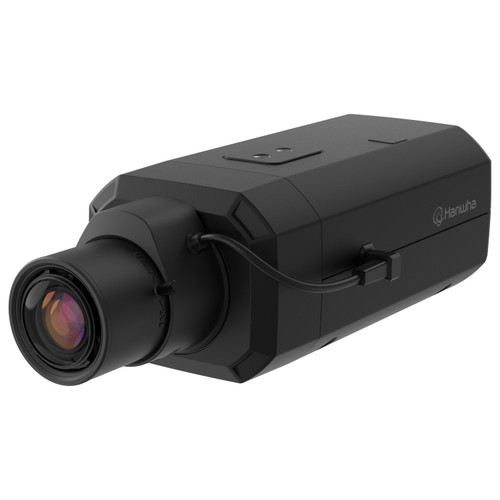
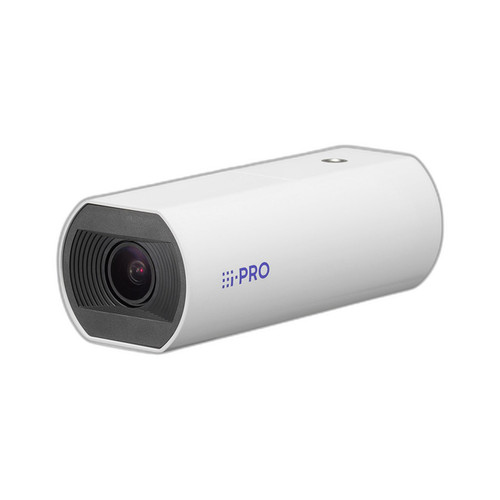
Both the Hanwha PNB-A6001/KAP and the i-PRO WV-U11301-F3 are 2MP indoor box cameras sharing a 1/2.8-inch CMOS sensor and PoE power, making them legitimate cross-shop candidates for integrators building or refreshing indoor fixed-camera deployments. The comparison surfaces meaningful differences in lens flexibility, low-light performance, WDR capability, edge-AI depth, and cybersecurity certification—factors that will separate the right fit depending on whether the priority is adaptive surveillance intelligence or hardened regulatory compliance.
In This Guide
How do the imaging specs compare?
Both cameras resolve 1920×1080 at 2MP on a 1/2.8-inch CMOS sensor, so raw resolution is identical. The Hanwha A6001/KAP uses a motorized varifocal lens, giving installers adjustable focal length for scene framing without physically repositioning the camera—a practical advantage in complex or evolving environments. The i-PRO U11301-F3 ships with a fixed 3.2mm F2.0 lens, offering no focal adjustment but a wide, bright aperture suited to open indoor spaces.
Low-light and WDR performance heavily favor the i-PRO. The U11301-F3 is rated at 0.07 lx color and 0.003 lx B&W with image stabilization on board, and it delivers 120 dB Super Dynamic WDR—measured at Level 31—for scenes with extreme contrast such as lobby entrances with bright windows. The Hanwha A6001/KAP provides no published minimum illumination figure or WDR rating in the supplied specifications, so direct numeric comparison on those two dimensions is not possible. Both cameras support H.265, H.264, and MJPEG; Hanwha also adds WiseStream II for adaptive bitrate reduction, which is not listed for the i-PRO.
What about installation and environment?
Both cameras are rated for indoor use only. No IP or IK ingress/impact ratings are listed for either model in the supplied specifications, so resistance to dust, moisture, or physical impact cannot be compared. The Hanwha A6001/KAP operates from 0°C to +55°C; the i-PRO U11301-F3 operates from −10°C to +50°C, giving the i-PRO a 10°C cold-side advantage and the Hanwha a 5°C high-side advantage—relevant where equipment rooms run warm.
Power input for both is PoE 802.3af. The i-PRO is confirmed as PoE Class 0 with a stated maximum of 13 W. The Hanwha also lists 12V DC as an alternative power option, which the i-PRO does not specify. The i-PRO body measures 59 mm (W) × 49 mm (H) × 142 mm (D); no dimensions are published for the Hanwha A6001/KAP. The i-PRO supports wall and ceiling mounting; the Hanwha lists no specific mount type in its supplied specs. The i-PRO also integrates a built-in microphone, eliminating a separate audio device for basic monitoring. The Hanwha does not list built-in audio in the supplied specifications.
Which fits your VMS and analytics better?
VMS integration for both cameras includes ONVIF, but the depth differs. The Hanwha A6001/KAP explicitly supports ONVIF Profile S, G, and T, and is natively integrated with Wisenet WAVE and Samsung SSM VMS platforms—an advantage for Hanwha-ecosystem deployments. The i-PRO U11301-F3 is listed as ONVIF-compatible, but specific ONVIF profiles are noted as 'not specified in evidence' in the supplied specs (one spec field lists S, G, T, though the evidence qualifier was applied). Neither limitation is fatal for multivendor ONVIF environments, but Hanwha's native integrations give it a clear edge within a Wisenet infrastructure.
Edge analytics differentiate the two cameras substantially. The Hanwha A6001/KAP runs AI deep-learning object classification on the Wisenet 7 SoC—purpose-built for perimeter monitoring and LPR use cases. The i-PRO U11301-F3 provides i-VMD intelligent motion detection, scene change detection, and audio detection, which are rule-based analytics rather than deep-learning classification. However, the i-PRO carries FIPS 140-3 Level 3 certification via the NXP EdgeLock SE052F SecureElement plus signed firmware, secure boot, and HTTPS encryption—making it the mandated choice for regulated or government environments. The i-PRO also supports on-board microSD storage; no local storage option is listed for the Hanwha in the supplied specifications. Both cameras are listed as NDAA-compliant.
Which should you choose: the A6001/KAP or the U11301-F3?
Our take: The A6001/KAP is the stronger choice when the deployment demands flexible lens positioning and deep AI object classification at the edge—its motorized varifocal lens and Wisenet 7 deep-learning SoC are purpose-built for perimeter detection and LPR, and its 55°C upper operating limit suits warmer equipment rooms. By contrast, the U11301-F3 wins on low-light sensitivity (0.003 lx B&W vs. no published figure for the Hanwha), extreme contrast handling (120 dB Super Dynamic WDR vs. no WDR figure published for the Hanwha), and cybersecurity posture (FIPS 140-3 Level 3 hardware certification, signed firmware, secure boot—none of which are listed for the Hanwha). It also adds built-in microphone audio and onboard microSD storage the Hanwha does not specify. Choose the A6001/KAP for Wisenet-ecosystem, AI-analytics-driven sites; choose the U11301-F3 for regulated, government, or high-security facilities where FIPS certification and low-light performance are non-negotiable.
Side-by-Side Comparison
Spec-for-spec, from manufacturer data.
| Specification | Hanwha A6001/KAP | i-PRO U11301-F3 |
|---|---|---|
| Resolution | 2MP (1920×1080) | 2MP (1920×1080) |
| Image Sensor | 1/2.8 inch CMOS | 1/2.8 inch CMOS |
| Lens / Focal Length | Motorized varifocal (focal length not published) | 3.2mm fixed, F2.0 |
| Min Illumination (Color) | — | 0.07 lx |
| Min Illumination (B&W) | — | 0.003 lx |
| Wide Dynamic Range | — | 120 dB Super Dynamic (Level 31) |
| Max Frame Rate | — | 30 fps (25 fps mode available) |
| Video Compression | H.265 / H.264 / MJPEG / WiseStream II | H.265 / H.264 / MJPEG |
| Image Stabilization | — | Yes |
| IP / Environmental Rating | Indoor only (no IP rating listed) | Indoor only (no IP rating listed) |
| Operating Temperature | 0°C to +55°C | −10°C to +50°C |
| Power Input / PoE Class | PoE 802.3af / 12V DC | PoE 802.3af (Class 0, 13W max est.) |
| Audio | — | Built-in microphone |
| Edge Storage | — | microSD |
| Edge Analytics | AI deep-learning object classification (Wisenet 7) | i-VMD; Scene Change Detection; Audio Detection |
| ONVIF Profiles | Profile S / G / T | ONVIF compatible (specific profiles not confirmed in evidence) |
| Native VMS Integration | Wisenet WAVE; SSM | — |
| Cybersecurity Certification | NDAA-compliant | FIPS 140-3 Level 3; Signed Firmware; Secure Boot; NDAA-compliant |
| Chipset | Wisenet 7 SoC | — |
| Dimensions | — | 59mm (W) × 49mm (H) × 142mm (D) |
| TAA Compliant | Yes | — |
Frequently Asked Questions
Which should you choose: the A6001/KAP or the U11301-F3?
The A6001/KAP is the stronger choice when the deployment demands flexible lens positioning and deep AI object classification at the edge—its motorized varifocal lens and Wisenet 7 deep-learning SoC are purpose-built for perimeter detection and LPR, and its 55°C upper operating limit suits warmer equipment rooms. By contrast, the U11301-F3 wins on low-light sensitivity (0.003 lx B&W vs. no published figure for the Hanwha), extreme contrast handling (120 dB Super Dynamic WDR vs. no WDR figure published for the Hanwha), and cybersecurity posture (FIPS 140-3 Level 3 hardware certification, signed firmware, secure boot—none of which are listed for the Hanwha). It also adds built-in microphone audio and onboard microSD storage the Hanwha does not specify. Choose the A6001/KAP for Wisenet-ecosystem, AI-analytics-driven sites; choose the U11301-F3 for regulated, government, or high-security facilities where FIPS certification and low-light performance are non-negotiable.
Is the A6001/KAP or U11301-F3 better for low-light performance?
Based on supplied specifications, the i-PRO U11301-F3 has a published minimum illumination of 0.07 lx color and 0.003 lx B&W with 120 dB Super Dynamic WDR. The Hanwha A6001/KAP provides no minimum illumination figure or WDR rating in the supplied specifications, so a direct numeric comparison cannot be made. For verified low-light and high-contrast performance, the i-PRO is the documented choice.
Which camera is better for AI video analytics?
The Hanwha A6001/KAP runs AI deep-learning object classification on its Wisenet 7 SoC, enabling edge-based perimeter monitoring and LPR. The i-PRO U11301-F3 offers i-VMD motion detection, scene change detection, and audio detection—rule-based analytics rather than deep-learning classification. For richer AI-driven object classification at the edge, the A6001/KAP holds the advantage based on supplied specifications.
Which camera is required for FIPS 140-3 or government-regulated installations?
The i-PRO WV-U11301-F3 is the only model of the two with a FIPS 140-3 Level 3 certification, implemented via the NXP EdgeLock SE052F SecureElement hardware component, along with signed firmware and secure boot. The Hanwha A6001/KAP does not list FIPS 140-3 certification in its supplied specifications. For federally regulated or high-security facilities requiring FIPS 140-3, the i-PRO U11301-F3 is the compliant choice.
Get a Second Opinion on Your Camera Choice
Share your site layout, coverage goals, and budget. Our team will validate the camera selection, flag anything we would change, and recommend products that match the use case.