
Geovision PBL880W-0010 vs Geovision TBLP880-0010: Specification Comparison
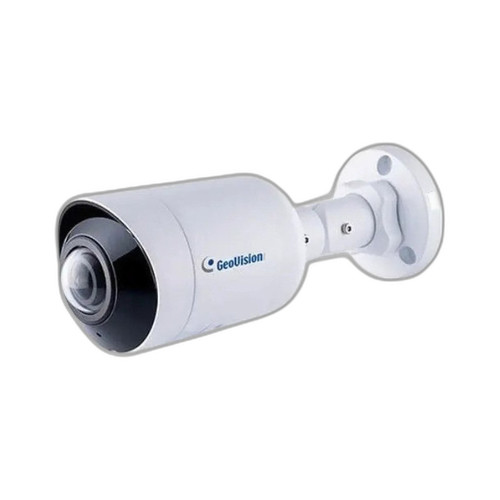
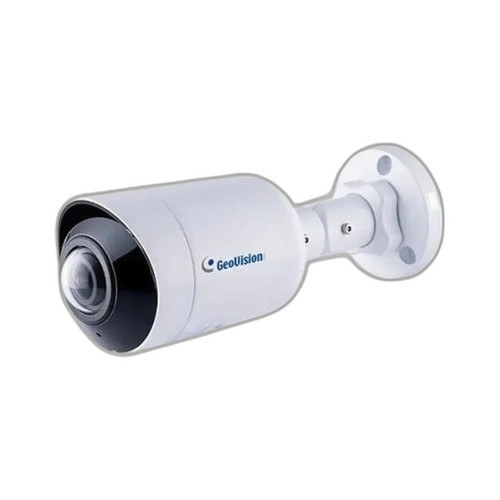
Both the Geovision PBL880W-0010 and the TBLP880-0010 are 8MP panoramic bullet IP cameras sharing the same 1.68mm fixed lens and 180° field of view, making them direct cross-shop candidates for wide-area single-unit deployments. The comparison focuses on where they diverge: WDR implementation, analytics depth, PoE power specification, mounting flexibility, physical dimensions, and compression codec support — all of which affect total cost of ownership, switch-port budgeting, and integration with existing VMS infrastructure.
In This Guide
How do the imaging specs compare?
Both cameras deliver 8MP resolution through a 1.68mm fixed lens providing 180° panoramic coverage. The PBL880W-0010 specifies WDR Pro and IR at 850nm with a Super Low Lux minimum illumination rating. The TBLP880-0010 specifies standard WDR (not Pro), IR with Day/Night switching, a 1/2.7-inch sensor, lens aperture of F/2.0, and an IR effective range of approximately 20–30m. The PBL880W-0010 does not list sensor size, aperture, or a numeric IR range in the provided specs.
On low-light handling, the PBL880W-0010 claims a Super Low Lux rating alongside 850nm IR, but no numeric lux floor is provided. The TBLP880-0010 lists Day/Night IR mode and a concrete sensor size (1/2.7 inch) but no numeric minimum illumination figure. The PBL880W-0010's WDR Pro designation implies a more capable dynamic-range implementation than the TBLP880-0010's unqualified WDR label, though no measured stop or dB value is provided for either model.
What about installation and environment?
The TBLP880-0010 is the only model with a stated power specification: PoE 802.3af (approximately 12–13W), eliminating the need for a separate power run. The PBL880W-0010 lists no power input method in the provided specs. Mounting options differ: the TBLP880-0010 supports Wall, Pole, Corner, and Power Box positions; the PBL880W-0010 supports only Wall and Pole. The TBLP880-0010 provides physical dimensions (137 × 233 × 160 mm) and weight (1.65 kg / 3.64 lb); no dimensional or weight data is listed for the PBL880W-0010.
Neither model lists an IP ingress-protection rating, IK impact rating, or operating temperature range in the provided specifications. Buyers requiring rated environmental performance should consult the manufacturer datasheets before specifying either unit for outdoor or harsh-environment installations.
Which fits your VMS and analytics better?
Both cameras declare ONVIF compatibility, but the TBLP880-0010 specifies ONVIF Profile S, which defines a concrete interoperability baseline for live streaming and PTZ control messaging. The PBL880W-0010 lists ONVIF-compatible NVR/VMS platforms without naming a profile. On compression, the PBL880W-0010 supports both H.265 and H.264, providing codec flexibility for older NVRs that do not decode H.265. The TBLP880-0010 lists H.265 only, which reduces bandwidth and storage but requires an H.265-capable recording platform.
Analytics differ in labeling: the PBL880W-0010 lists AI analytics; the TBLP880-0010 lists AI Deep-Learning analytics. No further detail — specific functions such as line crossing, object classification, or face detection — is provided for either model in the supplied specs. Neither model lists audio input/output capability, on-board edge storage (SD card slot), or alarm I/O in the provided specifications.
Which should you choose: the PBL880W-0010 or the TBLP880-0010?
Our take: The TBLP880-0010 is the stronger choice when a confirmed PoE 802.3af power budget, a concrete ONVIF Profile S declaration, and a known physical envelope are required for the project. The TBLP880-0010 specifies 802.3af PoE (~12–13W) versus no stated power method on the PBL880W-0010; it declares ONVIF Profile S versus an unqualified ONVIF claim; and it documents a 1/2.7-inch sensor and F/2.0 aperture versus no sensor or aperture data on the competing unit. The PBL880W-0010 holds a meaningful advantage where legacy NVR compatibility matters — it supports both H.265 and H.264, while the TBLP880-0010 is H.265-only — and its WDR Pro label suggests a more capable dynamic-range implementation. Neither model provides IP rating, IK rating, operating temperature, audio, or edge-storage data in the supplied specs, so projects with rated environmental or feature requirements must verify against manufacturer datasheets before final selection.
Side-by-Side Comparison
Spec-for-spec, from manufacturer data.
| Specification | Geovision PBL880W-0010 | Geovision TBLP880-0010 |
|---|---|---|
| Resolution | 8 MP | 8 MP |
| Form Factor | Panoramic Bullet | Panoramic Bullet |
| Lens / Focal Length | 1.68 mm (180° panoramic) | 1.68 mm fixed, F/2.0 |
| Image Sensor Size | — | 1/2.7 inch |
| Min Illumination | Super Low Lux | — |
| IR Wavelength | 850 nm | — |
| IR Range | — | ~20–30 m |
| Night Mode | IR | IR; Day/Night |
| WDR | WDR Pro | WDR |
| Video Compression | H.265; H.264 | H.265 |
| ONVIF | Yes (profile not stated) | Yes — Profile S |
| Analytics | AI | AI Deep-Learning |
| Power Input | — | PoE 802.3af (~12–13 W) |
| Mount Types | Wall; Pole | Wall; Pole; Corner; Power Box |
| Dimensions | — | 137 × 233 × 160 mm (5.4" × 9.17" × 6.3") |
| Weight | — | 1.65 kg (3.64 lb) |
Frequently Asked Questions
Which should you choose: the PBL880W-0010 or the TBLP880-0010?
The TBLP880-0010 is the stronger choice when a confirmed PoE 802.3af power budget, a concrete ONVIF Profile S declaration, and a known physical envelope are required for the project. The TBLP880-0010 specifies 802.3af PoE (~12–13W) versus no stated power method on the PBL880W-0010; it declares ONVIF Profile S versus an unqualified ONVIF claim; and it documents a 1/2.7-inch sensor and F/2.0 aperture versus no sensor or aperture data on the competing unit. The PBL880W-0010 holds a meaningful advantage where legacy NVR compatibility matters — it supports both H.265 and H.264, while the TBLP880-0010 is H.265-only — and its WDR Pro label suggests a more capable dynamic-range implementation. Neither model provides IP rating, IK rating, operating temperature, audio, or edge-storage data in the supplied specs, so projects with rated environmental or feature requirements must verify against manufacturer datasheets before final selection.
Is the PBL880W-0010 or TBLP880-0010 better for low light?
Based on the provided specs, the PBL880W-0010 carries a Super Low Lux rating and WDR Pro designation, which suggest stronger low-light and high-contrast performance on paper. The TBLP880-0010 lists a 1/2.7-inch sensor with F/2.0 aperture and Day/Night IR mode with an approximate 20–30m IR range, but no minimum lux figure is stated for either model. A numeric lux comparison is not possible from the supplied data alone.
Can I use the TBLP880-0010 with my existing H.264 NVR?
The TBLP880-0010 lists H.265 compression only in the provided specifications. If your NVR does not support H.265 decoding, you would need to check whether the camera offers a fallback stream. The PBL880W-0010 explicitly lists both H.265 and H.264, making it the safer choice for H.264-only recording platforms based on the specs provided.
Which camera is easier to install on a corner mount?
The TBLP880-0010 explicitly lists Corner as a supported mount position (in addition to Wall, Pole, and Power Box). The PBL880W-0010 lists only Wall and Pole mount types in the provided specs, so the TBLP880-0010 offers broader mounting flexibility for corner installations.
Get a Second Opinion on Your Camera Choice
Share your site layout, coverage goals, and budget. Our team will validate the camera selection, flag anything we would change, and recommend products that match the use case.