
Geovision MFD4700-0F10 vs Geovision TFD480W-0010: Specification Comparison
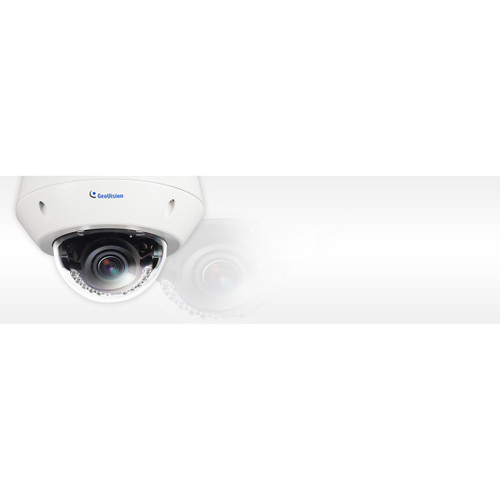
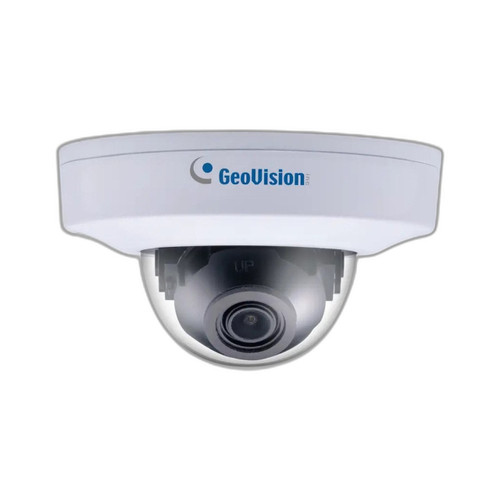
Both the Geovision MFD4700-0F10 and the TFD480W-0010 are 4MP mini dome IP cameras from Geovision, sharing the same resolution class, fixed lens format, H.265 compression, and IR night vision. A buyer evaluating indoor dome cameras in the 4MP tier would reasonably cross-shop these two models. The comparison below is grounded strictly in the specifications provided for each unit, highlighting where they diverge on imaging, installation, and integration criteria relevant to a professional integrator or IT procurement decision.
In This Guide
How do the imaging specs compare?
Both cameras deliver 4MP resolution and both carry IR night vision with WDR listed as 'WDR Pro' in the spec field and 'WDR' in the secondary tag for each unit — the spec sheets do not differentiate WDR stop count or dynamic range in dB between the two models, so no numeric advantage can be assigned to either. The MFD4700-0F10 lists a specific sensor resolution of 2560×1920 and explicitly calls out a 'Super Low Lux' minimum illumination rating; the TFD480W-0010 does not provide a minimum illumination figure in the supplied specifications.
On the lens side, the MFD4700-0F10 specifies a 2.8 mm focal length; the TFD480W-0010 specifies a '2.8 mm fixed' lens — effectively the same focal length, though the TFD480W-0010 explicitly confirms the fixed (non-varifocal) nature. IR capability is listed for both, but neither specification set provides an IR illumination range in meters, so a numeric night-vision distance comparison cannot be made from the data provided.
What about installation and environment?
The MFD4700-0F10 is specified as compatible with indoor environments and supports ceiling or wall mounting in a mini dome form factor. Its operating temperature is documented at 0–50°C. No IP ingress protection rating, IK impact rating, or power/PoE class is stated in the provided specifications for this model.
The TFD480W-0010 specifies ceiling mounting only and is described as a dome form factor (not explicitly 'mini dome'). Its third card bullet notes 802.3af PoE power, which is the only power input data present for either unit. No operating temperature range, IP rating, or IK rating is provided in the TFD480W-0010 spec set. Neither model's supplied data includes dimensions, weight, or warranty duration.
Which fits your VMS and analytics better?
The MFD4700-0F10 is listed as ONVIF Profile S compliant, which mandates a defined feature set including live streaming, PTZ control signaling, and event handling under that profile. The TFD480W-0010 is listed as 'ONVIF' compliant without a named profile, meaning Profile S or higher conformance is not confirmed by the provided data. For integrators whose VMS mandates Profile S certification, the MFD4700-0F10 provides an explicit spec-level assurance the TFD480W-0010 does not.
Neither specification set includes data on edge analytics, onboard storage (SD card slot), audio input or output, or alarm I/O. The MFD4700-0F10's Cable Category is listed as 'IPPTZCam' while the TFD480W-0010's is listed as 'Accessories' — these appear to be internal catalog classification tags rather than technical interface specifications, and no technical conclusion about connectivity should be drawn from them.
Which should you choose: the MFD4700-0F10 or the TFD480W-0010?
Our take: The MFD4700-0F10 is the stronger choice when ONVIF Profile S compliance and documented low-light performance are decision criteria. Three concrete spec-level differences support this: first, the MFD4700-0F10 explicitly carries ONVIF Profile S certification while the TFD480W-0010 lists only generic ONVIF compliance, leaving profile conformance unconfirmed; second, the MFD4700-0F10 specifies a 'Super Low Lux' minimum illumination rating while the TFD480W-0010 provides no minimum illumination figure at all; third, the MFD4700-0F10 documents an operating temperature range of 0–50°C while the TFD480W-0010 does not disclose one. Conversely, the TFD480W-0010 is the only unit with a stated power standard (802.3af PoE), which matters for switch port budget planning. If PoE class confirmation is the primary concern and the VMS does not require a named ONVIF profile, the TFD480W-0010 warrants further datasheet review before ruling it out.
Side-by-Side Comparison
Spec-for-spec, from manufacturer data.
| Specification | Geovision MFD4700-0F10 | Geovision TFD480W-0010 |
|---|---|---|
| Resolution | 4 MP (2560×1920) | 4 MP |
| Lens / Focal Length | 2.8 mm | 2.8 mm fixed |
| Min Illumination | Super Low Lux | — |
| IR Night Vision | IR | IR |
| WDR | WDR Pro | WDR Pro |
| Video Compression | H.265 | H.265 |
| ONVIF Compliance | Profile S | ONVIF (no profile stated) |
| Form Factor | Mini Dome | Dome |
| Mount Type | Ceiling / Wall | Ceiling |
| Compatible With | Indoor | Installations (unspecified) |
| Operating Temperature | 0–50°C | — |
| Power / PoE | — | 802.3af PoE |
Frequently Asked Questions
Which should you choose: the MFD4700-0F10 or the TFD480W-0010?
The MFD4700-0F10 is the stronger choice when ONVIF Profile S compliance and documented low-light performance are decision criteria. Three concrete spec-level differences support this: first, the MFD4700-0F10 explicitly carries ONVIF Profile S certification while the TFD480W-0010 lists only generic ONVIF compliance, leaving profile conformance unconfirmed; second, the MFD4700-0F10 specifies a 'Super Low Lux' minimum illumination rating while the TFD480W-0010 provides no minimum illumination figure at all; third, the MFD4700-0F10 documents an operating temperature range of 0–50°C while the TFD480W-0010 does not disclose one. Conversely, the TFD480W-0010 is the only unit with a stated power standard (802.3af PoE), which matters for switch port budget planning. If PoE class confirmation is the primary concern and the VMS does not require a named ONVIF profile, the TFD480W-0010 warrants further datasheet review before ruling it out.
Is the MFD4700-0F10 or TFD480W-0010 better for low light?
Based on the provided specifications, the MFD4700-0F10 has an explicit 'Super Low Lux' minimum illumination rating. The TFD480W-0010 does not include a minimum illumination figure in its supplied specs, so a direct numeric comparison cannot be made. If low-light performance is critical, confirm the TFD480W-0010's lux rating from its full datasheet before specifying it.
Will either camera work with my ONVIF-based VMS?
The MFD4700-0F10 is certified ONVIF Profile S, which guarantees a defined interoperability baseline for live streaming and event handling. The TFD480W-0010 is listed as ONVIF compliant but no profile (S, T, G, etc.) is named in the provided specs. If your VMS requires Profile S or Profile T conformance, the MFD4700-0F10 is the safer choice based on available data.
Which camera supports PoE, and what class?
The TFD480W-0010's product bullet references 802.3af PoE as its power input. The MFD4700-0F10 does not include a PoE standard or power class in the provided specification set. Integrators budgeting switch port wattage should verify the MFD4700-0F10's power draw from its datasheet at /content/product-datasheets/84-MFD4700-0F10.pdf before deployment.
Get a Second Opinion on Your Camera Choice
Share your site layout, coverage goals, and budget. Our team will validate the camera selection, flag anything we would change, and recommend products that match the use case.