
Geovision MFD1501-4F vs Geovision MFD2700-2F10: Specification Comparison
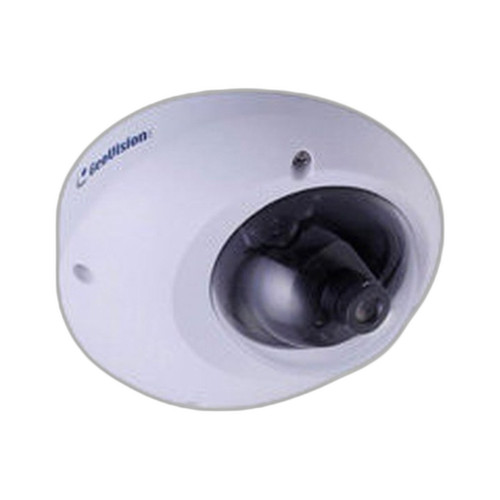
The GV-MFD1501-4F and 84-MFD2700-2F10 are both Geovision fixed mini dome cameras intended for indoor ceiling or wall installations drawing power over standard 802.3af PoE. The MFD1501-4F is a 1.3 MP unit built around a super low-lux sensor and a 2.1 mm wide-angle lens, while the MFD2700-2F10 steps up to 2 MP with a 3.8 mm lens, IR illumination, and WDR Pro. This comparison covers imaging capability, installation characteristics, and VMS/integration fit for installers choosing between the two.
In This Guide
How do the imaging specs compare?
The MFD1501-4F delivers 1.3 MP resolution through a 2.1 mm fixed lens, providing a wide field of view suited to confined spaces. Its primary low-light technology is described as 'super low-lux,' meaning the sensor is tuned for sensitivity in dim ambient light without active IR illumination. No WDR capability is listed in the provided specifications for this model.
The MFD2700-2F10 captures 2 MP resolution through a 3.8 mm fixed lens, offering a narrower field of view appropriate for corridor or lobby coverage. It adds WDR Pro for handling high-contrast lighting scenes and includes built-in IR for active illumination in complete darkness. H.265 compression is specified for the MFD2700-2F10, while only H.264 is referenced for the MFD1501-4F. IR range, minimum illumination figures, frame rates, and image sensor size are not provided in the supplied specifications for either model.
What about installation and environment?
Both cameras draw power via 802.3af PoE and are specified as mini dome form factors with ceiling mounting supported on each. The MFD1501-4F also lists wall mounting as a supported option; the MFD2700-2F10 lists ceiling only. The MFD1501-4F ships with a fixed 1.3 m pigtail cable, which constrains placement relative to the nearest junction box. The MFD2700-2F10 uses a standard Ethernet connection with no fixed-length cable noted in the specifications.
IP rating, IK impact rating, operating temperature range, dimensions, and weight are not provided in the supplied specifications for either model. Installers requiring rated environmental or vandal resistance should consult the full datasheets before specifying either unit for outdoor or high-abuse locations. A datasheet PDF is referenced in the MFD2700-2F10 listing at /content/product-datasheets/84-MFD2700-2F10.pdf; no equivalent datasheet link is present for the MFD1501-4F.
Which fits your VMS and analytics better?
Both cameras declare ONVIF compliance, enabling integration with third-party VMS platforms that support the ONVIF profile standard. The MFD1501-4F additionally lists explicit compatibility with Geovision NVR/DVR systems without extra licensing, which is a relevant distinction for sites already running Geovision infrastructure. The MFD2700-2F10 lists ONVIF-compliant systems generically without specifying Geovision-native support in the provided specifications.
Edge analytics, on-board storage, audio input or output, and alarm I/O are not specified for either model in the data provided. Buyers requiring edge recording, two-way audio, or built-in motion analytics should verify those capabilities directly against manufacturer datasheets before selection.
Which should you choose: the MFD1501-4F or the MFD2700-2F10?
Our take: The MFD2700-2F10 is the stronger choice when the installation demands active low-light coverage, higher resolution, or mixed-lighting performance, while the MFD1501-4F suits confined spaces where a wide 2.1 mm field of view and Geovision-native integration without additional licensing are priorities. On resolution, the MFD2700-2F10 provides 2 MP versus 1.3 MP, a roughly 54% pixel advantage relevant to identification tasks. On low-light strategy, the MFD2700-2F10 uses active IR illumination for complete-darkness operation; the MFD1501-4F relies solely on passive super low-lux sensitivity with no IR. On compression, the MFD2700-2F10 specifies H.265, reducing storage and bandwidth requirements compared to the MFD1501-4F's H.264. The MFD1501-4F's fixed 1.3 m pigtail cable limits installation flexibility. Neither model's IP rating, temperature range, or frame rate is specified in the provided data, so those factors cannot be compared here.
Side-by-Side Comparison
Spec-for-spec, from manufacturer data.
| Specification | Geovision MFD1501-4F | Geovision MFD2700-2F10 |
|---|---|---|
| Resolution | 1.3 MP | 2 MP |
| Lens / Focal Length | 2.1 mm fixed | 3.8 mm fixed |
| Low-Light Technology | Super low-lux (passive) | IR illumination |
| IR Illumination | — | Yes |
| WDR | — | WDR Pro |
| Video Compression | H.264 | H.265 |
| ONVIF | Yes | Yes |
| VMS Compatibility | Geovision NVR/DVR; ONVIF | ONVIF-compliant systems |
| Power Input | PoE 802.3af | PoE 802.3af |
| Power Consumption | 5 W | — |
| Form Factor | Mini dome | Mini dome |
| Mount Type | Ceiling; Wall | Ceiling |
| Cable Type | Fixed 1.3 m pigtail | Ethernet |
Frequently Asked Questions
Which should you choose: the MFD1501-4F or the MFD2700-2F10?
The MFD2700-2F10 is the stronger choice when the installation demands active low-light coverage, higher resolution, or mixed-lighting performance, while the MFD1501-4F suits confined spaces where a wide 2.1 mm field of view and Geovision-native integration without additional licensing are priorities. On resolution, the MFD2700-2F10 provides 2 MP versus 1.3 MP, a roughly 54% pixel advantage relevant to identification tasks. On low-light strategy, the MFD2700-2F10 uses active IR illumination for complete-darkness operation; the MFD1501-4F relies solely on passive super low-lux sensitivity with no IR. On compression, the MFD2700-2F10 specifies H.265, reducing storage and bandwidth requirements compared to the MFD1501-4F's H.264. The MFD1501-4F's fixed 1.3 m pigtail cable limits installation flexibility. Neither model's IP rating, temperature range, or frame rate is specified in the provided data, so those factors cannot be compared here.
Is the MFD1501-4F or MFD2700-2F10 better for low-light performance?
Based on the provided specifications, the two models use different low-light strategies. The MFD1501-4F relies on a super low-lux sensor for passive sensitivity in dim ambient light but has no IR illumination listed. The MFD2700-2F10 includes active IR illumination for operation in complete darkness as well as WDR Pro for high-contrast scenes. If the installation environment drops to near-zero ambient light, the MFD2700-2F10's active IR is the more reliable choice; the specific IR range is not stated in the supplied specs.
Do both cameras work with non-Geovision VMS platforms?
Both cameras list ONVIF compliance, which enables integration with third-party ONVIF-compatible VMS platforms. The MFD1501-4F additionally specifies explicit compatibility with Geovision NVR/DVR systems without extra licensing, making it the clearer choice for pure Geovision deployments. The MFD2700-2F10's ONVIF support is listed generically; Geovision-native compatibility for that model is not confirmed in the provided specifications.
Which camera is easier to install in a standard drop ceiling?
The MFD2700-2F10 uses a standard Ethernet connection, giving the installer flexibility in cable routing to the drop-ceiling junction box. The MFD1501-4F ships with a fixed 1.3 m pigtail cable, which constrains how far the camera body can be positioned from the nearest connection point. If the ceiling plenum depth or conduit layout limits cable reach, the MFD2700-2F10's conventional Ethernet termination offers more flexibility. Mount type for the MFD1501-4F also includes wall in addition to ceiling, which the MFD2700-2F10 does not list.
Get a Second Opinion on Your Camera Choice
Share your site layout, coverage goals, and budget. Our team will validate the camera selection, flag anything we would change, and recommend products that match the use case.