
Geovision FD2500 vs Geovision MFD2700-2F10: Specification Comparison
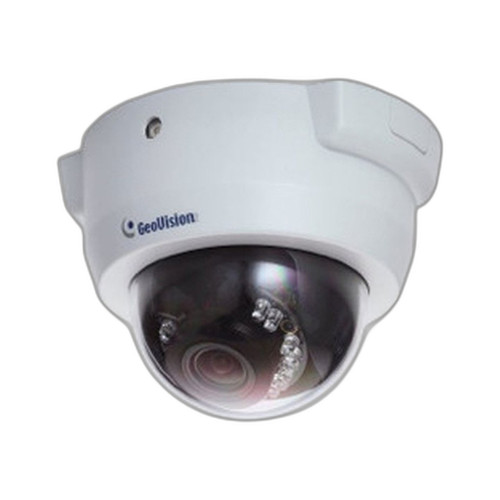
The Geovision GV-FD2500 and GV-MFD2700-2F10 are both 2MP fixed-lens IP dome cameras from the same manufacturer, powered via 802.3af PoE and targeted at indoor or light-duty ceiling/wall installations. Both carry ONVIF compliance and IR night vision, making them plausible cross-shop candidates for integrators specifying entry-level surveillance in lobbies, corridors, or small commercial spaces. This comparison examines where the two diverge across imaging, installation, and VMS/analytics integration.
In This Guide
How do the imaging specs compare?
Both cameras deliver a 2MP (1920×1080) image. The FD2500 uses a 3–9 mm fixed lens, giving installers a degree of field-of-view flexibility at the point of specification, whereas the MFD2700-2F10 ships with a single 3.8 mm fixed lens suited to wider corridor or lobby views. The FD2500 is explicitly rated for Super Low Lux IR performance and is marketed for facial ID and object recognition at 10–25 ft per its spec sheet; minimum illumination figures are not numerically stated in the provided specs for either model.
The MFD2700-2F10 adds WDR Pro (also noted in specs as WDR), which is absent from the FD2500's stated specifications. WDR is meaningful in mixed bright-to-dim environments such as entrances with exterior glare. Both cameras include integrated IR LEDs for zero-light operation, but IR range in metres is not specified for either model in the data provided. Video compression: H.265 is confirmed only for the MFD2700-2F10; the FD2500's compression format is not stated in the supplied specs.
What about installation and environment?
Both cameras are PoE-powered via IEEE 802.3af and connect over standard Ethernet, eliminating separate power runs. The FD2500 supports ceiling or wall mounting; the MFD2700-2F10 is specified for ceiling mount only. Both use a dome form factor. IP/IK impact ratings, operating temperature range, dimensions, and weight are not provided in the supplied specifications for either model, so environmental suitability (outdoor, humid, or vandal-prone locations) cannot be evaluated from available data.
The FD2500's cable category is listed as IPCAM while the MFD2700-2F10 is listed as IPPTZCam in the provided metadata; neither unit is described as a PTZ in its product name or specs, so the IPPTZCam cable-category tag on the MFD2700-2F10 appears to be a classification artefact rather than a functional distinction.
Which fits your VMS and analytics better?
The MFD2700-2F10 carries an explicit ONVIF: Yes spec entry and lists VMS compatibility as ONVIF-compliant systems. The FD2500 states VMS compatibility with ONVIF-compliant NVR platforms, implying ONVIF support though no explicit ONVIF flag is included in its spec list. H.265 compression is confirmed only on the MFD2700-2F10, which reduces bandwidth and storage requirements on compatible NVRs; the FD2500's codec is unspecified in supplied data.
Edge analytics, on-board SD card storage, audio input/output, and alarm I/O specifications are not provided for either model. The FD2500 spec sheet references facial ID and object recognition capability at 10–25 ft, suggesting some level of analytics support, but no on-camera analytics spec is formally listed. Neither model's warranty term is stated in the provided data.
Which should you choose: the FD2500 or the MFD2700-2F10?
Our take: The MFD2700-2F10 is the stronger choice when WDR performance and bandwidth efficiency are priorities, while the FD2500 warrants consideration where lens flexibility or Super Low Lux sensitivity matters most. Specifically: the MFD2700-2F10 includes WDR Pro (absent from the FD2500's specs), uses H.265 compression for reduced storage load (codec unspecified on the FD2500), and carries an explicit ONVIF certification flag. The FD2500's 3–9 mm variable fixed lens offers more field-of-view options at installation versus the MFD2700-2F10's single 3.8 mm fixed lens, and its Super Low Lux IR rating targets scenes with minimal ambient light. Neither model's IP/IK rating, operating temperature, IR range in metres, or storage/audio specs are available in the supplied data, so final environment and integration decisions should be verified against the manufacturers' full datasheets before specifying.
Side-by-Side Comparison
Spec-for-spec, from manufacturer data.
| Specification | Geovision FD2500 | Geovision MFD2700-2F10 |
|---|---|---|
| Resolution | 2 MP (1920×1080) | 2 MP (1920×1080) |
| Lens / Focal Length | 3–9 mm fixed | 3.8 mm fixed |
| Low-Light Rating | Super Low Lux IR | IR (no Super Low Lux designation in specs) |
| WDR | — | WDR Pro |
| IR Night Vision | Yes | Yes |
| Video Compression | — | H.265 |
| ONVIF | Implied (ONVIF-compliant NVR platforms) | Yes (explicit) |
| Power Input | PoE (802.3af) | PoE (802.3af) |
| Form Factor | Dome | Dome |
| Mount Type | Ceiling / Wall | Ceiling |
Frequently Asked Questions
Which should you choose: the FD2500 or the MFD2700-2F10?
The MFD2700-2F10 is the stronger choice when WDR performance and bandwidth efficiency are priorities, while the FD2500 warrants consideration where lens flexibility or Super Low Lux sensitivity matters most. Specifically: the MFD2700-2F10 includes WDR Pro (absent from the FD2500's specs), uses H.265 compression for reduced storage load (codec unspecified on the FD2500), and carries an explicit ONVIF certification flag. The FD2500's 3–9 mm variable fixed lens offers more field-of-view options at installation versus the MFD2700-2F10's single 3.8 mm fixed lens, and its Super Low Lux IR rating targets scenes with minimal ambient light. Neither model's IP/IK rating, operating temperature, IR range in metres, or storage/audio specs are available in the supplied data, so final environment and integration decisions should be verified against the manufacturers' full datasheets before specifying.
Is the FD2500 or MFD2700-2F10 better for low-light performance?
The FD2500 is explicitly rated for Super Low Lux IR and is spec-cited for facial ID and object recognition at 10–25 ft in low light. The MFD2700-2F10 carries IR as well but does not carry a Super Low Lux designation in the provided specs. Minimum illumination figures in lux are not stated for either model, so a definitive numerical comparison is not possible from available data.
Does the MFD2700-2F10 handle backlit or high-contrast scenes better than the FD2500?
Yes, based on available specs. The MFD2700-2F10 lists WDR Pro, which is designed to balance bright and dark areas within the same frame — a common challenge at building entrances or windows. WDR is not listed in the FD2500's specifications.
Will either camera work with my existing ONVIF NVR?
Both cameras indicate ONVIF compatibility in their specifications — the MFD2700-2F10 with an explicit ONVIF: Yes flag and the FD2500 through its VMS compatibility description referencing ONVIF-compliant NVR platforms. Confirm profile level (Profile S, T, or G) with Geovision's ONVIF conformance documentation before deployment if specific profile support is required.
Get a Second Opinion on Your Camera Choice
Share your site layout, coverage goals, and budget. Our team will validate the camera selection, flag anything we would change, and recommend products that match the use case.