
Geovision EBD474W-0010 vs Geovision MFD4700-0F10: Specification Comparison
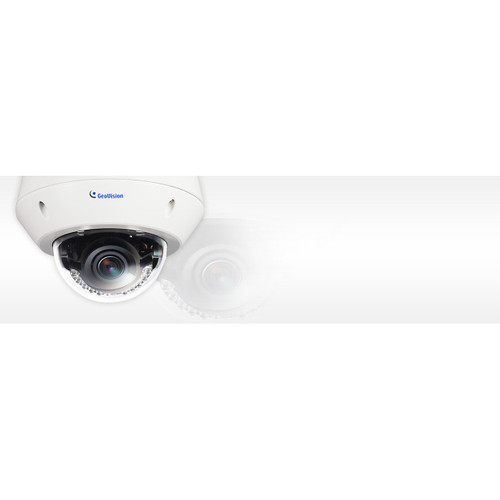
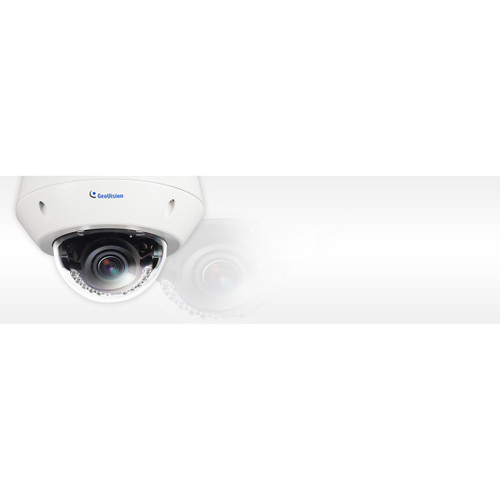
Both the Geovision EBD474W-0010 and the MFD4700-0F10 are 4MP fixed-lens IP dome cameras from the same manufacturer, sharing a 2.8 mm focal length and targeting indoor/ceiling or wall-mount installations at similar price points. A buyer choosing between them is weighing a Super Low Lux IR dome with WDR Pro and broad ecosystem compatibility against a Mini Dome variant that adds confirmed H.265 compression, a defined operating temperature range, and ONVIF Profile S certification. The comparison below draws strictly from the provided specifications.
In This Guide
How do the imaging specs compare?
Both cameras deliver 4 MP resolution and carry WDR Pro (listed as 'WDR' on both spec sheets, with 'WDR Pro' in the product title for the EBD474W-0010 and in the WDR field for the MFD4700-0F10). Both use a 2.8 mm fixed lens and include IR night vision with Super Low Lux sensitivity. The MFD4700-0F10 spec sheet explicitly states a minimum illumination of 'Super Low Lux' and a sensor output resolution of 2560×1920, giving buyers a concrete pixel-array figure. The EBD474W-0010 labels its mode as 'Super Low Lux IR' but does not provide a numeric minimum illumination value or pixel-array dimension in the provided specs.
On compression, the MFD4700-0F10 specifies H.265, which approximately halves storage and bandwidth consumption compared with H.264. The EBD474W-0010 lists no compression codec in the provided specifications. Neither camera's provided specs include a stated IR range in meters, a maximum frame rate, or image sensor size, so those comparisons cannot be made from the data on hand.
What about installation and environment?
The MFD4700-0F10 is the only model with a defined operating temperature range in the provided specs: 0–50°C, indicating it is rated for indoor, climate-controlled environments. The EBD474W-0010 lists no operating temperature. Neither camera's provided specs include an IP ingress-protection rating or an IK impact rating, so outdoor suitability and vandal resistance cannot be confirmed from the data at hand.
Both cameras support ceiling and wall mounting in a dome form factor. The MFD4700-0F10 is described as a 'Mini Dome,' which typically implies a smaller footprint, but physical dimensions and weight are not provided for either unit. The MFD4700-0F10 specifies Ethernet connectivity; the EBD474W-0010 does not list a connectivity method or PoE class in the provided specs. Neither unit lists power input specifications.
Which fits your VMS and analytics better?
The EBD474W-0010 lists compatibility with both ONVIF and the Geovision ecosystem, giving it a dual integration path: standard ONVIF for third-party VMS platforms and native Geovision VMS integration. The MFD4700-0F10 specifies ONVIF Profile S, which is a defined compliance tier guaranteeing live streaming, PTZ control structures, and device discovery interoperability, but does not mention native Geovision ecosystem compatibility in the provided specs.
Neither camera's provided specifications include mention of edge analytics, onboard SD card storage, or audio input/output. Those capabilities cannot be compared from the data supplied. Buyers requiring confirmed codec efficiency for NVR storage planning have a clear data point only on the MFD4700-0F10 (H.265); buyers prioritizing native Geovision VMS integration have an explicit callout only on the EBD474W-0010.
Which should you choose: the EBD474W-0010 or the MFD4700-0F10?
Our take: The MFD4700-0F10 is the stronger choice when confirmed H.265 compression, a defined operating temperature, and an explicit ONVIF Profile S certification are decision criteria. First, the MFD4700-0F10 specifies H.265 encoding while the EBD474W-0010 lists no codec, a meaningful gap for storage-constrained deployments. Second, the MFD4700-0F10 provides a confirmed 0–50°C operating range; the EBD474W-0010 supplies none, leaving environmental suitability unverifiable from spec alone. Third, ONVIF Profile S on the MFD4700-0F10 is a defined compliance tier rather than a generic ONVIF claim. Conversely, the EBD474W-0010 explicitly names Geovision ecosystem compatibility, making it the safer pick for sites already running Geovision VMS. Where the two cameras share identical data—4 MP, 2.8 mm fixed lens, Super Low Lux IR, WDR—no differentiation can be drawn from the provided specifications.
Side-by-Side Comparison
Spec-for-spec, from manufacturer data.
| Specification | Geovision EBD474W-0010 | Geovision MFD4700-0F10 |
|---|---|---|
| Resolution | 4 MP | 4 MP |
| Pixel Array | — | 2560×1920 |
| Lens / Focal Length | 2.8 mm fixed | 2.8 mm fixed |
| Form Factor | Dome | Mini Dome |
| Min Illumination | — | Super Low Lux |
| IR / Low-Light Mode | Super Low Lux IR | Super Low Lux IR |
| WDR | WDR Pro | WDR Pro |
| Video Compression | — | H.265 |
| ONVIF | ONVIF | ONVIF Profile S |
| VMS Ecosystem | Geovision ecosystem | — |
| Operating Temperature | — | 0–50°C |
| Power / Connectivity | — | Ethernet |
| Mount Type | Ceiling; Wall | Ceiling / Wall |
Frequently Asked Questions
Which should you choose: the EBD474W-0010 or the MFD4700-0F10?
The MFD4700-0F10 is the stronger choice when confirmed H.265 compression, a defined operating temperature, and an explicit ONVIF Profile S certification are decision criteria. First, the MFD4700-0F10 specifies H.265 encoding while the EBD474W-0010 lists no codec, a meaningful gap for storage-constrained deployments. Second, the MFD4700-0F10 provides a confirmed 0–50°C operating range; the EBD474W-0010 supplies none, leaving environmental suitability unverifiable from spec alone. Third, ONVIF Profile S on the MFD4700-0F10 is a defined compliance tier rather than a generic ONVIF claim. Conversely, the EBD474W-0010 explicitly names Geovision ecosystem compatibility, making it the safer pick for sites already running Geovision VMS. Where the two cameras share identical data—4 MP, 2.8 mm fixed lens, Super Low Lux IR, WDR—no differentiation can be drawn from the provided specifications.
Is the EBD474W-0010 or MFD4700-0F10 better for low light?
Both cameras specify Super Low Lux IR sensitivity and include IR night vision, so neither can be declared superior in low-light performance based on the provided specifications. Neither model's spec sheet includes a numeric minimum illumination value (e.g., lux at F-number) that would allow a direct comparison.
Does either camera support H.265 to save storage space?
Yes—the MFD4700-0F10 explicitly specifies H.265 compression, which typically reduces storage and bandwidth requirements by roughly 50% compared with H.264. The EBD474W-0010 does not list a video compression codec in the provided specifications, so its codec support cannot be confirmed from the data on hand.
Which camera integrates better with a Geovision VMS?
The EBD474W-0010 explicitly lists Geovision ecosystem compatibility alongside ONVIF, making it the documented choice for Geovision VMS environments. The MFD4700-0F10 specifies ONVIF Profile S but does not mention native Geovision ecosystem compatibility in the provided specifications.
Get a Second Opinion on Your Camera Choice
Share your site layout, coverage goals, and budget. Our team will validate the camera selection, flag anything we would change, and recommend products that match the use case.