
Geovision ADR4701 vs Geovision TFD4700-0010: Specification Comparison
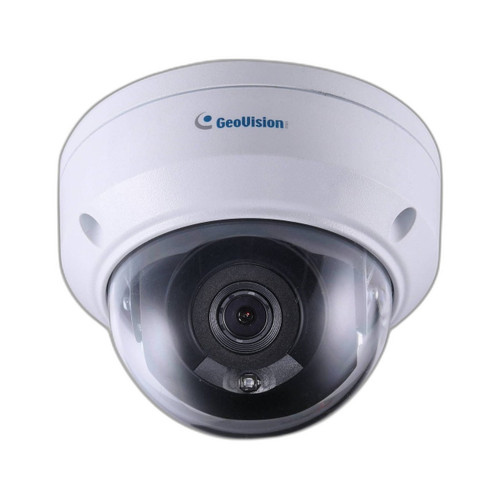
The Geovision GV-ADR4701 and GV-TFD4700-0010 are both 4MP fixed mini dome IP cameras designed for indoor/outdoor surveillance deployments. Both share a 2.8mm fixed lens, H.265 compression, dome form factor, and ONVIF compliance, making them genuine cross-shop candidates for integrators evaluating a compact fixed dome at the 4MP tier. Key differentiators lie in low-light approach, WDR implementation, environmental ratings, and power specifications.
In This Guide
How do the imaging specs compare?
Both cameras deliver 4MP resolution with H.265 compression and a 2.8mm fixed lens. The TFD4700-0010 specifies a concrete pixel count of 2688×1520, while the ADR4701's spec sheet lists an irregular '8×79' pixel value that appears to be a data entry error rather than a usable sensor dimension; buyers should verify with Geovision documentation before relying on that figure.
For low-light performance, the two cameras take different approaches. The ADR4701 uses active IR illumination, providing measurable night-vision reach in zero-ambient-light conditions. The TFD4700-0010 specifies 'Super Low Lux' passive sensitivity without IR emitters listed in the provided specs—suited for environments with residual ambient light. The ADR4701 lists standard WDR; the TFD4700-0010 lists WDR Pro, indicating a higher-grade dynamic range implementation per Geovision's own product line nomenclature.
What about installation and environment?
The ADR4701 carries IP66 dust/water ingress protection and an IK10 vandal-resistance rating, making it suitable for exposed outdoor installations and environments where physical impact is a concern. The TFD4700-0010 has no IP or IK rating listed in the provided specifications; buyers requiring rated environmental protection should confirm with Geovision before deploying it outdoors.
Power consumption for the ADR4701 is specified at 11W via PoE, giving installers a concrete PoE budget figure. No power draw or PoE class is listed for the TFD4700-0010. The ADR4701 also specifies an operating temperature range of 0°C to 50°C; no operating temperature is listed for the TFD4700-0010. Both cameras support ceiling and wall mounting in a dome form factor, with Ethernet connectivity on the TFD4700-0010 confirmed explicitly and implied via PoE on the ADR4701.
Which fits your VMS and analytics better?
Both cameras are ONVIF-compliant, enabling integration with any conformant VMS or NVR/DVR platform without proprietary lock-in. The ADR4701 explicitly lists compatibility with NVR/DVR systems alongside ONVIF; the TFD4700-0010 lists ONVIF only. Neither camera has edge analytics, on-board storage, or audio input/output listed in the provided specifications for either model. Buyers requiring those features should request updated datasheets directly from Geovision, as absence from the provided spec set does not confirm absence from the product.
Which should you choose: the ADR4701 or the TFD4700-0010?
Our take: The ADR4701 is the stronger choice when the installation environment demands verified outdoor durability or guaranteed night-vision in zero-ambient-light conditions. It carries confirmed IP66 and IK10 ratings absent from the TFD4700-0010's provided specs, a documented 11W PoE power draw for switch budgeting, and active IR for true darkness operation. The TFD4700-0010 holds an edge in imaging quality under ambient light: it specifies WDR Pro versus the ADR4701's standard WDR, and its Super Low Lux passive sensor can outperform IR-based designs in partially lit environments. The TFD4700-0010 also provides a verified 2688×1520 pixel count. Choose the ADR4701 for hardened outdoor or vandal-prone installs; choose the TFD4700-0010 where ambient light is present and superior dynamic range matters more than rated environmental protection.
Side-by-Side Comparison
Spec-for-spec, from manufacturer data.
| Specification | Geovision ADR4701 | Geovision TFD4700-0010 |
|---|---|---|
| Resolution | 4 MP | 4 MP (2688×1520) |
| Lens / Focal Length | 2.8mm fixed | 2.8mm fixed |
| Video Compression | H.265 | H.265 |
| WDR | WDR | WDR Pro |
| Low-Light / Night Vision | IR (active IR illumination) | Super Low Lux (passive) |
| IR Illumination | Yes | — |
| ONVIF | Yes | Yes |
| VMS Compatibility | ONVIF; NVR/DVR systems | ONVIF |
| Form Factor | Mini Dome | Mini Dome |
| Mount Type | Ceiling; Wall | Ceiling; Wall |
| IP Rating | IP66 | — |
| IK / Impact Rating | IK10 | — |
| Operating Temperature | 0°C to 50°C | — |
| Power / PoE | 11 W (PoE) | — |
| Connectivity | PoE (implied) | Ethernet |
Frequently Asked Questions
Which should you choose: the ADR4701 or the TFD4700-0010?
The ADR4701 is the stronger choice when the installation environment demands verified outdoor durability or guaranteed night-vision in zero-ambient-light conditions. It carries confirmed IP66 and IK10 ratings absent from the TFD4700-0010's provided specs, a documented 11W PoE power draw for switch budgeting, and active IR for true darkness operation. The TFD4700-0010 holds an edge in imaging quality under ambient light: it specifies WDR Pro versus the ADR4701's standard WDR, and its Super Low Lux passive sensor can outperform IR-based designs in partially lit environments. The TFD4700-0010 also provides a verified 2688×1520 pixel count. Choose the ADR4701 for hardened outdoor or vandal-prone installs; choose the TFD4700-0010 where ambient light is present and superior dynamic range matters more than rated environmental protection.
Is the ADR4701 or TFD4700-0010 better for low light?
It depends on the lighting environment. The ADR4701 uses active IR illumination, making it suitable for complete darkness. The TFD4700-0010 uses Super Low Lux passive sensitivity—better suited for areas with some residual ambient light such as parking lots with street lighting. Neither IR range nor minimum lux figures are provided in the available specs, so confirm detailed illumination numbers with Geovision before deciding.
Can I install either camera outdoors?
The ADR4701 is rated IP66 (dust-tight, water jet resistant) and IK10 (vandal-resistant), making it a confirmed outdoor candidate. No IP or IK rating is listed in the provided specifications for the TFD4700-0010; its suitability for outdoor installation cannot be confirmed from the available data alone.
Which camera has better dynamic range for high-contrast scenes?
The TFD4700-0010 specifies WDR Pro, which is a higher-grade WDR implementation in Geovision's nomenclature versus the standard WDR listed for the ADR4701. For scenes with simultaneous bright and shadowed areas—such as building entrances—the TFD4700-0010's WDR Pro designation suggests superior dynamic range performance, though no dB values are provided in either spec set to quantify the difference.
Get a Second Opinion on Your Camera Choice
Share your site layout, coverage goals, and budget. Our team will validate the camera selection, flag anything we would change, and recommend products that match the use case.