
Geovision ADR4701 vs Geovision MFD4700-0F10: Specification Comparison
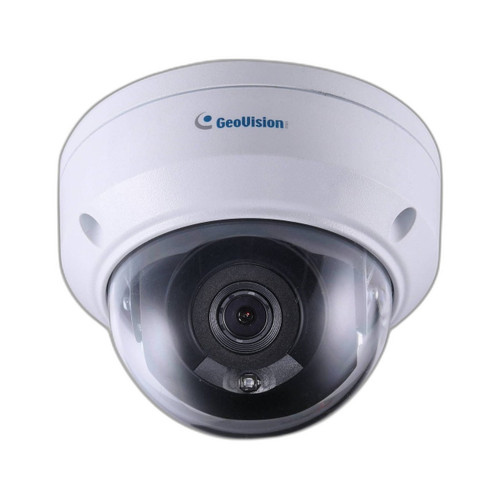
Both the GV-ADR4701 and the 84-MFD4700-0F10 are Geovision 4MP H.265 fixed mini dome cameras intended for NVR/VMS-based deployments. They share the same resolution class, compression standard, lens focal length, and general form factor, making them direct cross-shop candidates for installers evaluating ceiling- or wall-mount indoor/outdoor mini domes. This comparison examines how they differ across imaging performance, installation and environmental suitability, and VMS integration depth based strictly on the provided specifications.
In This Guide
How do the imaging specs compare?
Both cameras deliver 4MP resolution and H.265 compression. The ADR4701 lists a resolution pixel value of 8×79, which appears to be a data artifact rather than a sensor pixel count and cannot be used for comparison; the MFD4700-0F10 provides a concrete sensor output of 2560×1920 pixels. Both cameras include IR night vision and WDR, but the MFD4700-0F10 specifies 'WDR Pro' as its WDR implementation, while the ADR4701 lists only 'WDR' with no further qualification. The MFD4700-0F10 also lists a 'Super Low Lux' minimum illumination rating, whereas no minimum illumination figure is provided for the ADR4701.
Both cameras use a 2.8 mm fixed lens, so field of view and focal length are equivalent. IR capability is listed for both, but neither specification sheet provides a maximum IR range figure, so distance comparison cannot be made from the data provided. Frame rate is not specified for either model.
What about installation and environment?
The ADR4701 carries IP66 and IK10 ratings, making it explicitly rated for dust-tight, jet-water-resistant, and vandal-resistant deployments — suitable for exposed or semi-exposed outdoor and high-risk indoor locations. The MFD4700-0F10 provides no IP or IK rating in the supplied specifications, so environmental ingress and impact protection cannot be confirmed for that model from the data given.
The ADR4701 specifies an 11 W power draw, consistent with PoE (802.3af), and lists operating temperature as 0°C to 50°C. The MFD4700-0F10 lists the same operating temperature range (0–50°C) but provides no power consumption or PoE class figure. Both support ceiling and wall mounting; the ADR4701 is specified as compatible with 'discrete' installations, while the MFD4700-0F10 is specified for 'indoor' use, reinforcing that the MFD4700-0F10 is not confirmed for outdoor or wet environments.
Which fits your VMS and analytics better?
The ADR4701 lists ONVIF compliance generically alongside NVR/DVR system compatibility, without specifying a particular ONVIF profile. The MFD4700-0F10 specifies ONVIF Profile S, which is a defined interoperability standard covering live video, PTZ control signaling (for applicable cameras), and event handling — providing a concrete integration guarantee for Profile S-compliant VMS platforms.
Neither specification sheet lists edge analytics, onboard audio (microphone or speaker), or SD card/edge storage capabilities for either model. These features cannot be compared because the data is absent for both products.
Which should you choose: the ADR4701 or the MFD4700-0F10?
Our take: The ADR4701 is the stronger choice when the installation environment requires confirmed outdoor or vandal-resistant performance. Its IP66 and IK10 ratings provide defined protection against dust, water jets, and physical impact that the MFD4700-0F10's specification sheet does not match — the MFD4700-0F10 carries no listed IP or IK rating. The ADR4701 also documents its power draw at 11 W, simplifying PoE switch planning. Conversely, the MFD4700-0F10 edges ahead on imaging documentation: it specifies WDR Pro (versus unqualified WDR on the ADR4701), a confirmed 2560×1920 pixel output, and a Super Low Lux minimum illumination rating that the ADR4701 spec sheet omits. The MFD4700-0F10 also declares ONVIF Profile S explicitly. For outdoor, vandal-prone, or mixed indoor/outdoor deployments choose the ADR4701; for controlled indoor environments where low-light performance documentation and named ONVIF profile matter, the MFD4700-0F10 is the better-documented option.
Side-by-Side Comparison
Spec-for-spec, from manufacturer data.
| Specification | Geovision ADR4701 | Geovision MFD4700-0F10 |
|---|---|---|
| Resolution | 4 MP | 4 MP (2560×1920) |
| Video Compression | H.265 | H.265 |
| Lens / Focal Length | 2.8 mm fixed | 2.8 mm fixed |
| WDR | WDR | WDR Pro |
| Min Illumination | — | Super Low Lux |
| IR Night Vision | Yes | Yes |
| Form Factor | Mini Dome | Mini Dome |
| Mount Type | Ceiling; Wall | Ceiling / Wall |
| IP Rating | IP66 | — |
| IK / Impact Rating | IK10 | — |
| Operating Temperature | 0°C to 50°C | 0–50°C |
| Power Consumption | 11 W | — |
| ONVIF Profile | ONVIF (profile not specified) | ONVIF Profile S |
| Intended Environment | Discrete (outdoor-rated) | Indoor |
Frequently Asked Questions
Which should you choose: the ADR4701 or the MFD4700-0F10?
The ADR4701 is the stronger choice when the installation environment requires confirmed outdoor or vandal-resistant performance. Its IP66 and IK10 ratings provide defined protection against dust, water jets, and physical impact that the MFD4700-0F10's specification sheet does not match — the MFD4700-0F10 carries no listed IP or IK rating. The ADR4701 also documents its power draw at 11 W, simplifying PoE switch planning. Conversely, the MFD4700-0F10 edges ahead on imaging documentation: it specifies WDR Pro (versus unqualified WDR on the ADR4701), a confirmed 2560×1920 pixel output, and a Super Low Lux minimum illumination rating that the ADR4701 spec sheet omits. The MFD4700-0F10 also declares ONVIF Profile S explicitly. For outdoor, vandal-prone, or mixed indoor/outdoor deployments choose the ADR4701; for controlled indoor environments where low-light performance documentation and named ONVIF profile matter, the MFD4700-0F10 is the better-documented option.
Is the ADR4701 or MFD4700-0F10 better for low-light performance?
Based on the provided specifications, the MFD4700-0F10 has the advantage on paper: it lists a 'Super Low Lux' minimum illumination rating, while the ADR4701 spec sheet provides no minimum illumination figure. Both cameras include IR night vision, but no IR range distance is specified for either model, so distance comparison cannot be made from the available data.
Can either camera be used outdoors?
The ADR4701 is rated IP66 (dust-tight and jet-water resistant) and IK10 (vandal-resistant), confirming suitability for outdoor and exposed installs. The MFD4700-0F10 carries no IP or IK rating in its specification sheet and is listed as 'indoor' compatible, so outdoor use cannot be confirmed for that model from the data provided.
Which camera has better VMS compatibility — the ADR4701 or the MFD4700-0F10?
Both cameras support ONVIF, but the MFD4700-0F10 specifies ONVIF Profile S, a defined interoperability profile recognized by most major VMS platforms. The ADR4701 lists ONVIF compliance without naming a specific profile. If your VMS requires a confirmed Profile S device, the MFD4700-0F10 provides that documented guarantee; the ADR4701's ONVIF level is not specified.
Get a Second Opinion on Your Camera Choice
Share your site layout, coverage goals, and budget. Our team will validate the camera selection, flag anything we would change, and recommend products that match the use case.