
Digital Watchdog DWC-XPZA08Mi vs Hanwha C9303RW: Specification Comparison
Both the Digital Watchdog DWC-XPZA08Mi and the Hanwha XNP-C9303RW are outdoor 8MP (4K) PTZ IP cameras aimed at wide-area surveillance applications where optical zoom, auto-tracking, and harsh-environment resilience are primary requirements. A buyer evaluating either camera is likely sourcing for perimeter protection, parking-lot monitoring, or traffic-oversight deployments where pan/tilt speed, zoom reach, IR performance, and VMS ecosystem fit all factor into the purchasing decision. The comparison below is drawn exclusively from the published specifications of each unit.
In This Guide
How do the imaging specs compare?
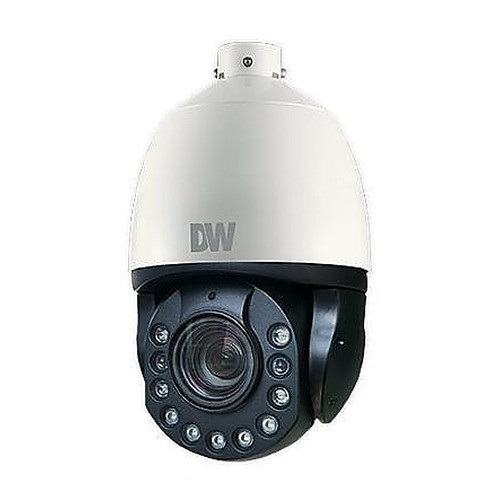
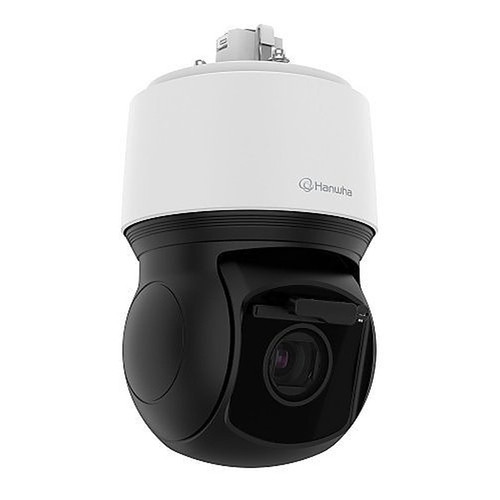
The DWC-XPZA08Mi uses a 1/1.8" CMOS sensor delivering 3840×2160 at up to 30 fps, with a 6.5–260mm varifocal lens providing 40x optical and 16x digital zoom, a horizontal field of view ranging from 64.1° (wide) to 1.6° (tele), and minimum scene illumination of 0.005 lux in color (0.0 lux B/W). Its Smart IR™ system is rated to 1,148 ft (350 m). True WDR is specified but no dB figure is given in the provided specs. The XNP-C9303RW uses a smaller 1/2.8" CMOS sensor, also 3840×2160, but rated at 30 fps at 8MP with a 5–150mm DC auto-iris lens delivering 30x optical zoom, 32x digital, and a combined 960x total. Its HFOV runs 57.42° wide to a tele figure not explicitly stated for full zoom, and minimum illumination is 0.1 lux color / 0 lux IR. Wise IR reaches 200 m (656 ft).
On raw low-light sensitivity, the DWC-XPZA08Mi's larger 1/1.8" sensor and 0.005 lux color threshold outperform the XNP-C9303RW's 0.1 lux color rating by roughly 20×, and its Smart IR range (1,148 ft) more than doubles the Hanwha's Wise IR reach (656 ft). The Hanwha counters with a significantly wider aperture at wide angle (F1.6 vs. not specified for the DW), Extreme WDR rated at 120 dB (a concrete figure the DW spec does not provide), and a frame-rate spec that lists 60 fps as a header value—though its detailed spec clarifies 30 fps at 8MP. The DW offers greater telephoto reach (260mm vs. 150mm), while the Hanwha's DORI performance tables show tele-end detection at over 13,000 ft, reflecting its algorithm-aided range claims. The Hanwha also includes a wiper and lens heater for active water removal; no equivalent is listed for the DW.
What about installation and environment?
Both cameras carry IP66 and IK10 ratings, making them suitable for outdoor installations exposed to water jets and moderate physical impact. The XNP-C9303RW adds NEMA 4X and NEMA-TS 2 certifications—relevant for roadway and traffic-cabinet deployments where those standards are contractually required; the DWC-XPZA08Mi lists no equivalent NEMA certifications. Operating temperature for the DW spans -30°C to +60°C (-22°F to +140°F); the Hanwha operates from -40°C to +55°C (-40°F to +131°F), giving it a wider cold-end tolerance of 10°C—a meaningful difference in northern-climate outdoor installs.
Power requirements differ substantially. The DWC-XPZA08Mi demands high-power PoE (75 W, 1.363 A) and ships with a PoE injector; no IEEE class designation is specified in the provided data. The XNP-C9303RW is rated PoE++ (IEEE 802.3bt, Class 6, Type 3), with a typical draw of 26 W and maximum of 46 W—considerably more infrastructure-friendly. Both include an injector. The DW unit is heavier (12.72 lb / 5.77 kg vs. 12.34 lb / 5.60 kg) and slightly taller (364 mm vs. 318.8 mm). The Hanwha publishes an extensive named-accessory mounting ecosystem (SBP-156HMW, SBP-156WMW, SBP-300PMW2, SBP-156LMW, etc.); the DW spec notes mounting accessories are required and sold separately but does not list specific compatible mount SKUs.
Which fits your VMS and analytics better?
Both cameras are ONVIF-conformant (Profiles S, G, T, M) and support H.265/H.264/MJPEG compression with CBR and VBR bitrate control, making them compatible with any standards-based VMS. The DWC-XPZA08Mi streams up to quad + 3 secondary streams and supports a broad protocol list including SRT and MPEG-TS, which aids in streaming to cloud or broadcast integrations. It provides 4 alarm inputs and 2 outputs onboard, one audio in and one audio out (G.711), 8 privacy masks, and 500 presets. No on-board edge storage is specified in the provided data.
The XNP-C9303RW integrates Hanwha's AI engine (WiseNR II) natively, enabling classified object detection (person, face, vehicle, license plate, with vehicle sub-types), virtual line/area analytics, and AI-based auto-tracking for both persons and vehicles. Privacy masking extends to 32 zones with mosaic support. On-board storage supports dual microSD/SDHC/SDXC slots up to 1 TB (512 GB × 2), along with NAS recording. The camera also carries SRTP, 802.1X (EAP-TLS/LEAP/PEAP), AES encryption, TPM with FIPS 140-2 Level 2 certification, secure boot, and signed/encrypted firmware—a markedly deeper cybersecurity stack than the DW's digest authentication, HTTPS/TLS, and IP filtering. Audio I/O for the Hanwha is noted as partially truncated in the provided spec ('Alarm output / Audi—'); the DW lists 1-in/1-out explicitly.
Which should you choose: the DWC-XPZA08Mi or the C9303RW?
Our take: The DWC-XPZA08Mi is the stronger choice when maximum IR range, low-light sensitivity, and telephoto reach are the primary drivers—its Smart IR extends to 1,148 ft versus the Hanwha's 656 ft, its color minimum illumination is 0.005 lux versus 0.1 lux, and its 40x optical / 260mm tele lens exceeds the Hanwha's 30x / 150mm. The XNP-C9303RW is the stronger choice for deployments requiring rigorous cybersecurity compliance (FIPS 140-2 Level 2 TPM, 802.1X, AES, secure boot), AI-classified onboard analytics, dual-slot 1 TB edge storage, a lower sustained power budget (26 W typical vs. 75 W PoE demand), a wider cold-temperature floor (-40°C vs. -30°C), and NEMA 4X / NEMA-TS 2 certification for traffic or utility-cabinet installations. Buyers on a standards-compliant government or smart-city project will generally favor the Hanwha; end-users needing the longest possible night-time IR reach with high optical magnification on a conventional ONVIF VMS will lean toward the Digital Watchdog.
Side-by-Side Comparison
Spec-for-spec, from manufacturer data.
| Specification | Digital Watchdog DWC-XPZA08Mi | Hanwha C9303RW |
|---|---|---|
| Resolution | 3840×2160 (8MP) | 3840×2160 (8MP) |
| Image Sensor | 1/1.8" CMOS | 1/2.8" CMOS |
| Lens / Focal Length | 6.5–260mm varifocal (40x optical) | 5–150mm DC auto iris (30x optical) |
| Digital Zoom | 16x | 32x (960x total combined) |
| Min. Illumination (Color) | 0.005 lux | 0.1 lux |
| Min. Illumination (B/W) | 0.0 lux | 0 lux (IR) |
| IR Range | 1,148 ft (350m) Smart IR | 656 ft (200m) Wise IR |
| WDR | True WDR (dB not specified) | Extreme WDR 120dB |
| Max Frame Rate | 30fps @ 4K | 30fps @ 4K (60fps listed in header) |
| Pan Speed (Max) | 250°/sec | 500°/sec |
| Tilt Speed (Max) | 130°/sec | 350°/sec |
| Video Compression | H.265, H.264, MJPEG | H.265, H.264, MJPEG |
| IP / Impact Rating | IP66 / IK10 | IP66 / IK10 / NEMA 4X / NEMA-TS 2 |
| Operating Temperature | -30°C to +60°C (-22°F to +140°F) | -40°C to +55°C (-40°F to +131°F) |
| Power Input | High-power PoE, 75W (injector included) | PoE++ 802.3bt Class 6, Typ. 26W / Max 46W (injector included) |
| Onboard AI Analytics | Auto-tracking, motion detection (no classified AI specified) | AI: Person, Face, Vehicle, License Plate; auto-tracking |
| Edge Storage | Not specified | Dual microSD up to 1TB (512GB×2) |
| Audio | 1 input / 1 output (G.711) | Partially truncated in spec; not fully confirmed |
| Cybersecurity | Digest auth, HTTPS/TLS, IP filtering | FIPS 140-2 Lvl 2 TPM, 802.1X, AES, Secure boot, Signed firmware |
| ONVIF | Profile S, G, T, M | Profile S, G, T, M |
| Dimensions (H×D) | 226×364mm (8.89×14.3") | ø184.9×318.8mm (7.28×12.55") |
| Weight | 12.72 lb (5.77 kg) | 12.34 lb (5.60 kg) |
| Warranty | 2 years | 3 years |
Frequently Asked Questions
Which should you choose: the DWC-XPZA08Mi or the C9303RW?
The DWC-XPZA08Mi is the stronger choice when maximum IR range, low-light sensitivity, and telephoto reach are the primary drivers—its Smart IR extends to 1,148 ft versus the Hanwha's 656 ft, its color minimum illumination is 0.005 lux versus 0.1 lux, and its 40x optical / 260mm tele lens exceeds the Hanwha's 30x / 150mm. The XNP-C9303RW is the stronger choice for deployments requiring rigorous cybersecurity compliance (FIPS 140-2 Level 2 TPM, 802.1X, AES, secure boot), AI-classified onboard analytics, dual-slot 1 TB edge storage, a lower sustained power budget (26 W typical vs. 75 W PoE demand), a wider cold-temperature floor (-40°C vs. -30°C), and NEMA 4X / NEMA-TS 2 certification for traffic or utility-cabinet installations. Buyers on a standards-compliant government or smart-city project will generally favor the Hanwha; end-users needing the longest possible night-time IR reach with high optical magnification on a conventional ONVIF VMS will lean toward the Digital Watchdog.
Is the DWC-XPZA08Mi or XNP-C9303RW better for low-light and night performance?
Based on published specs, the DWC-XPZA08Mi has a lower color minimum illumination (0.005 lux vs. 0.1 lux) and a longer Smart IR range (1,148 ft vs. 656 ft), giving it a meaningful advantage in low-light and night scenarios where passive IR reach and sensor sensitivity are the deciding factors. The XNP-C9303RW reaches 0 lux only in IR (black-and-white) mode, which is also true of the DW at 0.0 lux B/W.
Which camera is easier to power and install in an existing infrastructure?
The XNP-C9303RW is easier to integrate into existing switch infrastructure: it draws a typical 26 W and a maximum of 46 W under IEEE 802.3bt (PoE++, Class 6), which many modern PoE++ switches can supply directly. The DWC-XPZA08Mi requires 75 W, which exceeds standard PoE++ budgets and necessitates the included high-power PoE injector or a specialty high-power mid-span—a relevant cable-run and switch-port consideration on multi-camera deployments.
Does either camera support onboard AI analytics or edge storage without a separate server?
Yes, but only the XNP-C9303RW includes these capabilities as specified. It provides an AI engine supporting person, face, vehicle, and license-plate classification; object auto-tracking; and dual microSD slots for up to 1 TB of on-camera edge storage with NAS recording support. The DWC-XPZA08Mi spec lists auto-tracking and motion detection but does not specify AI-classified analytics or onboard edge storage in the provided specification data.
Get a Second Opinion on Your Camera Choice
Share your site layout, coverage goals, and budget. Our team will validate the camera selection, flag anything we would change, and recommend products that match the use case.