
Digital Watchdog DWC-XPZA08Mi vs Hanwha C9253: Specification Comparison
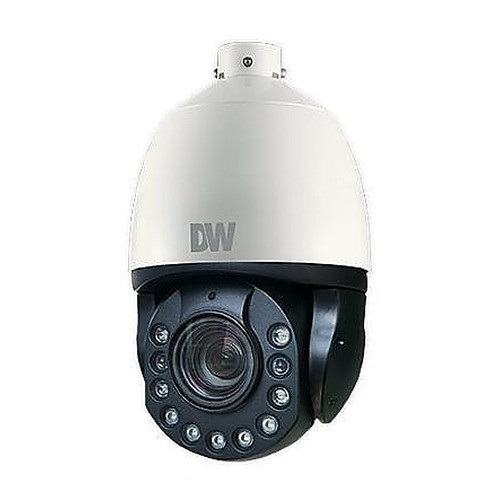
Both the Digital Watchdog DWC-XPZA08Mi and the Hanwha XNP-C9253 are outdoor 8MP (4K, 3840×2160) PTZ IP cameras intended for wide-area and perimeter surveillance. Each supports 40x and 25x optical zoom respectively, ONVIF compliance, IP66/IK10 environmental ratings, and AI-assisted auto-tracking. This comparison examines their imaging performance, installation requirements, and integration capabilities to help installers and IT buyers select the correct unit for their deployment.
In This Guide
How do the imaging specs compare?
The DWC-XPZA08Mi uses a larger 1/1.8" CMOS sensor versus the XNP-C9253's 1/2.8" CMOS. The Digital Watchdog unit delivers 40x optical zoom over a 6.5–260mm focal range (HFOV 64.1°–1.6°), while the Hanwha offers 25x optical zoom over 5–125mm (HFOV 57.42° wide). In low light, the DWC-XPZA08Mi reaches 0.005 lux in color and 0.0 lux in B/W, backed by Smart IR rated to 1,148 ft. The XNP-C9253 specifies 0.1 lux color and 0.01 lux B/W; no integrated IR illuminator distance is provided in the supplied specs (the spec lists 5m under IR Distance, which corresponds to a minimum object distance, not an illuminator range). Buyers requiring long-range active IR illumination should note this distinction.
For dynamic range, the DWC-XPZA08Mi lists True WDR without a dB figure; the XNP-C9253 specifies Extreme WDR at 120 dB. The Hanwha also applies an AI-engine-based noise reduction (WiseNR II / SSNR V), while Digital Watchdog uses Smart DNR 3D. The XNP-C9253 supports max 30fps at 8MP per its primary spec, but the Features field lists 60fps—no resolution context is provided for that 60fps figure in the supplied data. The DWC-XPZA08Mi is spec'd at 30fps at full 3840×2160. The Hanwha provides DORI distances: detection to 3,246.9m and identification to 324.7m at tele, which the Digital Watchdog datasheet does not publish.
What about installation and environment?
Both cameras carry IP66 and IK10 ratings. The XNP-C9253 adds NEMA 4X and NEMA-TS 2 (sections 2.2.7, 2.2.8, 2.2.9) certifications, relevant for traffic and roadway deployments. Operating temperature for the DWC-XPZA08Mi spans -30°C to +60°C (-22°F to +140°F); the XNP-C9253 operates from -40°C to +55°C, giving it a 10°C advantage at the cold extreme. The Hanwha also includes a built-in spin-dry water removal function and lens heater, which are not listed for the Digital Watchdog unit.
Power requirements differ meaningfully: the DWC-XPZA08Mi draws up to 75W via high-power PoE and ships with a PoE injector included; the XNP-C9253 draws a typical 24W / max 25.5W over standard PoE+ (IEEE 802.3at, Class 4), compatible with most managed PoE switches without a dedicated injector. The DWC-XPZA08Mi is heavier at 12.72 lbs (5.77 kg) versus 7.05 lbs (3.2 kg) for the Hanwha, and larger at 226×364mm versus ø158×293.3mm. The XNP-C9253 offers two microSD slots supporting up to 1TB (512GB×2) of edge storage; the DWC-XPZA08Mi does not list onboard storage in the supplied specifications.
Which fits your VMS and analytics better?
Both cameras conform to ONVIF Profiles S, G, T, and M, ensuring broad VMS compatibility. The XNP-C9253 additionally exposes Hanwha's SUNAPI and Wisenet SDK, enabling deeper integration with Wisenet WAVE or SSM platforms. Its AI analytics engine classifies persons, faces, vehicles (car/bus/truck/motorcycle/bicycle), and license plates; supports virtual line crossing with direction, virtual area, and DetectionShot; and drives object auto-tracking for persons and vehicles. The DWC-XPZA08Mi lists motion alarm, sensor detection, and auto-tracking but does not publish classified object types or AI-engine analytics in the supplied specifications.
On security posture, the XNP-C9253 provides 802.1X network authentication (EAP-TLS/LEAP/PEAP), TPM with FIPS 140-2 Level 2, secure boot, signed and encrypted firmware, SRTP, encrypted SD card, and a Hanwha Private Root CA device certificate. The DWC-XPZA08Mi lists HTTPS/TLS, digest authentication, IP filtering, and multi-user authority, but does not specify hardware-level security features. For audio, both cameras provide 1-in/1-out audio with G.711 listed on the DWC-XPZA08Mi; the XNP-C9253 references audio output in alarm events but does not publish audio codec details in the supplied specifications. The DWC-XPZA08Mi supports 8 privacy masks; the XNP-C9253 supports 32, with mosaic and color options.
Which should you choose: the DWC-XPZA08Mi or the C9253?
Our take: The DWC-XPZA08Mi is the stronger choice when long-range optical reach and integrated IR illumination are the primary requirements: its 40x optical zoom (vs. 25x) and 1,148 ft Smart IR range far exceed the Hanwha's optics, and its larger 1/1.8" sensor enables 0.005 lux color sensitivity versus the XNP-C9253's 0.1 lux. However, the XNP-C9253 leads in three areas that matter for demanding or standards-driven installations: it draws only 25.5W max on standard PoE+ (vs. 75W requiring a high-power injector), operates to -40°C (vs. -30°C), and delivers FIPS 140-2 Level 2 TPM, 802.1X authentication, and AI-classified object analytics (person/vehicle/license plate) not found in the Digital Watchdog's published specs. Choose the DWC-XPZA08Mi for long-range IR PTZ where a dedicated PoE injector is acceptable; choose the XNP-C9253 for cybersecurity-sensitive, traffic-rated, or switch-powered deployments requiring advanced AI analytics.
Side-by-Side Comparison
Spec-for-spec, from manufacturer data.
| Specification | Digital Watchdog DWC-XPZA08Mi | Hanwha C9253 |
|---|---|---|
| Resolution | 8MP (3840×2160) | 8MP (3840×2160) |
| Image Sensor | 1/1.8" CMOS | 1/2.8" CMOS |
| Optical Zoom / Focal Length | 40x / 6.5–260mm | 25x / 5–125mm |
| Min. Illumination (Color / B/W) | 0.005 lux / 0.0 lux | 0.1 lux / 0.01 lux |
| IR Illuminator Range | 1,148 ft (Smart IR) | Not specified in provided specs |
| WDR | True WDR (dB not specified) | Extreme WDR 120 dB |
| Max Frame Rate @ Full Res | 30fps @ 3840×2160 | 30fps @ 3840×2160 |
| Video Compression | H.265, H.264, MJPEG | H.265, H.264, MJPEG |
| IP Rating | IP66 | IP66, NEMA 4X, NEMA-TS 2 |
| IK / Impact Rating | IK10 | IK10 |
| Operating Temperature | -30°C to +60°C | -40°C to +55°C |
| Power Input / PoE Class | High-power PoE, max 75W (injector included) | PoE+ IEEE 802.3at Class 4, max 25.5W |
| Edge Storage | Not specified in provided specs | 2× microSD/SDHC/SDXC, up to 1TB (512GB×2) |
| AI / Analytics | Auto-tracking, motion detection (object class not specified) | AI: person, face, vehicle, license plate; virtual line/area; DetectionShot |
| Cybersecurity | HTTPS/TLS, digest auth, IP filtering | TPM FIPS 140-2 L2, 802.1X, secure boot, signed firmware, SRTP, encrypted SD |
| Dimensions (H×W or D×H) | 226×364mm | ø158×293.3mm |
| Weight | 12.72 lbs (5.77 kg) | 7.05 lbs (3.2 kg) |
| Warranty | 2 years | 3 years |
Frequently Asked Questions
Which should you choose: the DWC-XPZA08Mi or the C9253?
The DWC-XPZA08Mi is the stronger choice when long-range optical reach and integrated IR illumination are the primary requirements: its 40x optical zoom (vs. 25x) and 1,148 ft Smart IR range far exceed the Hanwha's optics, and its larger 1/1.8" sensor enables 0.005 lux color sensitivity versus the XNP-C9253's 0.1 lux. However, the XNP-C9253 leads in three areas that matter for demanding or standards-driven installations: it draws only 25.5W max on standard PoE+ (vs. 75W requiring a high-power injector), operates to -40°C (vs. -30°C), and delivers FIPS 140-2 Level 2 TPM, 802.1X authentication, and AI-classified object analytics (person/vehicle/license plate) not found in the Digital Watchdog's published specs. Choose the DWC-XPZA08Mi for long-range IR PTZ where a dedicated PoE injector is acceptable; choose the XNP-C9253 for cybersecurity-sensitive, traffic-rated, or switch-powered deployments requiring advanced AI analytics.
Is the DWC-XPZA08Mi or XNP-C9253 better for low-light performance?
Based on published specifications, the DWC-XPZA08Mi has a significant low-light advantage: it achieves 0.005 lux in color and 0.0 lux in B/W, and includes a built-in Smart IR illuminator rated to 1,148 ft. The XNP-C9253 specifies 0.1 lux color and 0.01 lux B/W; its supplied specifications do not list an integrated long-range IR illuminator. If active IR illumination at range is required, the Digital Watchdog unit is the spec-supported choice.
Can I power either camera from a standard PoE+ switch port?
The Hanwha XNP-C9253 draws a maximum of 25.5W over PoE+ (IEEE 802.3at, Class 4), which is within what a standard PoE+ switch port delivers. The DWC-XPZA08Mi requires up to 75W via high-power PoE and ships with a dedicated PoE injector; a standard PoE or PoE+ switch port will not supply sufficient power for that camera.
Which camera offers better cybersecurity features for a government or traffic installation?
The Hanwha XNP-C9253 publishes substantially more cybersecurity detail: TPM with FIPS 140-2 Level 2, 802.1X network authentication (EAP-TLS, EAP-LEAP, EAP-PEAP), secure boot, signed and encrypted firmware, SRTP, encrypted SD card storage, and a Hanwha Private Root CA device certificate. It also holds NEMA-TS 2 certification for traffic applications. The DWC-XPZA08Mi lists HTTPS/TLS, digest authentication, and IP filtering, but does not publish equivalent hardware security or traffic-rated certifications in the provided specifications.
Get a Second Opinion on Your Camera Choice
Share your site layout, coverage goals, and budget. Our team will validate the camera selection, flag anything we would change, and recommend products that match the use case.