
Digital Watchdog D4583WTIR vs Digital Watchdog V7553WTIR: Specification Comparison
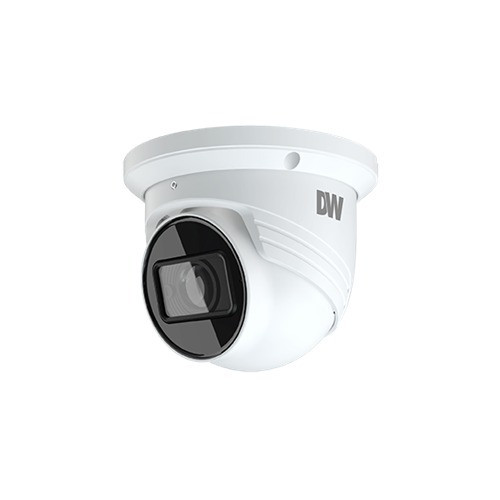
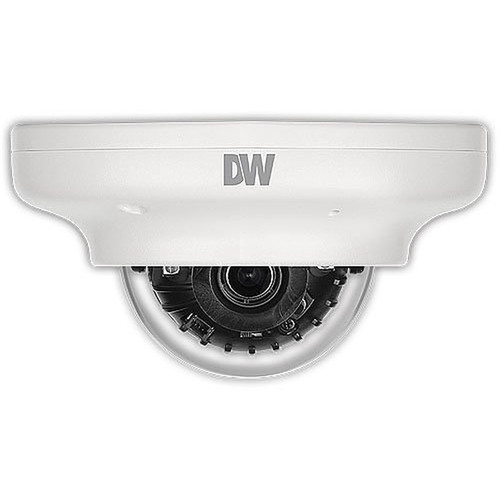
Both the Digital Watchdog DWC-D4583WTIR and DWC-V7553WTIR are 5MP vandal dome IP cameras from the same manufacturer's Star-Light IR lineup, sharing the same 1/2.8" CMOS sensor and 2608×1960 pixel array. They target the same resolution class but diverge meaningfully in lens type, IR range, housing material, environment rating, and intended deployment environment—indoor versus outdoor—making them legitimate cross-shop candidates for installers specifying a site with mixed interior and exterior coverage needs.
In This Guide
How do the imaging specs compare?
Both cameras share a 5MP 1/2.8" CMOS progressive-scan sensor at 2608×1960 active pixels and identical True WDR at 120dB, Smart DNR, gamma 0.45, and a Star-Light sense-up range of Off through ×32. The key low-light divergence is minimum color illumination: the D4583WTIR reaches 0.08 lux color versus 0.16 lux color on the V7553WTIR—a full stop advantage for the D4583WTIR in dim indoor environments. Both reach 0.0 lux in B/W IR mode. Maximum specified resolution for the D4583WTIR is listed as 5MP/1944p @ 20fps; the V7553WTIR's maximum frame rate at full resolution is not specified in the provided data.
The lens profiles differ substantially. The D4583WTIR uses a motorized varifocal 2.7–13.5mm lens with auto-focus and P-iris, delivering 85°–32° HFOV and 62°–24° VFOV—giving installers remote zoom and focus adjustment post-installation. The V7553WTIR uses a fixed 4.0mm lens at a static 82° HFOV and 60° VFOV, which is set at installation and cannot be remotely adjusted. IR range also differs: the D4583WTIR provides 70-foot Smart IR versus 50-foot Smart IR on the V7553WTIR. Signal technology on the D4583WTIR includes CVBS, 960H, HD-Analog, HD-CVI, HD-TVI, and HD over Coax; the V7553WTIR lists CVBS/960H/HD-CVI/HD-TVI without explicit HD-Analog or universal HD-over-Coax notation.
What about installation and environment?
Both cameras carry an IP66 ingress rating and share the same operating temperature range of -4°F to 122°F (-20°C to 50°C) and humidity tolerance of 10–90% non-condensing. The V7553WTIR adds an IK10 impact rating and is specified as outdoor-ready with aluminum die-cast construction—critical for exposed exterior locations subject to vandalism or inclement weather. The D4583WTIR housing is plastic (Snapit construction) with no IK rating listed in the provided specs, and is designated indoor use.
Power draw differs significantly: the D4583WTIR is rated at 6.5W maximum versus only 2.0W for the V7553WTIR, which is also assigned PoE Class 2. Both list 12VDC and 24VAC as power inputs; PoE class for the D4583WTIR is not specified in the provided data. The D4583WTIR is physically larger (4.24" × 3.9" / 107.8 × 99.1mm) and lighter at 0.55 lbs, while the V7553WTIR is more compact in height (4.13" × 2.39" / 105 × 60.7mm) but heavier at 0.88 lbs, consistent with its aluminum die-cast body. Both require separately sold mounting accessories.
Which fits your VMS and analytics better?
Both cameras specify Pelco C and UTC camera control protocols and include built-in motion detection, 24 programmable privacy zones, BLC, de-fog, mirror/flip, and auto day/night switching—providing equivalent analytics and control feature sets at the firmware level. The D4583WTIR includes a built-in microphone (1 microphone, 50Hz–10KHz frequency response, -38dB ±2dB sensitivity) and one alarm output, enabling audio capture and alarm triggering without external devices. The V7553WTIR does not list audio input, audio output, or alarm I/O in the provided specifications.
The V7553WTIR specifies onboard microSD edge storage support; the D4583WTIR does not list edge storage in the provided specifications. ONVIF conformance is not stated in the provided specifications for either model. The V7553WTIR lists Windows as a compatible operating system; no VMS OS compatibility is listed for the D4583WTIR. Both carry a 5-year warranty.
Which should you choose: the D4583WTIR or the V7553WTIR?
Our take: The D4583WTIR is the stronger choice when the deployment calls for indoor coverage with flexible framing, audio capture, or analog coax signal compatibility. Its motorized 2.7–13.5mm varifocal lens with auto-focus and P-iris gives installers remote adjustment capability the V7553WTIR's fixed 4.0mm lens cannot match; its 70-foot IR range outreaches the V7553WTIR's 50-foot Smart IR by 40%; and its 0.08 lux color sensitivity is one full stop better than the V7553WTIR's 0.16 lux. However, for any outdoor or impact-exposed installation, the V7553WTIR is the appropriate selection: its IK10 vandal rating and aluminum die-cast housing provide structural protection absent from the D4583WTIR's plastic Snapit body, and its 2.0W draw versus 6.5W eases PoE budget constraints on dense switch ports. Buyers needing onboard edge recording should note that only the V7553WTIR lists microSD support; buyers requiring built-in audio or alarm output should note those are specified only on the D4583WTIR.
Side-by-Side Comparison
Spec-for-spec, from manufacturer data.
| Specification | Digital Watchdog D4583WTIR | Digital Watchdog V7553WTIR |
|---|---|---|
| Resolution | 5MP (2608 × 1960) | 5MP (2608 × 1960) |
| Image Sensor | 1/2.8" CMOS | 1/2.8" CMOS |
| Lens Type | Motorized varifocal, auto-focus, P-iris | Fixed |
| Focal Length | 2.7–13.5mm | 4.0mm |
| Horizontal FOV | 85°–32° (variable) | 82° (fixed) |
| Min. Illumination (Color) | 0.08 lux | 0.16 lux |
| Min. Illumination (B/W) | 0.0 lux | 0.0 lux |
| IR Range | 70 ft (Smart IR) | 50 ft (Smart IR) |
| WDR | True WDR 120dB | True WDR 120dB |
| Max Frame Rate | 20fps @ 5MP/1944p | Not specified |
| IP Rating | IP66 | IP66 |
| IK / Impact Rating | Not specified | IK10 |
| Housing Material | Plastic (Snapit) | Aluminum die-cast |
| Environment | Indoor | Outdoor |
| Operating Temperature | -4°F to 122°F (-20°C to 50°C) | -4°F to 122°F (-20°C to 50°C) |
| Power (Max) | 6.5W | 2.0W |
| PoE Class | Not specified | Class 2 |
| Power Input | 12VDC / 24VAC | 12VDC |
| Audio | Built-in mic; 1 audio input | Not specified |
| Alarm I/O | 1 output | Not specified |
| Edge Storage | Not specified | microSD |
| Signal Technology | CVBS, 960H, HD-Analog, HD-CVI, HD-TVI, HD over Coax | CVBS, 960H, HD-CVI, HD-TVI |
| Dimensions (H × D) | 4.24" × 3.9" (107.8 × 99.1mm) | 4.13" × 2.39" (105 × 60.7mm) |
| Weight | 0.55 lbs (0.25 kg) | 0.88 lbs (0.4 kg) |
| Warranty | 5 years | 5 years |
Frequently Asked Questions
Which should you choose: the D4583WTIR or the V7553WTIR?
The D4583WTIR is the stronger choice when the deployment calls for indoor coverage with flexible framing, audio capture, or analog coax signal compatibility. Its motorized 2.7–13.5mm varifocal lens with auto-focus and P-iris gives installers remote adjustment capability the V7553WTIR's fixed 4.0mm lens cannot match; its 70-foot IR range outreaches the V7553WTIR's 50-foot Smart IR by 40%; and its 0.08 lux color sensitivity is one full stop better than the V7553WTIR's 0.16 lux. However, for any outdoor or impact-exposed installation, the V7553WTIR is the appropriate selection: its IK10 vandal rating and aluminum die-cast housing provide structural protection absent from the D4583WTIR's plastic Snapit body, and its 2.0W draw versus 6.5W eases PoE budget constraints on dense switch ports. Buyers needing onboard edge recording should note that only the V7553WTIR lists microSD support; buyers requiring built-in audio or alarm output should note those are specified only on the D4583WTIR.
Is the D4583WTIR or V7553WTIR better for low light?
The D4583WTIR reaches 0.08 lux in color mode versus 0.16 lux for the V7553WTIR—a one-stop advantage. Both cameras reach 0.0 lux in black-and-white IR mode. If color detail in very dim light matters, the D4583WTIR has the specified edge.
Can I use either camera outdoors?
The V7553WTIR is rated for outdoor use with an IP66 ingress rating and an IK10 impact rating in an aluminum die-cast housing. The D4583WTIR carries IP66 but has no IK impact rating listed in its specs and is designated for indoor use with a plastic housing. For exposed exterior locations, the V7553WTIR is the appropriate choice based on the provided specifications.
Which camera supports onboard recording and built-in audio?
Based on the provided specifications, these features split between models: the V7553WTIR supports microSD edge storage but does not list audio I/O or alarm output; the D4583WTIR includes a built-in microphone and one alarm output but does not list edge storage support. Neither feature set is available on both cameras simultaneously per the specs provided.
Get a Second Opinion on Your Camera Choice
Share your site layout, coverage goals, and budget. Our team will validate the camera selection, flag anything we would change, and recommend products that match the use case.