
Digital Watchdog D4283WTIR vs Digital Watchdog V6263WTIR: Specification Comparison
Both the Digital Watchdog DWC-D4283WTIR and DWC-V6263WTIR are 2MP (1944×1092) HD-over-Coax dome cameras sharing the same 1/3" CMOS sensor, 2.8–12mm vari-focal lens range, 100-foot Smart IR, and True WDR 100dB. They sit in the same resolution class and are both fixed analog-output domes, making them direct cross-shop candidates. The key differentiators are housing construction (plastic indoor vs. aluminum vandal dome), temperature floor, power options, audio capability, and ONVIF/IP support.
In This Guide
How do the imaging specs compare?
Both cameras use an identical 2.1MP 1/3" progressive-scan CMOS sensor producing 1944×1092 active pixels at variable frame rates across 50Hz and 60Hz. Minimum scene illumination is the same on both: 0.0 lux in B&W mode and 0.03 lux in color, supported by Smart IR rated to 100 feet on each model. True WDR is rated at 100dB on both. Smart DNR 3D digital noise reduction, auto gain control, BLC, de-fog, DRC, and Star-Light sense-up (Off, ×2–×32) are present on both units. Shutter speed range is identical at 1/30–1/30000 with Anti-Flicker, Auto, and Manual modes.
The lens specifications diverge slightly in measured field of view. The D4283WTIR lists a vertical FOV of 46.8°–19.6°, while the V6263WTIR lists 47.8°–18.7° — a marginal difference likely attributable to lens-assembly tolerances rather than a practical imaging distinction. The D4283WTIR specifies auto-focus and motorized zoom with P-iris as advanced lens features; the V6263WTIR lists only P-iris — motorized zoom is noted in the enriched field for the V6263WTIR but auto-focus is not confirmed in its primary spec sheet. Both cameras share the same signal technology output set with the exception that the D4283WTIR includes HD-Analog, which is not listed for the V6263WTIR.
What about installation and environment?
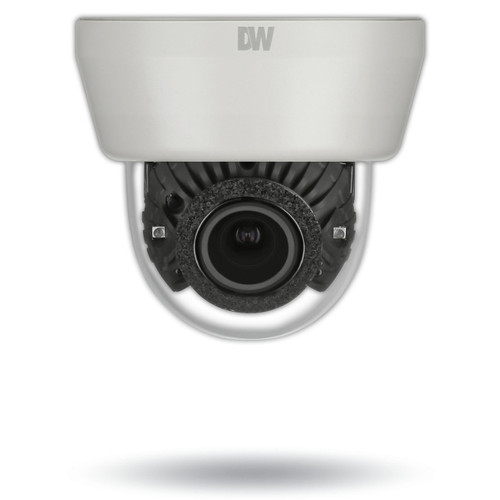
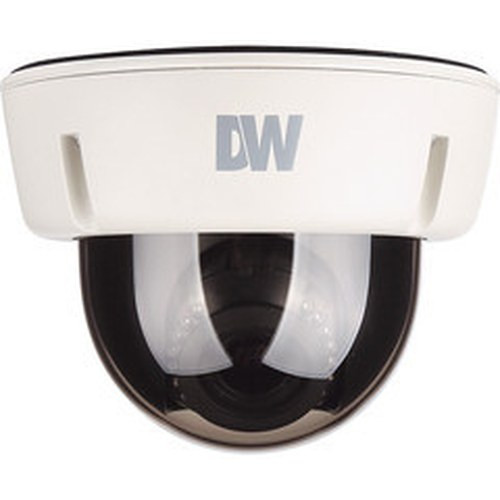
The housing and environmental ratings are where these cameras diverge most meaningfully. The D4283WTIR uses a plastic Snapit housing rated IP66 and is classified as an indoor dome, with an operating temperature range of -40°F to 122°F (-40°C to 50°C). The V6263WTIR uses aluminum die-cast construction, carries both IP66 and IK10 vandal ratings, and is classified as an outdoor dome. Its operating temperature floor is significantly warmer at -4°F (-20°C), which limits suitability in extreme cold environments compared to the D4283WTIR's -40°F floor.
Power requirements also differ. The D4283WTIR is specified at 24V AC with a maximum draw of 2.3W and lists PoE (802.3af) as a power type. The V6263WTIR accepts 12V DC or 24V AC and draws up to 4.35W; PoE is noted in the enriched field but not confirmed in the primary electrical specification. The D4283WTIR is notably lighter at 0.53 lbs (0.24 kg) vs. 1.65 lbs (0.75 kg) for the aluminum-bodied V6263WTIR, and smaller at 4.24"×3.9" vs. 5.7"×4.26". Both ship without mounting accessories, which are sold separately.
Which fits your VMS and analytics better?
The D4283WTIR explicitly lists ONVIF compatibility and supports H.264 and MJPEG video compression. It includes a built-in microphone (1 audio input) with an audio frequency response of 50Hz–10kHz and sensitivity of -38dB ±2dB, and supports on-board microSD storage (up to 32GB SDHC per spec). Camera control protocols Pelco C and Pelco D with UTP built-in are listed on both units. The D4283WTIR also lists Windows as a compatible operating system.
The V6263WTIR does not list ONVIF compliance, audio input/output, or on-board storage in its provided specifications. Both cameras share motion detection and 16 programmable privacy masks. Neither camera's spec sheet lists specific edge analytics beyond motion detection. For integrators requiring confirmed ONVIF interoperability, a built-in microphone, or edge storage on a coax-output camera, the D4283WTIR's spec sheet provides explicit confirmation; the V6263WTIR's spec data is silent on those features.
Which should you choose: the D4283WTIR or the V6263WTIR?
Our take: The D4283WTIR is the stronger choice when ONVIF compliance, built-in audio, on-board microSD storage, or extreme cold-temperature operation are requirements. It confirms ONVIF support, includes a built-in microphone with 50Hz–10kHz response, supports up to 32GB microSD edge storage, and operates down to -40°F versus the V6263WTIR's -4°F floor — a 36°F advantage in cold climates. The V6263WTIR's advantage is physical durability: its aluminum die-cast IK10 vandal-rated housing is purpose-built for exposed or high-risk outdoor locations where the D4283WTIR's plastic Snapit construction would be inappropriate. The V6263WTIR also accepts 12V DC power in addition to 24V AC, adding wiring flexibility. Both cameras deliver identical imaging performance on paper. Specify the D4283WTIR for sheltered or semi-exposed sites where VMS integration, audio, and cold tolerance matter; specify the V6263WTIR for exposed exterior locations requiring impact resistance and vandal deterrence.
Side-by-Side Comparison
Spec-for-spec, from manufacturer data.
| Specification | Digital Watchdog D4283WTIR | Digital Watchdog V6263WTIR |
|---|---|---|
| Resolution | 2.1MP / 1080p (1944×1092) | 2.1MP / 1080p (1944×1092) |
| Image Sensor | 1/3" CMOS, progressive scan | 1/3" CMOS, progressive scan |
| Lens / Focal Length | Motorized vari-focal 2.8–12mm, auto-focus, P-iris | Vari-focal 2.8–12mm, P-iris (auto-focus not confirmed in spec) |
| Horizontal FOV | 91° – 28° | 91° – 28° |
| Vertical FOV | 46.8° – 19.6° | 47.8° – 18.7° |
| Min Illumination | 0.0 lux (B&W) / 0.03 lux (color) | 0.0 lux (B&W) / 0.03 lux (color) |
| IR Range | 100 ft Smart IR | 100 ft Smart IR |
| WDR | True WDR 100dB | True WDR 100dB |
| Video Compression | H.264, MJPEG | — |
| Signal Output | CVBS, 960H, HD-Analog, HD-CVI, HD-TVI | CVBS, 960H, HD-CVI, HD-TVI |
| IP Rating | IP66 | IP66 |
| IK / Impact Rating | — | IK10 |
| Operating Temperature | -40°F to 122°F (-40°C to 50°C) | -4°F to 122°F (-20°C to 50°C) |
| Power Input | 24V AC; PoE 802.3af | 12V DC, 24V AC (PoE not confirmed in primary spec) |
| Max Power Draw | 2.3W | 4.35W |
| Housing / Material | Plastic Snapit, indoor dome | Aluminum die-cast, vandal dome |
| Audio | Built-in mic; 1 audio input; 50Hz–10kHz | — |
| Edge Storage | microSD up to 32GB (SDHC) | — |
| ONVIF | Yes | — |
| Privacy Masks | 16 programmable | 16 programmable |
| Dimensions (H×W) | 4.24" × 3.9" (107.8 × 99.1 mm) | 5.7" × 4.26" (145 × 108.3 mm) |
| Weight | 0.53 lbs (0.24 kg) | 1.65 lbs (0.75 kg) |
| Camera Control Protocols | Pelco C, Pelco D, UTP built-in | Pelco C, Pelco D, UTP built-in |
| Warranty | 5 years | 5 years |
Frequently Asked Questions
Which should you choose: the D4283WTIR or the V6263WTIR?
The D4283WTIR is the stronger choice when ONVIF compliance, built-in audio, on-board microSD storage, or extreme cold-temperature operation are requirements. It confirms ONVIF support, includes a built-in microphone with 50Hz–10kHz response, supports up to 32GB microSD edge storage, and operates down to -40°F versus the V6263WTIR's -4°F floor — a 36°F advantage in cold climates. The V6263WTIR's advantage is physical durability: its aluminum die-cast IK10 vandal-rated housing is purpose-built for exposed or high-risk outdoor locations where the D4283WTIR's plastic Snapit construction would be inappropriate. The V6263WTIR also accepts 12V DC power in addition to 24V AC, adding wiring flexibility. Both cameras deliver identical imaging performance on paper. Specify the D4283WTIR for sheltered or semi-exposed sites where VMS integration, audio, and cold tolerance matter; specify the V6263WTIR for exposed exterior locations requiring impact resistance and vandal deterrence.
Is the D4283WTIR or V6263WTIR better for low light?
Both cameras are rated identically for low-light performance: 0.0 lux in B&W mode and 0.03 lux in color, with 100-foot Smart IR and Star-Light sense-up (×2–×32). Neither has a measured advantage over the other based on the provided specifications.
Can the V6263WTIR handle vandalism or outdoor impact better than the D4283WTIR?
Yes. The V6263WTIR is constructed from aluminum die-casting and carries an IK10 vandal rating, which indicates resistance to mechanical impact. The D4283WTIR uses a plastic Snapit housing with no IK impact rating listed. For exposed or high-vandalism-risk locations, the V6263WTIR is the appropriate choice.
Does either camera work with a VMS over IP or require a DVR?
Both cameras output HD-over-Coax signals (HD-TVI, HD-CVI, CVBS, 960H) and are designed for connection to compatible DVRs rather than IP-based NVRs. The D4283WTIR additionally lists ONVIF compatibility; the V6263WTIR does not list ONVIF in its specifications. Neither camera is described as an IP/network camera in the provided spec data.
Get a Second Opinion on Your Camera Choice
Share your site layout, coverage goals, and budget. Our team will validate the camera selection, flag anything we would change, and recommend products that match the use case.