
Digital Watchdog D3853WTIRW vs Digital Watchdog DWC-XSDE08Mi: Specification Comparison
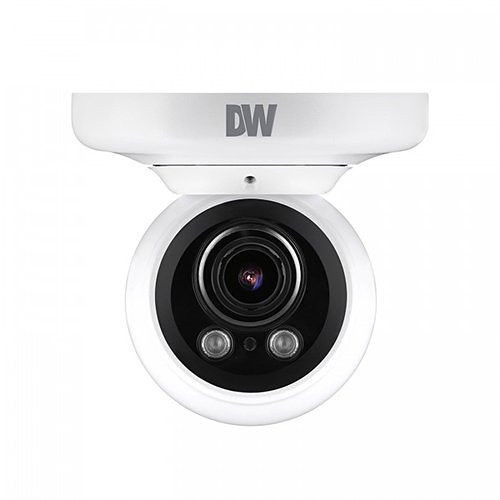
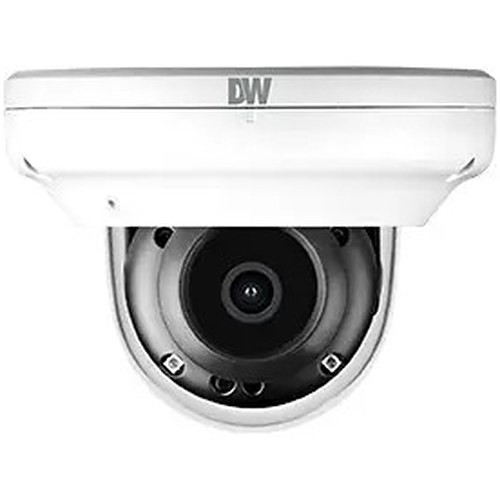
Both the Digital Watchdog DWC-D3853WTIRW and DWC-XSDE08Mi are 8MP (4K-class) IP dome cameras from the same manufacturer, making them a natural cross-shop for buyers evaluating resolution tier and dome form factor. The D3853WTIRW is positioned as an indoor Star-Light+ fixed-lens dome, while the XSDE08Mi is an outdoor AI-enabled vandal dome with a motorized varifocal lens. The comparison centers on sensor size, lens flexibility, environmental ratings, onboard analytics, and network integration depth.
In This Guide
How do the imaging specs compare?
Both cameras deliver 8MP resolution, but with slightly different active pixel arrays: the D3853WTIRW outputs 3864×2176 while the XSDE08Mi outputs 3840×2160. The more meaningful sensor difference is size — the D3853WTIRW uses a larger 1/1.8" CMOS, versus the XSDE08Mi's 1/2.8" CMOS. A larger sensor generally captures more light per pixel under equal conditions. Minimum color illumination is 0.10 lux for the D3853WTIRW and 0.09 lux for the XSDE08Mi; both reach 0.0 lux in B/W mode with IR active. Both provide 100-foot Smart IR range and 120dB True WDR.
The lens architectures differ significantly. The D3853WTIRW uses a fixed 2.8mm lens with a 106.5° horizontal field of view — wide coverage, no post-install adjustment. The XSDE08Mi uses a motorized varifocal 2.7–13.5mm lens with auto-focus and P-iris, delivering a HFOV range of 33.1°–90.3°. The XSDE08Mi supports up to 30fps at all resolutions including 4K; the D3853WTIRW specifies 4K at 15fps as a listed max resolution mode, with variable frame rates noted for other modes. The XSDE08Mi also adds slow shutter modes (x2–x10) not listed for the D3853WTIRW.
What about installation and environment?
The D3853WTIRW carries an IP66 rating (dust-tight, protected against powerful water jets) and is specified for indoor use only; no IK impact rating is listed in its specs. The XSDE08Mi is rated IP67 (dust-tight, protected against temporary immersion) and IK10 (highest standard vandal resistance), and is specified for outdoor use. Both cameras share the same operating temperature range of -4°F to 122°F (-20°C to 50°C) and humidity tolerance of 10–90% non-condensing.
Both cameras are PoE-powered over a single cable, eliminating the need for a separate power run. The D3853WTIRW draws a maximum of 3.0W. The XSDE08Mi draws up to 10.2W on DC12V or 12.5W over PoE (PoE Class 3), reflecting its motorized lens, higher-performance sensor, and onboard AI processing load — a relevant consideration for switch port budgeting. The D3853WTIRW is lighter at 0.66 lbs (0.3kg) versus 1.14 lbs (0.51kg) for the XSDE08Mi. The XSDE08Mi housing is aluminum die-casting; the D3853WTIRW housing is plastic. Mounting accessories are sold separately for both models.
Which fits your VMS and analytics better?
The XSDE08Mi provides substantially deeper network and analytics integration. It supports H.264, H.265, and MJPEG compression with CBR/VBR control, dual-stream at different rates and resolutions, and a full protocol stack including ONVIF, RTSP, SNMP v1/v2/v3, HTTPS/TLS, 802.1x, and IP filtering. It includes embedded AI analytics covering intrusion detection, line crossing, tailgating, counting, dwell time, direction, appear/disappear, and logical rules — plus a built-in microphone, 1-in/1-out audio I/O, 1-in/1-out alarm I/O, and onboard microSD/SDHC/SDXC storage up to 1TB. Operational notifications extend to email, FTP, SD card, and alarm output. The D3853WTIRW's specs do not list network compression formats, streaming protocols, ONVIF support, audio, alarm I/O, or onboard storage.
The D3853WTIRW does list UTC (Up-the-Coax) camera control and CVBS analog test output, indicating it is designed to operate in hybrid HD-over-Coax/analog-compatible installations (supporting CVBS, 960H, HD-CVI, HD-TVI, and HD-Analog signal technologies in addition to IP). The XSDE08Mi's spec sheet does not list analog or coax signal compatibility. Buyers integrating into a pure-IP VMS environment with ONVIF requirements, edge analytics, or local storage will find the XSDE08Mi's feature set documented; those in hybrid analog/IP environments should note the D3853WTIRW's coax signal support.
Which should you choose: the D3853WTIRW or the DWC-XSDE08Mi?
Our take: The DWC-XSDE08Mi is the stronger choice when the deployment is outdoors, requires flexible framing, vandal resistance, or embedded AI analytics. It carries an IP67 + IK10 rating versus the D3853WTIRW's IP66 with no listed IK rating; its motorized 2.7–13.5mm varifocal lens allows post-install zoom adjustment that the D3853WTIRW's fixed 2.8mm lens cannot provide; and it delivers 4K at 30fps versus the D3853WTIRW's specified 4K at 15fps. It also adds built-in audio, alarm I/O, onboard microSD storage up to 1TB, and documented ONVIF and AI analytics — none of which appear in the D3853WTIRW's spec sheet. The D3853WTIRW is the appropriate choice for indoor, fixed-wide-angle installations on hybrid coax/IP infrastructure, where its larger 1/1.8" sensor, 106.5° FOV, lower 3.0W power draw, and HD-over-Coax signal compatibility (CVBS, HD-CVI, HD-TVI, HD-Analog) are the deciding factors. Both carry 5-year warranties.
Side-by-Side Comparison
Spec-for-spec, from manufacturer data.
| Specification | Digital Watchdog D3853WTIRW | Digital Watchdog DWC-XSDE08Mi |
|---|---|---|
| Resolution (Active Pixels) | 3864 × 2176 (8MP) | 3840 × 2160 (8MP) |
| Image Sensor Size | 1/1.8" CMOS | 1/2.8" CMOS |
| Lens Type / Focal Length | Fixed, 2.8mm | Motorized varifocal, 2.7–13.5mm, auto-focus, P-iris |
| Horizontal Field of View | 106.5° | 90.3° – 33.1° |
| Min. Illumination (Color / B&W) | 0.10 lux / 0.0 lux | 0.09 lux / 0.0 lux |
| IR Range | 100 ft Smart IR | 100 ft Smart IR |
| Wide Dynamic Range | 120dB True WDR | 120dB True WDR |
| Max Frame Rate @ 4K | 15fps | 30fps |
| Video Compression | Not specified in provided specs | H.264, H.265, MJPEG |
| IP Rating | IP66 | IP67 |
| IK / Impact Rating | — | IK10 |
| Operating Temperature | -4°F to 122°F (-20°C to 50°C) | -4°F to 122°F (-20°C to 50°C) |
| Power Input / PoE Class | PoE, 12V DC, 3.0W max | PoE Class 3, 12.5W max; DC12V 10.2W max |
| Edge Storage | — | microSD / SDHC / SDXC up to 1TB |
| Audio | — | Built-in mic, 1 audio in, 1 audio out |
| Alarm I/O | — | 1 input, 1 output |
| AI / Edge Analytics | — | Intrusion, line crossing, tailgating, counting, dwell, direction, and more |
| ONVIF | — | Yes |
| Coax Signal Compatibility | CVBS, 960H, HD-CVI, HD-TVI, HD-Analog | — |
| Housing Material | Plastic | Aluminum die-casting |
| Environment Rating | Indoor | Outdoor |
| Dimensions (H × W) | 4.72" × 3.51" (120 × 89.4 mm) | 4.92" × 3.62" (125 × 92 mm) |
| Weight | 0.66 lbs (0.3 kg) | 1.14 lbs (0.51 kg) |
| Warranty | 5 years | 5 years |
Frequently Asked Questions
Which should you choose: the D3853WTIRW or the DWC-XSDE08Mi?
The DWC-XSDE08Mi is the stronger choice when the deployment is outdoors, requires flexible framing, vandal resistance, or embedded AI analytics. It carries an IP67 + IK10 rating versus the D3853WTIRW's IP66 with no listed IK rating; its motorized 2.7–13.5mm varifocal lens allows post-install zoom adjustment that the D3853WTIRW's fixed 2.8mm lens cannot provide; and it delivers 4K at 30fps versus the D3853WTIRW's specified 4K at 15fps. It also adds built-in audio, alarm I/O, onboard microSD storage up to 1TB, and documented ONVIF and AI analytics — none of which appear in the D3853WTIRW's spec sheet. The D3853WTIRW is the appropriate choice for indoor, fixed-wide-angle installations on hybrid coax/IP infrastructure, where its larger 1/1.8" sensor, 106.5° FOV, lower 3.0W power draw, and HD-over-Coax signal compatibility (CVBS, HD-CVI, HD-TVI, HD-Analog) are the deciding factors. Both carry 5-year warranties.
Is the D3853WTIRW or DWC-XSDE08Mi better for low light?
Both cameras reach 0.0 lux in B/W mode with IR active and provide 100-foot Smart IR range. In color mode, the XSDE08Mi is specified at 0.09 lux versus 0.10 lux for the D3853WTIRW — a marginal difference. However, the D3853WTIRW uses a larger 1/1.8" sensor compared to the XSDE08Mi's 1/2.8" sensor, which typically provides an advantage in low-light light collection at the pixel level. Neither camera's spec sheet provides sensitivity figures beyond these lux values, so a direct measured comparison is not possible from the provided specifications alone.
Can the DWC-XSDE08Mi be used indoors, and can the D3853WTIRW be used outdoors?
The DWC-XSDE08Mi is rated IP67 and IK10 with an aluminum die-cast housing, making it suitable for outdoor and vandal-prone environments — it can also be deployed indoors. The D3853WTIRW is specified as an indoor dome with an IP66 rating and plastic housing, with no listed IK impact rating; its specification sheet does not indicate it is designed for outdoor installation. Using the D3853WTIRW outdoors would be outside its documented application, and no IK vandal resistance is spec-confirmed.
Does the D3853WTIRW support ONVIF or AI analytics like the DWC-XSDE08Mi?
The DWC-XSDE08Mi's specifications list ONVIF protocol support and a broad set of embedded AI analytics including intrusion detection, line crossing, tailgating, counting, dwell time, and more. The D3853WTIRW's provided specifications do not list ONVIF compliance, edge analytics, audio I/O, alarm I/O, or onboard storage. Buyers who require ONVIF interoperability, VMS event-triggered analytics, or edge recording capability should select the XSDE08Mi based on the available spec data.
Get a Second Opinion on Your Camera Choice
Share your site layout, coverage goals, and budget. Our team will validate the camera selection, flag anything we would change, and recommend products that match the use case.